Have new flashes, a sudden increase in floaters, a curtain-like shadow or sudden blurred vision appeared during your run? Stop running and seek immediate, urgent eye care. Do not wait until your next workout or a routine appointment, and do not drive yourself. These symptoms can indicate retinal detachment or another urgent problem. For sudden significant sight loss, speech difficulty, one-sided weakness, confusion or other severe illness, call 112.
You do not need to identify the precise disease before making a prompt decision. What matters is not automatically explaining a new vision change as wind, sweat or a previous migraine. The explanation below helps you understand reporting symptoms and receiving care; reading must not delay seeking help. Running logs and race plans take a back seat here: protecting vision requires examination.
Why are new or suddenly changing phenomena especially important?
Dots, lines and floating shapes in your field of vision can be common experiences. However, the NHS recommends urgent assessment when they appear for the first time, suddenly increase, occur with flashes or are accompanied by a dark shadow, curtain or deterioration in vision. The change matters more than whether other runners have ever seen a floater. A general reassuring forum reply does not make a new symptom safe.
A “curtain” need not literally mean a black sheet descending. A person may experience a shadow, a missing area or an obstruction in their field of vision. You do not have to find the right word before asking for help. Explain that your vision has newly changed and describe what you notice. Your own account is more useful than naming a diagnosis selected in advance.
The running environment can make events harder to recall: light changes, trees move and you may be wearing sunglasses. An unusual visual experience still needs to be taken seriously. Do not restart simply to reproduce it on the same section. A natural description of the situation is enough to ask for help; you do not need to provoke visual symptoms at home or beside the route.
What is the retina, and why does an ordinary eye photograph not reveal the problem?
The retina is light-sensitive tissue at the back of the eye. In retinal detachment it moves away from its normal position, which can permanently damage sight. The National Eye Institute therefore calls for immediate eye or emergency care for suspicious symptoms. Prompt treatment can help preserve sight, but the necessary procedure and expected outcome can be judged only after examining the condition.
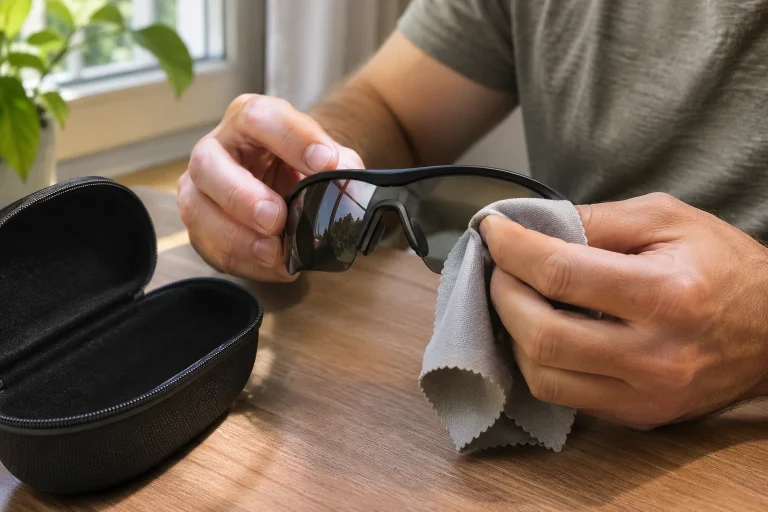
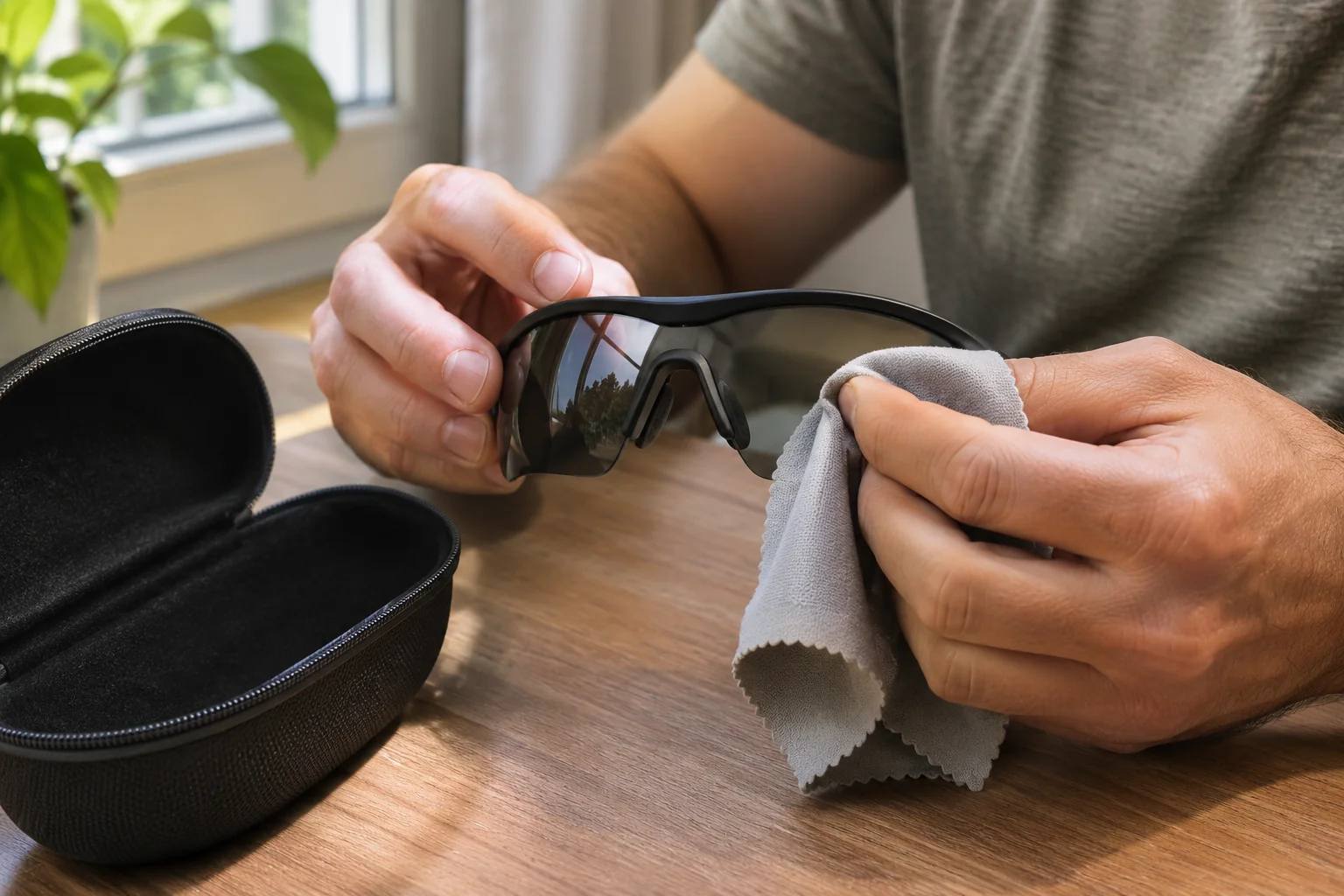
The eye’s outward appearance and the retina’s condition are different. A companion’s phone photograph of your face, your eye in a mirror or cleaning your glasses does not examine the back of the eye. Do not wait for a conspicuous external change before seeking urgent help. The new vision change itself is important information for the clinician, even if others notice nothing from outside.
The vitreous can also play a role. The NEI explains that the gel-like material filling the eye can change with age and separate from the retina; this can itself differ from retinal detachment. In some cases, however, a tear or another complication can accompany it. Floater shapes or sensations during running alone cannot distinguish these: an eye examination is needed.
 Enlarge image
A migraine history matters but is not an automatic explanation
Migraine aura can also involve visual phenomena such as flashing lights or zigzag shapes. The NHS migraine page describes these among possible symptoms. A previous migraine diagnosis and your individual plan are important history, but new, different or uncertain vision changes must not simply be placed in the same category because of them. Report the previous diagnosis and describe the current difference separately.
Do not make yourself a rule that no headache means an eye problem, or that a headache guarantees migraine. Similarly, a typical duration read online is no reason to wait with a new symptom. Clinical assessment involves both the course of symptoms and your history. Care for an urgent vision change should not be postponed so it can later fit a familiar pattern better.
Immediate help is particularly important if visual disturbance accompanies new speech difficulty, weakness on one side of the face or limbs, confusion or a sudden severe headache. Do not explain these as post-run exhaustion. Call 112 for suspected stroke even if symptoms have eased or disappeared. A running companion’s role is then to seek help promptly and give the location, rather than compare possible diagnoses.
What should you say on the phone, and how can a companion help?
Start with the current problem: “During a run, I noticed new flashes and a shadow in my vision.” Give the approximate onset time and whether symptoms remain. If you know whether one or both eyes are affected, say so; if unsure, say that. Do not delay calling while trying to distinguish the phenomenon perfectly through your own tests.
List accompanying symptoms separately. Was there an injury, eye pain, a new headache, speech difficulty or other illness? Mention known eye disease, previous surgery and migraine history too. Answer the professional’s questions and follow their guidance. Rather than starting “I think it is only…”, provide observations so no information needed to assess urgency is lost.
A companion can help describe the exact location, access and timing. You can move out of traffic, and if at a race, also ask the event’s medical staff for help. This should not mean the runner walking to a distant finish arch without care. A vision change also affects travel and orientation, so the person should not be left alone in a complicated situation.
| Useful detail | Simple wording | What you need not solve first |
|---|---|---|
| Onset | “It started a few minutes ago, near the bridge.” | GPS analysis accurate to the minute. |
| Phenomenon | “I see new dots and a dark shadow.” | Guessing the disease’s name. |
| Side affected | “It seems to be on one side; I am not sure.” | A lengthy vision test of your own. |
| Accompanying symptom | “There is also new difficulty speaking” or “I have not noticed that.” | Downplaying symptoms because of a sporting history. |
Changing glasses or a routine sight check is insufficient
The NEI describes a dilated eye examination to check suspected retinal detachment; further imaging may be considered if necessary. Its purpose is to assess the retina’s condition. A professional determines the appropriate examination and care pathway. Do not book only a later glasses check for new flashes or a shadow without reporting the urgent symptom.
When arranging travel for an eye examination, also consider getting home. Dilating drops can temporarily blur vision and increase light sensitivity; the NEI therefore recommends having someone take you home. Do not drive yourself with an acute vision change in the first place, and follow the provider’s guidance afterwards too. Trying your vision out in road traffic is not a safe check.
Bringing glasses and necessary medical documents can help, but searching at home must not delay urgent care. If your companion can open a previous report, that may help; if not, still seek care for the symptom. A vision-test app and reading your watch display do not replace a retinal examination. Clarify details during care already under way instead.
Running and plans after examination need separate decisions
After examination, ask exactly what was found and which changes require you to seek immediate care again. Even a reassuring result may involve follow-up or instructions to monitor symptoms. The NEI’s vitreous information also emphasises recognising complications. Base restarting running on specific guidance received, rather than simply on the initial fright passing.
If a retinal tear or detachment requires treatment, its form and recovery are individual. The NHS describes different procedures and recovery circumstances. Do not extract a universal return week for your running plan. Ask which activity, body positions or travel treatment affects, and when your condition will be reassessed. Your own provider must give these answers.
Race administration comes afterwards. Changing an entry, cancelling travel and notifying your club may be important organisational tasks, but cannot precede urgent examination. A companion can take on tasks you agree to. In an urgent health situation, you do not have to prove you prepared responsibly or are not inconveniencing the team.
 Enlarge image
Recognise three common misunderstandings in advance
First: “I have had a floater before.” A familiar, unchanged phenomenon differs from newly increasing symptoms or those accompanied by flashes or a shadow. Reporting change matters because it also informs the clinician’s assessment. Do not infer from an old experience that the current symptom is definitely harmless.
Second: “I will wait until I get home; it will be easier to sort out then.” Distance and the inconvenience of running clothes are no reason to delay urgent care. Explain where you are and ask for guidance to appropriate help. Third: “If I can still read my phone, it cannot be serious.” Recognising one nearby object does not examine the entire visual field and retina. Your own test must not provide false reassurance.
Consistency often matters to runners, but with a new vision change, consistent help-seeking matters. You need not finish the route or determine the symptom’s cause on the spot. Stop, report the new phenomenon and obtain urgent professional assessment; call 112 for severe or accompanying neurological symptoms. Your next workout can be discussed responsibly once care for the current eye problem has begun.
Sources
- NHS: retinal detachment
- NHS: floaters and flashes
- NEI: retinal detachment, 2025
- NEI: vitreous detachment
- NHS: migraine
- NHS: stroke symptoms
- NEI: dilated eye examination
How Futószív articles are prepared: our editorial guidelines.