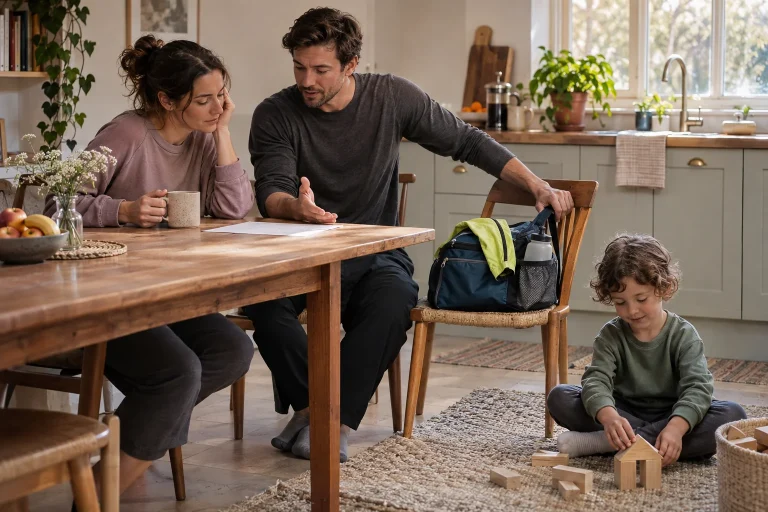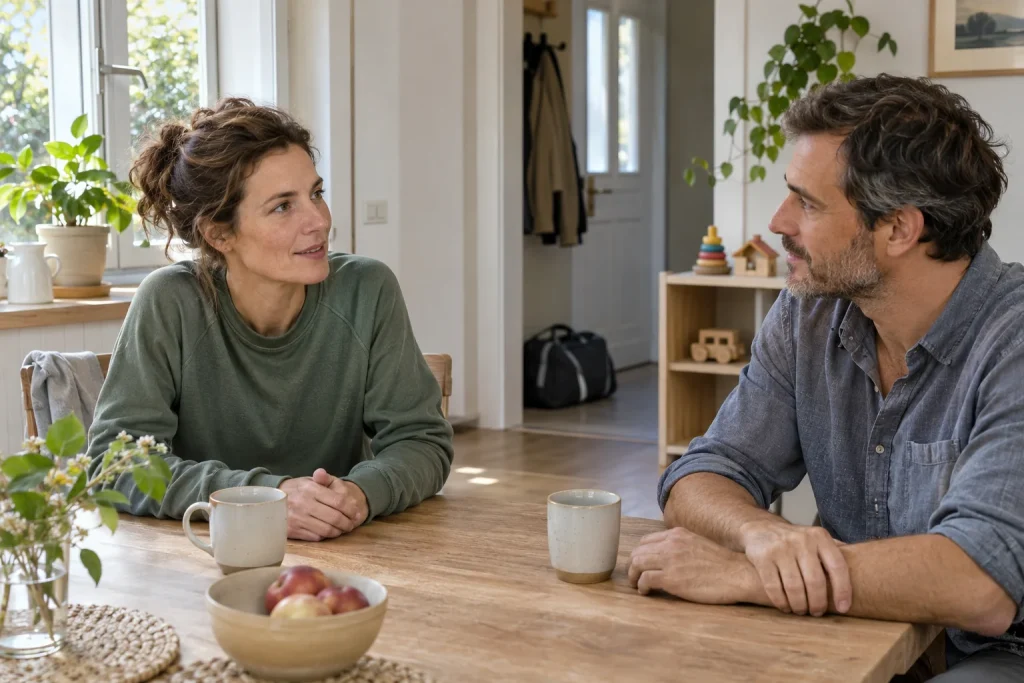
The running bag waits by the door, yet the next hour does not feel entirely yours. A child needs collecting, someone asks about dinner and the group’s message about the weekend long run arrives. Sometimes the question goes beyond fitting in a loop. You may also wonder what kind of mother you want to be, how important running is and what others think. These meanings meet in a calendar, but calendar editing alone may not resolve them.
Being a mother and identifying as a runner can fit together in several ways. Someone happily calls herself a runner with a few short outings; another values a race goal particularly strongly; another is currently moving away from sport. None determines the quality of motherhood. This article explores the social side of roles and expectations. The examples are our imagined situations, not interview quotations or part of postpartum medical return-to-running guidance.
What happens when two important roles claim the same time?
A role involves both activities and expectations. Care can mean concrete tasks: accompanying someone, preparing food, administration or attention. The runner role may involve a personal habit, time with friends or planned preparation. Conflict becomes visible when both need the same afternoon. Both can remain valuable; difficulty choosing does not itself show lack of interest in either.
Conflict also has a less visible side. Childcare may be arranged, yet you feel you can leave only after everything else is done. Running is then permitted in principle but always last on the task list in practice. Distinguish genuinely missing care from an expectation that a mother should constantly be available. This distinction can open a conversation, rather than provide an outsider’s ready-made answer for a family.
Running is not one package of demands either. A nearby loop, distant group workout and race trip occupying a whole morning need different time. Giving them all the same name can attach a whole racing season’s burden even to a simple outing. Describe the actual programme first: what would happen, how long would you be away and what would give it value for you?
Six women’s stories: what did the original research address?
Samantha Skinner’s 2015 qualitative study drew on interviews with six working mothers experienced in running. Five had children under fifteen; the sixth was involved in full-time care of an adult child with a disability. The thematic analysis connected running identity, maternal guilt and time constraints. It interpreted specific stories rather than surveying how common views or circumstances are among all mothers.
In their accounts, identification as a runner was influenced by the requirements attached to an “authentic runner” image. The author also described how they could redefine that role to fit their opportunities. The study did not test a family scheduling programme, so the discussion ideas below are our editorial examples. The research offers a perspective for noticing social expectations alongside kilometres.
A free hour differs from an hour you can actually use
Imagine two equally empty Saturday mornings in a calendar. On the first, someone else independently handles household tasks and knows where necessary items are. On the second, you must prepare everything before leaving, solve questions by phone while away and face unfinished work on return. The running programme may last equally long, but accessible personal time differs. This illustrates a situation rather than a research-measured family type.
To examine usability, name the whole process. Travel to the meeting point, changing clothes and later tasks matter too. Someone seeing only minutes spent moving may understand the same departure as a different agreement. The aim is not monitoring every minute, but preventing one person’s leisure from automatically involving another’s invisible extra work.
| Part to discuss | A more precise question | What does it clarify? |
|---|---|---|
| Preparation | What is needed for care to work without me? | Knowledge of the task does not remain with one person alone. |
| Time away | Who decides ordinary household questions? | The absent parent’s time is genuinely usable. |
| Returning | When and how do I rejoin the shared day? | Expectations around running become visible too. |
| The other person’s time | Which personal activity matters to them? | The agreement concerns reciprocity too. |
 Enlarge image
Who decides which running counts?
Large goals are often most visible on social platforms: long weekends, travel and personal bests. Building your definition of runner from these can make your shorter programme seem insignificant. Personal meaning can have several sources, however: a familiar route, meeting friends or spending time present in a chosen activity. None requires increasing distances.
Our illustrative question might be: if nobody saw the result, why would I want this outing? The answer is not an exam and can include ambition. It helps examine whether the next goal is yours or proof that you legitimately belong among runners despite shorter outings. Personal desire and external standards can coexist without every motive being sorted into one pure category.
Changing self-definition is not compulsory renunciation. A nearby event may fit now, while a more distant goal interests you later. Short runs remaining appealing over the long term is fine too. Flexible wording of the runner role leaves room for changing life circumstances without requiring renewed proof of commitment after every adjustment.
Guilt can conceal several different questions
“I feel bad about leaving” does not yet reveal what needs changing. Is a care need genuinely unresolved? Is agreed help uncertain? Or is everything arranged, with an internal standard calling personal time selfish? These are different situations. A concrete gap may need practical resolution; an unspoken expectation may need a conversation naming what each person takes for granted.
Guilt is not a reliable score of how caring you are. Nor must it be brushed aside in one gesture. It may help to describe the precise consequence you fear: a child’s current need, someone’s reproach or a belief that every moment of the day should be useful. Naming it specifically distinguishes a problem from general self-blame; this is a reflective example, not therapy.
You need not justify running by promising to be a more patient or better mother afterwards. If you enjoy it, it can have a place in life in its own right. A disappointing outing does not retrospectively make all that personal time unjustified. Enjoyment can vary, and family agreements need not depend on one workout’s mood outcome.
A useful family discussion also addresses responsibility
“May I go?” sometimes conceals unequal decision-making. The person preparing to run requests permission while the other grants it, although the latter’s free time is taken for granted. Our alternative conversation might be: “I would like to join the nearby group on Saturday. Let us see how that fits your activities and our shared tasks.” This is not a ready solution for every relationship, but names both the need and the shared subject of coordination.
Delegating a task and sharing responsibility are not necessarily the same. If someone can act only after detailed instructions, preparation still remains in one person’s hands. Make usual information accessible to both caregivers where possible in that family. Negotiating running time then need not always begin with one person doing more work in advance.
- Name the outing and total time away, rather than only workout duration.
- Discuss who takes independent responsibility for each task.
- Include the other person’s important personal activity in the same discussion.
- Clarify what genuinely counts as urgent contact during time away.
- Review whether the agreement worked rather than whether running was deserved.
Three life situations, three different possibilities
In one imagined family, parents work different shifts, so a nearby weekday session fits instead of the weekend group. In another, regular help exists but care information belongs only to the mother, making shared tasks the main question. In a third, no help is available and the mother currently finds no personal running time at all. The same “just make time” instruction would overlook something different in each.
The importance of wider conditions was also highlighted in McCormick and colleagues’ qualitative study following new runners. Alongside personal meaning, unequal opportunities mattered in twenty participants’ stories; strong reasons were not always sufficient to continue against substantial barriers. Published online in 2023 and in a 2024 journal issue, this was not a scheduling experiment designed exclusively for mothers.
When identifying possibilities, money, travel, working hours and available help are real conditions too. If one is missing, a harsher personal slogan does not replace it. Other forms or later occasions can be sought, but a temporary absence is an acceptable outcome. Not every life situation offers a running programme that can comfortably be created within current arrangements.
A running group’s expectations can change too
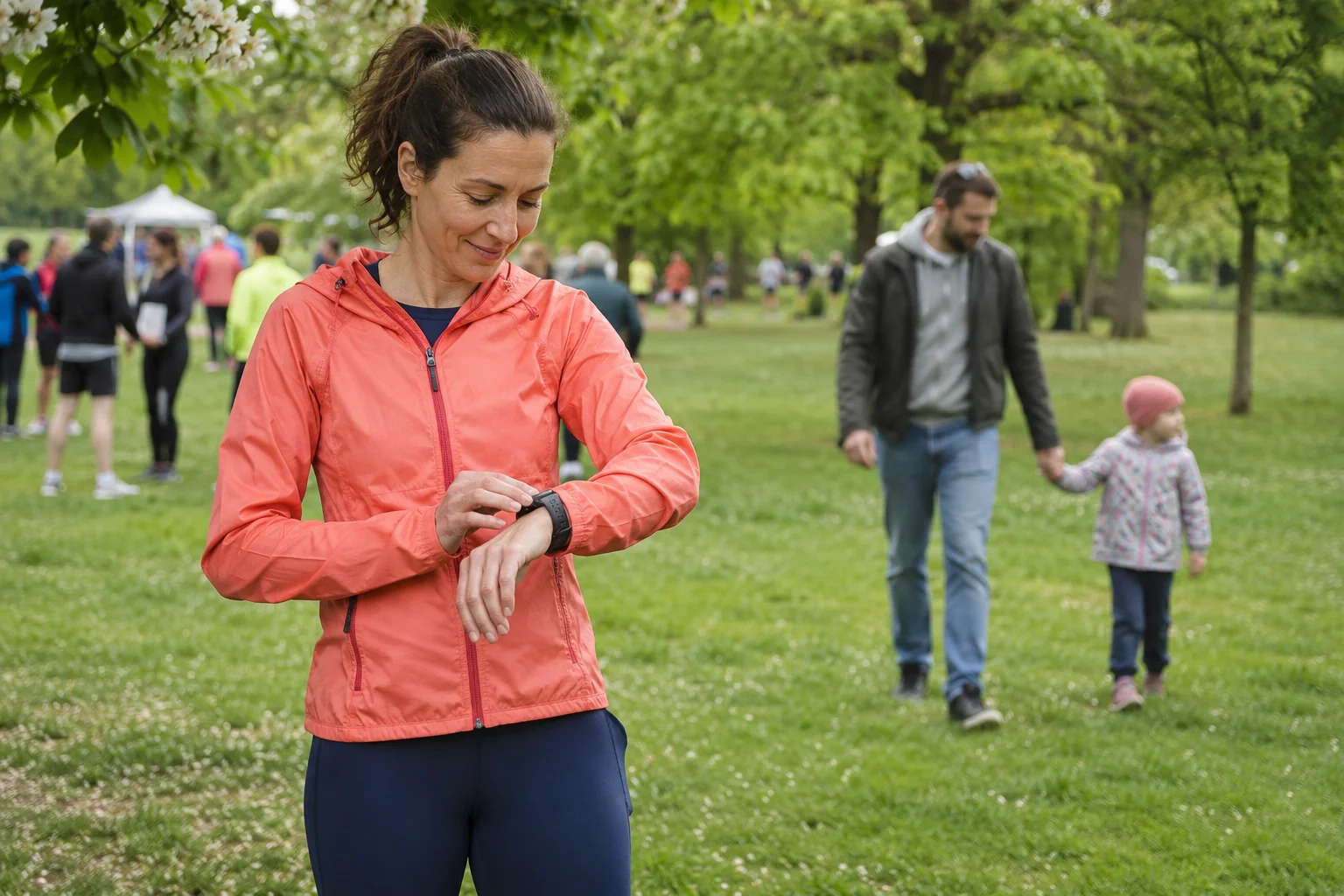
A group can help by stating exact start and finish times, whether shorter participation is possible and how it treats absences. These are organising options, not interventions tested in the studies. A predictable finish may particularly matter when someone’s next task cannot shift freely. “We will see how it goes” means freedom for some but an unplannable absence for others.
In a supportive community, interest need not mean accountability demands. “Good to see you again” creates a different situation from publicly listing absences. Sharing family details can remain personal: nobody needs to provide proof of caregiving because they have not attended for a while. Organisers can clarify participation without becoming judges in family disputes.
If a group celebrates only its longest programmes, ask which other experiences have room. A recurring meeting or favourite route can also be discussed. Race goals do not lose value; more forms of participation become visible. Equal respect in a community does not require everyone to run identically.
 Enlarge image
Messages to children are not performance assignments
A family can see that adults have interests and agreed time of their own. This need not be translated into a child’s running or sporting results. Our everyday explanation might be: “I am going to my chosen activity now; we will meet afterwards, and you will stay with them meanwhile.” The child’s safe care and adult’s activity appear together. The message is not that the child must like the same thing.
A shared family running outing is a separate decision. It can be enjoyable, but adult running time need not always be packaged as a children’s activity. A child declining to join does not reject their mother’s sport. Equally, a parent’s running result is not a parenting certificate. Preserve the distinction between interest in one another and shared performance pressure.
A description of roles with room for change
Your own statement as a runner can be specific: “I enjoy nearby group loops and am currently looking for room for those.” This may describe your present more precisely than a lifelong sporting pledge. Interests, care tasks and available help may change later. An amended plan does not erase past experiences or call your motherhood into question.
You can also observe a discussion’s outcome through clearer total time requirements, more independent task-sharing and fewer unspoken conditions. These editorial questions examine everyday functioning rather than form a personality test. Important roles coexisting may require another programme, different help or simply more say. Running can have its own place in life without having to prove itself against your maternal role.
Sources
- Skinner: Mothering, Running, and the Renegotiation of Running Identity, 2015, pages 18–39
- McCormick and colleagues: new runners continuing and stopping, online 2023, journal issue 2024
How Futószív articles are prepared: our editorial guidelines.