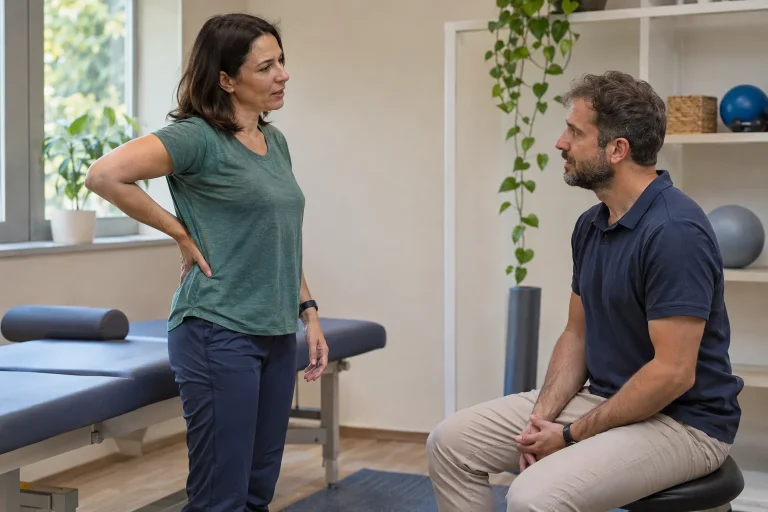
Your back is slow to get going in the morning, but feels different after getting ready and a little natural movement. As a runner, you might explain this through yesterday’s kilometres, the mattress or missed stretching. If symptoms recur, persist or affect the day, describe the pattern to your doctor. Stiffness changing with movement can be important, but does not name a disease by itself.
The possibility of inflammatory back symptoms is not an invitation to online self-diagnosis. It is a reminder that back pain is not always the story of one poorly managed workout. Onset, night-time and morning experiences, changes with rest and everyday movement, and other symptoms together can help appropriate medical assessment.
First explain what stiffness means for you
Stiffness is an everyday word: difficulty getting started, a movement feeling restricted, painful turning or simply needing time to get ready after waking. Do not compress these into one technical term. Naming the normal task that changed may be more useful in consultation: getting up, dressing, putting on shoes or taking the first few steps.
Pain and stiffness need not be the same experience either. Movement may feel awkward without being particularly painful; at other times, pain makes you move more cautiously. Say this directly. You need not measure severity through deep bending or twisting before assessment. The morning experience that happened anyway is an appropriate starting point.
Estimating how long the difficulty lasts can help establish timing, but do not choose a diagnostic minute threshold for yourself. “It is easier by the end of getting ready” and “it is still the same on reaching work” are understandable descriptions. Mark uncertain memories as uncertain. An apparently precise invented duration is less useful than an honest account.
Why can symptoms improving with movement matter?
For ankylosing spondylitis, an inflammatory spinal disease, the NHS describes a possible characteristic pattern of back symptoms improving with movement but not easing or worsening with rest, together with morning and night-time stiffness. Not everyone has every symptom. This pattern warrants an accurate discussion of the history, but feeling better one morning does not establish a diagnosis. NHS: symptoms and variability.
Distinguish natural movement from sporting load in your account. Did the feeling change after getting up, a few steps around home or normal preparations? Or did it seem different only at the end of training? These observations are not interchangeable. Temporary easing during movement does not mean longer or more intense running should be used to treat it.
You need not organise an experiment comparing rest and running. Do not deliberately remain still or run a pain-provoking trial simply to clarify the pattern. Describe days that have already happened. If your provider later suggests monitoring, ask which information would be useful to record and how.
When it began and how long it has lasted are separate information
Alongside current morning severity, recurrence duration and age at onset can matter. NICE guidance for recognising axial spondyloarthritis highlights assessment of persistent lower-back symptoms beginning at a younger age together with other features. This is a professional referral framework, rather than a home scoring sheet. NICE NG65: recognition and investigation.
Do not turn professional duration criteria into a compulsory waiting period. You need not wait months for help to fit a description you have read. Talk to a doctor if back symptoms disrupt daily life, worry you, worsen or persist. New severe or urgent symptoms require help based on the current situation, regardless of when stiffness first began.
Everyday events can help recall the timeline: did it already occur before a job change, do you remember it on a previous trip, or has it appeared only since the latest training block? These do not prove a cause; they organise the history. Mention an earlier similar period followed by a long interval in which symptoms did not concern you too.
 Enlarge image
Describe night-time and daytime experiences together
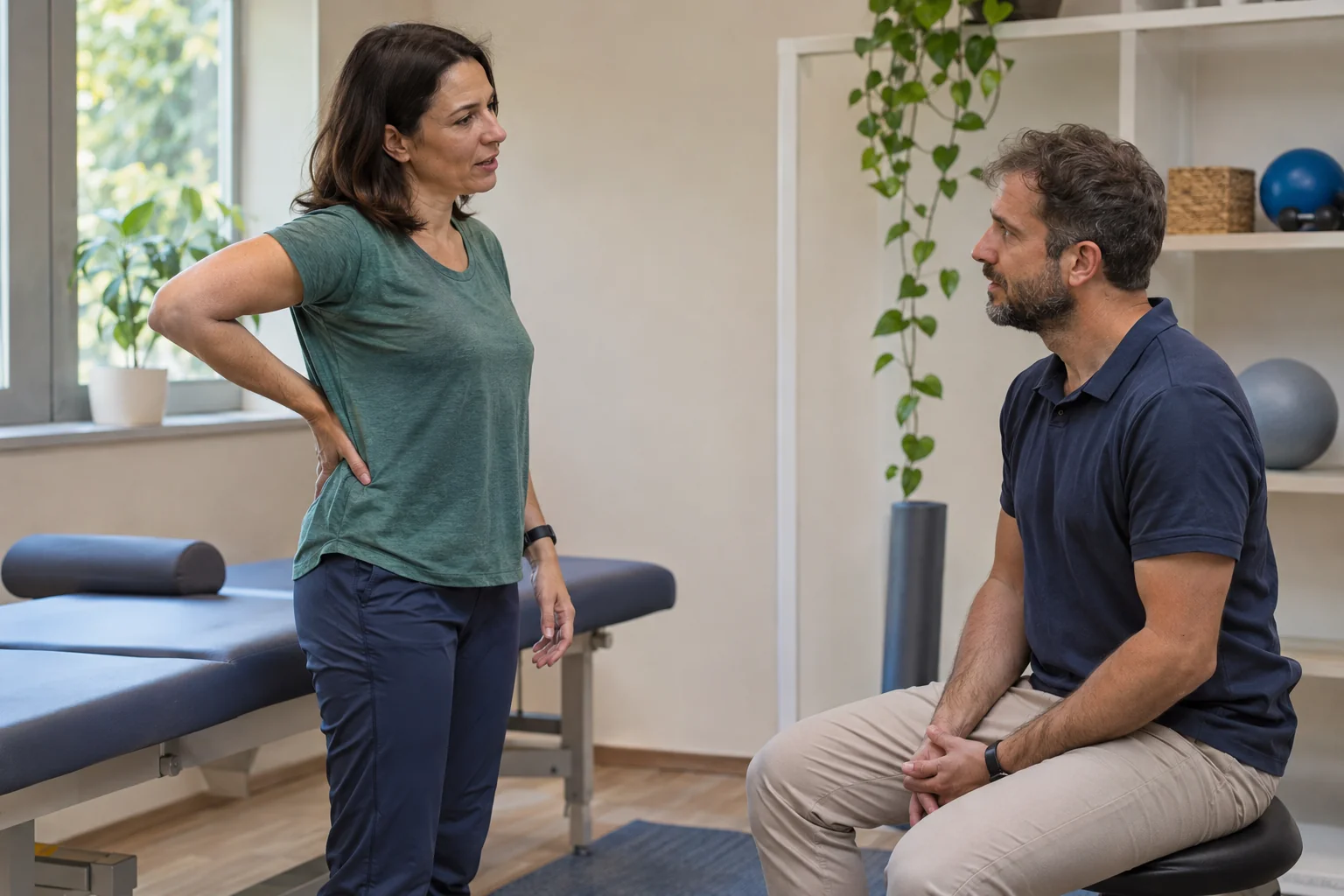
If pain wakes you or getting started is regularly harder after rest, include this in the morning story. Say what actually happened: did symptoms wake you, were you awake for another reason and then feel them, or did you notice them only on getting up? Differences between nights can be described too. An experience need not be identical every time to matter.
Daytime situations that are easy to recall may include getting going after prolonged sitting, usual walking and work. Running training is only one of these. If the rest of the day is relatively comfortable despite morning symptoms, say so; if your overall capacity has changed, mention that too. Your provider needs the whole pattern, rather than only the worst moment.
The NHS general back-pain information recommends medical advice for symptoms that, among other things, hinder everyday activity, fail to improve with rest or worsen at night. This does not identify the cause, but highlights the importance of seeking help. NHS: Back pain. Running regularly is no reason to treat these changes as automatically familiar.
Skin, eye and other symptoms can form part of the history too
Other body areas and earlier conditions can be relevant to assessing inflammatory spinal conditions. The NHS describes associated conditions including psoriasis, inflammatory bowel disease and inflammation at the front of the eye. If any have been diagnosed in your case, mention them and bring available records. This does not mean back symptoms in everyone with these conditions share the same cause.
Do not leave other joint symptoms or unusual fatigue unmentioned because your back is the main topic. Describe location, onset and changes rather than independently organising everything beneath one disease. Earlier clinical opinions and your current observations are separate information. If a past detail is uncertain, ask about retrieving documents.
New eye pain, light sensitivity, marked redness or a change in vision should not wait for a later back review: seek urgent ophthalmic assessment. The NHS uveitis page also emphasises early care. Several causes are possible; you need not prove a connection with your back beforehand. NHS: uveitis and seeking help.
Laboratory and imaging findings are not standalone verdicts
Wanting one certain test answer for persistent symptoms is understandable. The NHS diagnostic guidance explains, however, that recognising the condition requires several kinds of information and there is no single decisive test. History, examination and results requested where needed are interpreted together. Discuss test selection and findings with your own provider. NHS: the assessment process.
NICE also cautions that normal inflammatory laboratory values or a negative HLA-B27 result alone do not exclude spondyloarthritis. This does not mean ignoring a negative result. It means discussing its significance within the complete situation. A positive finding likewise does not authorise independent diagnosis or treatment selection.
Bring original earlier reports if available. Ask what they settled, which questions remain open and what monitoring is needed. Highlight symptoms changing since the previous examination. Do not order random tests for yourself or use medication effects as a diagnostic experiment. Interpreting your symptoms belongs within care.
You can ask specifically about rheumatological assessment
At a GP consultation, explain recurring morning stiffness, night-time symptoms or sensations changing with movement, and ask whether assessment for an inflammatory cause is warranted. This differs from bringing a ready diagnosis. A professional can judge further action and the need for rheumatological examination from symptoms and history.
If no referral is made immediately, ask which working explanation guides the plan, when to report back and which new information would change it. A clear monitoring plan offers more support than “I will keep an eye on it”. If referred, earlier findings, associated conditions and symptom chronology help use the available time for essential questions.
Do not omit genuine experiences because you are female or lead an active life. NICE notes that axial spondyloarthritis can affect women and men. This does not establish that you have it; it reminds us to assess your history instead of a stereotypical patient image. Running performance does not replace that assessment either.
 Enlarge image
A short note that does not become a home scoring test
Aim for a readable summary, rather than an endless symptom diary. Choose a few real details from mornings and everyday life. Notes can help a scheduled appointment, but new urgent symptoms should not leave you continuing to fill in a sheet.
| Topic | What should you note? | What is unnecessary? |
|---|---|---|
| Onset | How long has it recurred, and approximately how old were you when it began? | Inventing an exact date retrospectively. |
| Morning | Which normal activity is harder, and when does it change? | Performing a forced bending test. |
| Night | Do symptoms wake you, or do you notice them on waking? | Deliberately seeking pain in a lying position. |
| Daytime changes | What happens with natural movement and rest? | Proving the diagnosis through a running trial. |
| History | Known skin, eye, bowel or other joint conditions and their records. | Assigning every symptom to a single cause. |
An example sentence could be: “For months, my lower back has been difficult to get moving on several mornings; the feeling changes while getting ready, and sometimes wakes me at night. I previously focused only on the day after training, but now want to discuss the whole pattern.” Do not copy it if something different happens for you. Put your own experience into the sentence and leave missing details blank.
Seeking help and deciding about running are separate tasks
Sudden severe or rapidly worsening back pain with fever or feeling generally unwell needs urgent medical assessment. New loss of sensation around the perineum, bladder or bowel dysfunction, or new weakness or sensory disturbance in both legs may require immediate care. In a serious emergency in Hungary, call 112. Do not wait for a routine rheumatology appointment with these symptoms.
Temporary improvement in morning sensations does not alone answer which running you can do. If symptoms need assessment, ask your provider about the specific nature of your sport too. Do not try to remove stiffness with a longer workout or independently change medication to run. Connect movement’s role with the assessed condition and individual guidance.
Accurate symptom descriptions help prevent discussion getting stuck on guesses about mattresses, stretching or the last long run. The next step may be a reassuring explanation, further assessment or monitoring; your situation determines it. You need not decide which in advance. Describe onset, pattern and change.
Sources
- NHS: Ankylosing spondylitis
- NHS: Back pain
- NICE NG65: Recommendations
- NHS: Ankylosing spondylitis symptoms
- NHS: Ankylosing spondylitis diagnosis
- NHS: Uveitis
How Futószív articles are prepared: our editorial guidelines.