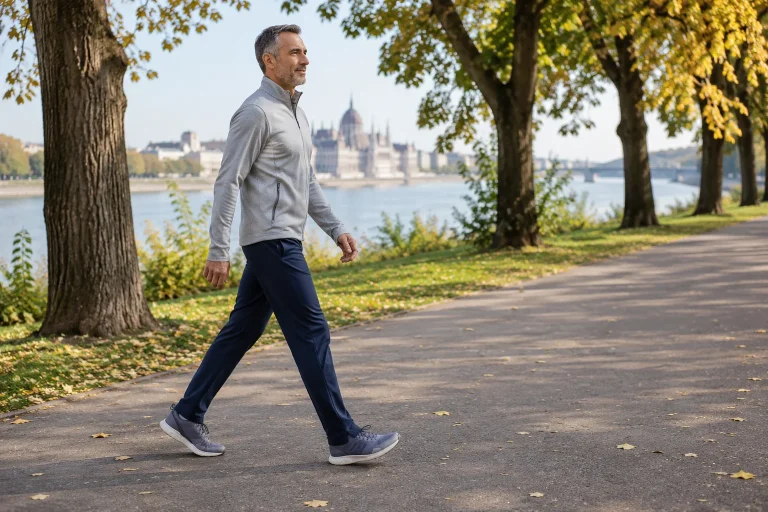
In running, success is easily described through kilometres and pace. In older age, continuing to reach places important to you can also be a meaningful outcome. The LIFE study concerned this mobility question. Its name did not conceal a race-preparation programme for older people.
The research helps explain that preserving independent mobility is a separate goal. It belongs on a sports portal just as much as a new target time. Accurate use retains the meaning of participants, comparison and measured endpoint. Individual activity planning remains a separate task even with these understood.
Whose question did the research seek to answer?
The LIFE study published in 2014 involved 1635 previously insufficiently active people aged 70–89. Their physical function put them at increased risk of losing mobility, but they could initially complete 400 metres. Eight US centres compared two programmes through random assignment, with an average follow-up of 2.6 years.
This differs importantly from a seventy-year-old who races regularly. Shared age does not make the situations identical. History, current function and individual goals can differ. Nor should study eligibility imply that someone not meeting it has no appropriate activity options.
Eligibility defines a research question. It is neither an honour, a general sporting-fitness rating nor an entrance test to complete at home. Reading about participants does not require classifying yourself through those details. Understand instead to which population a result directly applies.
Which outcome counted in LIFE?
The primary endpoint was major mobility disability, defined as losing the ability to complete 400 metres. This was neither a 400-metre running race nor an acceleration task. During reported follow-up, the endpoint occurred in 30.1 per cent of the activity group and 35.5 per cent of the health-education group. The study found a difference favouring the activity programme.
The difference is 5.4 percentage points. This is an observed group difference within the study, rather than a promise that everyone improved or every event was prevented. Mobility loss still occurred alongside the more favourable result. Group benefit and individual history are different statements deserving accurate treatment.
An everyday reading reveals preserving mobility as an important research goal in its own right. A functional result need not improve a sports-app ranking to be valuable. Individual-plan outcomes can therefore be discussed through more than training records.
 Enlarge image
Why can the programme not simply be copied into a watch?
The moderate-intensity multicomponent programme included centre- and home-based parts; the comparison group received health education and upper-limb stretching. Researchers did not merely compare more kilometres with doing nothing. The study compares programmes rather than isolating one movement’s effect.
A weekly watch target does not automatically contain explanation, adaptation, venue and support. Copying only quantity can erase everything enabling real participation. Organising movement is not administrative decoration beside numbers; in your day, it determines how the idea can happen.
The current National Institute on Aging guidance presents the combined role of aerobic, strengthening and balance activity. This explains why weekly running distance is narrower than an entire movement programme. Different tasks do not become identical in content merely because each involves movement.
Understand an activity’s purpose alongside its name in an individual programme. A task related to walking, strength or balance may not primarily serve sporting results. A task selected for current ability and condition does not lose value by differing from previous running training.
Four hundred metres can sit within a whole life situation
A research endpoint is deliberately precise and comparable. Everyday life is more complex: leaving home, entering a building, finding a chance to rest and returning. Walking ability is embedded in an environment. The same distance does not mean the same task on every route.
The WHO explanation of functional ability also emphasises the relationship between individual capacity and environment. Independent living therefore involves where and under which conditions desired activity happens. A meaningful life cannot be described through one sports metric.
Consider a favourite library visit. The journey may be short yet include a heavy door, stairs or a hurried connection. Increasing distance is not necessarily the individual goal. Route, timing and arranged assistance may matter too. This is an original editorial example rather than a separate outcome measured in LIFE.
| Sporting wording | Made precise as an everyday goal |
|---|---|
| I want to move more. | Which important place do I want to keep reaching? |
| I need better endurance. | Which part of the whole outward-and-return outing is difficult? |
| I want to fit in another session. | What supports regular participation in my real week? |
| I look only at pace. | Which other functional change do I want to preserve? |
Independence does not require doing everything without help
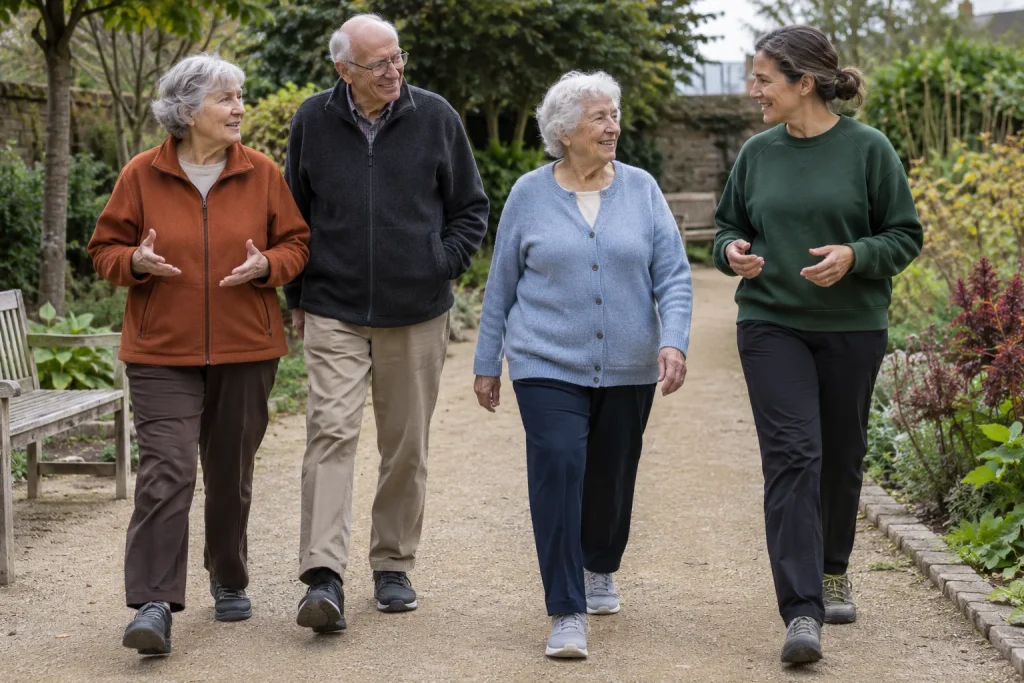
Some people choose to set out with a friend. Others arrange travel beforehand or select an accessible location. This does not devalue the goal. Appropriate assistance can help someone remain a participant in valued activities. You need not solve every task alone to retain your own role in the plan.
Agree support specifically. Company, reaching the venue, explanation and regular feedback are different kinds of help. Supervision required alone may not mean the same to everyone. The person’s needs and task can jointly define assistance in practice.
A sports community can help without automatically replacing healthcare or rehabilitation services. A patient clubmate may join an agreed walk without having to assess symptoms professionally. Clear roles prevent participation becoming a responsibility for which people are unprepared.
Name personal boundaries around help too. You might request travel support while wanting to discuss session content with the professional yourself. Your voice should not disappear into organisation. An older person’s programme does not become a family project merely because several people support it.
How can research interest become your own question?
You need not turn the whole study into personal training instructions. Take away that preserving independent mobility matters and discussing a multicomponent supported programme may be worthwhile. Your question can begin here: which activity and support fit my present situation?
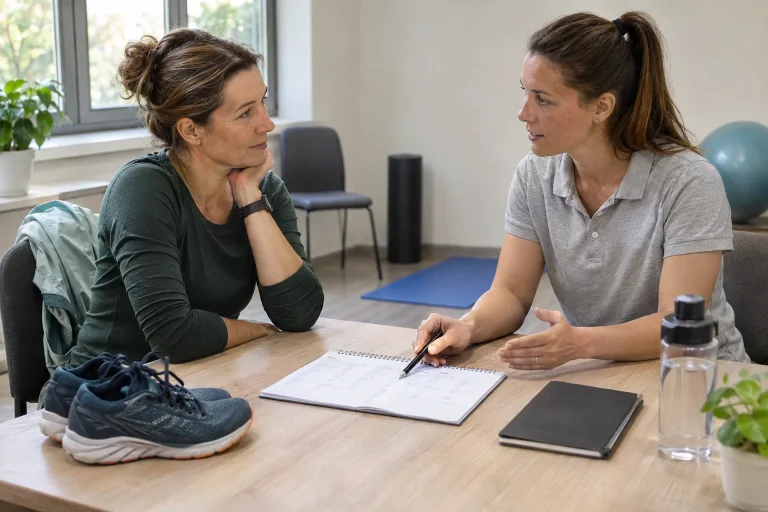
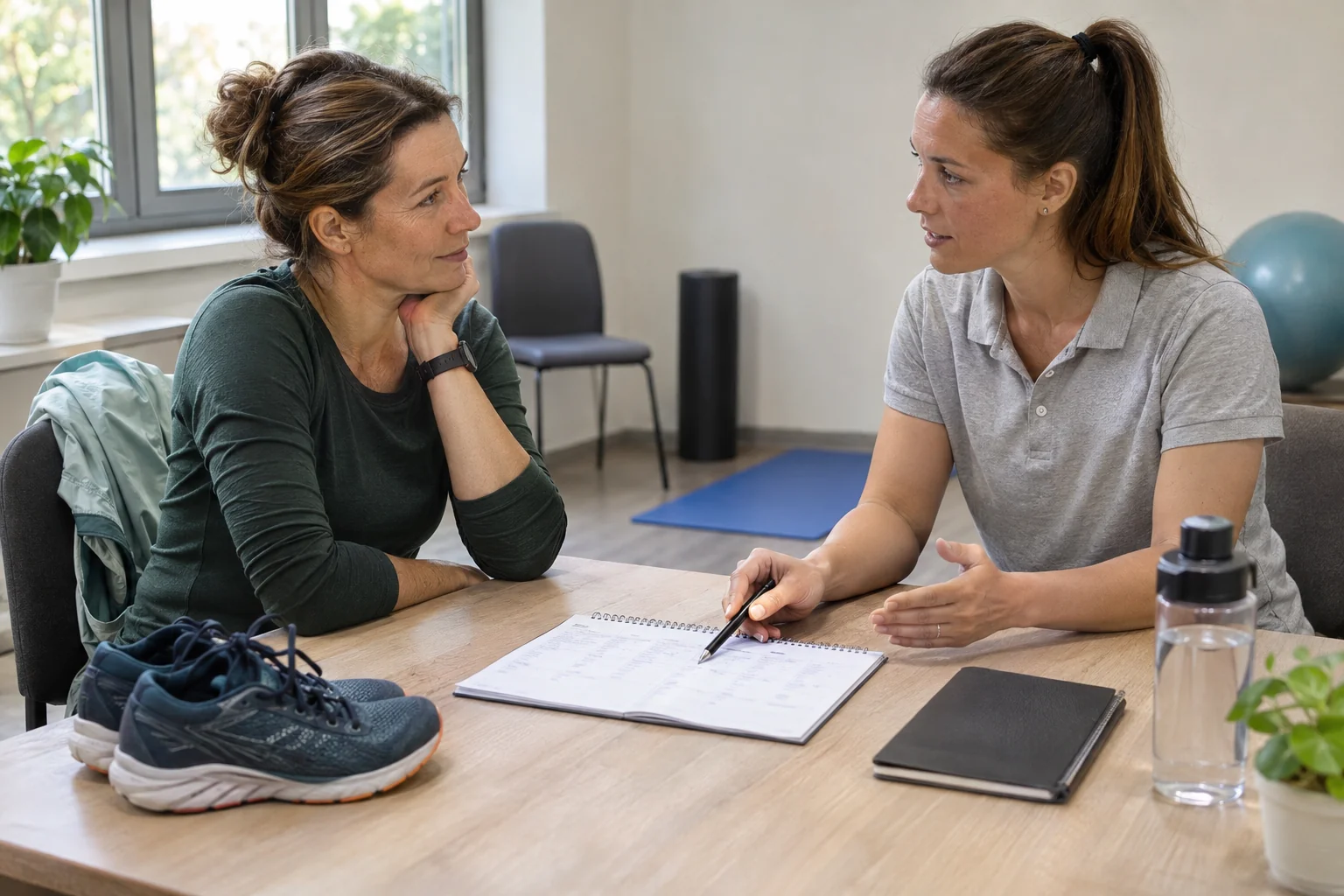
The NICE shared-decision-making guidance supports aligning individual goals with clearly discussed options. Bring an everyday example: which journey, task or outing matters, and what currently makes it difficult? Naming a goal is not a treatment plan, but offers a better starting point than generally wanting to be fitter.
New deterioration in daily function or symptoms needs separate assessment. A favourable research result does not automatically justify increasing load. Equally, difficulty does not mean abandoning every possibility forever. Clarifying condition and available support may provide a next step.
At discussion’s end, understand the plan’s purpose, manageable action and feedback arrangements. Every uncertainty need not be settled at once, but the current task should be clear. If instructions conflict with everyday possibilities, report that rather than silently substituting a completely different programme.
 Enlarge image
Observe function in your own life rather than through a home entry test
The study measurement does not instruct you to cover the same distance against the clock. Defined conditions and assessment support the research procedure. At home, describe changes in everyday language: what became easier, what requires more help and where uncertainty remains. No self-organised clinical test is needed.
A running watch may preserve some sporting data without revealing the whole story. The same distance can conceal different surroundings, feelings and daily tasks. If only total kilometres remain, what actually matters to you may become invisible. A short personal note sometimes preserves change better than another graph.
Assessment timing need not follow app streaks either. A planned review and discussion prompted by a new symptom are separate occasions. Enjoy a good day without turning it into a permanent readiness conclusion. A harder day need not mean the whole programme failed.
An everyday goal organises the programme differently
Imagine a seventy-eight-year-old who wants to visit friends regularly again. They first say running training is needed because that previously meant movement to them. Reviewing the actual situation reveals travel, the walking section and getting home afterwards as separate tasks. Appropriate options are sought for these.
The goal does not shrink because it carries no race number. Through individual discussion, an activity programme and organisational assistance can connect with desired participation. This does not personally reproduce LIFE’s result. It illustrates keeping everyday life central even after reading a study.
A central LIFE lesson is that preserving older people’s mobility is a valuable, researchable goal. You need not invent running pace or compulsory distance for your own next step. Precise research results, valued activities and individually planned support together can produce a more meaningful question.
Sources
Pahor and colleagues, 2014: the main LIFE mobility outcome; NIA: aerobic, strengthening and balance activity; NICE NG197: shared decision-making; WHO: healthy ageing and functional ability. Checked: 21 November 2026. Percentage points give a simple arithmetic difference; individual examples and questions are editorial illustrations rather than new study results.
How Futószív articles are prepared: our editorial guidelines.