Using leftovers is a good kitchen solution when you know the food’s journey. An appropriately handled retained element can ease the next running day’s meal in a new combination. A dish of uncertain age on a counter or in an unlabelled box does not become suitable through a creative name. Before planning the next meal, answer two questions: can the base be used safely, and what complete meal can you make from it?
This guide offers household support for adult recreational runners, not a personal dietary plan. Adjust quantity and composition to your needs and diet. With an allergy, illness or prescribed diet, every retained and newly added ingredient must suit you. The transformations assume appropriate earlier cooking, cooling and storage. A recipe idea alone never establishes the safety of food in unknown condition.
Decide on keeping food at the first meal
Next-day use does not begin the next day. During preparation, decide what reaches the table immediately and what is appropriately separated for later. A portion removed with clean equipment and handled traceably is clearer than a large bowl left on a shared table. Separation does not automatically extend storage time, however. Food-specific cooling and use guidance still applies.
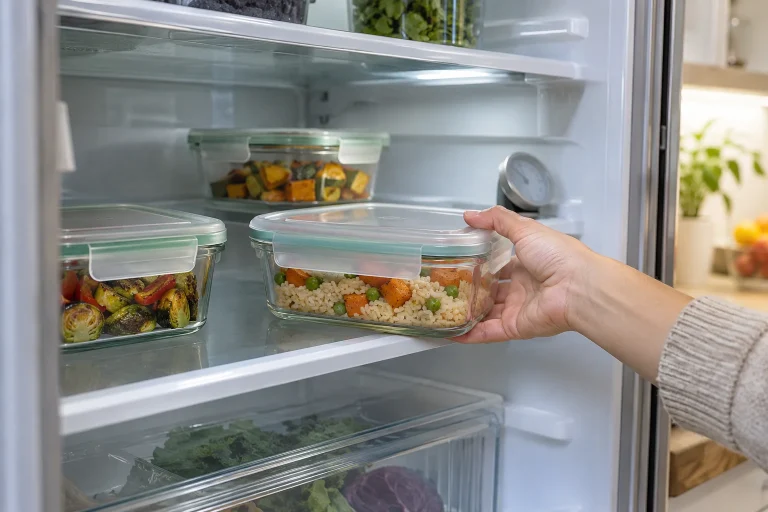
The Nébih Maradék nélkül refrigerator guide also presents smaller portions supporting rapid cooling. Foods requiring refrigeration should not stay at room temperature for more than two hours; actively plan cooling earlier. Suitable smaller containers may help instead of leaving a large pot on the counter for a long time. The limit does not mean deliberately keeping a dish waiting until then.
Label the container with at least contents and preparation time. Add important ingredients if necessary, especially in a shared household. Dinner may later be insufficient: it does not identify contents or preparation day. A legible label does not replace appropriate storage but supports decisions from actual information.
Condition check first, meal idea afterwards
Establish when the food was prepared, how it has been handled and whether required refrigeration was maintained. Without reliable answers, creative transformation does not resolve the issue. Pleasant smell or a familiar recipe name alone does not prove safety either. Do not classify uncertain food through tasting. Properly handled leftovers may be valuable, but reducing waste does not override food safety.
For packaged ingredients, instructions after opening and use-by dates may matter too. A leftover dish can receive a new element with its own handling conditions. Longer unopened shelf life does not give a new deadline to homemade food. Mixing ingredients of different ages or states does not let the newer refresh the older. Understand the whole dish’s history.
| Question | Usable answer | If no answer exists |
|---|---|---|
| What is in the container? | Known food and ingredients. | Do not build a certain allergen or dietary plan on it. |
| When was it made? | Legible date and traceable history. | Do not invent a preparation date from appearance. |
| How was it cooled and stored? | Known handling appropriate to the food. | Do not treat reheating as a general repair. |
| Has it already been reheated? | Known sequence of operations. | Do not create a repeated heating-and-cooling chain. |
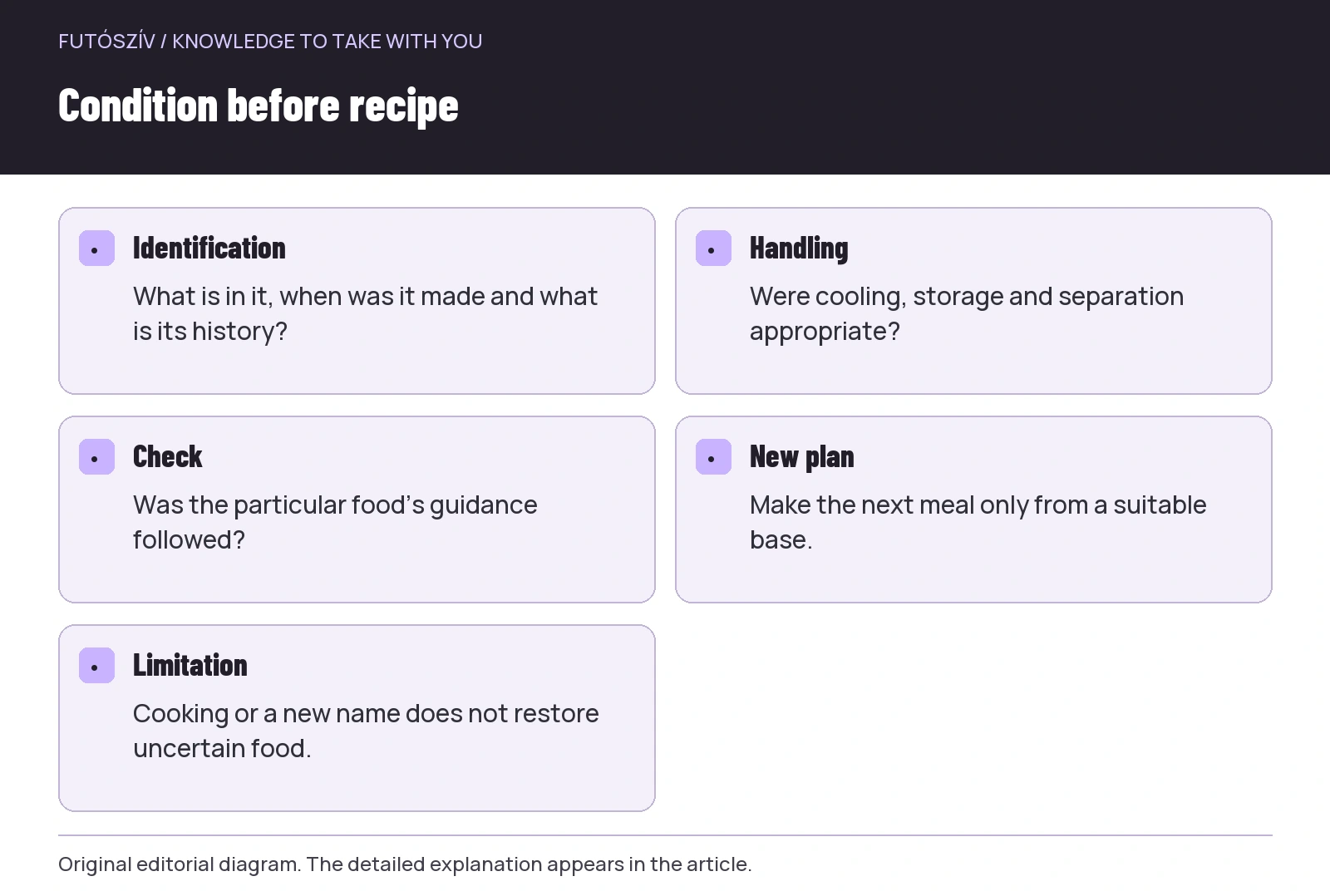 Enlarge diagram
Text version of the diagram
- Identification
- What is in it, when was it made and what is its history?
- Handling
- Were cooling, storage and separation appropriate?
- Check
- Was the particular food’s guidance followed?
- New plan
- Make the next meal only from a suitable base.
- Limitation
- Cooking or a new name does not restore uncertain food.
General advice and food-specific rules matter together
The Food Standards Agency home food fact checker discusses rice separately. It describes rapid cooling, ideally refrigeration within one hour, refrigerated use within twenty-four hours and no more than one reheating. Later heating does not automatically restore safety to improperly stored rice. Treat this as that authority’s practical rice guidance, not a universal rule for every food.
Other foods may need separate considerations too. For egg dishes, multicomponent meals or products with specific storage requirements, do not apply timings read for another ingredient. Follow appropriate guidance for your own leftovers. If later use is uncertain, plan accordingly during original preparation where safe for that food and storage method.
First transformation: another serving format for a suitable vegetable base
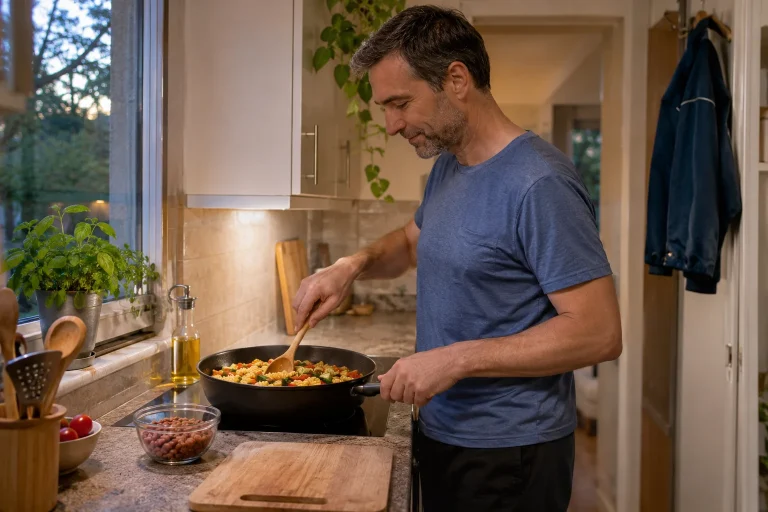
An appropriately prepared and retained vegetable element can join another dish next time. Add a freshly prepared side and appropriate main component, or use it in a familiar recipe. First clarify base condition and plan the whole next preparation sequence. Earlier food may already contain seasoning, sauce or other ingredients, so do not treat it as raw neutral vegetables.
Sauced and drier vegetables fit a new dish differently. Pouring every leftover into one pan makes texture and composition hard to control. Add a few suitable fresh elements to a well-chosen base instead. Creativity here means deliberately shaping serving and flavour, not maximising container numbers. Adapt the complete meal’s quantity to your needs.
For example, consider an appropriately handled vegetable sauce with known composition. Make suitable fresh pasta for the next meal and reheat the sauce once as required. This is not a general recipe for all leftovers. Sauce age, earlier storage and ingredients still limit use. Freshly cooked pasta does not restart its storage period.
Second transformation: a suitable thick dish as a separate topping
An appropriately handled thick dish of known composition can accompany another base at the next meal. A newly prepared suitable accompaniment replaces the previous side for different serving. The main dish remains the previously cooked element; its history does not disappear. Decide keeping time from actual preparation and storage, not its new name.
Take out only the portion needed for reheating and keep the rest handled as instructed. Previously separated portions make work more traceable than repeatedly heating the whole container and returning it. Portioning here concerns handling and practical use, not prescribed weight-loss quantities. The full plated meal must still fit your needs.
In shared households, explain that a portion comes from previously cooked food and which operations it underwent. Others may use the container, so information should exist beyond memory. A simple label helps prevent someone cooling it again and planning a third use after it has already been reheated once. Kitchen handover belongs to the system just as cooking does.
Third transformation: using bread with a new texture
Bread in appropriate condition can become fresh toast or another accompaniment following a specific recipe. This simple texture change is different from rescuing spoiled bread. Do not try making mouldy or otherwise unsuitable food generally safe through baking, seasoning or removing visible sections. Begin with suitable ingredients.
Choose freshly prepared or appropriately handled familiar toppings for toast. Bread alone does not establish the whole dinner’s suitability. Consider accompaniments and appropriate quantity. New texture offers variety without requiring a special recipe for every meal. A simple dish with a familiar topping and suitable accompaniments can be deliberately planned too.
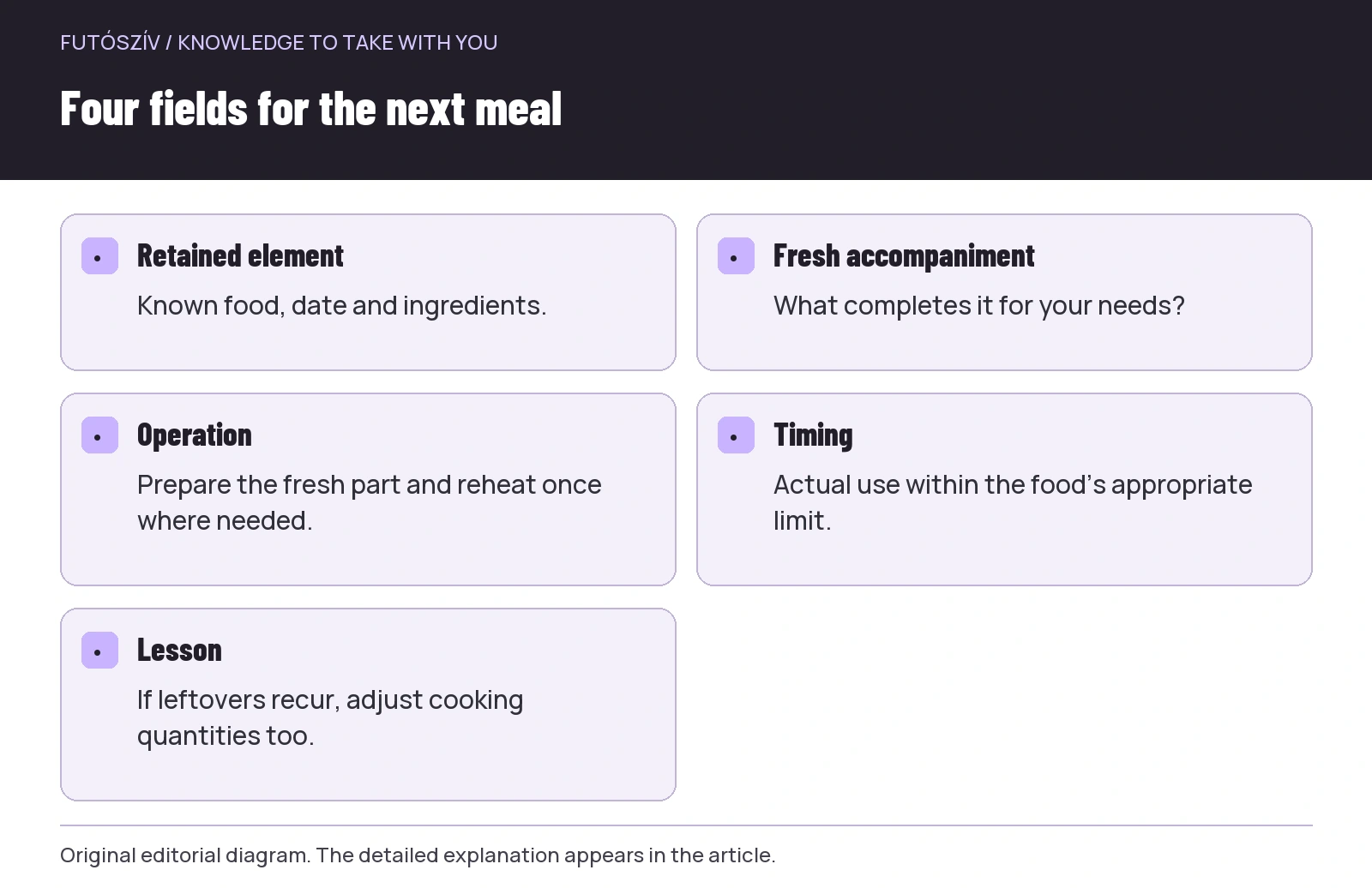 Enlarge diagram
Text version of the diagram
- Retained element
- Known food, date and ingredients.
- Fresh accompaniment
- What completes it for your needs?
- Operation
- Prepare the fresh part and reheat once where needed.
- Timing
- Actual use within the food’s appropriate limit.
- Lesson
- If leftovers recur, adjust cooking quantities too.
Reheating is a separate operation
The Food Standards Agency cooking guidance describes reheating leftovers no more than once and making the whole dish thoroughly hot. With microwaves, attend particularly to uneven heating, stirring or turning and appliance instructions. Warmth at the surface does not ensure adequate heating at the centre. Follow the procedure for your appliance and food.
Do not plan a new meal whose long sequence only slightly warms the previously cooked part at the end. Appropriate cooking of fresh ingredients and required reheating of old food are two conditions. A combined recipe must ensure both. Quickly mixing them may not do so. Separately handling them properly and pairing on the plate may be simpler.
Make the next step visible in the fridge
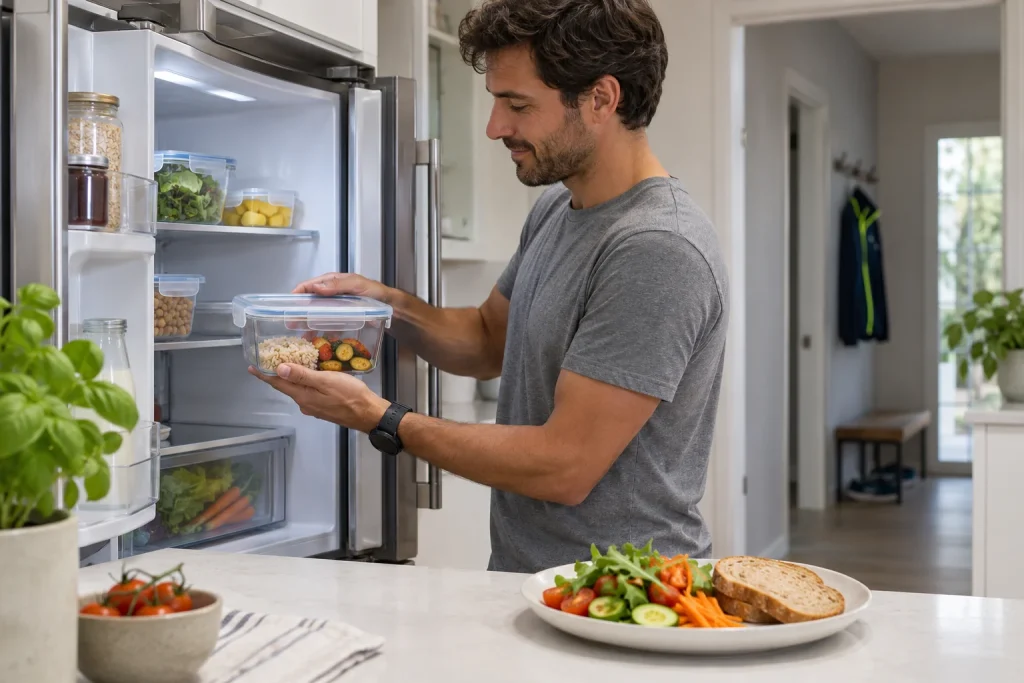
The Maradék nélkül programme’s practical advice recommends reviewing fridge and freezer contents and naming and dating food placed in the freezer. Make intended near-future use easy to see. A designated area is only organisational support, however. Required temperature, separation and food-specific use limits still apply.
Do not fill the fridge with promises that something will eventually be made from everything. Containers tied to a specific next meal help more. Add which fresh accompaniment is needed, the preparation operation and when eating will genuinely happen. Without a realistic occasion, change original cooking quantity or a safe preservation method appropriate to the food.
Solutions for three recurring situations
If too much side dish always remains, first adjust next cooking quantity to actual use. If sauce or a thick dish remains, choose a fresh accompaniment and appropriate use time beforehand. If uncertain-age containers regularly appear, address labels and household handover first. These situations require different changes; a new leftover recipe cannot solve all three.
The aim is not preventing food entering waste under every circumstance. It is creating fewer uncertain leftovers and turning properly retained elements into enjoyable meals. Traceable history, appropriate cooling and simple transformation together make the system usable. The next running day then has a known safely achievable meal plan rather than an unresolved box at the back of the fridge.
Sources and further reading
- Nébih Maradék nélkül: Refrigerator guide
- Food Standards Agency: Home food fact checker
- Food Standards Agency: Cooking your food
- Nébih Maradék nélkül: Here is what you can do
How Futószív articles are prepared: our editorial guidelines.