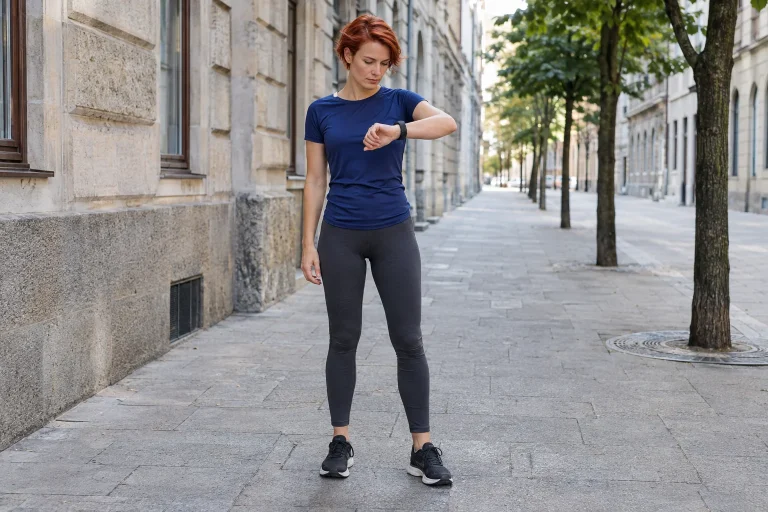
You go for a run after work, shower and open your language textbook. It would be good to know that movement has helped your learning as well as making the day more pleasant. Human experiments have found improvements in certain memory outcomes after exercise. The useful question is how this relates to the task in front of you: twenty new words, a professional examination or understanding a complex concept.
The relationship between running and learning translates best into everyday life when we retain the specifics. What did participants learn, when did they exercise, and how was their knowledge checked later? A vocabulary experiment can teach us much about memory research. In your own schedule, however, there must be room for exercise, the transition afterwards and the work of studying itself. A laboratory finding is an interesting point of reference, rather than a ready-made exam formula.
What did the frequently cited running and vocabulary experiment show?
In 2007, Winter and colleagues compared intense running, more moderate running and resting sessions in twenty-seven healthy participants. The conditions followed in a random order, so the same people took part in several situations. The researchers examined acquisition of new vocabulary and its subsequent retention. Vocabulary learning was faster after the intense condition; the study reports a twenty per cent difference in that particular comparison. The original human study produced this interesting finding, but the percentage applies to its own task and sample.
The researchers also measured peripheral BDNF and catecholamines. Some biological values varied alongside learning outcomes. This offers a starting point for investigating possible mechanisms; it does not mean a blood value can reveal your next exam grade. Vocabulary-learning speed, subsequent recall and a molecular signal remain three separate measurements. What makes the paper particularly interesting is that these could be studied together in a controlled design.
Do not therefore immediately turn twenty per cent into twenty per cent less study time. Your own material, prior knowledge and assessment differ from the experimental task. The finding is not a discount voucher for studying. It shows that, in a precisely defined exercise situation, a particular acquisition measure was more favourable. Planning your own schedule requires more information, especially if it would involve introducing exercise that is new or demanding for you.
Vocabulary learning is only one question about memory
Assigning meaning to a new word is a different task from recalling the location of an object seen earlier or explaining a theory. In 2018, Suwabe and colleagues examined discrimination between similar memories after a short bout of very light cycling. In young, healthy adults, they found better outcomes in certain comparisons under the exercise condition. This original study used neither sprinting, running nor a language examination. It clearly illustrates why naming the exercise and the task precisely matters.
It is useful to divide knowledge into separate questions when preparing for exams too. Do you recognise the right answer when you see the options? Can you retrieve it without help? Can you apply it to a new example? These are different requirements. If you monitor only how familiar the text feels, you may not be checking what the assessment will demand. This is a study-planning consideration, rather than a test intended to detect exercise effects on the brain.
Consider a fictional example of an adult language learner. After running, they find it easier to sit down at the desk and feel pleased to have revised a lesson. Two separate questions remain: did they manage to start studying, and can they recall the words later? The first may be an important success in organising the day; the second requires an actual check. The two can be connected without automatically inferring one from the other.
 Enlarge image
Where exercise fits into the sequence
Exercise can be studied at times other than before learning. In 2016, Van Dongen and colleagues first had participants learn picture–location pairs, then compared three groups: immediate exercise, exercise four hours later and no exercise. They checked memory forty-eight hours later. In that particular design, the delayed-exercise group retained the associations better. The research therefore also raises questions about the timing of memory consolidation.
This still does not establish a four-hour rule for every learner. The experiment used a particular task, exercise protocol and assessment time; it did not test the full range of other intervals with every kind of learning material. The important idea is that learning can be investigated as a process with several stages. Acquisition, the intervening period and subsequent recall occupy distinct places in the sequence. The result gives us reason to ask more precise questions, rather than treat a single time as universal.
In your own diary, first identify the real constraints. When can you study without interruption, when does your familiar exercise fit, and what happens between them? If you need to travel home after running, prepare food and change clothes, those activities are part of your day too. The minutes after exercise in the study do not mean the same thing as your entire evening slot. Plan from the time actually available for studying, including travel and the transition.
| Question | Research example | Application to your own studying |
|---|---|---|
| What happens after exercise? | Speed of acquiring new vocabulary | Do not confuse a faster start with complete knowledge |
| When does exercise take place? | An immediate or delayed condition after learning | Consider the whole day’s sequence, rather than a single number of hours |
| When is knowledge assessed? | Later recall at a specified time | Check later knowledge separately from immediate familiarity |
| What needs to be known? | Distinguishing a word, a location or a similar image | Match practice to the actual assessment |
Good timing does not replace the work of learning
In 2011, Karpicke and Blunt examined retrieval practice and concept mapping when learning science texts. In their particular design, the retrieval condition led to better subsequent outcomes, including on questions requiring comprehension and inference. The original research was not an exercise study. It highlights that the activity undertaken during learning can itself be researched, and that every difference need not be attributed to the run beforehand.
The practical idea is simple: after reading the material, try answering a relevant question in your own words, then check your answer against the material. We suggest this to see what you can recall, rather than to measure the effect of running. A concept map can serve other purposes, such as organising relationships. A comparison in one study does not mean there is only one usable method for every kind of material. The aim is to get feedback on the specific requirement.
For example, after a professional-study chapter, do not simply tick off having read it. You can also ask whether you can name its three basic concepts, explain how they differ and give your own example of each. These are illustrative study questions, rather than validated ability scales. They help distinguish the activity completed from information about what you know. In this way, a pleasant post-run burst of motivation can turn into a genuine learning task, without a promise of performance.
Sleep is also part of what happens after learning
In 2006, Gais and colleagues compared sleep and wakefulness after learning in human experiments examining vocabulary recall. Their findings demonstrated the importance of sleep for retaining those particular memories. The original paper was not about running, so it does not provide a ready answer comparing running and sleep. It does, however, make clear why the period after learning should not be treated as an empty background.
A later original study, published in 2021, separated overnight sleep from daytime wakefulness when learning more realistic factual knowledge. The researchers found less forgetting after sleep during the first retention interval, but no advantage in the ability to relearn. One week later, the difference in the primary measure was no longer significant. This research again shows that acquisition, retention and relearning are different endpoints.
When planning your own evening, the sensible question to retain is whether everything has a realistic place. If an exercise plan fits only by repeatedly pushing study and bedtime later, reconsider the sequence as a whole. You do not need to build the day around a single biological mechanism. Manageable movement, a meaningful learning task and time left for sleep together form the everyday framework.
How can you observe your own routine without turning it into a self-experiment competition?
One everyday option is to leave a predictable study block alongside an already familiar exercise session that suits you. Decide beforehand which material you will use and what visible result will mark the work as completed. This might be your own summary of a short chapter or solutions to a few practice tasks. This is organising your schedule. It does not require adding sprints, making training harder or copying the original study’s exercise demands.
If you make notes, record what you actually observed. Did you have enough time to sit down, did you complete the task, and what remained at the next session? Do not retrospectively invent adrenaline or BDNF to explain it. A good day does not reveal which mechanism operated, and a harder day does not establish that exercise was ineffective. Information about your routine is useful when you do not make it appear more scientific than what you actually recorded.
Comparability also means recognising that different material can differ in difficulty. The outcome of a task on a familiar topic and that of a completely new chapter should not be explained simply by whether you ran. Personal notes are therefore better suited to organising questions: when can you start work, which material needs which kind of help, and where is the day overcrowded? Establishing causation in research is a more demanding task; you do not need to produce that from your diary.
 Enlarge image
What is the realistic gain for a runner preparing for an exam?
Exercise and memory research gives us good reason to be curious. It shows that learning can be studied in relation to other events in the day, as well as through time spent at a desk. It also teaches us to name more precisely what we want to know. In exam preparation, the useful goal is to coordinate the learning task, schedule and feedback, rather than hit a presumed hormonal peak.
If you enjoy running, you can make room for that valuable activity alongside studying without expecting an intellectual record every time. Preserve the precision of the research findings: they appeared in particular people, with particular exercise and in a particular task. In your own day, be clear about what you have done, what you already know and what still needs practice. That is a relationship between running and learning you can actually use in everyday life.
Sources
- Winter and colleagues, 2007: High impact running improves learning
- Suwabe and colleagues, 2018: acute mild exercise and mnemonic discrimination
- Van Dongen and colleagues, 2016: timing of exercise after learning
- Karpicke and Blunt, 2011: retrieval practice when learning science texts
- Gais and colleagues, 2006: sleep and vocabulary recall
- Sleep after learning aids the consolidation of factual knowledge, but not relearning, 2021
How Futószív articles are prepared: our editorial guidelines.