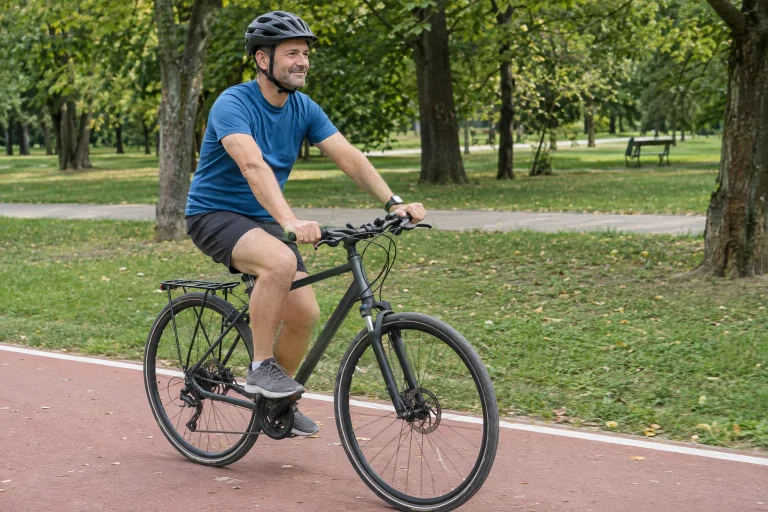
After hip replacement, movement can become enjoyable again: reaching a shop independently, walking more comfortably with family or joining a shared programme. A former runner may still have a separate question about whether running can return. Saying regular movement is generally useful does not answer it. Higher-impact sport with a prosthesis requires its own consideration.
Guidance from the treating surgeon and rehabilitation team takes priority over another athlete’s number of postoperative months. This article explores how to make activity discussions more precise, what to know about your surgical history and how movement can remain meaningful even when running is not an appropriate choice.
Daily walking and running are different return goals
Leaving hospital, everyday independence and undertaking a sporting load can have different conditions. Safely completing an agreed daily task does not automatically establish repeated running steps as appropriate. Enjoying improvement is valid, but approach the next activity as a separate question. ‘I can walk now’ is an important achievement, not a standalone running-readiness assessment.
The AAOS postoperative information emphasises individual instructions and generally favours lower-impact sports over higher-impact activities. It includes jogging in the latter group. ‘You can return to sport’ may therefore be misleading without specifying the activity and circumstances being discussed. AAOS: activities after total hip replacement.
Describe your goal in the language of your life. Do you imagine a short jog on a level track, want regular long runs or actually miss friends and outdoor time? These are different requests. The surgeon can respond meaningfully with the actual plan in view, while the rehabilitation professional can connect everyday and sporting goals.
Why do the prosthesis and surgical history matter?
Discussing hip replacement involves more than current pain. Operation type, implant, surgical circumstances and recovery so far are information the treating team knows or can retrieve from records. You do not need to become a technical expert. Your discharge summary and follow-up findings nevertheless provide a better basis than an online description of someone else’s implant.
AAHKS, the American Association of Hip and Knee Surgeons, recommends avoiding high-impact sport. It names running as an example placing considerable demands on the implant and discusses wear and later loosening. Do not translate this into every step being harmful, but do not assume feeling well removes every longer-term consideration either. The AAHKS guide to returning to sport emphasises discussing goals with the surgeon.
‘I have a modern prosthesis’ does not itself answer your sporting options. Device name, advertising claims and an acquaintance’s experience are different information. Ask your surgeon which surgical and personal factors matter in your case and what they mean for planned activity. Do not use online implant comparisons to override individual restrictions.
 Enlarge image
Elapsed calendar time is not the sole permission criterion
Online accounts readily report who began a sport after how many weeks or months. They often omit surgical details, previous experience and treating-team advice. You cannot simply add another person’s deadline to your surgery date. Time passing belongs to the history but does not itself select an appropriate sport.
Clarify which recovery phase your instructions address. Advice during early wound healing, advice at a later check and a long-term sport restriction are different documents. Do not regard every old instruction as permanent, but do not independently discard it. Clarify changes with your own team, especially when receiving care in several places.
A useful question is: ‘Which advice should I follow now, and when will we review it?’ This asks for the current decision framework rather than a general date. If running is not recommended longer term, discuss that clearly too. An understandable explanation helps form real, manageable activity plans instead of an uncertain ‘perhaps someday’.
A lower-impact alternative can be a goal in its own right
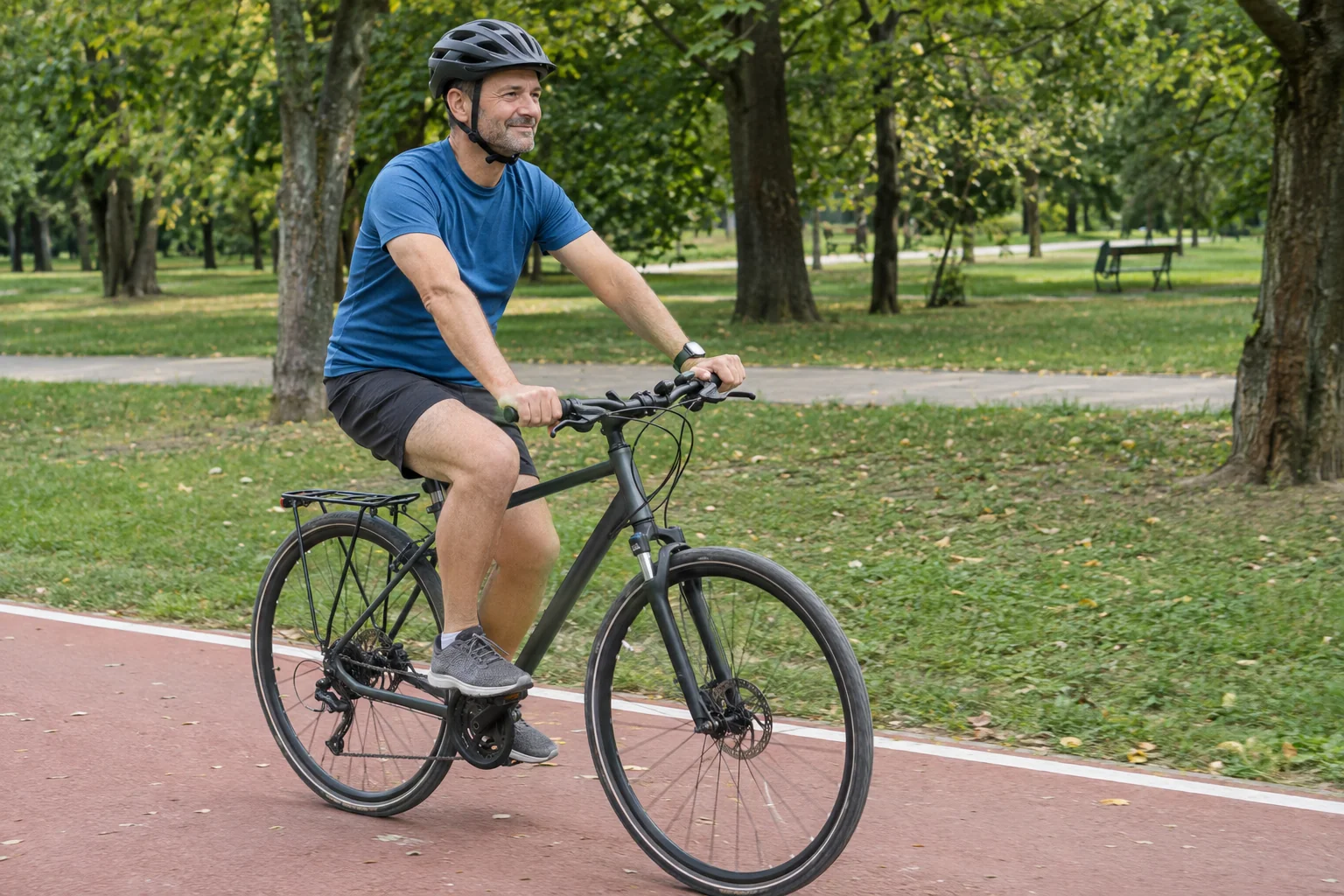
Cycling, swimming or another lower-impact activity need not be merely a temporary replacement for running. The AAOS mentions such options but links starting conditions to postoperative status. Wound healing matters for water-based activity, for example. This does not mean you should independently begin any listed sport on your first comfortable day.
Describe practical activity details too. A stationary bike and cycling in traffic involve different organisational and environmental demands. A pool programme includes travel, changing and reaching the water. Review the whole situation rather than only the activity name: what is available, what do you know and which help or adjustments may be needed?
Enjoyment can guide the choice too. If running’s quiet outdoor mornings mattered, an individually approved outdoor programme may suit better than an entirely new competitive sport. If you miss company, seek an appropriate shared occasion that can be adapted. An alternative’s value is not measured by how exactly it imitates running kilometres.
Do not turn general activity guidance into a postoperative training plan
The CDC emphasises physical activity’s value for adults with chronic conditions or disabilities too, recommending professional discussion of individually appropriate types and amounts. This is a public-health framework, not a personal protocol after recent surgery. A weekly recommendation cannot calculate how many running minutes suit you now. CDC: activity with chronic conditions and disabilities.
Daily walking, individually prescribed rehabilitation exercises and a later recreational programme can serve different purposes. Ask what each does within your plan. You can then avoid independently replacing exercises with a longer walk or adding load beside recommended walking just to improve watch numbers. Understand the plan’s purpose rather than simply executing it.
More movement is not automatically better at a particular recovery stage. Equally, a running restriction is not a general instruction to remain motionless. Between those extremes, request specific answers about activities you can do, those needing help and those to avoid for now. An individual plan must connect to your current condition.
Describe uncertain situations alongside goals at follow-up
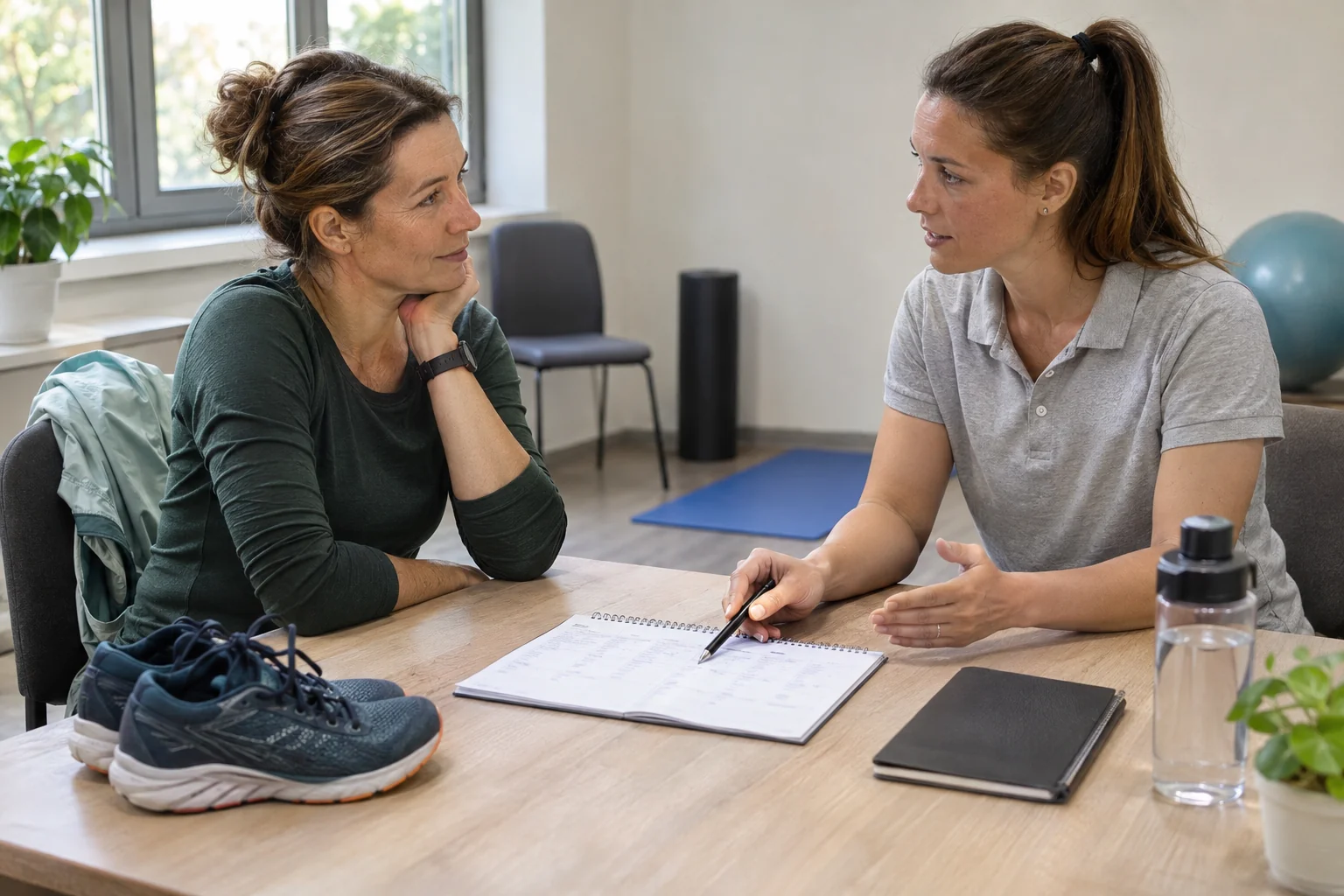
Bring two or three real examples alongside ‘I want to do sport’. Do you want to walk with family on an outing, rejoin a regular cycling meeting or attend the running club’s weekend programme? Specific situations help identify which part has an answer, which needs further assessment and which wish may need another solution.
Alongside surgical documents, a short list of current activities and experiences may help. You do not need maximum walking distances or workout trials to gather data. Describe what actually happened within your instructions. If something was uncomfortable, note the situation and sequence; if help makes it possible, describe the kind of help too.
Bring questions about medicines, wound care, aids and movement restrictions separately as well. Do not independently adapt these to a sporting programme. Planning running is no reason to abandon a prescribed aid or alter medication. Ask your own provider to explain anything unclear in the discharge summary.
 Enlarge image
New symptoms move the sporting question down the list
The AAOS postoperative information lists fever, increasing wound redness or drainage and increasing pain among warning signs. New or substantial leg swelling or lower-leg symptoms also require prompt medical contact. Do not treat these as simple training reactions. Follow your surgical team’s instructions for seeking help.
Sudden breathlessness or chest pain may be an emergency; in Hungary, call 112. You do not first need to decide whether it genuinely relates to surgery. Report the symptom, onset and operation when new problems occur. This is not a complete complication list, so keep warnings in your own discharge summary and provider instructions available too.
A follow-up date is not a boundary until which every change must wait. Seek guidance earlier if a significant new symptom develops. The aim is not to assume a definite complication from every unusual feeling, but to inform the right person at the right time. A sporting success story cannot be used to dismiss new symptoms.
How can you obtain a useful answer about running?
The questions below do not replace permission to run. They help ensure you understand what the advice concerns and the next step by the consultation’s end. Repeat answers in your own words, especially if surgeon and rehabilitation professional discussed different components.
| Question | Why does it help? |
|---|---|
| Which activities are recommended for me, and why? | It connects a general sport category to your own surgical situation. |
| Have we considered running separately, or only daily activity? | It avoids overinterpreting general advice. |
| Is the restriction temporary or longer term? | It clarifies what to ask about again and when. |
| Which accessible alternative fits my goal? | Continuing movement can become a specific, manageable plan. |
| Who follows change, and which symptoms should prompt earlier contact? | Follow-up becomes more than an uncertain appointment date. |
If you want another medical opinion, seek consultation with full surgical records and your actual goal. Its value is not whether it permits the desired sport, but whether you receive an individual, reasoned assessment. Searching online for a more favourable answer cannot replace knowledge of your own condition.
Running identity can remain part of life even if activity changes. You can participate in the community, discuss movement’s enjoyment and set goals fitting your situation. Sport with a prosthesis is not a willpower test. Choosing appropriate movement can form part of a sustainable, independent and enjoyable life.
Sources
- AAOS: Activities After Total Hip Replacement
- CDC: Chronic Conditions & Disabilities Activity
- AAHKS: Resuming Sports After Hip Replacement
How Futószív articles are prepared: our editorial guidelines.