After a high-blood-pressure diagnosis, runners often hold two thoughts together: activity is beneficial, but is my own training appropriate? These are not contradictory. Regular physical activity can be important in care while the form and intensity of running must fit individual condition, treatment and goals.
The starting point is therefore not an online heart-rate limit or one home measurement. A precise blood-pressure diary and activity framework agreed with a doctor are more useful. This article helps prepare them rather than providing personal diagnosis, medication changes or individual training clearance.
Do not diagnose from a post-run number
Interpreting resting blood pressure requires appropriate measurement conditions and further information. A value immediately after running describes a different situation from one recorded sitting quietly. Do not combine them into one average without explanation.
The 2024 ESC guideline considers confirmed blood-pressure values alongside overall cardiovascular risk. Office and home measurements may need separate interpretation too. Diagnosis and treatment targets are healthcare responsibilities.
If you see an unusual value once, record circumstances and follow agreed actions. Do not take another run to test whether you can lower it. Measurement is not a performance trial.
Keep home measurement consistent
The American Heart Association guide recommends an automatic upper-arm device, a suitable cuff and correct use. Checking device suitability and size with a healthcare professional is worthwhile too.
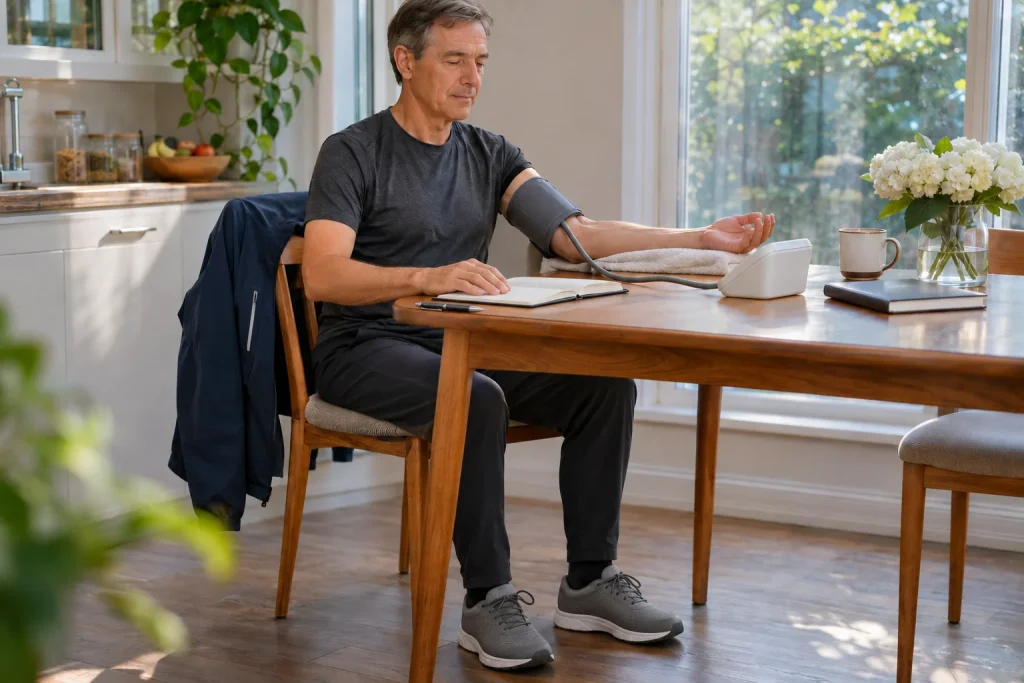
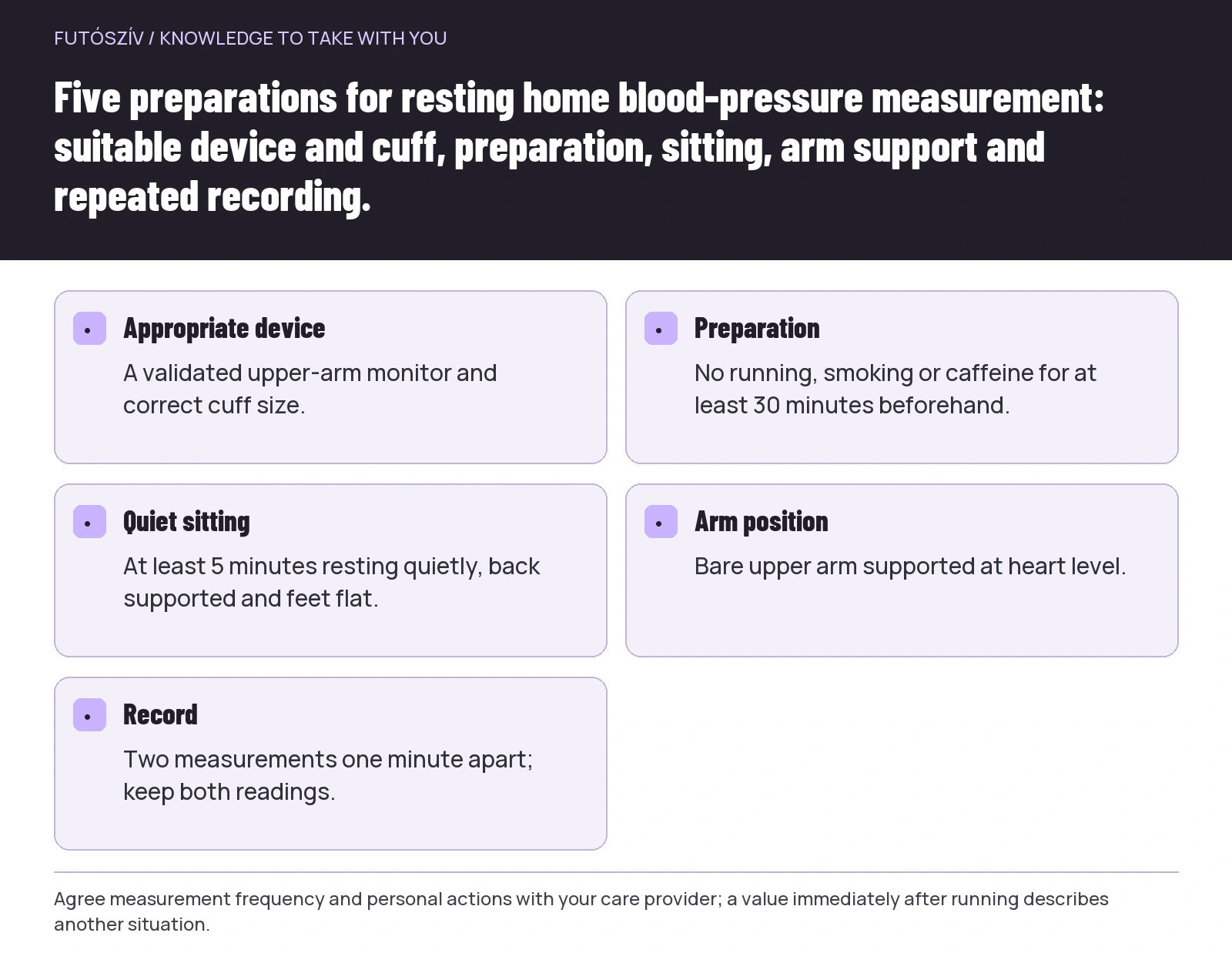
Do not run, smoke or drink caffeine during the thirty minutes before measurement. Empty your bladder, then sit quietly for at least five minutes. Support your back, keep feet flat and legs uncrossed, and support the bare upper arm with its cuff at heart level.
Do not talk or use your phone during measurement. The guide recommends recording two measurements one minute apart. Agree daily timing, frequency and observation period with your care provider so the information is useful for your situation.
Cuff and posture are not minor details
The AHA scientific statement on blood-pressure measurement discusses methodology in detail. Device, correct size and posture influence interpretability. Running fitness cannot correct a poor measurement routine.
If measuring in several places with different devices, mark this. Do not assume wrist, upper-arm and cuffless readings can all be compared alike. Ask whether the chosen device suits the purpose you intend.
Bring the device or its precise details to follow-up if use is uncertain. Demonstrating measurement makes questions easier to resolve than inferring conditions only from written numbers.
 Enlarge diagram
Text version of the illustration
- Appropriate device
- A validated upper-arm monitor and correct cuff size.
- Preparation
- No running, smoking or caffeine for at least 30 minutes beforehand.
- Quiet sitting
- At least 5 minutes resting quietly, back supported and feet flat.
- Arm position
- Bare upper arm supported at heart level.
- Record
- Two measurements one minute apart; keep both readings.
What belongs in a blood-pressure diary?
Include date, time, readings and important circumstances. Mark measurements outside the usual resting situation separately. The professional should see which data underlies evaluation.
Running details can remain in a separate diary, but connect the histories: when activity occurred, the task and any symptoms. You need not begin unlimited measurement series after every run. Give observation a defined purpose beforehand.
Do not delete unwelcome numbers or show only the lowest. Treatment and activity planning require reality. If a measurement seemed faulty, mark uncertainty rather than replace it afterwards with a more favourable value.
Regular movement matters; intensity is individual
The 2024 European and 2025 US blood-pressure guideline both give physical activity a role in care. This does not require everyone with hypertension to follow one programme or immediately perform intense intervals.
A randomised study involving eighty-eight participants with hypertension compared different aerobic training programmes. Its protocol is not an independently transferable high-intensity home prescription. Participant selection and programme conditions matter.
Your question might be: “With my current blood pressure, treatment and history, which activity is appropriate now?” Clarify easy running, intense training and racing separately. Do not infer suitability of every task from one broadly permissive sentence.
Describe your actual running plan
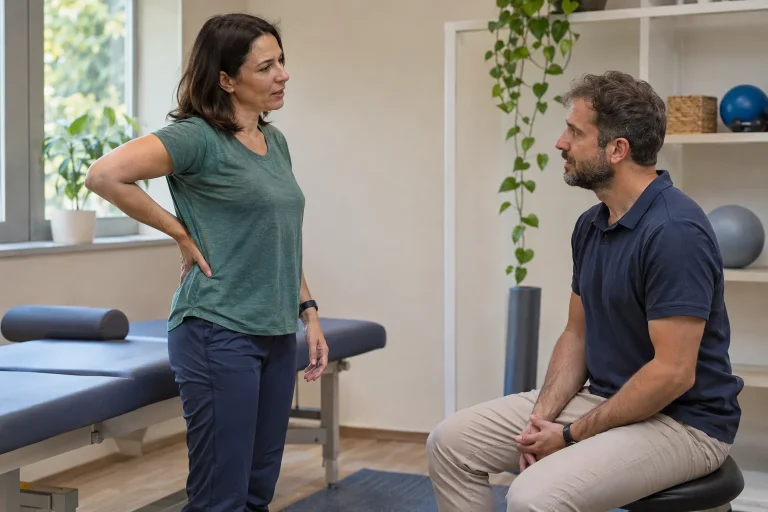
At consultation, say more than that you exercise. Describe duration, frequency, fast sessions, longer outings and other sports. Intended changes matter too: returning, race preparation or a substantial load increase.
After a long break, provide current routine alongside old results. Load decisions concern today’s situation. Previous sporting history is useful but cannot replace current condition.
Show the main training-plan structure if available. Ask what can remain and what needs changing. A concrete understandable plan supports joint decisions more than “Can I run?” alone.
Do not change medication for running’s sake
Do not independently omit, add or reschedule medication to obtain a better number or workout. Discuss treatment changes with your care provider. An apparently normal home value is not an independent reason to stop treatment.
The 2025 US guideline discusses monitoring and treatment decisions within comprehensive care. Activity connects to it rather than replacing treatment under its own rules. Report side effects or unusual exercise experiences precisely.
Ask which training feedback is most useful for you too. Treatment and individual condition can affect planning; do not insist on targets derived from previous heart-rate data without discussion. Interpret effort and symptoms within your own situation.
Do not change everything at once in a new programme
With an appropriately agreed activity framework, build from your current foundation. Do not introduce more days, longer distance, faster pace and new strength work together. Traceable changes also help interpretation.
Everyday scheduling matters too. If training displaces sleep and calm meals, review the whole life situation. Health-related planning happens beyond running minutes.
The initial aim can simply be regular manageable movement and an observation routine. Every run need not prove blood-pressure treatment or fitness is already perfect. Follow-up draws on several pieces of information.
 Enlarge diagram
Text version of the illustration
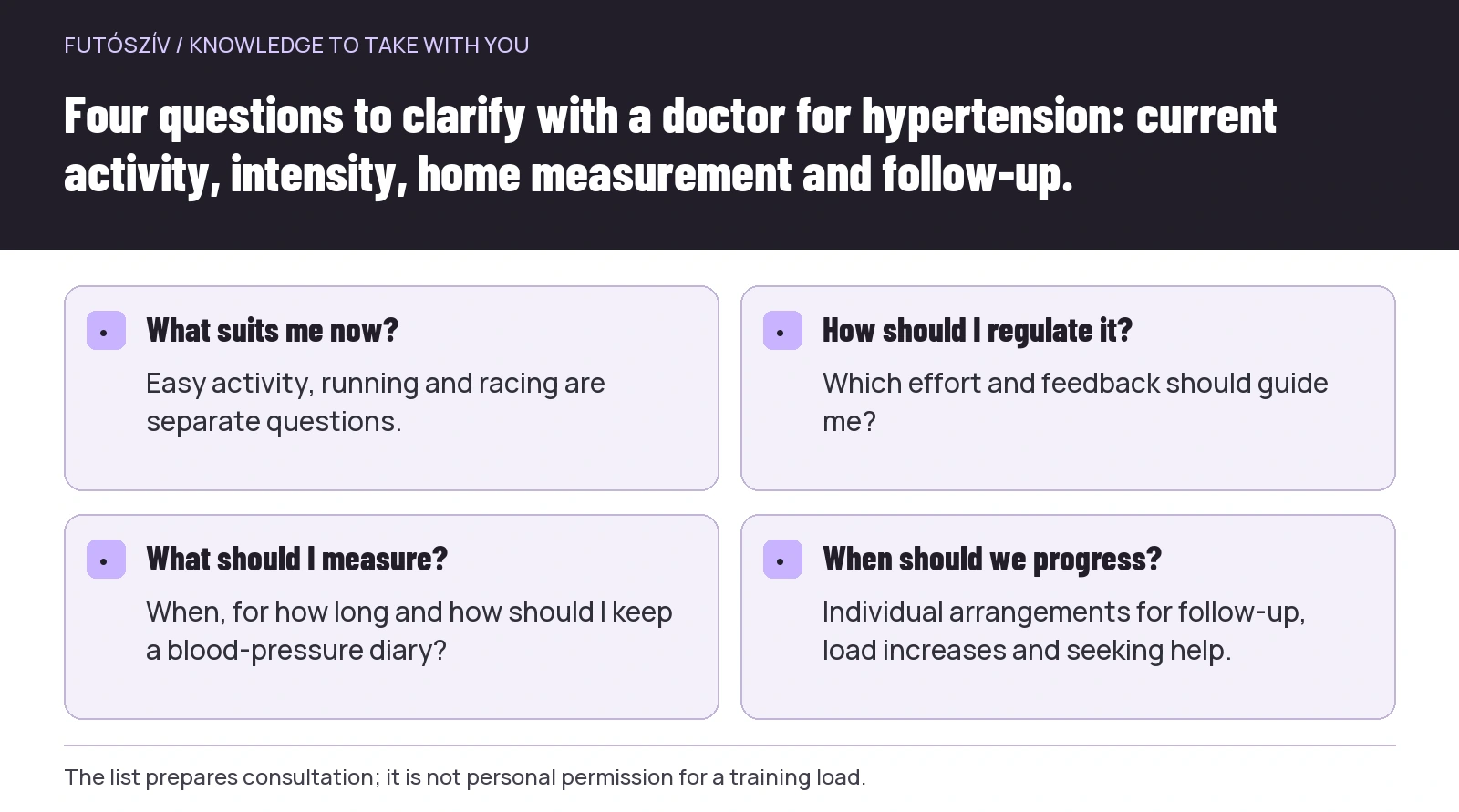
- What suits me now?
- Easy activity, running and racing are separate questions.
- How should I regulate it?
- Which effort and feedback should guide me?
- What should I measure?
- When, for how long and how should I keep a blood-pressure diary?
- When should we progress?
- Individual arrangements for follow-up, load increases and seeking help.
Include strength training in the discussion
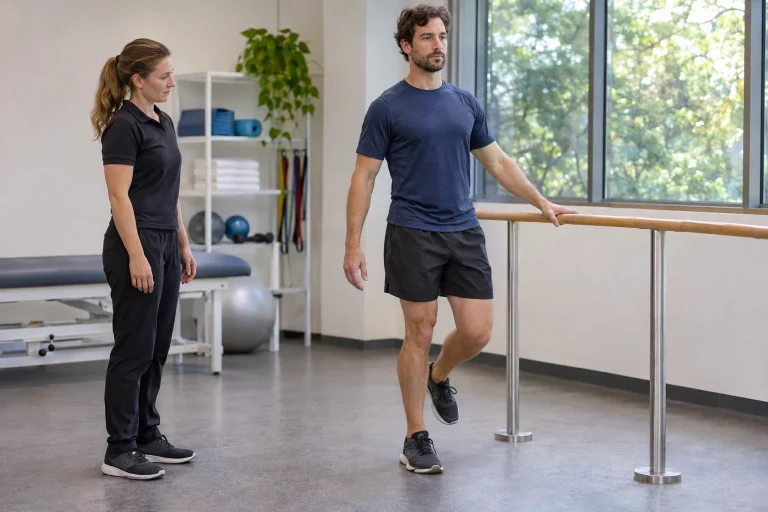
If doing gym or home strength work alongside running, describe its character too. Heavy-resistance tasks and lighter technique practice can be different situations. Do not let running kilometres alone describe load.
The 2024 ESC guideline discusses several activity forms in blood-pressure care. Specific exercises, difficulty and progression must nevertheless fit personal condition. General recommendations also cannot replace learning appropriate execution.
Request clarification if advice seems too broad. What does appropriate effort mean for you, which tasks need avoiding or adjusting, and when should you discuss again? These provide a clearer framework for a coach too.
When is this no longer a training question?
If resting systolic pressure exceeds 180 mmHg and/or diastolic exceeds 120, AHA information recommends prompt healthcare contact even without symptoms. This is not a number to investigate through a test run. Agree personal actions with your care provider beforehand too.
For severe chest pain, breathing difficulty, unconsciousness or other life-threatening symptoms, the 112 emergency number is appropriate. Do not wait for a blood-pressure reading before seeking help when seriously unwell. Assistance does not depend on successfully recording a number.
Stop exertion for new symptoms during running and seek help appropriate to the situation. Last week’s favourable review does not override today’s symptom. Clarify conditions for continuing with a healthcare professional when needed.
Before racing, review the environment separately
Longer duration, heat, travel and waiting around the start can create a new situation. With a known condition or treatment question, discuss the planned race details. Not every activity agreement implies identical conditions for an intense race.
Do not experiment on race day with new medication, supplements or fuelling through guesswork. Begin from the familiar routine and prior professional plan. If the situation changes, the goal can change too.
Know the event’s medical and help-request arrangements as well. This is simple logistical preparation worth doing beforehand. Race number and target time matter less than current condition.
Bring information and questions to follow-up
Show the blood-pressure diary kept as agreed and briefly summarise running. What happened, were there symptoms and what new goal do you want? Together the diaries can support the next decision.
Ask how changes are assessed, whether more measurement or investigation is needed and when activity can change. Request a more concrete explanation if unclear. A good follow-up ends with an understandable next step as well as another number.
Planning running with hypertension is not one sentence permitting or prohibiting it. Consistent measurement, appropriate care and individually adapted movement together provide the framework. From this you can build a routine coordinating health and running goals.
Official and primary sources
- ESC 2024: guideline for managing elevated blood pressure and hypertension.
- AHA/ACC 2025: adult high-blood-pressure guideline.
- AHA: home blood-pressure monitoring; scientific statement on blood-pressure measurement.
- Randomised study of aerobic training programmes in participants with hypertension – not an individual exercise prescription.
- Hungarian National Ambulance Service: life-threatening situations and urgent help.
How Futószív articles are prepared: our editorial guidelines.