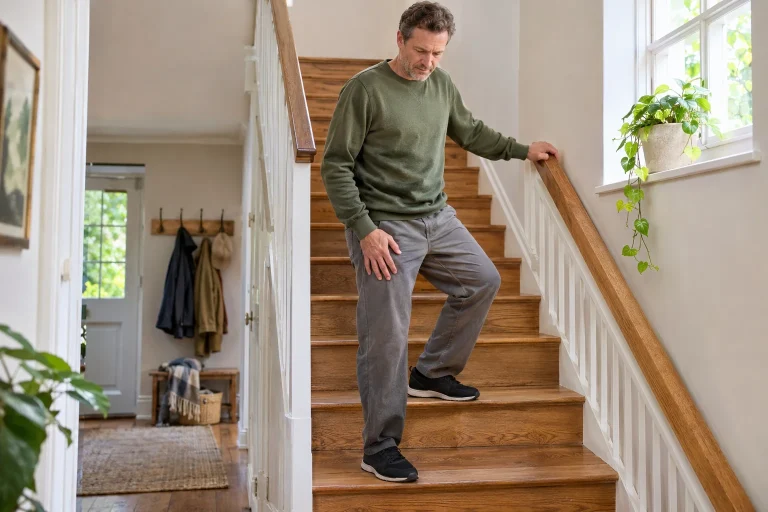
Recently, your foot has caught the ground several times, or you trip even over a familiar threshold. You may first have blamed shoes or inattention. A single trip cannot establish disease, but a new recurring change should not be dismissed as simple clumsiness. It matters particularly if lifting the front of your foot has also become harder.
This article supports recognising the change and organising appropriate help. It does not diagnose or provide a home walking-correction routine. A foot catching can have several causes; observation aims to make your own experience accurately describable while everyday mobility receives appropriate attention too.
Sudden weakness and associated symptoms take priority
Sudden weakness or numbness on one side, changes in face or speech, new confusion or another sign suggesting stroke may require immediate help. The NHS information on stroke symptoms also emphasises that symptoms resolving after a short time must not be ignored. Do not try to continue by lifting your knees higher or searching for home exercises in that situation.
Back pain accompanied by reduced sensation around the perineum or genitals, new inability to pass urine or changes in bladder or bowel control may also be urgent. The NHS information on a slipped disc specifically warns about these. You need not decide the precise cause before seeking appropriate urgent help. Continuing a run is not a test for this question.
Seek prompt healthcare assessment for sudden or worsening difficulty lifting the foot. Even if the change is more gradual, new persistent difficulty still matters. The NHS information on foot drop recommends medical advice if lifting the front of the foot and toes becomes difficult. Do not wait for a more serious fall.
What exactly does your foot catching mean?
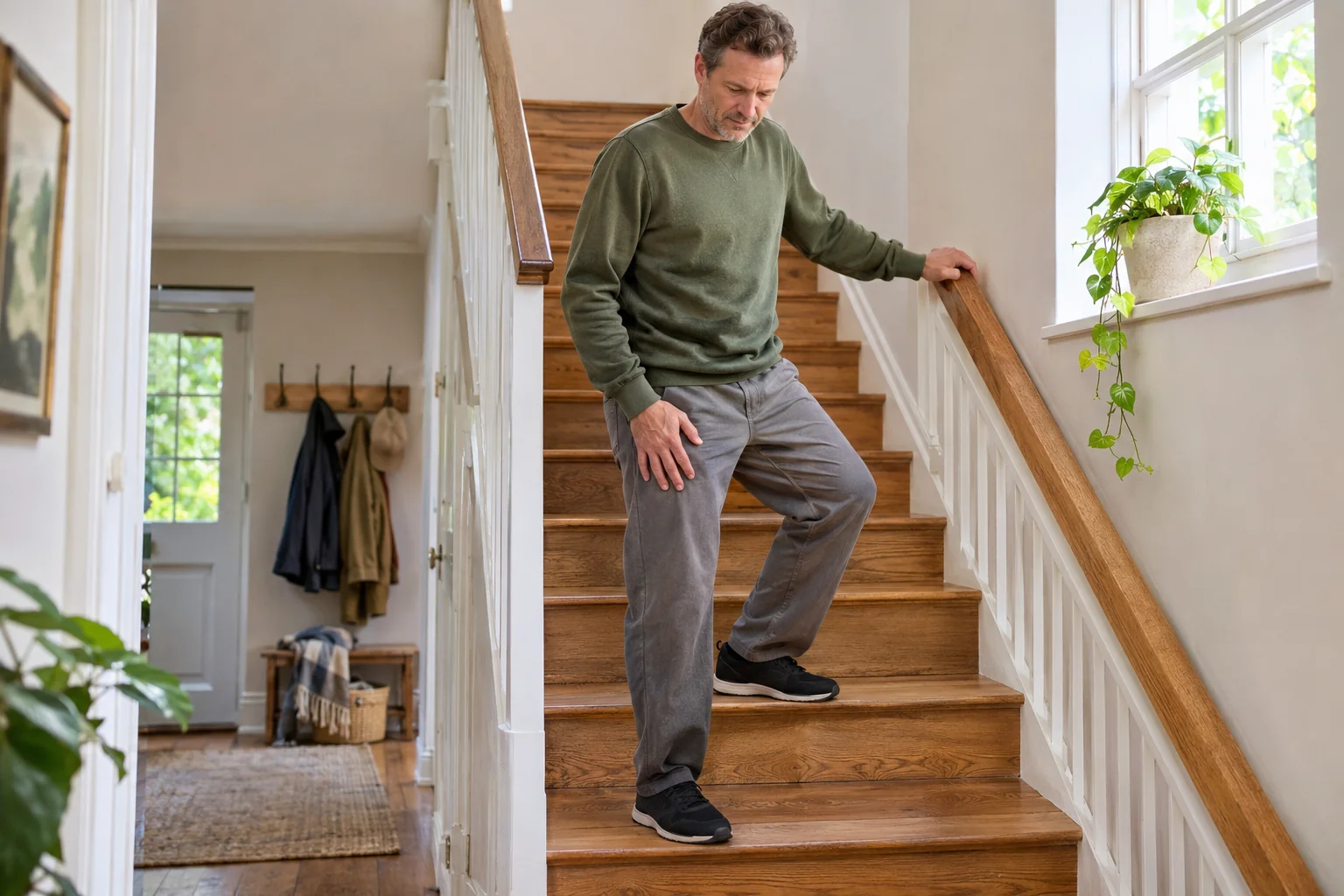
Does the shoe’s toe scrape the ground, does the foot lift differently from before, or do you trip over a particular object? These are different descriptions. Name what you actually experience rather than immediately selecting a cause. It must be a nerve or I just step badly is already a conclusion; the specific movement event is more useful information for assessment.
Whether it happens on one or both sides and where you noticed it also matter. Indoors, after a longer journey, on stairs or in a particular shoe? Circumstances may help explain the story but do not determine the cause alone. A change noticed in one situation is not necessarily only a problem with that location.
Do not turn observation into repeated dangerous trials. You need not cross the same threshold again or run faster to demonstrate when your foot catches. Describing an event in an ordinary situation can provide a sufficient starting point. Accurate description preserves information rather than recreating the trip.
 Enlarge image
The term foot drop does not mean a single disease
Foot drop describes difficulty lifting the foot and toes. The NHS discusses several possible underlying causes, including nerve, muscle or other neurological connections. The name therefore does not itself reveal the cause in your case, and ordinary tripping cannot automatically establish it either.
Professional assessment may involve examining the foot and walking, with further investigations when necessary. The aim is to clarify the actual cause rather than classify yourself using an online diagram. Similar-looking movement difficulties can have different backgrounds, so another person’s story is not an individual diagnosis either.
The likely course and form of help may also depend on the cause and timing. Neither promising certain rapid improvement nor assuming a permanent condition before assessment is appropriate. Meaningful steps remain amid uncertainty: seeking appropriate help, preserving the timeline and arranging the conditions for mobility.
Timing and associated changes offer more than self-blame
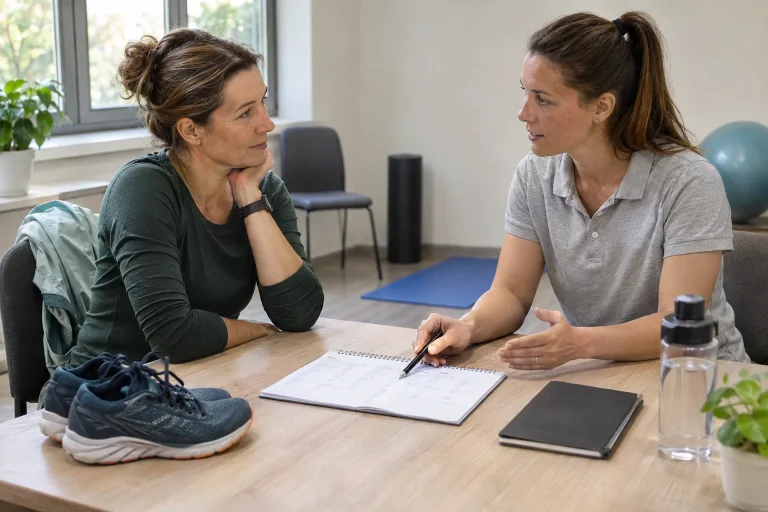
When did you first notice it? Did it become apparent around an event, injury, illness or treatment? Is there numbness, pain, other weakness or walking that differs from before? Describe these without turning them into your own diagnostic score. The details provide history for professional discussion.
If you cannot give a precise date, say so. I noticed it a few weeks ago, but do not know exactly when it began is better than a time presented as certain afterwards. Unknown details need not be filled in either. Observation need not be perfect for a change to deserve assessment.
| Detail to retain | Useful personal wording |
|---|---|
| Side and situation | In which foot and during which activity did I notice it? |
| Timeline | Is it new, worsening or recurring? |
| Associated sign | Is there altered sensation, pain or other weakness too? |
| Consequence | Did I trip, nearly fall or need help? |
The list does not replace urgent help, and you need not finish it if you are unwell. It may support recall in a less urgent discussion. Sports-watch recordings remain separate data: a good pace or completed loop does not disprove a new difficulty you noticed in foot movement.
Checking shoes can help, but is not a general solution
Footwear that fits appropriately and stays on the foot is an important environmental detail. You can check whether laces have loosened or something is in the way, but do not leave the entire issue to a purchase. Another model, thicker sole or insole ordered online does not replace assessment of new difficulty lifting the foot.
If equipment, support or a shoe accessory is recommended, understand its purpose and how it fits your situation. Appropriate selection and use may require individual attention. A solution that worked for another runner may not address the same problem. A visible walking change should not be settled with the name of one product category.
Forcing a higher knee lift or trying quicker steps is not a general first solution either. You might temporarily avoid catching in a different way, but the cause remains unknown. Professional assessment and appropriately arranged help offer a clearer direction than independently changing your movement.
Make everyday routes easier to navigate
The NICE guideline on falls in older people includes assessment of the environment and previous events alongside individual factors. Repeated catching of the foot makes it worth considering where you currently need to move. Not every important task happens on the running route; your home, entrance area and stairs also belong to the day.
A cable, loose object or poorly placed parcel in the way can be rearranged with appropriate help. Lighting and usable support may matter too. This does not prove that the physical change’s cause has gone away. Environmental improvements and healthcare assessment may both be needed, answering different questions.
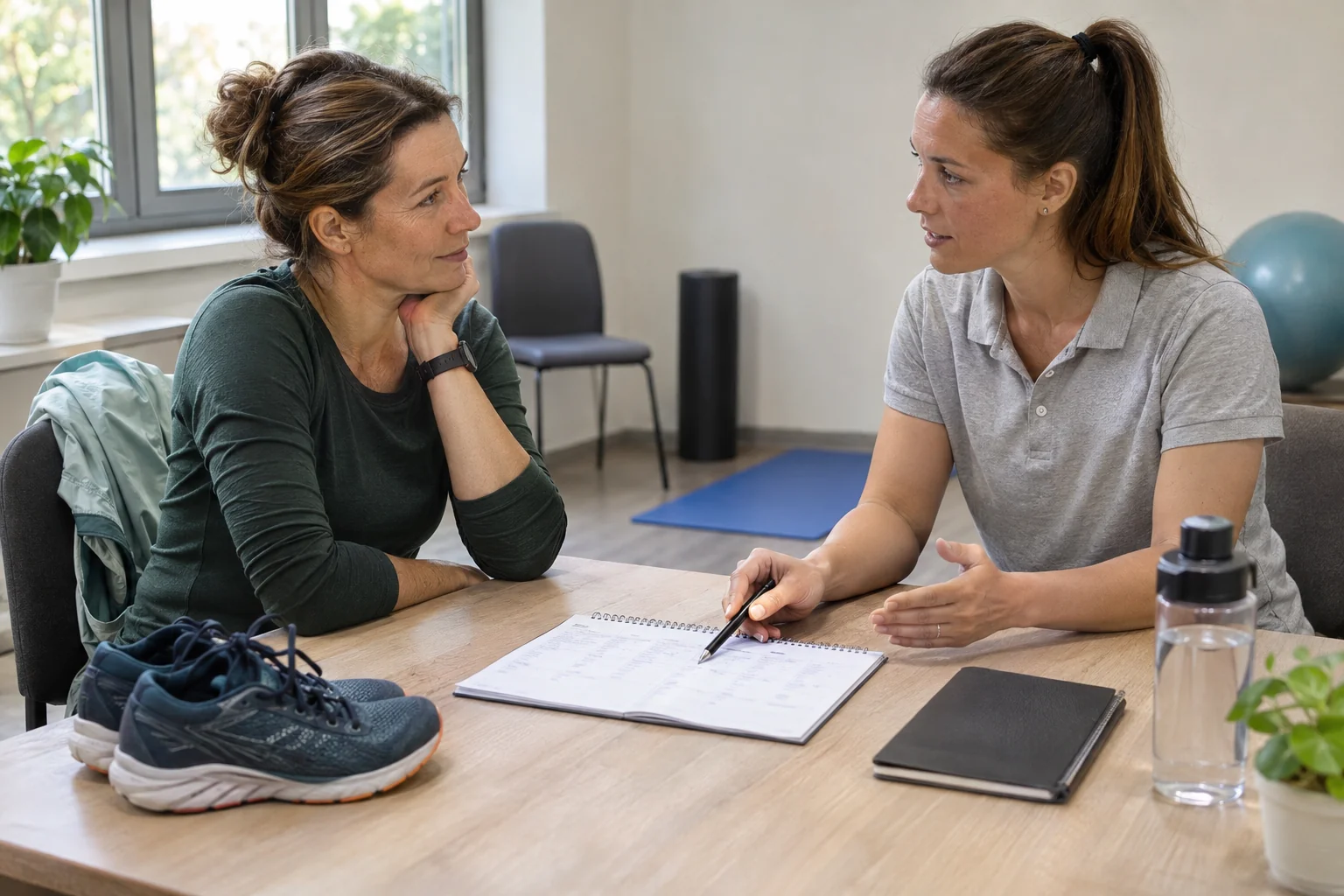
Review arrangements for setting out too. Do you need to hurry, carry many bags or visit an unfamiliar place? Request specific help for the journey or a harder task. You need not prove everyday independence by tackling every previous obstacle unchanged. Appropriate support can make an important activity accessible.
 Enlarge image
Do not let a proof-seeking loop decide the question of running
If a new walking difficulty has appeared, meaningful discussion of continuing running requires clarification of the individual situation. Reducing distance or choosing a familiar route does not necessarily resolve the main question. You need not establish whether it happens only when running if that requires recreating an uncertain situation.
A running partner can organise and support, but need not determine the symptom’s cause. You can briefly say that you noticed a new change in walking and currently need a different outing. You are not obliged to share your detailed health history with the group. Necessary information is what concerns arrangements for the shared occasion.
Social participation may meanwhile remain available in a form suited to your situation. A conversation or more accessible meeting does not replace care, but connection need not depend on completing the entire run. Preserving a sporting role is not more important than taking the new change appropriately seriously.
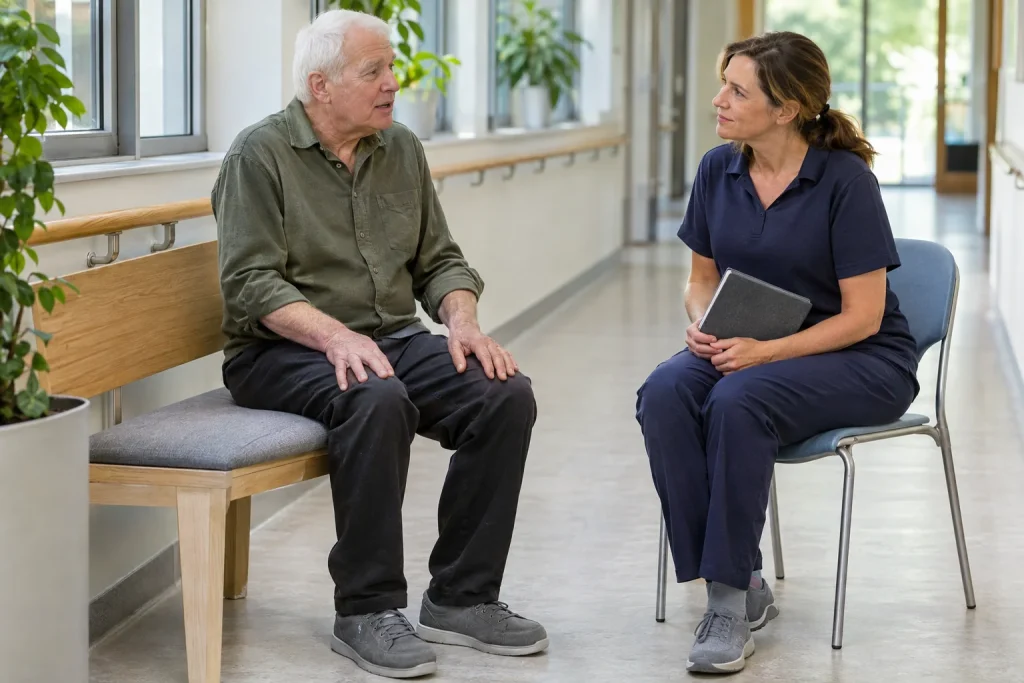
You can also make specific arrangements for reaching healthcare. If an entrance, waiting area or long corridor currently presents difficulty, explain beforehand what support you would like. A relative may help with the journey or remembering important times while you continue describing your own experience. You need not prepare a long proof video or export all your sports data for the discussion. What matters is that the real change is explained clearly and access does not become another unnecessary barrier.
The next plan should make using help understandable too
Different support may be considered after appropriate assessment. The NHS information describes individually selected aids and rehabilitation options, for example, but these are not identical solutions for everyone. Within your own plan, understand the purpose of a recommended device or task, how to use it and when review will happen.
Report anything uncomfortable, unclear or causing new symptoms. Using help need not become solitary guesswork. Your question can be specific: which part of the everyday journey needs support, in which environment can the task be performed and which change should prompt renewed contact? An appropriate explanation forms part of a usable plan.
An imaginary older man notices that his shoe’s toe repeatedly catches along a familiar route inside his home. He does not make a faster running test of it. He preserves the timeline, seeks appropriate healthcare help and meanwhile rearranges objects left in the way with a family member. Organising the environment helps his day, but they do not call it a definitive solution to the physical question.
Repeated foot catching then becomes an accurately named change rather than a personal label of clumsiness. A single event need not produce a diagnosis, but new difficulty should not be trivialised. The timeline, appropriate assessment and a usable everyday environment together offer a clearer next step.
Sources
NHS: foot drop and difficulty lifting the foot; NICE NG249: falls assessment and individual circumstances; NHS: sudden stroke symptoms; NHS: urgent signs accompanying back symptoms. Checked: 21 November 2026. The everyday example and note-taking list are original illustrations, rather than a diagnostic test or individual walking-correction prescription.
How Futószív articles are prepared: our editorial guidelines.