The run can finish before training analysis does
You are home, showered and dinner is over, yet the evening still revolves around running. You open splits, compare the route with last week and check the group’s activities. Originally two-minute logging becomes prolonged browsing. Often the problem is not using a sports app, but analysis having no clear ending.
Planning an evening with screens does not require expelling every device from life. Separate essential recording, assessment supporting actual decisions and aimless reviewing. These three activities need different time allowances. A running diary serves you when it leaves usable information for tomorrow while preserving time to close the day.
What do sources say, and what do they not?
The US NHLBI information on healthy sleep habits recommends a quiet pre-bed period and discusses avoiding bright artificial light. The American Heart Association technology guide likewise supports reconsidering evening device use. These are general sleep suggestions, not proof that a specified number of diary minutes produces the same effect in everyone.
The organisational ideas below are therefore options to try. We do not present them as personalised sleep therapy or promise that putting a phone aside resolves every sleep problem. The aim is to prevent evening data browsing quietly occupying time intended for rest. Persistent sleep symptoms are a separate professional question.
First name why you are opening the app
Before entering, formulate one question. Did the planned easy run work, does a shoe problem need noting, or must brief feedback go to the coach? Without a question, opening the record is probably an evening habit rather than an urgent task. Recognising this already provides useful information.
Choose a finishing condition alongside the question. For a shoe issue, that could be saving one sentence in the diary. For coach feedback, writing a short message. The task can end when this is done even if the app offers more graphs. Responsible training monitoring does not require viewing every available figure.
Create an evening minimum and separate analysis time
An evening minimum can have three brief fields: the plan, how you felt and any circumstance relevant next time. For example: easy loop; conversational effort; sock seam troublesome at the third kilometre. This may later say more than an isolated average pace without requiring lengthy comparison.
Give detailed weekly analysis another time when you can actually decide from the information. If speaking with a coach on Saturday, gathering questions on Friday afternoon may make sense. Reviewing a graph again at eleven at night does not necessarily produce immediate action. Recording and interpretation can work well at separate times.
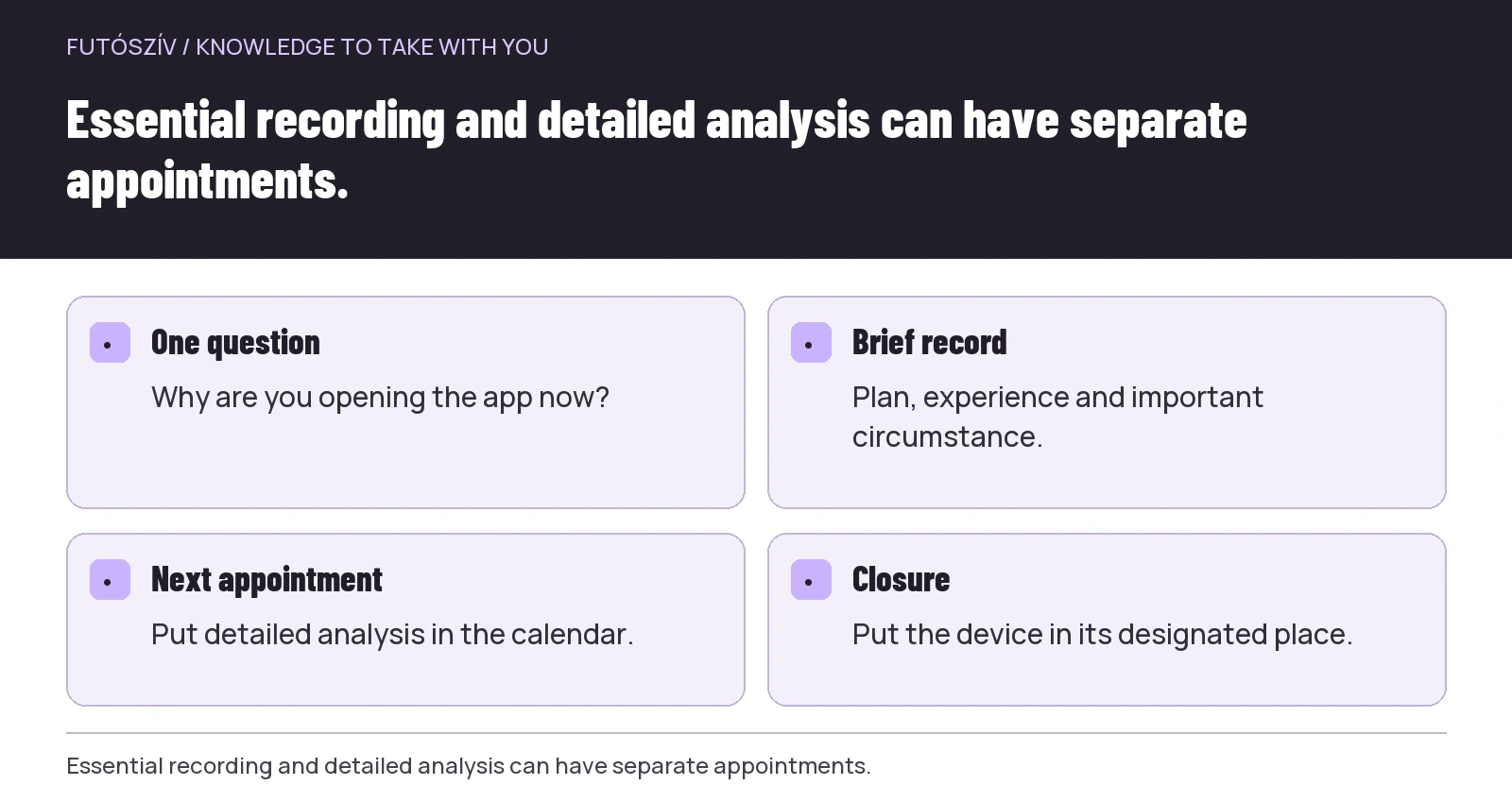 Enlarge diagram
Text version of the diagram
- One question
- Why are you opening the app now?
- Brief record
- Plan, experience and important circumstance.
- Next appointment
- Put detailed analysis in the calendar.
- Closure
- Put the device in its designated place.
Make tomorrow’s reminder specific
I will look tomorrow easily turns into another evening reopening. Leave a small precise task: on Tuesday after lunch, compare the two routes’ elevation gain; write down the long-run question for the weekend discussion. The thought is preserved without following it through immediately. Paper, a calendar or one note can hold it.
If the same question repeatedly returns, examine which decision you expect from it. Rechecking a GPS discrepancy may not provide a more certain answer, for example. Marking the data uncertain may suffice. A diary can record uncertainty rather than find a final explanation every evening.
Do not let the sports watch automatically rewrite your evening
An unusual score or notification can easily change how you view the day. You may arrive home pleased, then immediately search for a training fault because of a graph. Return to the original question: is there a concrete safety-related decision needing this data now, or can it wait for organised review?
Do not make an evening medical diagnosis from one device signal. Of course, do not set aside new, severe or concerning symptoms for a diary rule: seek appropriate healthcare help for those. Normal training analysis and assessing health symptoms are separate tasks. A quiet evening routine must not mean ignoring important symptoms.
Plan the phone’s physical location
Looking less is a difficult intention to verify. Choosing a charging place where the device goes after brief logging is more specific. Choose somewhere fitting your household needs. If family or work requires remaining reachable, important calls may need separate settings; every notification need not be treated alike.
It can also help not to use the entire social platform for evening notes. A short paper sheet or simple note can later be transferred into the usual training diary. Necessary information remains without messages, videos and friends’ results demanding attention simultaneously. The solution’s value lies in manageability.
Social replies can have their own time too
After an evening club run, thanking people for shared kilometres can feel good. Every comment need not receive an immediate response. Write the message, then remind yourself to read further replies tomorrow. As an organiser, clarify when meaningful answers can be expected and where urgent on-site questions belong.
Social connection is not measured through continuous availability. Share training photographs and other people’s personal information thoughtfully in any case. Amid evening fatigue, you need not immediately decide whom to tag or which location details to publish. A post left until tomorrow can be equally friendly while easier to check calmly.
A late training day may need different arrangements
If work or family tasks permit only late running, an early-evening digital closure may be impossible some days. Do not try to follow an unattainable ideal evening. Make a shortened version: after necessary tasks, one-sentence logging, important coach feedback and closure. Detailed browsing can move to another occasion.
The shortened version is not a healthcare assessment of evening running or an instruction about your training time. It is an organisational tool preventing late arrival from gaining another long unplanned screen period. If training timing and sleep repeatedly conflict, discuss this separately with the professional supporting your training.
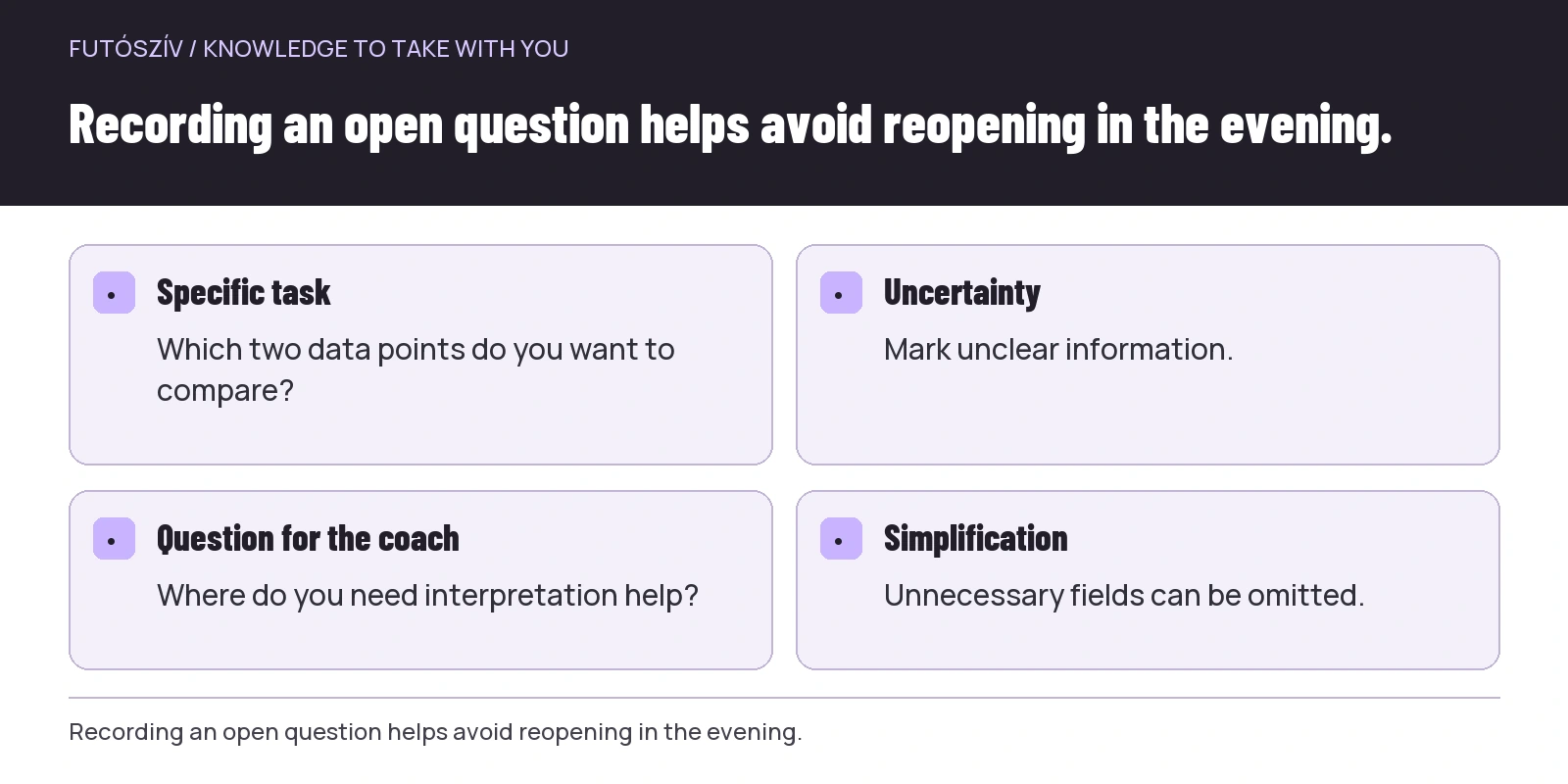 Enlarge diagram
Text version of the diagram
- Specific task
- Which two data points do you want to compare?
- Uncertainty
- Mark unclear information.
- Question for the coach
- Where do you need interpretation help?
- Simplification
- Unnecessary fields can be omitted.
A trial week: what is actually worth observing?
For one week, choose one change, such as no longer comparing evening splits. Briefly note whether you closed the diary and what interrupted the plan. No new detailed scoring system is needed. Look for actionable obstacles: late group messages, a forgotten reminder or a note difficult to find.
At the week’s end, consider more than reduced screen time. Was important training information retained, were next-day tasks easier to begin and how manageable did the system feel? If the method needs more organisation than it saves, simplify it. The best evening routine is not necessarily the strictest.
When logging itself becomes oppressive
Disproportionate tension about missing an entry, checking the same information again or judging running only through public feedback may be warning signs. An article cannot diagnose illness from them. They may nevertheless suffice to articulate that a tool intended to help has become a burden.
Discuss this with your coach and, if anxiety, sleep difficulty or compulsive checking disrupt everyday life, a healthcare or mental healthcare professional. You need not first try another app or perfect self-discipline to seek help. Support aims for a livable way of functioning, not an even prettier diary.
A specific Tuesday-evening example
Suppose you reach home at half past nine after a familiar short loop and leave early tomorrow. You note completing the planned route, comfortable shoes and choosing different pace on some sections because of wind. Elevation data is unimportant now; that was not the session’s purpose. You record one question about the weekend long run for Friday’s discussion. That evening’s training record can then end.
If a message about a friend’s successful race arrives meanwhile, it need not trigger immediate reassessment of your results. You can be pleased for them and reply later. Tomorrow, with actual app time available, return to the conversation. The example’s point is not half past nine: it is a distinct task, a placed next step and familiar social stimuli not automatically starting new analysis.
A closed evening leaves a diary usable tomorrow too
Imagine two brief entries. One contains ten graphs but does not reveal how the run felt. The other records plan, experience and next question in three sentences. The latter may often support a later conversation more directly. Detailed data should remain central when it actually serves a defined decision.
An evening boundary can be flexible but recognisable: information saved, open question noted and the next analysis appointed. The rest of the evening can then concern other things too. An informed relationship with running includes allowing something other than running data to receive your final attention at day’s end.
Sources and further reading
- NHLBI: Healthy Sleep Habits
- American Heart Association: How to Sleep Better with Tech Tweaks
- NHS: How can meditation help with sleep?
How Futószív articles are prepared: our editorial guidelines.