Give daytime rest a clear purpose first
After a longer run, sitting quietly may feel welcome; during a difficult working day, you may feel genuinely sleepy. These are not necessarily the same situation. Before adding naps to your routine, name the purpose: brief quiet time, temporary help with alertness or replacing regularly missing main sleep. The last requires separate attention.
This article offers general information and practical considerations. It does not prescribe compulsory naps for every runner, treat insomnia or guarantee sporting improvement. Health, routine and sleep symptoms can affect whether napping suits you. Persistent or substantial sleepiness needs professional attention.
Quiet rest and sleep are not interchangeable
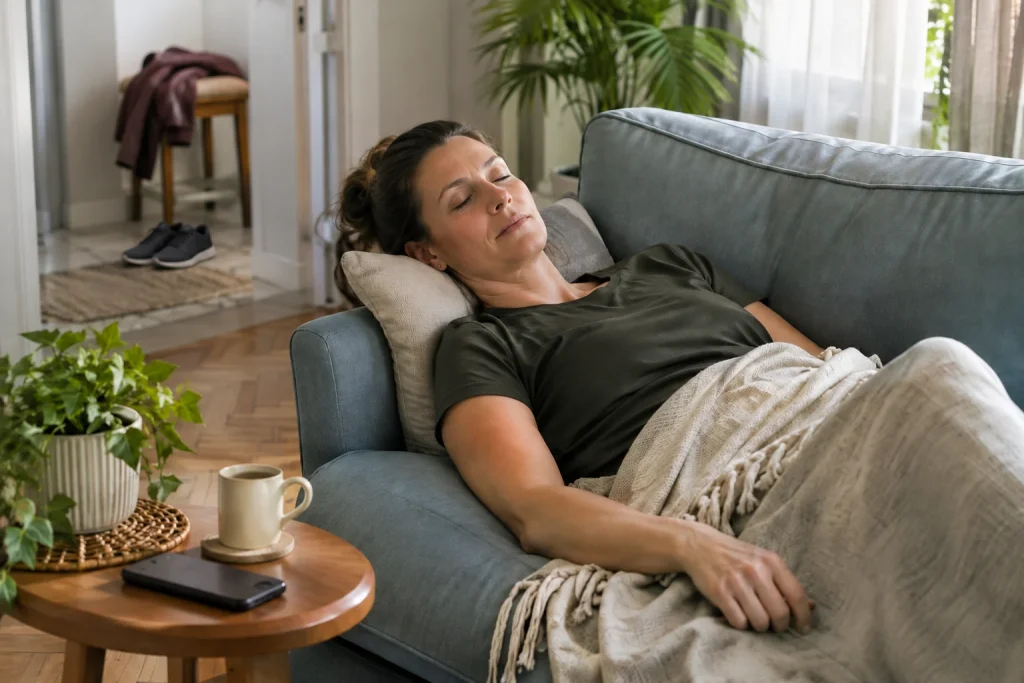
NIOSH training material on napping distinguishes short actual sleep from a quiet break. In the research described, brief naps, for example fifteen to twenty minutes, could support alertness. The material also emphasises temporary assistance rather than replacing regular, adequate main sleep.
Sitting somewhere peaceful can have personal value too, without requiring the same effect. Falling asleep need not become an achievement to complete or prove afterwards. Clear descriptions help express experience: there was an opportunity to rest, you actually slept or you remained very sleepy.
Look beyond a place to lie down in the schedule
A short nap includes preparation and time after waking. If the whole available window is allocated to the nap, no buffer remains before the next task. Consider the full framework: where to rest, when you genuinely need to leave and the attention required next.
Do not first experiment on a day when driving, complex decisions or an important race start follow immediately. You cannot know your waking experience under those conditions beforehand. Even a seemingly convenient short break can create a rush if transition time is ignored.
Full alertness does not always return immediately on waking
NIOSH separately discusses temporary grogginess after waking, known as sleep inertia. Reactions and thinking may slow, with duration depending on circumstances. Its information recommends allowing time before critical tasks. No single number of minutes can guarantee safe alertness for everyone.
For runners, this means not scheduling driving or complex event preparation for the moment you open your eyes. First ensure you can concentrate appropriately. If still sleepy, do not try to override it with willpower or race excitement. Personal safety matters more than keeping the calendar at any cost.
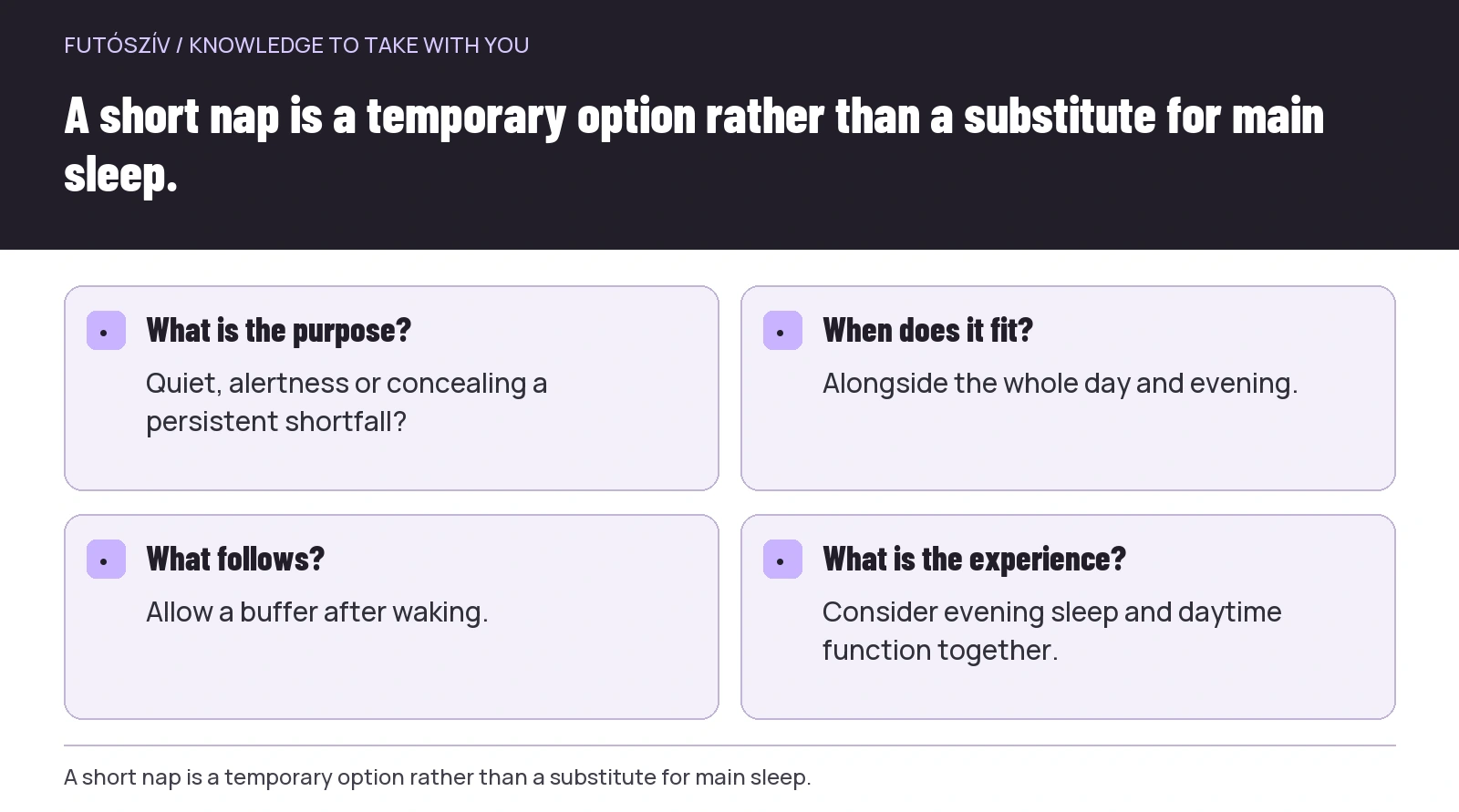 Enlarge diagram
Text version of the illustration
- What is the purpose?
- Quiet, alertness or concealing a persistent shortfall?
- When does it fit?
- Alongside the whole day and evening.
- What follows?
- Allow a buffer after waking.
- What is the experience?
- Consider evening sleep and daytime function together.
Consider night-time sleep too
If you regularly struggle to fall asleep at night, assess napping differently from an occasional rest alongside adequate main sleep. NHS general insomnia advice includes avoiding daytime naps. This does not contradict workplace alertness research: it addresses another problem and setting.
Do not base your decision on one popular tip. If receiving care for a sleep disorder, discuss naps with the professional supporting treatment. Fatigue after running does not automatically justify rewriting your sleep plan. The main question is how the option fits the functioning of the whole day and night.
Shift work is a separate situation
With night work, daytime sleep can be part of main sleep rather than a simple afternoon addition. Short-nap suggestions designed for ordinary daytime routines cannot fully describe shift work. The rota, workplace safety and health may need separate discussion. Adapt running to the actual timeline.
When exercising around shifts, mark main sleep opportunities separately from possible brief supplementary rest. Do not treat the whole morning after work as empty training time. Workplace and healthcare support may contribute to an appropriate solution; this article gives no sleep or training timetable for every rota.
After a long run, a nap is not the whole of recovery
Alongside rest, consider the next day’s arrangements, agreed food and fluid provision and individual health experience. A brief sleep does not automatically make the whole day adequate if main sleep is regularly missing. Avoid reducing recovery to one conspicuous habit.
If exercise is followed by unusual, disproportionate or persistent illness, do not simply try a longer nap. Symptoms may need assessment. This article cannot establish which fatigue is expected and which may involve a health issue. Report actual experience to your coach and, where needed, a healthcare professional.
Choose a safe, workable location
Home, work and travel offer different possibilities. Check whether resting there is genuinely permitted and safe, whether interruptions are likely and how you will return to the next task. Workplace sleeping arrangements need discussion within the appropriate local framework. Such space or free time is not available everywhere.
When travelling by car, stopping safely and managing sleepiness are separate road-safety questions. A brief nap is not automatic permission to continue driving. If you cannot pay attention safely, another solution is needed. Reaching a running event or getting home cannot override your own or others’ safety.
Do not turn rest into another scored challenge
App information about daytime sleep can be interesting without becoming a compulsory daily target. If naps do not fit or suit you, you are not missing an indispensable recovery tool for everyone. Individual needs and appropriate professional advice matter more than a community example.
After a short trial, noting how you woke and how evening sleep went may suffice. Every detail need not immediately become numerical. Discuss it if measurement increases sleep-related worry. Rest remains an optional opportunity when it does not become another sporting achievement to prove.
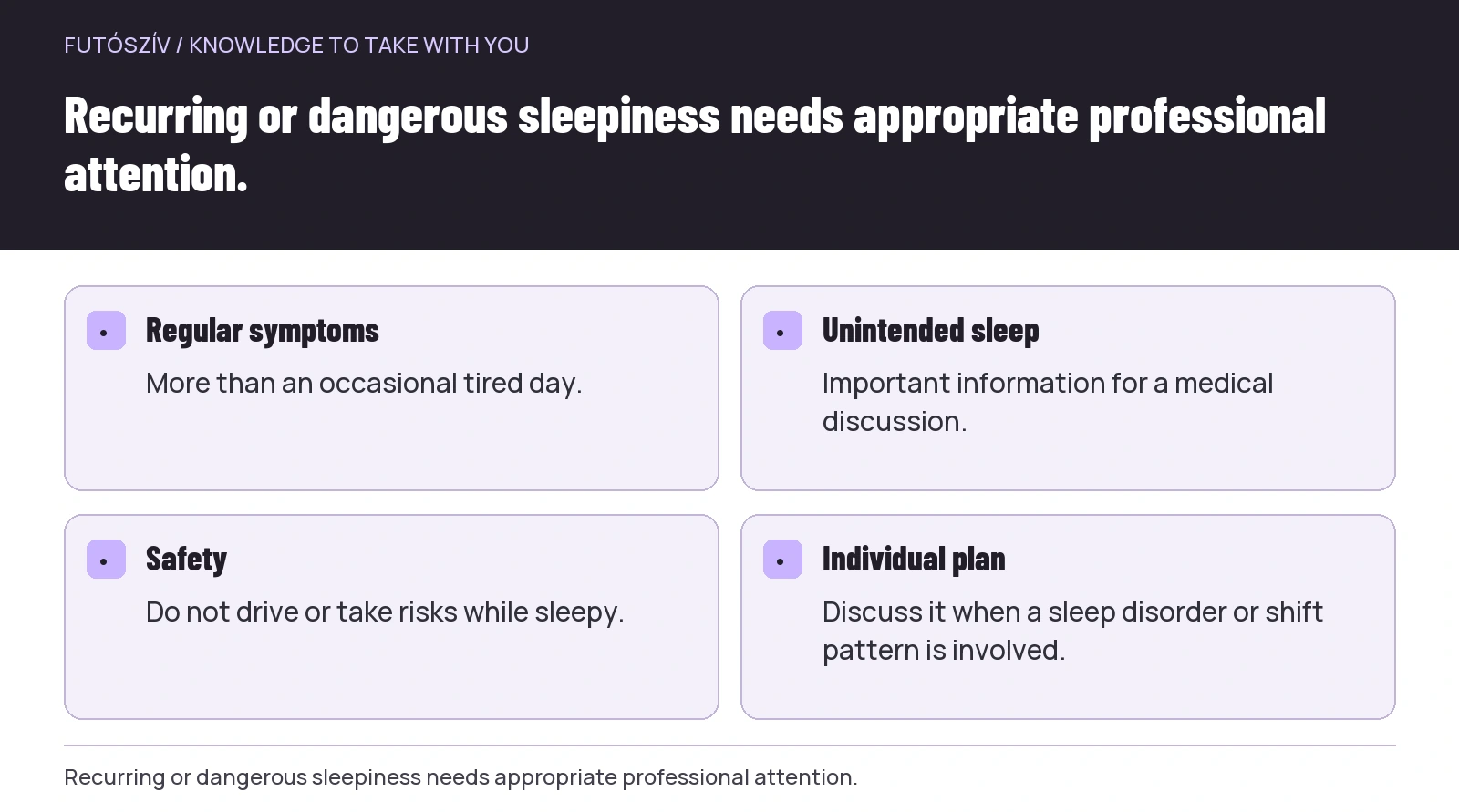 Enlarge diagram
Text version of the illustration
- Regular symptoms
- More than an occasional tired day.
- Unintended sleep
- Important information for a medical discussion.
- Safety
- Do not drive or take risks while sleepy.
- Individual plan
- Discuss it when a sleep disorder or shift pattern is involved.
A caffeine nap is not a default solution for everyone
Social media often suggests combining a short sleep with caffeine. A research or workplace approach does not automatically become a personal recommendation. Timing, individual sensitivity and health matter too. This article gives no dose and does not suggest improvising experiments before a race.
If you regularly counter daytime sleepiness with increasing stimulation, review the entire sleep and work pattern with a professional. The goal is not staying awake at any cost for the next workout. First understand why adequate alertness or rest is missing. A short sleep and a drink together do not replace assessment of persistent symptoms.
Which information should you bring to a professional?
Explain when daytime sleepiness occurs, your sleep opportunity, work pattern and what follows brief rest. Unintended sleep, difficulty staying awake and substantial disruption of daily life may be important. You do not need to connect this to a particular illness beforehand. A specific description provides a more useful starting point.
The professional may ask further questions, suggest assessment or discuss an individual sleep plan. Do not wait until another race or busy working period creates danger. Recurring daytime sleepiness is not simply an inevitable trait of someone exercising a lot. Distinguish healthcare and organisational causes appropriately.
An example of a clear, optional trial
On a less busy day, a runner wants to observe how a brief daytime sleep opportunity fits their routine. They check what follows and avoid scheduling immediate driving or an important task on waking. At the day’s end, they briefly consider the experience and evening sleep. They do not automatically infer better race fitness.
If the trial is unsuitable or sleep symptoms need professional advice, they choose another solution. Its value is not measured by repeating it daily. A short rest can fit when linked to a clear purpose, suitable setting and the overall sleep situation. Safety and individual needs matter more than imitating a popular recovery habit.
Explain shared-programme timing beforehand
When travelling with a team or organising the day with others, state which window you want available for rest. Companions then need not interpret an unannounced disappearance. Agree when to meet again and whom to contact about important changes. This practical discussion does not require publicly sharing personal sleep or health information.
The answer can change later
After race travel, a new shift pattern or a health change, daytime sleep may have a different role. Earlier experience is a guide rather than a permanent rule. Even if naps previously fitted well, review evening sleep and daytime alertness again. Adapt individual plans alongside circumstances.
A running friend’s solution can remain theirs. You do not need the same timing, equipment or routine to take recovery seriously. The useful question is which need you want to address and which professionally appropriate options are available. That supports responsible decisions rather than a general recipe.
Sources and further reading
How Futószív articles are prepared: our editorial guidelines.