Afternoon refreshments connect with the evening routine too
Coffee after work, a drink before training and a caffeinated sports product during a longer run can each serve a different purpose. For evening sleep, however, they belong to the same day. Counting coffee cups alone does not give the full picture. Products, amounts and timing relative to planned sleep matter too.
This article helps gather information and formulate questions. It gives no personalised caffeine dose, performance-enhancement protocol or universal last-consumption time. Health symptoms, medication or uncertain individual circumstances may need a healthcare professional; sporting goals can also be discussed with a sports dietitian.
Natural origin does not make caffeine neutral for sleep
EFSA’s review and FDA information identify several caffeine sources and emphasise considering all of them in the daily picture. Coffee, tea, energy drinks and some sports products contribute. A plant-derived ingredient or a product called natural does not mean it contains no caffeine or has no personal effect.
Look separately at a product’s purpose and composition. Do not infer ingredients from a name such as refreshment. Flavours or versions within one range can differ too. Packaging and current manufacturer information are more useful than an old community table showing another size or recipe.
Read the units on the label too
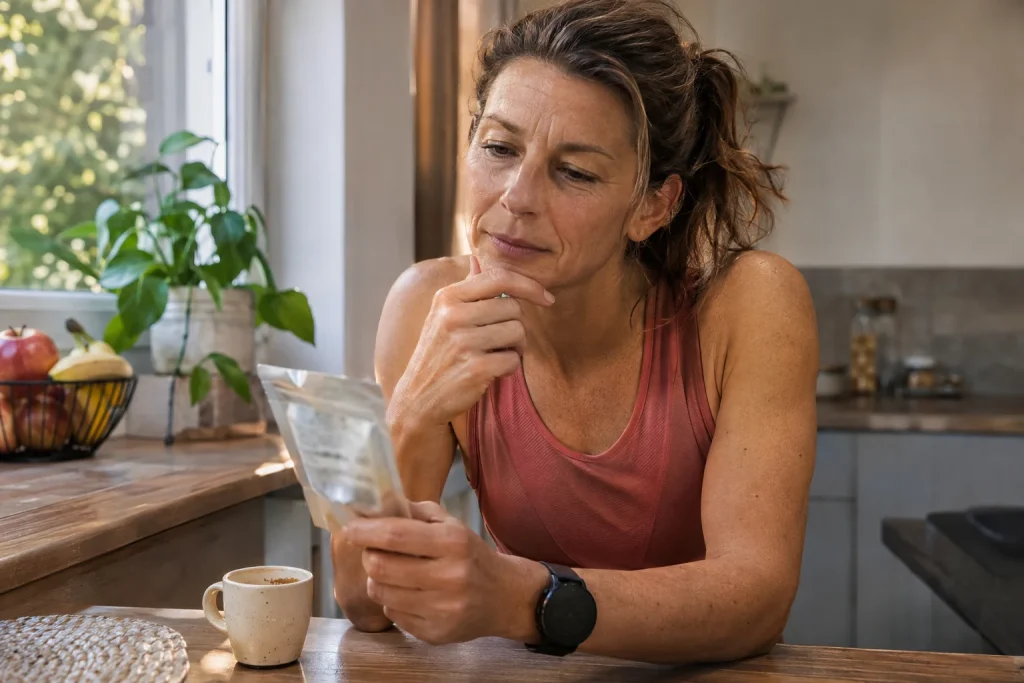
Caffeine amounts may apply to one serving, the whole pack or a specified volume. Before adding values, check compatible units. A front-of-pack number on a multi-serving product need not describe all contents. Without the quantity actually consumed, daily totals easily become inaccurate.
A fictional label example lists thirty milligrams of caffeine per hundred millilitres in a five-hundred-millilitre bottle. The whole bottle contains five times thirty, or one hundred and fifty milligrams in this example. This illustrates unit conversion only, not actual product data or a recommended amount. Use your real product’s label.
Sports products belong in the daily total too
Another fictional example lists forty milligrams per sachet, so two consumed sachets add eighty milligrams to that total. This is neither a training plan nor encouragement to consume it. It shows how per-serving information relates to servings used. Do not use these examples to define a personal safety threshold.
If caffeine quantity is unclear, mark it uncertain and ask the manufacturer or an appropriate professional. Missing information is not zero. Morning coffee, an afternoon drink and an exercise product can have separate rows on one sheet. A clear total supports professional discussion rather than replacing individual assessment.
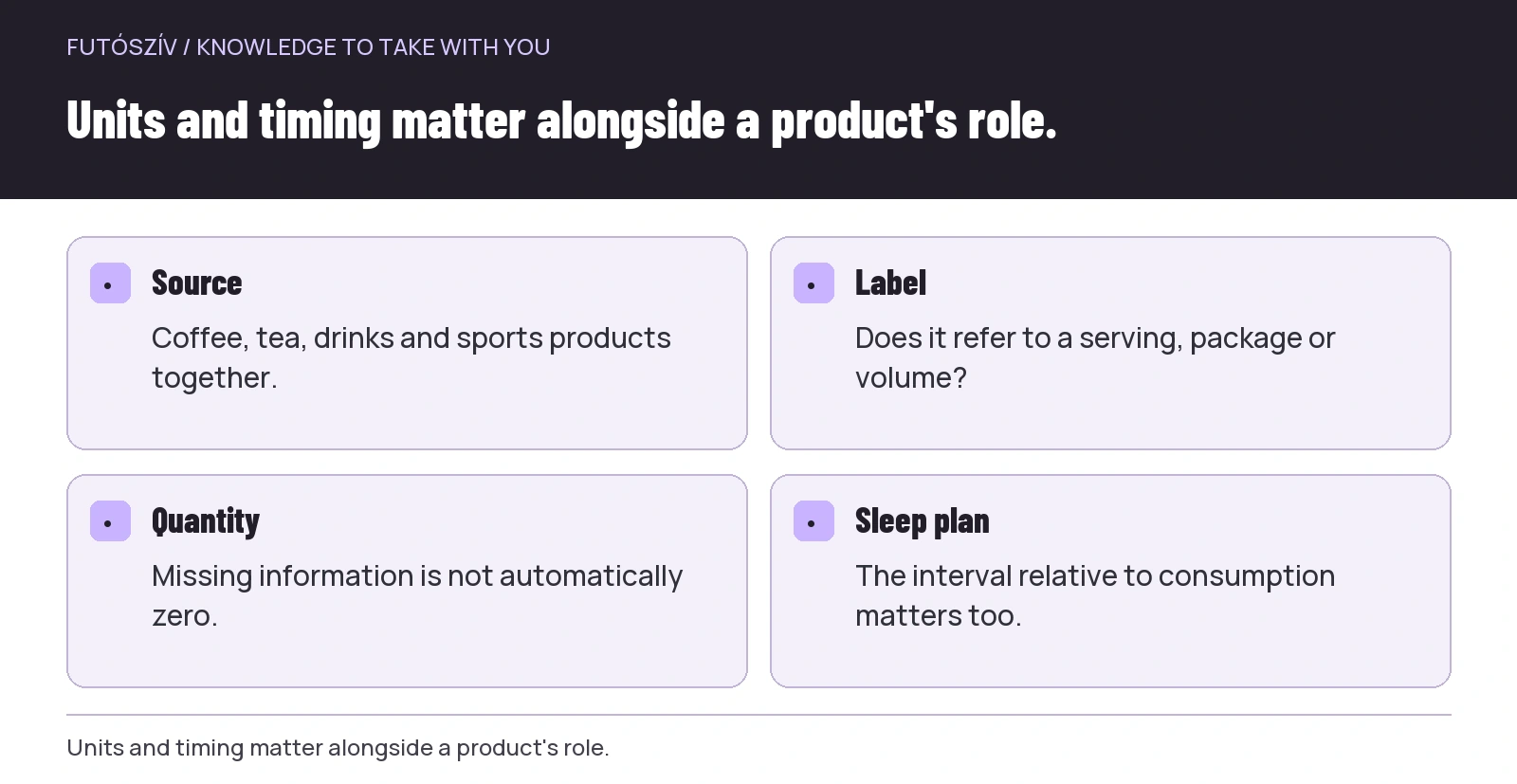 Enlarge diagram
Text version of the illustration
- Source
- Coffee, tea, drinks and sports products together.
- Label
- Does it refer to a serving, package or volume?
- Quantity
- Missing information is not automatically zero.
- Sleep plan
- The interval relative to consumption matters too.
Time relative to sleep may help more than the word afternoon
Someone going to bed early has a different interval after the same afternoon drink from someone starting a night shift. The clock time alone is not the key. Add when you plan main sleep. The connection becomes clearer, especially with changing shifts or race travel.
AIS caffeine information also emphasises timing relative to sleep and individual differences. Effects do not follow one shared deadline after which everyone is at risk and before which everyone is unaffected. An individual question involves all sources, current health and actual sleep experience together.
A study result is not individual permission
A double-blind crossover study published in a 2025 issue of SLEEP compared caffeine amounts and pre-bed timings in twenty-three men. It shows why dose and timing should be considered together. Participants and circumstances nevertheless limit direct generalisation.
If a smaller amount showed no significant difference within that sample, this does not prove no sleep effect across every age, health condition and routine. Avoid reducing a scientific result to a personal threshold. This article therefore does not convert study conditions into a recommended evening-consumption rule for everyone.
Being able to fall asleep does not describe the whole night
Someone may fall asleep quickly after late coffee and conclude caffeine does not affect their sleep at all. Sleep assessment involves several questions, however, and one impression is not a complete measurement. Equally, one watch score alone cannot establish that a drink caused every change.
For recurring difficulties, describe experience simply: bedtime, the problem and daytime wellbeing. Add caffeine sources and important routine circumstances. The aim is an interpretable account, rather than certain causation from one evening. An appropriate professional carries out necessary assessment.
An evening race includes the following day too
For an evening event, chosen performance products and subsequent sleep belong in one plan. AIS sports-supplement information emphasises individual use developed with a professional. Every run does not need caffeine, and a popular race strategy does not automatically fit your routine.
Discuss when you will reach home, fixed tasks next day and experience with the product beforehand. Last-minute ideas at the start are not the time for trying a new preparation or larger amount. A personal sporting plan should consider the whole day and health rather than only time until the finish line.
Do not address persistent sleepiness only with more stimulation
If increasing caffeine is needed on successive days to stay awake through work and sport, review the whole situation. What is happening to main sleep? Has work changed? Are sleep symptoms recurring? A cleverer refreshment strategy is not necessarily the answer. Healthcare may be needed too.
Do not drive while sleepy or undertake dangerous activity because you consumed a stimulant. A drink or pre-race excitement does not guarantee alertness and safety. Discuss regular symptoms with an appropriate professional. Caffeine use is important background, but does not replace individual assessment of causes.
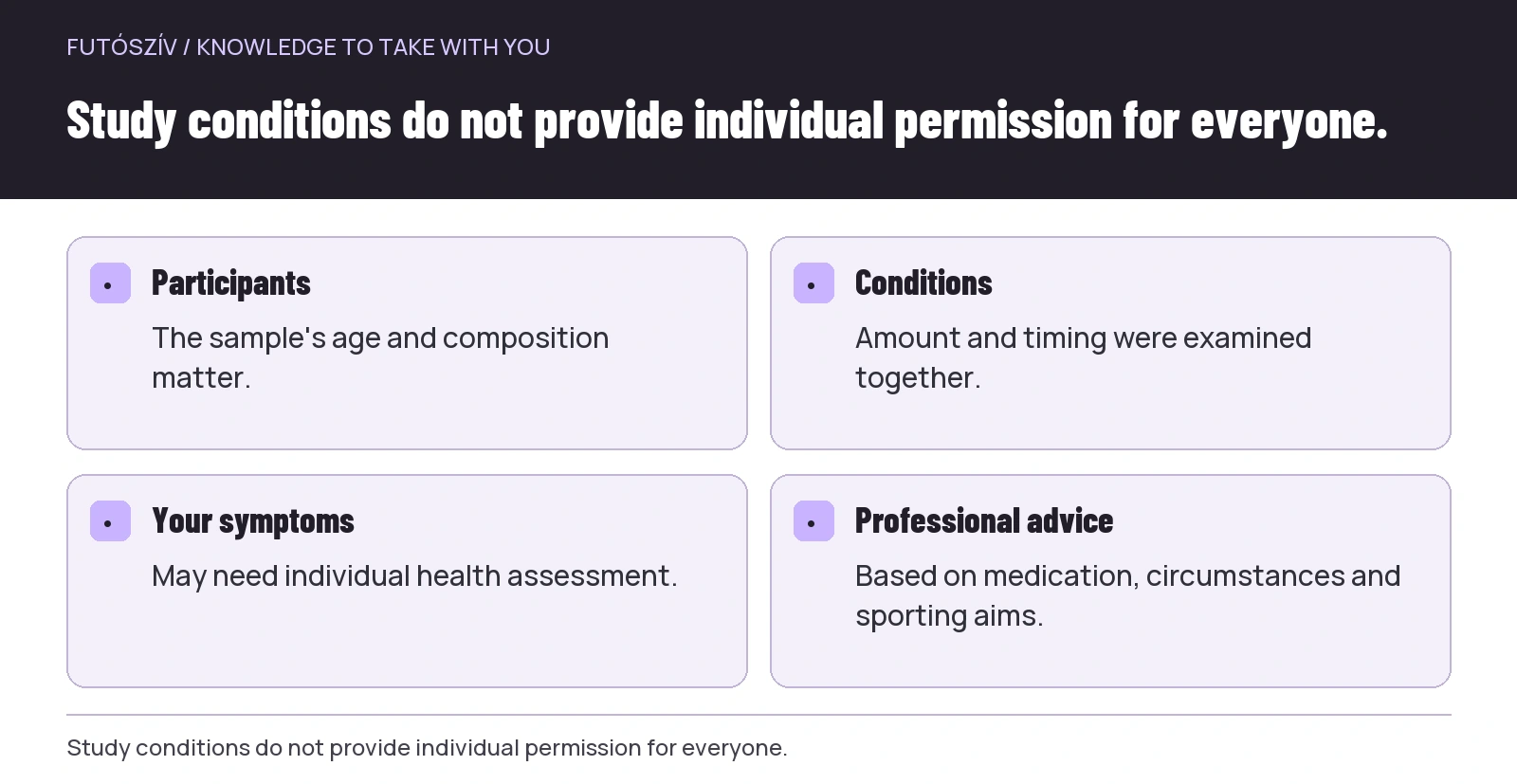 Enlarge diagram
Text version of the illustration
- Participants
- The sample’s age and composition matter.
- Conditions
- Amount and timing were examined together.
- Your symptoms
- May need individual health assessment.
- Professional advice
- Based on medication, circumstances and sporting aims.
General adult information is not every group’s personal rule
FDA and MedlinePlus highlight individual sensitivity, some conditions and medications, and consultation during pregnancy, planned pregnancy and breastfeeding. Adult athlete examples should not become personal recommendations for children or adolescents either. This article therefore gives no single daily amount for everyone.
If receiving treatment, ask what to consider about caffeine sources. Sporting packaging does not automatically make a product appropriate in every condition. Individual advice needs actual product and usage information. You need not first decide caffeine certainly caused a symptom before asking.
Keep observation simple rather than conducting constant self-experiments
To review consumption, first describe the existing day. Which product, pack size and time appeared alongside which sleep plan? Mark uncertain information. Do not deliberately increase consumption or induce worse sleep to make a connection seem clearer. Your safety is not an experimental variable.
Seek individual advice about changes where needed, especially with regular larger intake, symptoms or health questions. A diary supports shared interpretation. Mention if detailed monitoring itself causes anxiety. The useful tool need not contain the most data, only what supports an appropriate decision.
Do not explain alarming symptoms solely through coffee
Palpitations, unusual illness or other symptoms may need healthcare assessment. Seek urgent help for chest pain, fainting or severe symptoms. It is unsafe to decide remotely that a sensation is only caffeine. Consumption details are important information, but not a diagnosis alone.
Do not try to prepare a home sporting dose from pure or highly concentrated caffeine. FDA and AIS warn of serious risks from these products. This article gives no dangerous quantity experiment or measuring recipe. Label examples concern everyday interpretation, rather than instructions for using such preparations.
Useful questions for the next discussion
Which caffeine sources feature across my day? Do I know actual product information and the quantity consumed? What interval separates consumption from planned sleep? Do symptoms or health circumstances require individual advice? These four questions can start an organised conversation without inventing your own general safety limit.
Assessing afternoon refreshments is therefore more than deciding one prohibited or permitted time. Products, the whole day, sporting aims and sleep enter the picture together. A suitable solution can change with work or health. The aim is an informed individual decision rather than copying another runner’s coffee schedule unchanged.
Sources and further reading
- EFSA: Caffeine, all dietary sources and assessment scope
- MedlinePlus: Caffeine and individual health considerations
- FDA: Spilling the Beans, How Much Caffeine is Too Much?
- Australian Institute of Sport: Caffeine
- Gardiner et al.: Dose and timing effects of caffeine on subsequent sleep, randomized crossover trial
How Futószív articles are prepared: our editorial guidelines.