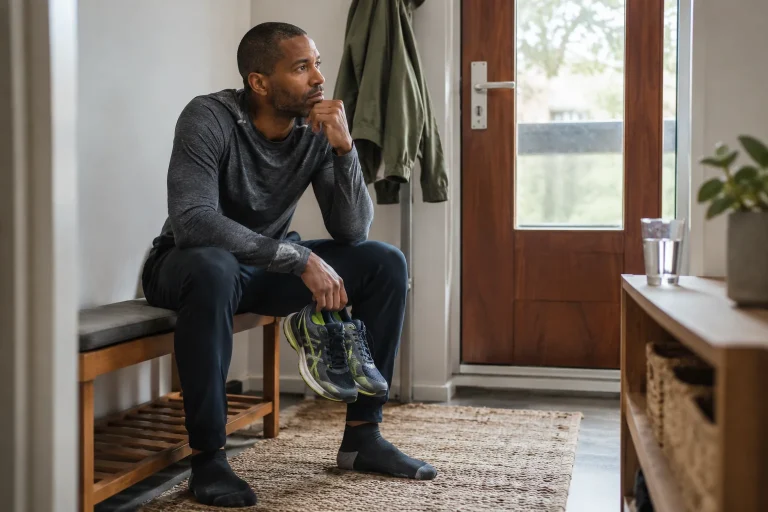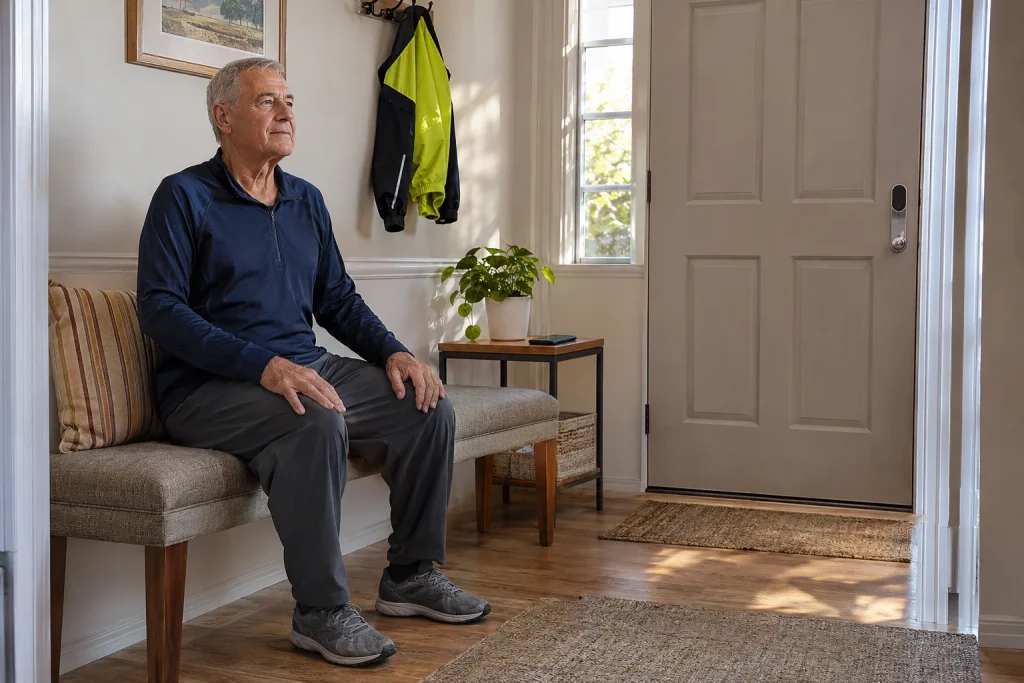
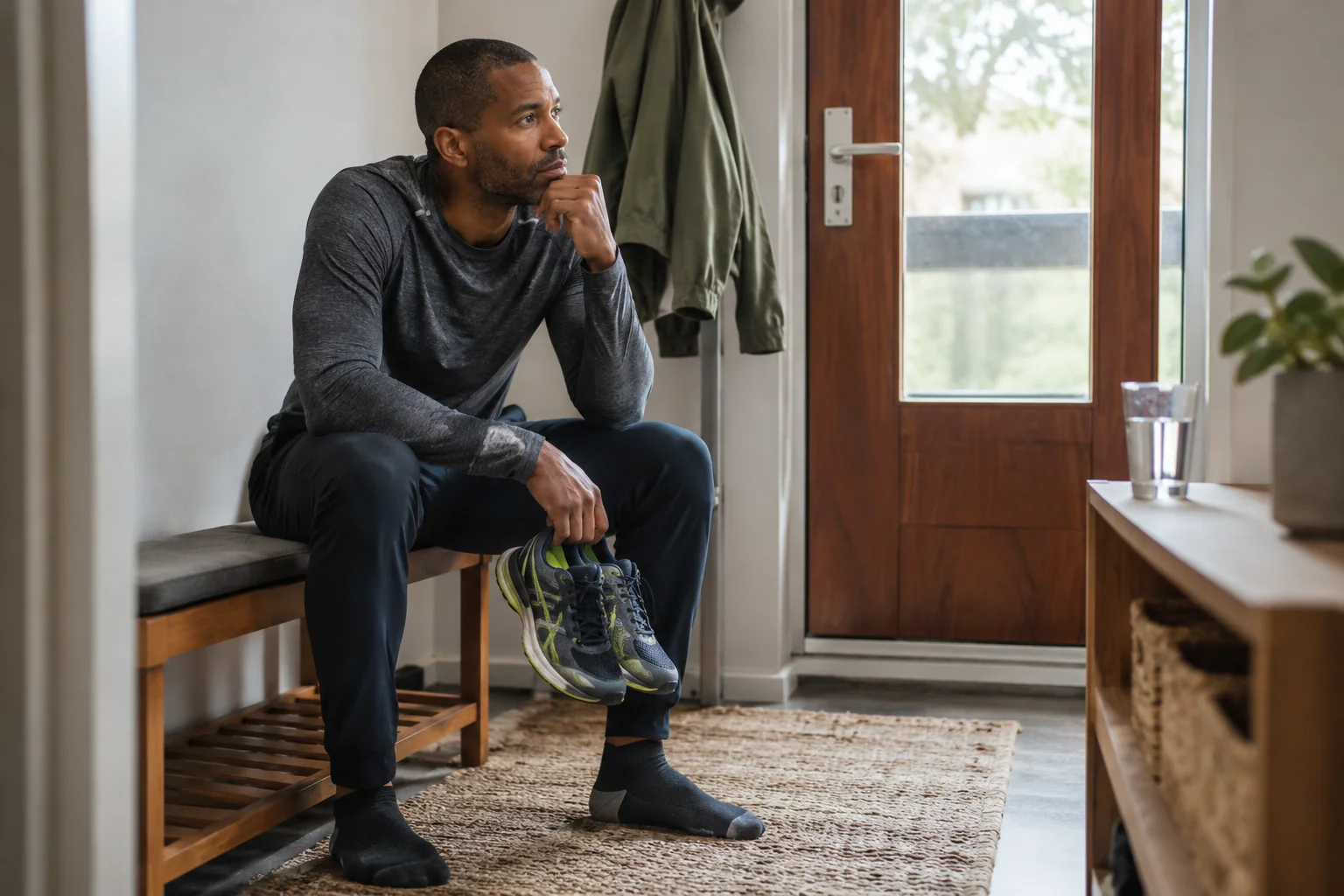
You sit up in bed, stand, and the room briefly feels uncertain. Your running shoes already wait at the door and your companion will arrive soon. Your safety now takes priority over departure plans: do not start running while dizzy or try to “work the sensation out” with quick steps. Ask for help if needed and safely position yourself sitting or lying down.
Urgent help may be neededif dizziness accompanies sudden one-sided weakness, facial drooping, speech difficulty, severe chest symptoms or serious breathing difficulty. The NHS stroke information explains that sudden neurological symptoms must be taken seriously even if they stop. Its guidance on fainting also treats fainting during exertion and incomplete recovery as urgent situations. In Hungary, call 112 in such emergencies; do not drive yourself to care.
Why does having just stood up matter?
When moving from lying or sitting to standing, circulation must adapt to the changed posture. Gravity changes blood distribution, and several regulatory processes seek to maintain adequate circulation. If adaptation is inadequate, blood pressure may fall with the position change. Understanding this process does not establish the cause of every episode of dizziness on standing.
The American Heart Association’s 2024 scientific statement discusses the complex background of postural blood-pressure drops in detail. The phenomenon can coexist with high blood pressure. Do not therefore assume known hypertension excludes every such problem or that one home reading settles the whole question.
Individual investigation clarifies what lies behind a particular symptom. The morning situation, medicines, previous conditions and symptom pattern can provide information together. Posture is important context, but insufficient diagnosis alone. As a runner, understand this first instead of searching for another warm-up trick.
Dizziness can describe several experiences
Some describe spinning; others feel unsteady, see darkness or experience lightheadedness close to fainting. These can be hard to distinguish initially, and you need not choose technical terms. Your own words are useful. Accuracy matters more than attaching a disease name found online.
The NHS dizziness page recommends professional assessment of persistent or recurring symptoms and avoiding dangerous activities while dizzy. For someone preparing to run, stairs, a busy crossing or driving may be practical concerns too. The workout itself is not the only issue.
You can explain that the sensation begins on rising from bed, settles after a short time or occurs elsewhere too. Fainting, falling or new accompanying symptoms also matter. Observation must not become a task of deliberately triggering dizziness repeatedly. Describing experience requires no further risky trial.
Remove rushing from morning preparations
The CDC information on postural blood-pressure drops emphasises slow position changes and reporting symptoms. It does not recommend walking around while dizzy. This is not a home pre-run test, but recognition that safety is needed between changing position and departing.
Tying shoes, bending, putting on a jacket and rushing to the door can pile up in practice. If symptoms recur, identify these preparation situations in discussion too. Placing necessary items within reach the previous evening may be simple practical help. This does not automatically remove the cause, but makes the morning less rushed.
Your running companion can know beforehand that departure time is not fixed in stone. You need not hurry to another room while symptomatic merely to send a short message. A meeting can be postponed; a social agreement creates no health obligation. If support is needed, ask for it separately from setting out.
 Enlarge image
Why is “Running will sort it out” not a useful trial?
Running would add exertion and a new environment to a situation whose cause is unknown. Outside, kerbs, bicycles, traffic and getting home also arise. A few steps at home do not establish that the next longer section will be appropriate. You need not wait for unsteadiness to return outside the home.
Your usual fitness does not prevent a new symptom needing investigation. Previous good runs and the current symptom are separate information. Even if dizziness has stopped, report recurrent episodes. A symptom-free moment does not necessarily explain what happened minutes before.
The decision need not become an argument about self-discipline. The question is not whether your willpower is strong enough to set out, but whether your condition is adequately clarified and what your individual situation requires. A missed or rescheduled outing can be understood as a decision adapted to new information rather than neglected training.
Do not independently adapt medicine to the sporting plan
The NHS information on low blood pressure includes medicines among possible contributing factors. Changing individual treatment is a professional matter. Do not omit the morning dose because you want to run or infer from one symptom that a medicine is definitely unnecessary or harmful.
The NIA medicine-safety guide advises not stopping prescribed medicine without consultation. Sharing the current list and changes experienced may assist assessment. Include non-prescription products and supplements too, even though they were not prescribed.
A scheduling question can be specific: when did you take the prescribed medicine, when did you rise and when did symptoms appear? This is chronology, not proof of causation. Notes help the professional see the situation more accurately. Independent omission changes treatment and may also make understanding events harder.
Fluid and salt are not the same solution for everyone
Many quick tips accompany standing-related dizziness: drink more, eat salty food, buy compression equipment. Do not adopt them as one universal package. The AHA statement illustrates the complexity of individual judgement, particularly when postural blood-pressure drops coexist with high blood pressure.
If you have individual fluid or salt instructions, do not override them with sporting internet advice. A general article does not know your conditions and treatment. The useful information here is not a quantitative target for all readers, but that a presumed quick solution can conflict with the current care plan.
Buying compression products cannot replace clarifying the symptom’s cause. Likewise, avoid diagnosing from the effect of coffee or a supplement. If you previously received individual symptom-management guidance, discuss whether it remains current; still report new or changed symptoms separately.
What does one blood-pressure reading show, and what remains open?
A seated reading is a momentary measurement under particular conditions. Assessing a posture-related phenomenon may be a different question from following general resting blood pressure. Do not derive running permission or a diagnosis from one home number. The reading does not erase the symptom’s course.
If you already have individual measurement instructions, follow them and record conditions as instructed. Do not begin repeated symptom-provoking standing sequences to check an online threshold. This article therefore provides no home provocation test. Assessment’s purpose, execution and safety must fit the particular condition.
The NHS information recommends professional checks for recurring symptoms potentially associated with low blood pressure. The emphasis is reporting recurrence. You need not produce a strikingly abnormal number before discussing dizziness.
 Enlarge image
Brief observations without compulsive self-testing
Keep notes useful and short. When did it happen, after which position change, how would you describe the sensation, and were there accompanying symptoms or a fall? A witness’s observations can be reported too. The aim is not continuous checking all morning or testing yourself before every movement.
| Circumstance to retain | Why it may help |
|---|---|
| It happened after sitting up from lying or standing from sitting. | It shows the relationship between the event and posture. |
| There was spinning, darkening vision or near-faintness. | It clarifies the experience behind dizziness. |
| There were other symptoms, a fall or injury. | It helps describe the incident’s full significance. |
| New treatment or another change preceded it. | It provides chronology for professional assessment without independent causal conclusions. |
If symptoms repeat, intensify or unsettle everyday travel, do more than rearrange the next sporting outing. Seek professional assessment. Care can also clarify when and how to ask for help again. The individual plan must address everyday function as well as running time.
Make the morning running plan genuinely changeable
In an illustrative situation, your companion expects the same time every Tuesday. Agree beforehand that symptoms mean a message or brief call cancels the shared run and necessary help becomes the priority. Support does not mean persuading someone to set out. A shared rule can remove pressure to prove yourself from the morning.
Once the symptom’s background has been assessed and individual guidance received, adapt movement accordingly. Return does not become appropriate because a general article’s waiting period has elapsed; this article gives none. Current condition, clarified cause and agreed conditions matter together. The previous training plan can then be reshaped.
Dizziness on standing is therefore not an annoying pre-training obstacle that must be overcome. Its circumstances deserve understanding and investigation where needed. Calmer preparation, a safe position and accurate information help connect running plans to your actual condition.
Sources
NHS: low blood pressure; NHS: dizziness; NHS: fainting; NHS: stroke symptoms; CDC STEADI: postural hypotension; AHA: orthostatic hypotension and hypertension; NIA: medicine safety. Checked: 21 November 2026.
How Futószív articles are prepared: our editorial guidelines.