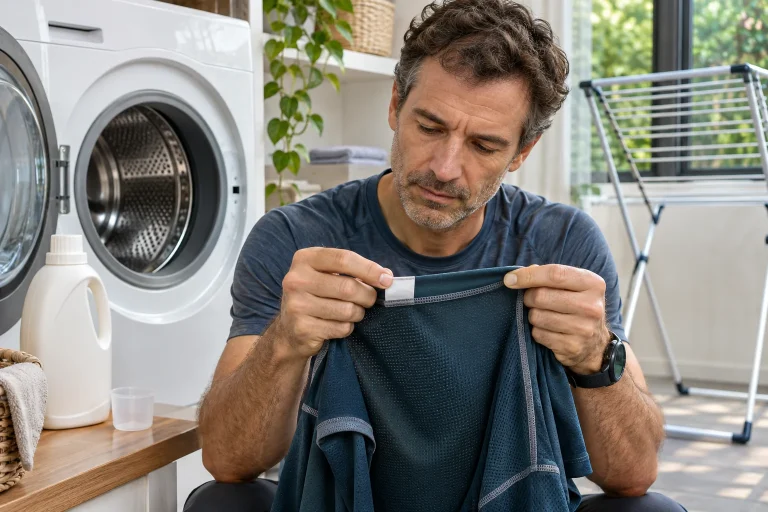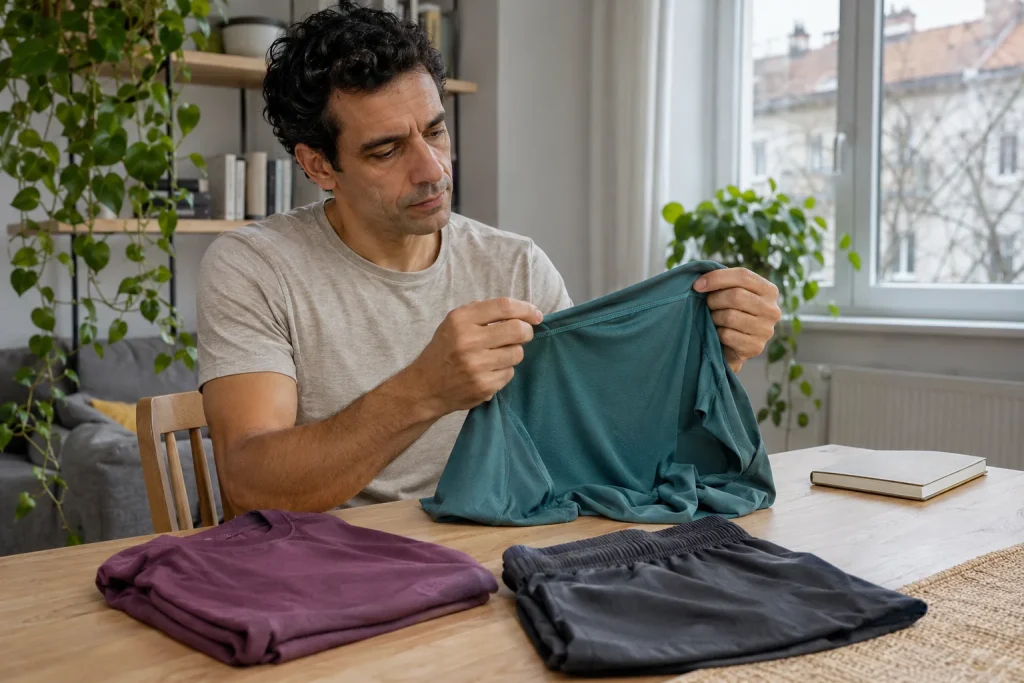
A new running top has joined your wardrobe, you bought a different detergent and used a new cream for the longer weekend run. In the evening, you notice itchy, irritated skin beneath your clothes. Blaming the most recent purchase seems obvious, but several contacts changed together in this history. An uncomfortable garment, irritation of the skin and contact allergy to a particular substance are not the same finding.
Clothing observations help assessment when you do not try to make them replace diagnosis. The aim is to explain clearly where, when and under what circumstances symptoms occurred, which products you used and what is already known about your skin. Seek medical help for recurring, persistent or severe symptoms. Reapplying something that already caused symptoms or sticking a detergent ‘test’ under clothing is not a safe home diagnostic procedure.
Contact dermatitis: contact matters, with two different mechanisms
The NHS describes contact dermatitis as eczema triggered by contact with a substance. In irritant dermatitis, the substance directly damages the outer skin layer; in allergic dermatitis, an immune response is involved too. The distinction matters because ‘something did not agree with my skin’ does not yet name the mechanism. Symptoms after wearing a garment do not equal confirmed textile allergy.
Both irritation and allergy can involve everyday products. NHS examples include cleaning products, soaps, cosmetic ingredients and certain metals. That does not make every listed item suspect. In your situation, the questions are what contacted the skin, where and how symptoms developed. A product name alone tells less than its contents and actual use.
Contact dermatitis can be itchy, dry, cracked or blistered. Visible colour changes may look different on different skin tones, so describe more than bright red patches. A photograph may help show changes over time, but phone comparisons do not become a medical examination. Describe symptoms factually: you should not have to fit your own skin to an online example image.
Describe the contact area without treating it as mapped proof
Exactly which area is affected is a useful starting point. Did symptoms occur beneath the neckline, at the waistband, on the shoulder or across a larger area? Was it covered by one or several garments? Was there a strap, zip, adhesive or applied product? These observations support the medical conversation. They do not prove that a particular seam, fibre or dye is responsible, even if the patch’s shape seems familiar.
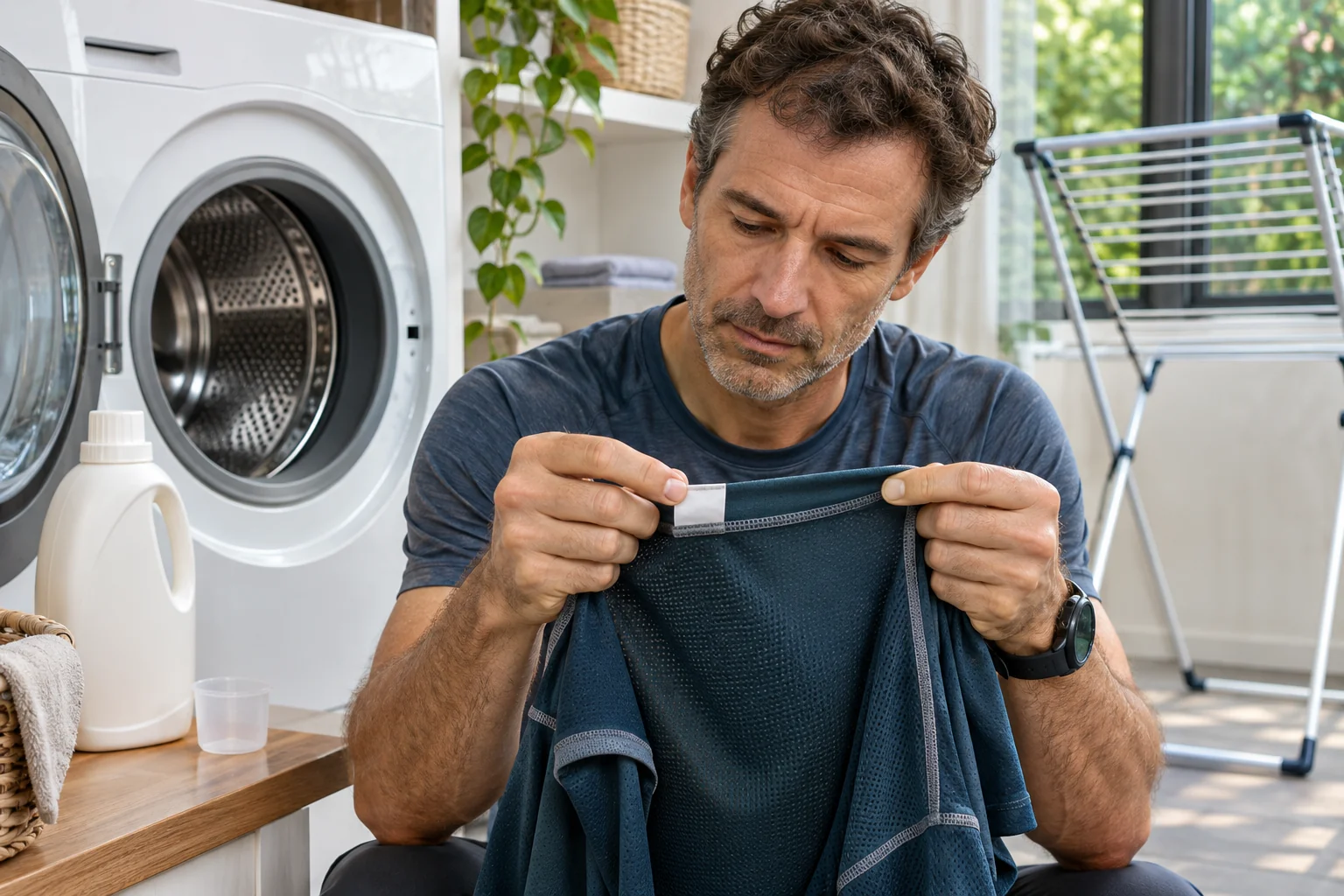
You can inspect clothing after removing it. Photograph the whole garment and label, then note which part contacted the symptomatic area. You do not need to put it on again or try it over a long run. Say if trouble occurred on first use; regular previous wear is important history too. Clarify ‘old’ and ‘new’ with actual periods of use.
Consider an example: you immediately attribute symptoms at the waist to the new trousers’ fabric. Yet a running belt contacted the same skin, and moisturiser used after showering covered the whole area. You need not decide which ‘wins’ as the cause. List all three and their order of use. The clinician then receives an interpretable situation rather than a prematurely narrowed, possibly mistaken label.
 Enlarge image
Include washing and skin products in the timeline
Alongside the garment’s purchase date, note the washing routine. Which product did you use, was there fabric conditioner, did you treat a stain with something else and did anything change from your normal procedure? This is not an invitation to begin a series of washing experiments. You are documenting use that already happened, without trying detergent or stain remover directly on your skin.
For cosmetics, likewise find the precise product rather than describing only its purpose. ‘Sun protection’, ‘anti-chafing cream’ or ‘fragranced moisturiser’ does not reveal ingredients. Keep the original packaging or take a readable photograph. The British Association of Dermatologists’ guidance for people preparing for testing also emphasises reviewing personal products and ingredient lists; agree with the particular clinic what to bring in person.
If you change many things at once, later improvement makes it harder to identify what contributed. Do not solve this by trying the suspected triggers on yourself again. Record what happened and seek help with reasonable next steps instead. Uncertain information is useful to the dermatologist when presented as uncertain. ‘Probably the same product’ is less misleading than a falsely certain brand name.
| What should you record? | A specific example | What does it not prove? |
|---|---|---|
| Contact area | The area under the shoulder strap and around the neckline. | It does not identify the allergen or irritant. |
| Sequence of use | The order of first wearing the top, washing and applying cream. | The last product used is not automatically the cause. |
| Product identification | The original ingredient list and exact packaging. | Reading the label does not replace assessment. |
| Symptom changes | When itching began and how it changed over subsequent days. | Improvement alone does not establish a specific contact allergy. |
Product trials, self-tests and specialist tests are not interchangeable
You can find accessible guidance on trying cosmetics on a small area before introducing them. The American Academy of Dermatology discusses this separately, but it is not the same as investigating an existing, recurring skin complaint. Observing tolerability before using a new product does not diagnose a condition or reliably identify which ingredient causes allergy.
Do not reuse a product already associated with a reaction merely to prove something. In particular, do not make homemade patches with concentrated detergent, stain remover or mixtures of substances. Your own preparation stuck to the skin is not equivalent to the test conditions, materials and specialist interpretation. Nor should you add sweating during running to make such an experiment more ‘realistic’.
If a commercial or community recommendation promises to identify textile allergy quickly at home, ask precisely what it measures and which professional interpretation accompanies it. Feeling better after avoiding a product is useful observation, but not necessarily identification of the triggering substance. Notes about known symptoms and all contacts may support appropriate care more than a reaction photograph you created yourself.
What does patch testing investigate, and why discuss running beforehand?
Specialist patch testing investigates contact allergy. BAD says it is performed in dermatology care and is not a test for food allergy. AAD also distinguishes patch testing for delayed skin reactions from skin testing used for immediate reactions. Different allergy tests therefore cannot replace one another simply because all involve the skin.
Testing can involve several appointments and later readings, so mention an important upcoming race or trip when booking. BAD’s guidance describes avoiding sport and strenuous physical activity during testing because sweating can detach the patches. Your testing clinic’s detailed instructions take priority. Scheduling a long run and trying to stick patches back on afterwards is not a good plan.
Tell the clinic beforehand about medicines, creams, other skin conditions and possible pregnancy. Do not independently stop medication based on preparation instructions. Ask what to do differently before and during testing and whom to call if a patch moves or a new reaction appears. Agreed contact arrangements are more useful than literally following another country’s patient leaflet.
You need usable everyday guidance from the result
At the end of testing, ask more than whether it was positive. Clarify what the result means for your actual products. Which substance name should you look for, which ingredient list matters and when should you request manufacturer information? A general ‘for sensitive skin’ label or familiar brand name is not the same as avoiding a specific trigger.
Do not translate a negative test into ‘it must all be in my head’ either. BAD explains that a negative patch test is useful information too: contact allergy may be a less likely explanation, but assessment of symptoms does not end. Discuss what was tested, which other explanations the doctor is considering and how further skin care or follow-up should proceed.
You do not need to replace your entire wardrobe before testing. Preserving product identifiers and clarifying the question is more useful than introducing many new materials together. If a professional advises avoiding a specific ingredient, you can make targeted choices later. This can support more sustainable shopping too: the decision rests on understanding your situation precisely rather than stigmatising a whole fibre family.
 Enlarge image
Let the skin’s condition guide the next step, rather than the entry date
If symptoms persist, recur or are particularly severe, seek medical assessment; a pharmacist can also help with initial symptom advice. Do not postpone targeted care until you have tried a long loop in every running top. Mention any existing skin condition and previous treatment plan. Assessing a new contact-related complaint is not solely a clothing choice.
Rapid worsening, discharge, increasing pain, feeling generally unwell or shivering can indicate infection according to the NHS symptom information. Seek medical help promptly rather than waiting for another detergent to arrive. Do not conceal the history with ‘the top only rubbed’ if symptoms have since changed. The current condition and speed of change matter more than your original explanation.
For returning to running or changing what you wear, take specific questions to the clinician: what may contact the area, which care can you follow and which change should prompt contact again? Keep observations, test results and instructions separate. Choosing a more comfortable top then remains a useful clothing decision, while diagnosing contact allergy belongs in the appropriate professional setting.
Sources
- NHS: contact dermatitis
- NHS: diagnosing contact dermatitis
- NHS: symptoms and signs of infection
- BAD: patch testing, 2024
- AAD: patch testing and skin reactions
- AAD: trying a new skin-care product beforehand
How Futószív articles are prepared: our editorial guidelines.