If a sudden snap or feeling of being struck from behind occurs in the calf–heel area during running, and pushing off or walking becomes harder, stop and seek urgent healthcare assessment. An Achilles rupture is possible; finishing a short run, stretching or a home test cannot rule it out. You need not read the rest of this article before seeking help.
According to Cambridge University Hospitals’ 2026 information, initial pain with rupture may decrease, and some altered walking may remain possible. Easing pain therefore does not establish absence of significant injury. New difficulty with usual push-off, together with the event, is important information even when pain is no longer as strong as at first.
The finish line is not a useful decision point now
Remaining distance can strongly influence a runner’s thinking. You can already see the finish arch, the car is nearby or companions say there is only a short stretch left. These understandable circumstances are not data for assessing injury. A nearby finish does not reveal what happened to the tendon or make something safe that would remain questionable over a longer distance.
“I will jog in slowly” still creates new load even below original pace. The decision need not fit a race result, paid entry or training streak. The NIAMS sports-injury information likewise advises against working through injury pain. The reason for help here is sudden change rather than achieving a particular pain threshold.
At an organised event, tell on-site healthcare staff or an organiser the specific symptoms. Add that you felt a snap and push-off changed rather than saying only “I cannot continue”. This is clearer than describing it solely as tiredness. Someone else can handle the race number and luggage; you need not finish before care is justified.
Why is the Achilles important in push-off?
The AAOS tendon-rupture page describes the Achilles as the force-transmitting connection between calf muscles and heel bone. It contributes to downward foot movement and forward travel during walking or running. This explains the relevance of new functional change and why pain location alone is insufficient.
The tendon is more than a sore point above the heel. It transmits force in movement, so interrupted continuity differs from an uncomfortably tight muscle sensation. Experience alone cannot establish the exact structure involved, however. A snap, pain and weakness do not identify tissue at home; prompt assessment clarifies this.
“I can move my foot” is not the same as having usual push-off either. One partial movement does not establish integrity of the whole system. You need not examine tendon function by rising onto tiptoes or jumping. Report changes in normal movement rather than add load to prove a possible explanation.
 Enlarge image
The experience may follow a known pattern, but you need not make the diagnosis
CUH describes feeling struck from behind when no external contact occurred. A snap or crack can also form part of the history. Report the sudden event precisely. You need not wait for dramatic swelling or bruising before seeking help for changed function.
Other calf or ankle injuries can also cause sudden symptoms. The article does not ask you to declare every snap an Achilles rupture, but not to rule the possibility out with a few apparently reassuring personal tests. Appropriate assessment can consider several causes. Recognising and communicating the event, rather than final differentiation, is the layperson’s task here.
Sudden change matters even without earlier tendon symptoms. If pain existed previously, do not automatically call the new event a usual bad day. Separate what was normal before, what happened now and how push-off changed. An old diagnosis is important history rather than a complete explanation of every later symptom.
Why are easing pain and ability to walk insufficient?
Pain intensity may change after the event, so later mildness does not rewrite the first minutes. CUH says walking with rupture may be difficult but remain possible in an altered form. Together these explain why “I can tolerate it now” is unreliable. Possible injury is not excluded according to pain tolerance.
“If you reached the car, it cannot be serious” is not a valid home rule either. Distance covered shows only that you covered it somehow. It does not reveal compensations, involved structures or condition. Report changed function even if momentum or circumstances led you to continue initially.
If a companion suggests standing again to see what happens, ask instead for help arranging assistance. Symptom history does not need repeated demonstrations. Earlier walking or one brief movement now cannot reliably replace assessment. Self-testing need not become a condition for the next safe step.
Do not make massage, stretching or a rupture test the first response
Sport has familiar responses to sudden calf symptoms: touching, stretching and trying to loosen the area. With an uncertain sudden event, clarify what happened first. You need not force the foot upwards, perform deep heel drops or have a running companion examine the calf. The goal is appropriate care rather than immediately “releasing” the symptom.
AAOS explains that medical examination can include special manoeuvres. Their description is not a home guide. As a layperson, you need not interpret foot movement during calf squeezing or use it to clear yourself to continue running. The examiner evaluates signs with history and the whole situation; one home test does not replace that.
If you already tried such a method, simply report it in care. There is no need for shame or repeating it to make the result seem more precise. The current task is communicating history and condition. Also report when medication was taken or other help received and known details.
Location and reaching care are part of seeking help
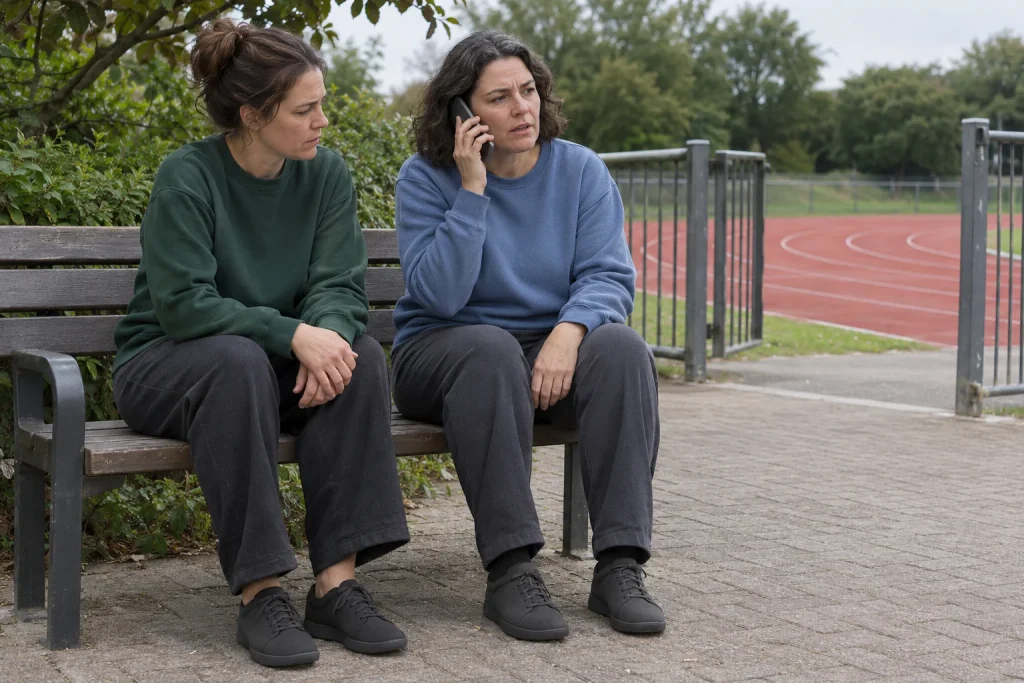
Explain exactly where you are, whether anyone is with you and how well you can move. Access differs at a track, park, city street or trail. Logistical information helps the next step fit reality. A companion can handle location sharing or contact while you stop safely and wait for appropriate help.
Getting home must not become a test of the condition. If walking is difficult, do not prove no care is needed by overcoming distance. Hurrying to a bus stop or a stair shortcut adds load too. Request guidance and help reaching care, reporting environmental difficulties. You need not independently improvise suitable transport or support.
The running companion’s task is not diagnosis. They can call available help, provide location, take luggage or notify someone needed. In a group, make responsibilities clear. You need not demonstrate injury details through painful movement to every new helper; a brief precise verbal handover may help more.
 Enlarge image
Prioritise the sudden change during assessment
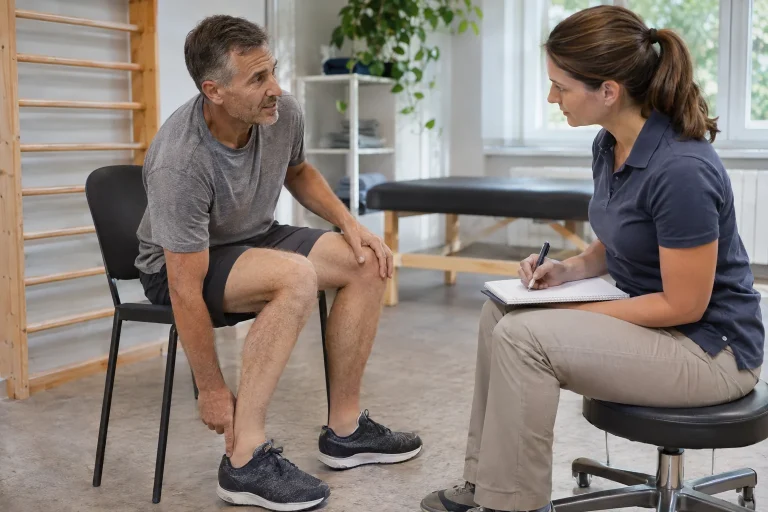
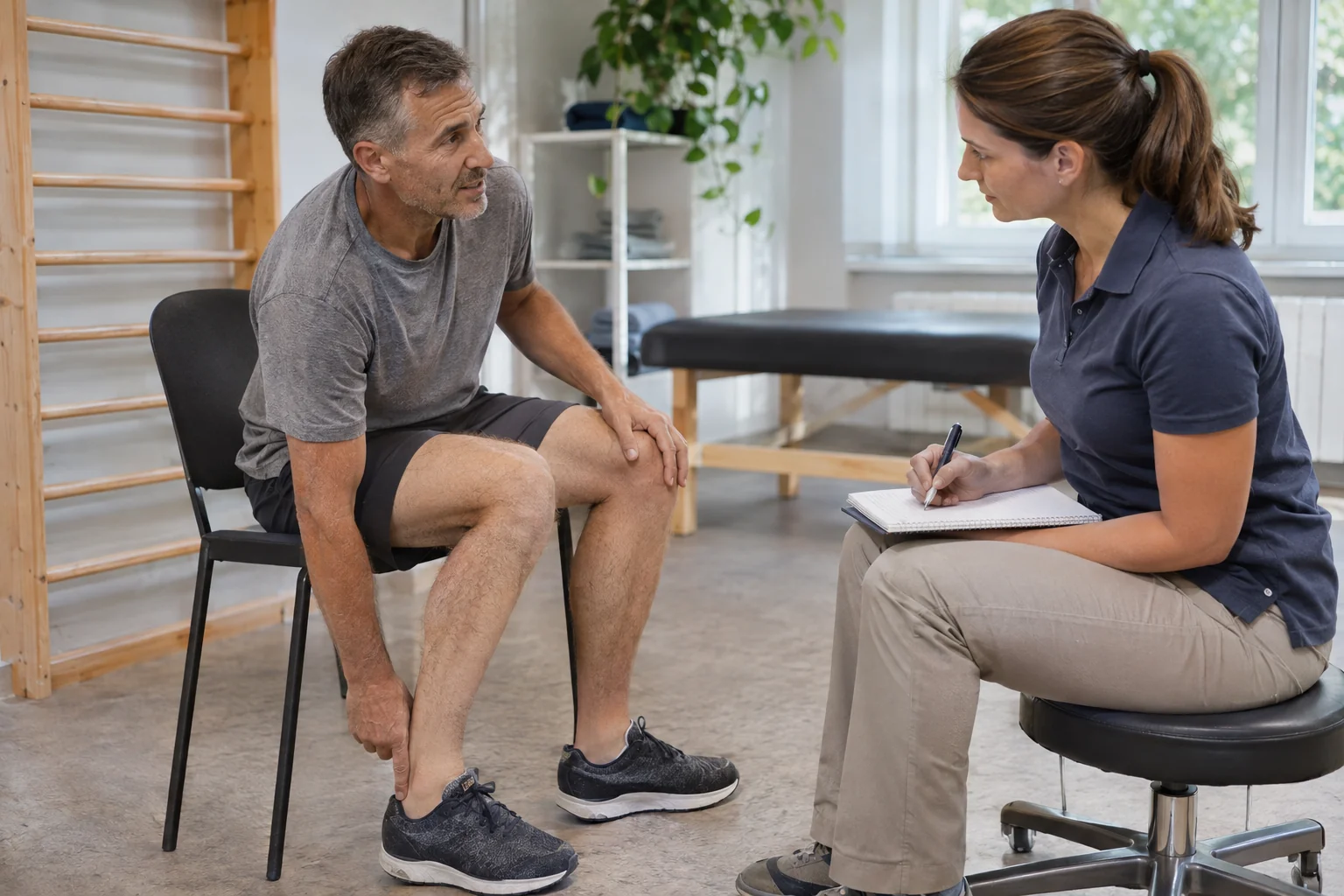
A brief handover might begin: “At this time while running I felt a snap at the back; since then I walk differently and pushing off is difficult.” Add exact location, pain changes, previous tendon symptoms and other relevant history. You need not choose a Latin name. Describe symptoms and functional change; examination supplies professional classification.
The AAOS also describes history, medical examination and imaging when needed. The same investigation is not required in every case, and you need not decide nothing can be clarified without MRI. Ask what has been established and whether questions remain. Reassurance comes from understandable assessment rather than one investigation’s name.
If given immobilisation or another aid, understand its use personally. Do not adjust it from another patient’s internet account. Different care pathways and conditions may carry different instructions. CUH presents its own treatment timetable too; Hungarian readers should not adopt it as a general self-directed adjustment or loading programme.
Later treatment is an individual decision
Confirmed rupture does not automatically mean identical treatment for everyone. The AAOS discusses surgical and non-surgical options, emphasising condition and personal needs in the decision. You need not compare surgical outcomes on social media in the first moments instead of seeking help.
The plan should clarify how and how much weight bearing is allowed, the next follow-up and which symptom changes require earlier contact. Rehabilitation and return to sport are separate processes rather than an online calendar to tick. Your clinician links steps to the current condition. Another runner’s recovery time is not a deadline for your tendon.
At the moment of sudden snapping and difficulty pushing off, the most important decision is simpler than later treatment questions: seek appropriate assessment rather than try to finish. You need not first prove rupture definitely occurred. Easing pain and several steps do not settle the question. Promptly reporting the event and new functional change provides the starting point for individual care.
Sources
- Cambridge University Hospitals: Achilles rupture, symptoms and care, 2026
- AAOS OrthoInfo: Achilles symptoms and suspected sudden rupture
- AAOS OrthoInfo: Achilles rupture, examination and treatment decisions
- NIAMS: sports injuries, seeking help and rehabilitation
How Futószív articles are prepared: our editorial guidelines.