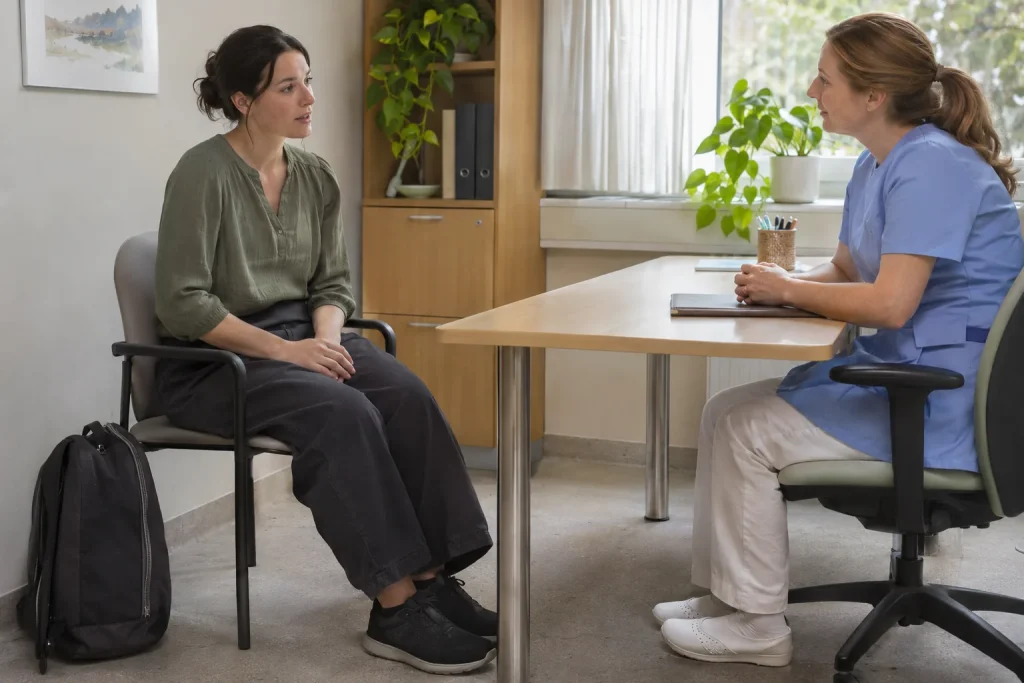
During everyday movement after a caesarean, a new sensation appears around the wound: stronger pain, an uncomfortable change or something you have not experienced before. As a runner, it is easy to immediately turn this into a workload question: was the walk too long, are your clothes tight or is your core simply still weak? Circumstances matter, but a new wound symptom may also need healthcare assessment. Report the change to the appropriate person first, rather than planning the next workout.
Seek healthcare guidance promptly for increasing pain, redness or swelling around the wound, discharge, an unpleasant smell, the wound opening, fever or feeling unwell. For severe acute illness, difficulty breathing, chest pain or fainting, you can call 112 in Hungary. The date of your next check-up is not a rule requiring you to wait with new symptoms. The following considerations help you describe symptoms and understand your individual actions; they do not teach wound examination or treatment at home.
A new symptom matters more than a general recovery deadline
The NHS information on recovery after a caesarean describes adjustment over several weeks and a cautious return to activity. A general recovery timeframe does not mean every symptom is normal until then, or every activity automatically appropriate afterwards. Describe your own change as part of your current condition.
‘This much time has already passed’ often seems a reassuring argument, but it is not an examination finding. You may have felt well on previous days yet have a new symptom now. This change over time is an important part of the story. You do not need to keep the symptom quiet because others think you should be better by now.
The same applies to an earlier check. If the wound was found to be fine then, that described its condition at the time. You can still report new pain or a visible change. Asking for help is not questioning earlier care; it provides new information about what has happened since.
Which changes are worth naming specifically?
The NHS lists increasing redness, pain and swelling around the wound, and pus or foul-smelling discharge, among signs requiring immediate contact with your healthcare professional. The Gloucestershire Hospitals NHS wound care information also highlights wound opening and generally feeling feverish and unwell. You do not need to construct a diagnosis from these yourself.
You can ask for help with a simple description: ‘It hurts more than yesterday’, ‘I noticed new fluid’ or ‘The wound edge looks different’. You do not need to know whether infection, irritation or another cause lies behind it. A professional can ask for details and determine the examination needed. Precise observation is worth more than a label selected at home.
Colour changes do not look the same on every skin tone. The Guy’s and St Thomas’ NHS patient information draws attention to this too. Do not therefore look only for resemblance to a wound photograph online. Changes in pain, swelling, discharge and how you feel can be described separately, and you do not need to look identical to an example photograph for assessment.
 Enlarge image
Fever and feeling unwell belong in the wound account
The current Cambridge University Hospitals wound care information lists fever, feeling unwell, increasing pain and discharge among symptoms to report. Do not leave these until the end of the conversation simply because you began thinking about a local sensation linked to a movement. The professional needs to know the full current picture.
‘I have been tired all day’ and ‘I newly feel feverish and ill’ are not necessarily the same story. You can describe the tiring circumstances of the postpartum period too, but do not use them to exclude a new symptom’s significance. You do not have to decide the explanation beforehand. When seeking help, describe the change, its onset and accompanying symptoms.
If you become severely acutely unwell, do not spend the first moments photographing the wound. The CDC information on maternal warning signs also treats chest symptoms, difficulty breathing and fainting as urgent signs. Reaching appropriate help comes first then, while the wound and surgery history can be described as important background.
| Information | Useful wording | What you do not need to do first |
|---|---|---|
| Timing of surgery | This is when the caesarean took place, and this was the follow-up I received. | Rewrite the entire hospital history in detail. |
| New local change | This has become more painful, swollen or different around the wound. | Press on it or perform strenuous movement to prove the symptom. |
| How you feel | I also notice fever, weakness or another new feeling of illness. | Decide whether the wound definitely causes it. |
| Circumstances of noticing it | I noticed it while walking, standing up or doing another activity. | Repeat the task as a test. |
Describe the movement, but do not use it to determine the cause
It can be useful to know that the symptom appeared while walking, standing up, bending or doing a childcare task. The circumstance is not necessarily the cause. If the wound’s condition is already changing, a particular movement may simply have made the sensation noticeable. Describe that account without drawing your own conclusion.
If you used a sports watch, its timing may help recall the event, but a complete workload analysis is not needed to make contact. Distance and heart rate do not measure the wound’s condition. You do not need to assign every new symptom to the day’s latest activity, and low intensity does not establish that it is certainly harmless.
Do not repeat the same task to check whether the pain appears again. Provoking a symptom is not a condition for asking for help. If it has gone away, that may also be important information, but do not turn it into automatic permission to continue the previous programme. Decide about continuing according to individual guidance.
A new symptom is not a scar-massage task
Among sporting advice, you can easily find scar treatment, mobilisation, tape or a technique to ‘release adhesions’. With a new wound symptom not yet assessed, however, clarify the situation with your healthcare professional first. This article provides no self-massage or wound treatment instructions. A change relating to an existing individual treatment plan also needs reporting to the person who set it.
Follow the wound care arrangements you received and ask if uncertain. Different wound closures, dressings and care circumstances mean online examples do not necessarily describe your task. Do not begin using a new product or technique because someone found it useful during another recovery. Assessment of the specific symptom should precede improvised changes.
Do not adjust medication to planned activity on your own either. If the symptom changes your pain-relief needs or previous guidance is unclear, discuss this with your healthcare professional. Masking pain is not an assessment of suitability and is not intended to enable you to finish a predetermined programme at any cost.
If several people offer different everyday suggestions, keep healthcare guidance clearly distinguishable. Note who provided it and which symptom it concerned. A friend’s idea should not become mixed into your individual care plan simply because it appears in the same phone note.
Agree with your healthcare professional how to show the wound
A phone discussion may lead to a request for a picture or an in-person examination. Clarify the method and purpose of sending an image through the appropriate care channel. You do not need to upload a wound photograph to a running group or public forum for opinions. Visual resemblance does not replace examination, and the image may reveal personal health information.
If looking at or describing the area is difficult, say so. You do not need to stop seeking help because of this or move around to find the best photographic angle. The professional can suggest an appropriate next step. Your own comfort and consent are also part of how assessment happens.
Your partner can help with calling or preparing documents if you wish. It still matters that your own symptom description is heard. If you can answer, the other person should not reshape the story as ‘just a little strain’. Help is practical support, not a preliminary judgement of the symptom.
 Enlarge image
Be clear about the care contact and review date
You do not need to wait for the next general check with a new wound change. The NHS asks for immediate contact with the symptoms described, and hospital information also emphasises that problems needing reporting can develop at home. Within your own care, know whom to contact with a new symptom: the maternity contact you were given, your treating professional or currently available healthcare services.
At the end of the call, ask whether you need to attend, when, where and which changes mean you should seek help more urgently. If guidance is unclear, ask for clarification. ‘Keep an eye on it’ alone may be insufficient; it helps to know what you are watching, for how long and whom to tell. You can also briefly write down the individual instructions received.
If another change or deterioration occurs after the first contact, report it as new information. You do not need to stick to advice given for the previous condition as though it applied unchanged to every later situation. Monitoring recovery is an ongoing process in which symptoms and the professional’s feedback can both change.
Plan continued sport from the assessed situation
Once the symptom has been clarified, ask about activity separately: what can you do, what should wait and which changes mean you should get back in touch? A wound check does not necessarily assess the entire running plan. You need to understand both general activity and the specific question of running within your own situation.
A missed workout is not a debt. You do not need to transfer the same duration into another activity tomorrow or make up the previously planned volume at the weekend. Individual recovery and healthcare tasks are currently a more important foundation than a complete calendar. Tell your coach or companions only what is necessary to modify the programme.
Reporting a new symptom after a caesarean does not mean giving up trust in your body. It means taking your own experience seriously: you noticed something different and take it to the appropriate professional. Sport can regain a place later; the next step now is understandable guidance on your current condition and the requirements for continuing safely.
Sources
- NHS: recovery after a caesarean and symptoms to report
- CDC: urgent maternal warning signs
- Gloucestershire Hospitals NHS: wound symptoms after a caesarean
- Cambridge University Hospitals: wound care and changes to report, 2026 information
- Guy’s and St Thomas’ NHS: reporting wound changes
How Futószív articles are prepared: our editorial guidelines.