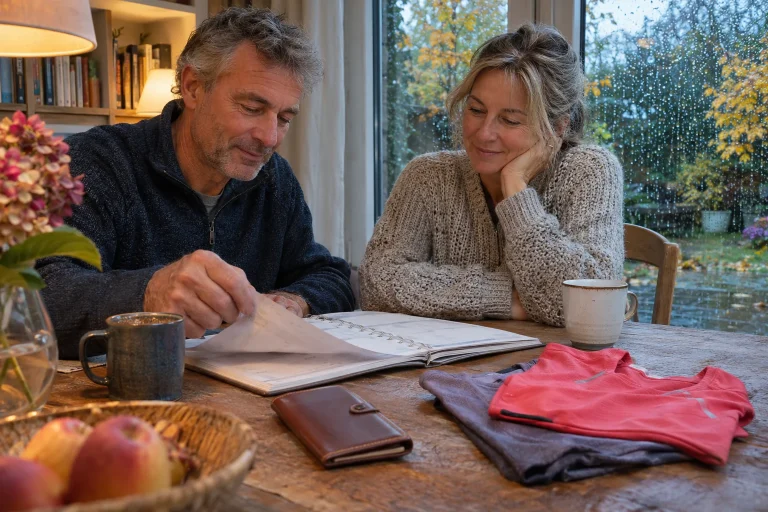
You have started finding room for movement in your week, but the scales cannot show how the routine is developing. Your weight may be unchanged while you now know when you can leave without rushing. You have found a comfortable route, clarified your own pace with the group or stopped searching for equipment before every outing. These are real changes in how your sport works.
Tracking without scales does not mean replacing body weight with other numbers. It means choosing feedback for your own goal. Building a feasible habit needs different information from monitoring a health condition or professionally assessing a specific sporting ability. That distinction helps make a diary useful rather than another task to prove yourself.
First name what you want to understand better
‘Am I progressing?’ may be too broad. Make it specific: am I reaching my chosen session more regularly, is setting out easier, can I find a suitable programme, or do I better understand what fits my day? Each question suggests different observations. If scheduling is the main difficulty, running pace may not answer it.
The NHLBI activity guidance recommends naming benefits that matter to you and planning movement within an enjoyable, feasible daily routine. An activity diary can support this. Everyone need not value the same things. Company, outdoor time or movement fitting everyday tasks may take priority for different people.
Write one sentence making your own question recognisable. For example: I want a weekday time I do not constantly have to cancel. Or: I want to join shared sessions according to my own programme. These are organisational goals, not clinical indicators. Yet they reveal whether movement is finding room in your real life.
Conditions behind a completed session matter too
A tick shows something happened, but not how. Departure may have been calm or rushed, the location convenient or difficult to reach, participation chosen or pressured. Sometimes one short sentence teaches more about a routine than the number of completed days. It also reveals which condition you want to recreate.
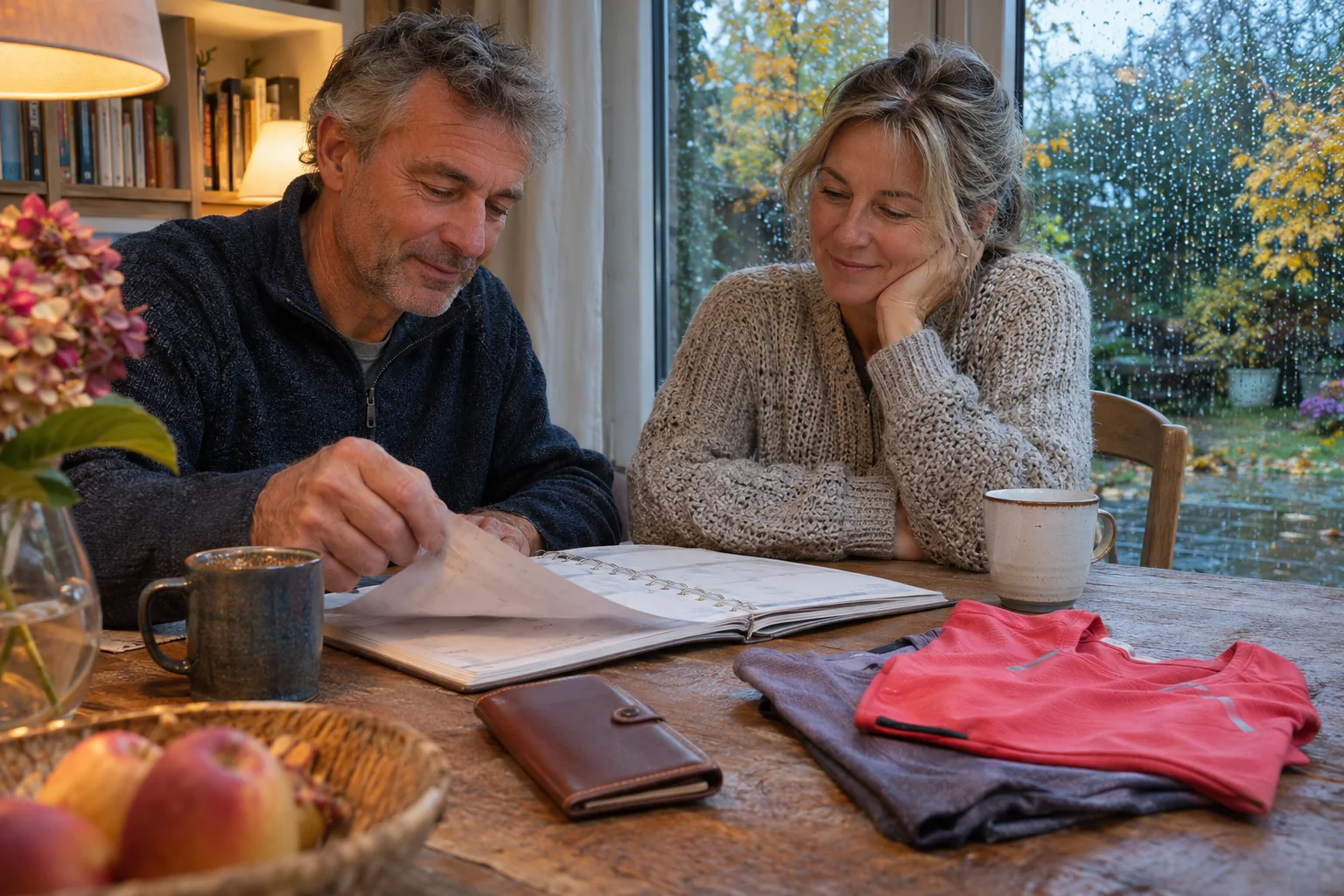
The NIDDK activity guide highlights goals, barriers and tracking experiences. This is not a compulsory diary format. You might note that preparing a bag made departure easier or another bus allowed a calmer arrival. These can lead to specific organisational decisions later.
A missed session is more than an empty box too. Illness, unsuitable weather, unavailable support and an uninteresting programme are different stories. Turning them all into one failure count loses information. Simply name the circumstance factually. The aim is not overcoming every barrier but understanding what can be planned differently and what needs accepting now.
Make comfort a specific observation
‘I felt better’ is important personal experience, but occasional detail makes planning easier. A top stayed down, socks needed no adjustment, the group let you stop freely or there was unhurried time for travelling home. These do not need one combined score. They are different details belonging to your activity situation.
In a larger body, appropriately sized objects with suitable capacity can support comfort. Finding a usable chair, fitting clothing or adjustable equipment is an environmental improvement. You need not record it as a body change. Your diary can separate venue suitability, understanding the task and suitable equipment, distinguishing observations about yourself from solutions in the environment.
However, more comfortable clothes or a better mood do not exclude a health problem. Do not merge new pain, numbness or recurring illness into a general comfort score. Describe separately what occurred and when. An organisational diary does not replace medical assessment or establish that symptoms are insignificant.
 Enlarge image
Learning can be a visible outcome too
You learn many small things while establishing activity. Where can you arrive for a session? How do you adjust suitable equipment? Which route offers an easy return? What should you ask the instructor? These may not appear in a watch summary, yet can change feasibility. Reduced uncertainty often comes from very specific knowledge.
A note might say you now know whom to ask for an individual adaptation or have learned the difference between two app fields. This does not require calling every workout a lesson. Simply notice that you have more choices. Independent navigation of sport can shape a routine, especially after a long break or life change.
A learning goal is not a clinical ability test. Do not invent home tasks to infer heart health, joint capacity or freedom from injury. Discuss appropriate assessment of a specific movement ability with a professional. Record what you actually observed, not what you hope the observation proves.
Wellbeing and device data play different roles
A watch may record time or distance while you describe how the session felt. Neither makes the other unnecessary. Attractive data do not prove a programme fitted your day, and a pleasant experience does not check sensor accuracy. If using both, keep separate lines: what did the device record, and what was your experience?
Comparisons also depend on how similar circumstances are. A relaxed weekend walk differs from a post-work outing involving travel. Do not attribute every difference to bodily improvement or decline. First examine changes in programme and surroundings. An observation’s value comes from better understanding, not the dramatic nature of change.
Simpler tracking does not require buying a device. A small sheet, calendar entry or a few personal sentences may answer an organisational question. More data also require more organisation. If you do not use them for decisions, you need not collect every possible metric. Your routine is not more serious because it appears on many screens.
| What would you like to track? | Simple observation | Interpretive limit |
|---|---|---|
| Feasibility | What helped or hindered setting out? | Not a grade for discipline |
| Environmental comfort | Did venue, clothing and access work? | Not a medical finding |
| Learning | What became clearer or independently manageable? | Not a test of fitness to run |
| Your experience | Which part would you like to experience again? | Not guaranteed health or weight change |
Do not confuse one worse day with persistent deterioration
A session can be harder to arrange or less enjoyable. Name circumstances rather than immediately calling the whole routine a failure. Schedule, company or venue may differ. Symptoms still deserve attention: describing a circumstance is not the same as certainly identifying its cause.
If fatigue persists, has no clear explanation, affects daily life or comes with other symptoms, seek healthcare assessment. The NHS information on tiredness and fatigue recommends medical discussion in such situations too. Do not counterbalance persistent worsening with positive diary signs or try to explain it away using supplements or more training.
When seeking help, describe changes in familiar functioning. Previously easy daily tasks may have become harder, or symptoms may recur across different settings. You do not need enough diary entries first. Observation can help discussion, but necessary care must not depend on finishing a tracking project.
What might a genuinely short tracking sheet look like?
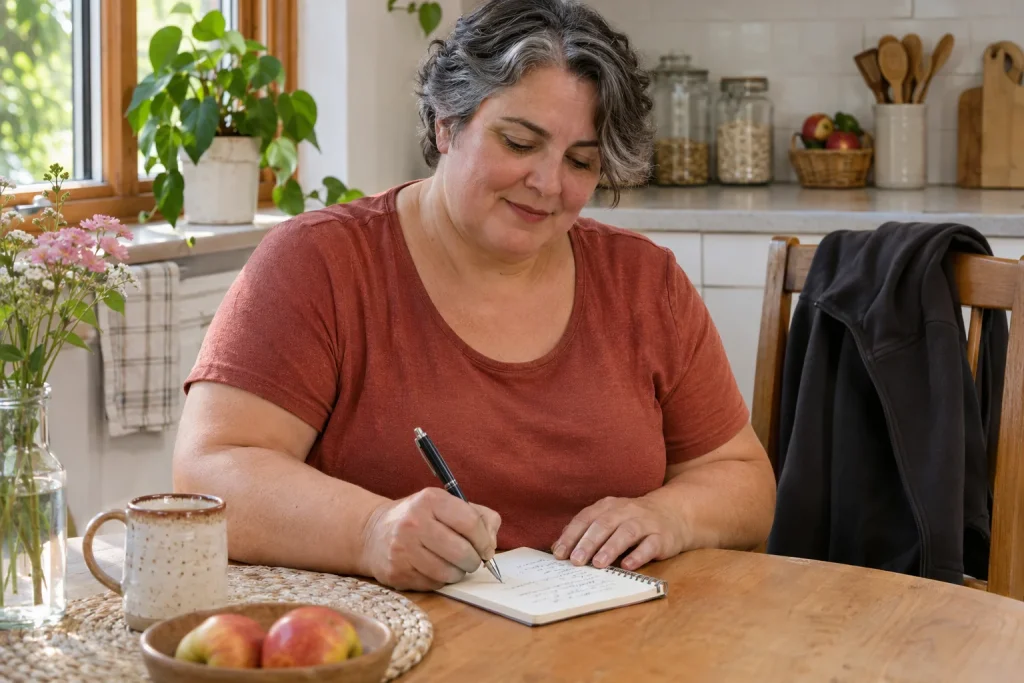
Choose a few questions you actually use. What was the programme? What helped participation? What did I experience? What would I change next time? Each answer can be a sentence. Not every question needs answering daily, and retaining only one important detail is fine. The sheet exists to ease later decisions.
A fictional entry could be: ‘I started at the nearer entrance. Arrival was calmer. My phone bounced in the pocket, so next time I will look at other storage.’ No calories or weight appear, yet one thing to keep and one to change are clear. The next decision can be simple equipment or organisation rather than another performance target.
Another fictional entry: ‘I said beforehand I would leave early. They accepted it, so I did not have to justify myself.’ This shows a working social condition. Recording only distance might make shorter participation seem a decline, while your independent choice was better respected. Tracking chosen for your goal reveals that distinction.
 Enlarge image
Do not let a new metric become a new compulsion
Strict rules can arise even after putting scales aside: always more sessions, better feelings or more positive entries. But a routine is not a constantly rising graph. Life circumstances and necessary adaptations change too. If tracking makes you feel guilty about every modification, simplify, review less often or discuss what you want it for.
Sharing data is also a choice. You can show a coach relevant details without uploading anything publicly. Personal notes may contain health or private information that does not concern the whole group. Maintaining a routine does not require constant public proof of participation.
Occasionally ask which observation led to a real change. If a field is regularly completed but helps nothing, omit it. If a recurring practical barrier becomes clear, seek a solution. A diary is useful because it connects to your decisions, not because every space is filled.
Take one understandable decision into next week, not a number
A review may need only one condition to retain and one modification. Keep the convenient starting point but change the time; keep the social programme but clarify getting home; keep short notes but remove pointless scoring. These decisions concern how the routine works. None must become another step up in training load.
An activity routine can develop in more places than a weight graph. Better access, clearer tasks and respect for your choices count too. Health changes need appropriate individual assessment; understanding how everyday sport works can start from specific experiences. Separating those purposes makes tracking more precise and less burdensome.
Sources
- NIDDK: Tips to Help You Get Active
- NHLBI: Getting Started and Staying Active
- NHS: Tiredness and fatigue
How Futószív articles are prepared: our editorial guidelines.