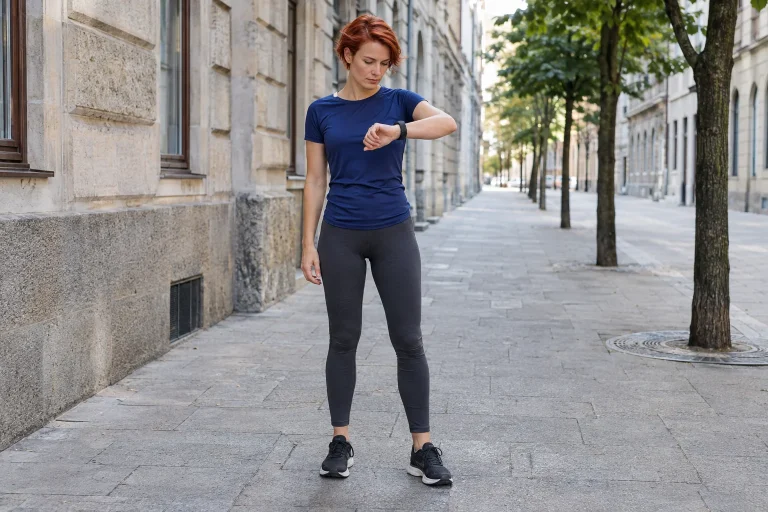
In the minutes before a start, the same bodily arousal can mean eagerly anticipating the run or wishing you could go home. Afterwards, you may talk energetically even if moving did not feel particularly enjoyable. Adrenaline’s name is often applied to every situation: it drives, lifts and energises us. It is worth looking more closely at the bodily process genuinely bearing this name and the personal experience with more components than that.
Running biology is interesting because muscle work, circulatory adaptation, attention and feelings meet in one event. Researchers nevertheless ask separate questions about them. The amount of a substance in a blood sample differs from whether someone enjoyed running, and from targeted brain imaging. Keeping these perspectives together makes hormone news much more informative.
Adrenaline is a signalling substance; excitement is an experience
Adrenaline and epinephrine are two names for the same substance. The Society for Endocrinology introduces it as a hormone: entering the bloodstream from the adrenal gland, it adjusts several organs’ activity to the situation. Cellular responses depend on their receptors and functions. Circulation, breathing and energy mobilisation can all form part of this coordinated response. Noradrenaline, also called norepinephrine, is related but separate; similar names do not make the substances interchangeable. The professional society’s explanation of adrenaline clarifies hormonal signalling basics rather than providing a procedure for measuring running pleasure.
Everyday excitement, by contrast, is a personal account. It can mean pleasant anticipation, nervousness, alert readiness or liberation after a difficult task. Saying you are excited does not specify how much of which substance circulates in your blood. Seeing an adrenaline value in a laboratory result likewise does not alone reveal how the event felt. Everyday statements and biological data describe the same person at different levels.
Imagine two runners beginning a shared workout. One thinks about the familiar route; the other wonders whether they can keep up. There may be similar bodily signs in the story without their experiences being identical. This is an illustration, not a finding that their hormone levels matched. Its lesson is precisely that visible movements and chosen words cannot calculate a specific molecular quantity backwards.
What does catecholamine mean in running research?
Catecholamines are a group of compounds including dopamine, noradrenaline and adrenaline. This does not mean measuring one variable under three names. Readers should immediately identify which substance a study measured, from which sample and when. “Catecholamines increased” conceals much more detail than separately naming the substance and sampling. A group name can provide an overview, but interpretation needs the individual measurements.
Winter and colleagues’ 2007 study compared intense running, more moderate running and rest in twenty-seven healthy participants using a random-order crossover design. They examined learning new words, finding faster acquisition after the intense condition. Peripheral BDNF and three catecholamines were measured around the interventions too. Certain molecular values were associated with later learning outcomes. The original paper thus connected activity, a learning task and accompanying biological phenomena, rather than producing a happiness value from blood.
Notice the target outcome here: vocabulary learning and subsequent recall. News about it shifting to post-run euphoria is already addressing another question. Better learning, pleasant mood and bodily liveliness can all be interesting without serving as substitute measures for one another. An imaginary data sheet would therefore have three fields: what was the task, what did the laboratory measure and what did the person report about feelings?
 Enlarge image
Sampling location belongs to the claim
Peripheral measurement refers to a sample outside the central nervous system. Blood drawn from an arm differs from measurement at synapses in a particular brain region. A substance being called dopamine or noradrenaline does not specify measurement location simply because we also associate it with nervous-system function. In science news, “in blood”, “in urine” and “through brain imaging” therefore carry substantial information. Omitting them can easily expand a claim beyond the data.
PET takes another approach: it examines a specified radioactive tracer’s distribution or binding to targets. RadiologyInfo’s professional patient information also emphasises that different tracers inform different processes. A brain appearing in an image therefore does not mean every neurotransmitter has become visible. The tracer and interpretive model belong to the research question too. The professional introduction to PET helps explain this distinction.
In 2000, Wang and colleagues used post-treadmill PET in twelve healthy adults who exercised regularly. The tracer raclopride examined D2 receptor availability in the putamen, without finding a significant difference from rest in that design. This targeted brain study asked a methodologically different question from research on blood catecholamines. Findings from different approaches do not imply that either measurement proves the other wrong.
| Which data? | What can they describe? | What else does interpretation require? |
|---|---|---|
| A substance measured in blood | The concentration measured in that sample | Substance name, sample type, timing and condition |
| A substance measured in urine | A laboratory value tied to the collected sample | Collection procedure, processing and comparison |
| A targeted PET measure | A signal for the process examined with the chosen tracer | Brain region, tracer, measurement window and model |
| A personal experience report | How someone experienced the situation | The question asked and the report’s timing |
The same running task in another social situation
The setting in which a running experience arises can say much about it. A 2023 original study examined interval running in twenty-two men who exercised regularly, first individually and then competitively. Researchers analysed flow reports and urine catecholamines. In the noncompetitive condition, greater flow was associated with lower adrenaline and noradrenaline values; the same association was not identified in the competitive condition. The full paper separately describes sampling and condition order.
This suggests an interesting thought: the situation’s meaning can be studied alongside movement’s form. However, the individual task preceded the competitive one, only men were studied and laboratory values came from urine. The association is not direct brain measurement or proof that adjusting one hormone produced absorption. Distinguish stronger mechanistic interpretations from the relationship actually observed.
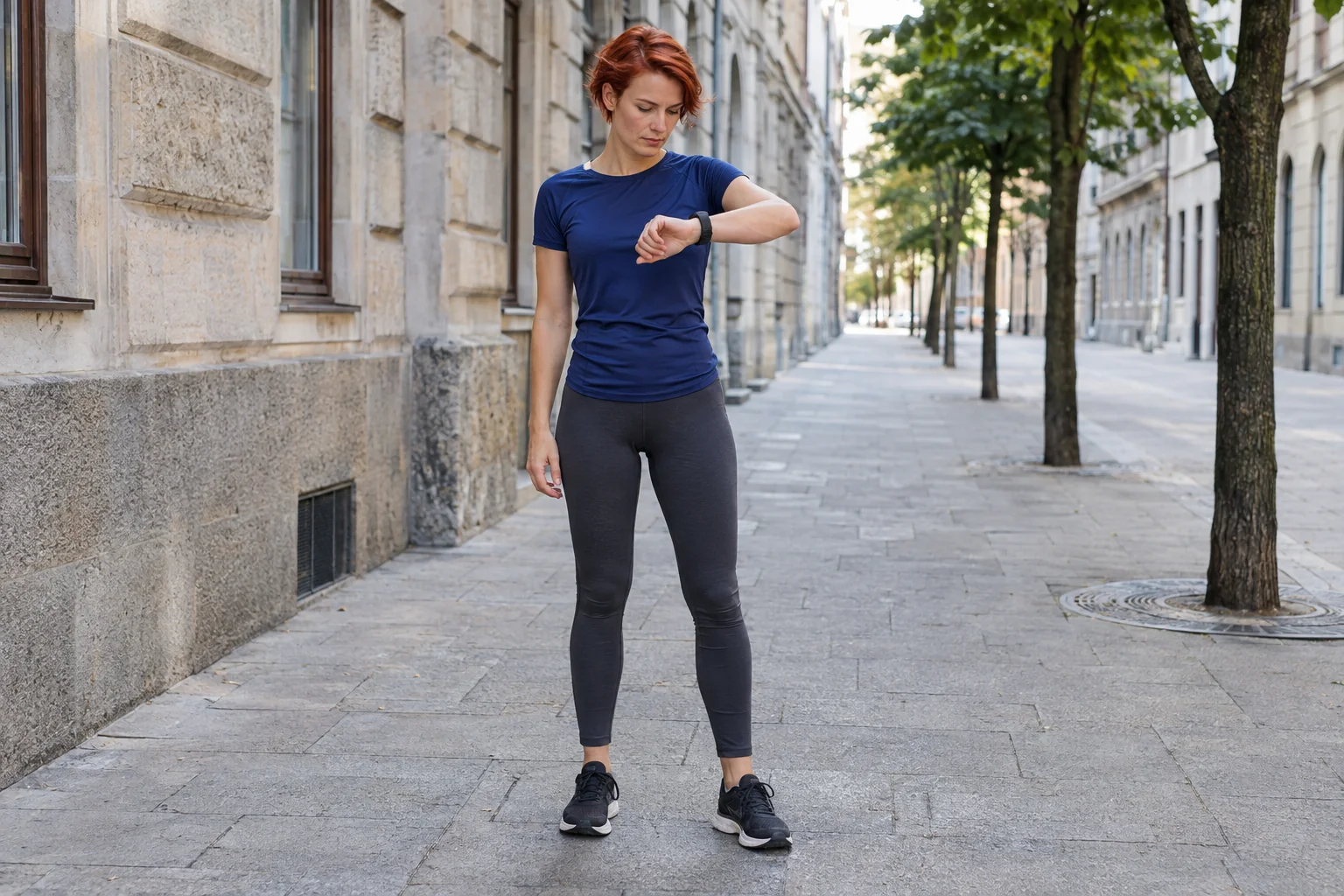
For your running life, this can become a question: in which situations can you genuinely attend to moving? An individual run with glances at your watch, friendly conversation and pre-start waiting may tell different stories. Your answer is not a home hormone test, but a more precise description. Saying a shared jog’s conversation carried you along already says more about the afternoon than assuming your adrenaline level was good.
How does association become an explanation too quickly?
Imagine a study where both a laboratory value and a task result change after activity. We can make three statements: something changed in the sample; performance changed; the two variables were associated. Saying the first caused the second is another step. Establishing a mediating mechanism also requires examining how other explanations can be excluded and whether the proposed pathway really explains the effect. Attractive parallel curves alone are insufficient.
Comparison conditions improve the question. If the same person attends rest and exercise sessions, fewer individual differences remain that could mistakenly be attributed to activity. The complete exercise situation still contains several elements. Physical work, timing and the break before the task together form the intervention. A group difference can convincingly support this complex situation without separately proving each molecule’s role.
In running discussion, therefore, checking verbs is good editorial practice. “Measured”, “was associated with” and “may explain” express different certainty. “Causes” or “guarantees” are much stronger. If research found an association, precise wording does not make it uninteresting. It identifies where the next question begins for another experiment to answer.
How should you read a headline about an energising hormone?
An imaginary report promises that a short run releases a happiness hormone and makes your brain work better. Break this apart. What kind of run? Who was studied? What improved: learning words, button-press speed or an experience report? Which substance was measured where? Individual answers may form a genuinely exciting finding, but claims packaged in a headline do not automatically become conclusions from the same experiment.
A more precise headline is less magical but teaches more. It might say that certain learning outcomes and peripheral signalling substances varied together after running in a small human study. Or that another group sought changes in a defined receptor signal through targeted brain imaging. You can then choose which question interests you: learning, physical adaptation, flow or calm. They need not all reduce to one happiness word.
Even a picture combining a runner, brain and laboratory tube does not replace this check. A photograph can illustrate a topic; methods and data carry the result. The same applies to a colourful sports-watch screen: appearance does not turn other sensor data or an algorithmic estimate into catecholamine measurement. Always seek the exact measurement supporting a specific claim.
 Enlarge image
You can say much about a run without guessing molecules
Choose everyday but precise words for experience. Before starting you anticipated it, during it you became absorbed, and afterwards you felt content or tired. These differ in time too. “The shared start felt good, I was distracted in the middle, but I enjoyed the conversation” tells a more nuanced story than attaching “hormone rush” to the whole workout. This is neither a research questionnaire nor a self-rating scale, but preserving an event in your own language.
If curiosity prompts a note, add context: were you running alone or with others, what task did you plan afterwards and when did you decide to describe the feeling? Such a diary entry does not reveal adrenaline levels, but makes your story interpretable later. Biological interest and personal experience can then complement each other. Research reveals how processes can be studied; you retain what made that run memorable to you.
Sources
- Winter and colleagues: High impact running improves learning, 2007
- Wang and colleagues: PET studies of aerobic exercise and striatal dopamine, 2000
- Physical exercise, mental flow and catecholamines, original human study, 2023
- Society for Endocrinology: Adrenaline
- ACR and RSNA: PET/CT, 2026 professional information
How Futószív articles are prepared: our editorial guidelines.