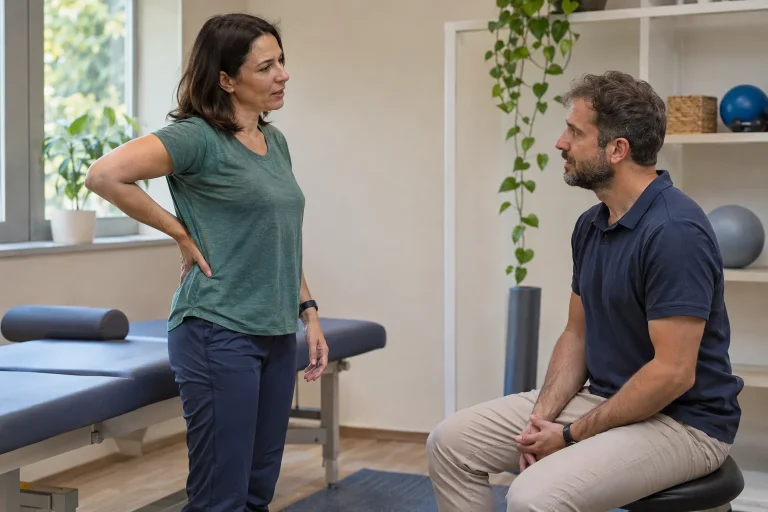
The wound visible from the outside after abdominal surgery is only part of what happened. The incision’s length and the skin’s surface do not tell you which procedure took place inside, how recovery has progressed or which personal restrictions you received. Returning to running therefore needs to be discussed using the actual surgical history, current condition and your care team’s guidance.
This article helps you clarify those questions. It does not set a postoperative week for starting running or provide an exercise self-test or wound-treatment recipe. A useful starting point is to separate observing the wound, returning to everyday function and the sport you plan. These are related, but none automatically answers the others.
The method of access and the actual procedure are separate facts
Laparoscopy means access through small incisions for examination or treatment in the abdomen or pelvis. The NHS lists several uses of the same surgical approach, including investigating a condition, removing an organ or carrying out a repair. ‘It was laparoscopic’ is therefore important information, but not the complete surgical description. NHS: laparoscopy.
Alongside whether surgery was open or performed through small incisions, ask exactly what happened. What was its purpose, which procedure was performed and is there any detail affecting advice about your next activity? You do not need to understand every technical term immediately. What matters is receiving an answer about your own history.
If the procedure changed from what was planned, ask for an explanation of the actual surgical outcome. Earlier general information and the care delivered may leave something to clarify. When discussing a running goal, do not simply repeat the preoperative plan; begin with what your discharge summary says happened.
A small scar does not make recovery identical after every procedure
The RCOG information on recovery after laparoscopic surgery separates diagnostic and operative procedures, and discusses operations of differing complexity within the latter. It relates individual recovery to several circumstances, including the reason for surgery, its precise type and how it went. The document concerns defined gynaecological procedures, not a shared programme for all abdominal surgery. RCOG: recovery after laparoscopy.
This is also a useful way to compare sources. If a leaflet discusses everyday activity after a simpler procedure, you cannot read it as clearance to run after a more complex one. First check whom the document addresses and which surgery it covers. Sharing the word laparoscopy does not make the whole situation identical.
The wound’s external appearance cannot reveal every detail the surgeon knows about the procedure. A friend’s photograph or a scar from your own previous minor operation is therefore not a suitable basis for comparison. A more precise personal question is: ‘Which detail of my operation led to this activity advice, and when should we reassess it?’
Wound care matters, but it is not an assessment of readiness for sport
In its surgical wound-care information, the American College of Surgeons emphasises following individual instructions for dressings, cleaning and monitoring. Closure methods can differ too: stitches, staples, adhesive or another method may be used. Understand your own responsibilities and which details need a professional. ACS: surgical wound care.
Following a wound-care plan well is not the same as receiving an answer about running. If a surgical review says the wound is progressing appropriately in a particular respect, ask what that means for the specific activity. Do not extend the statement through your own inference. The connection between wound condition, overall recovery and the intended movement needs clarification.
Do not remove dressings or closure materials for a photograph or trial run against your own instructions. This article does not prescribe when you may shower, which treatment to use or what to put on the wound. If advice is unclear, ask your treating team to clarify it. Running-clothing comfort is not a reason to change wound-care rules yourself.
 Enlarge image
Early mobilisation and running training are different questions
The general NHS page on recovery after surgery discusses moving as soon as possible in line with your abilities and medical advice. The Cambridge University Hospitals information following abdominal surgery also separately addresses getting up, walking, rest and strenuous activities. These are different parts of recovery; the importance of early movement does not establish a specific running load. NHS: activity after surgery; CUH: advice following abdominal surgery.
Do not merge ‘may I walk?’ and ‘may I run?’ Similarly, returning to work, driving or housework is not identical to sport. The tasks and guidance may differ. If you have received several general statements, ask your care professional to help interpret them for your own planned activity too.
This article does not recommend stairs, jumping, abdominal exercises or running as a test of readiness. Successfully completing a short task does not describe the entire surgical recovery. You do not need home tests to fill gaps in individual assessment. Describe the everyday experiences you already have and discuss the next step.
Describe how the whole day works too
The NHS notes that considerable tiredness can occur after major surgery or general anaesthesia, so share your own experience of current capacity. Do not say only that the wound bothers you less. Getting ready, moving around home, work-related tasks and how the whole day unfolds can all form part of your account.
For example, managing a short walk does not mean the rest of the day afterwards is as it was before. Explain if any familiar tasks now work differently. Your everyday account is not less valuable because there is no pace or heart-rate graph. These details also belong in a discussion about recovery.
You can ask for help with specific tasks too: shopping, travel, carrying bags or household work. The Cambridge information also discusses the relationship between rest and activity early on, and help from people around you. Organising support that fits your own instructions is more useful than planning to catch up quickly on previous training volume.
New wound symptoms or feeling unwell should not wait for a sports review
The CDC lists redness, pain, cloudy drainage and fever among possible symptoms of surgical site infection, and recommends contacting your care professional immediately if they occur. You do not need to distinguish these changes from appropriate healing by yourself. Describe what you notice and ask for help suited to the current situation. CDC: surgical site infection.
Worsening abdominal pain, severe or persistent vomiting, unusual bleeding or other worrying postoperative symptoms require prompt medical guidance. The NHS laparoscopy information specifically warns about these. Chest pain or severe difficulty breathing can be an emergency; in a serious emergency in Hungary, you can call 112. Do not do a trial workout before seeking help.
New leg pain or swelling after surgery must also be reported: the general NHS recovery page highlights this separately. You do not first need to label the symptom as running-related or a consequence of surgery. The current symptom, surgery date and type all matter together. This article does not set a period during which you should wait with unusual illness.
Highlight the individual instructions in your discharge summary
The document can contain several kinds of information: the procedure’s name, the course of care, further treatment and follow-up. As a runner, identify what concerns movement and what concerns care at home. Ask for an explanation if a term is unclear. Missing sports advice must not be replaced with your own most favourable interpretation.
‘Take it easy’ or ‘gradually increase activity’ can be too broad for everyday life. Ask which activities this covers in your own situation, which step still needs assessment and when you will discuss it again. Clarification is not about obtaining a numbered timetable for every detail, but an individual framework you can follow.
If several professionals gave statements that seem different, retain their original context. One may have been discussing wound care, another everyday movement. Explain which connection you do not understand. Do not simply choose the sentence suggesting an earlier return or extend an answer to another question.
 Enlarge image
A specific running goal says more than the sport’s name
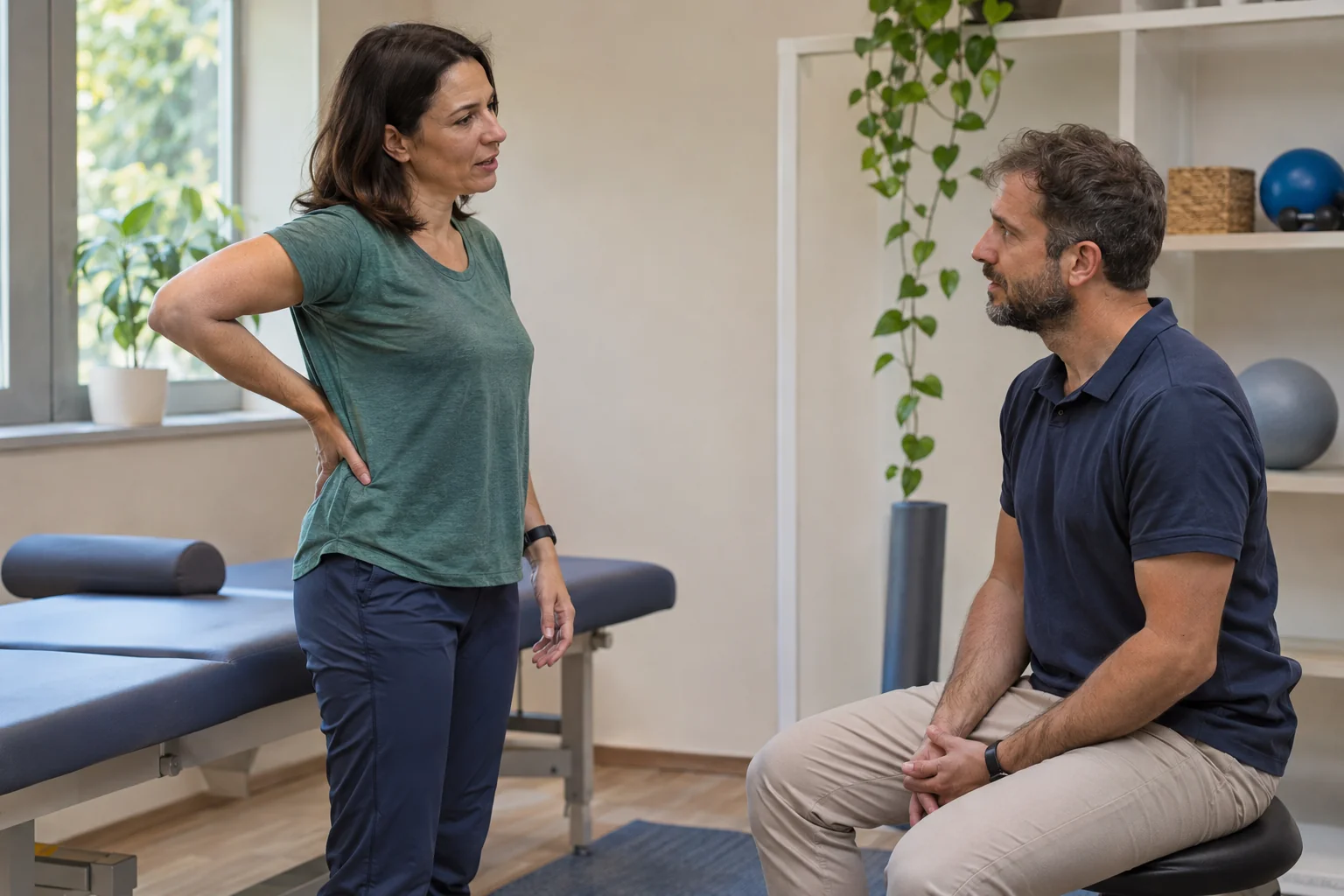
At your next consultation, describe the type of running too. Do you want a nearby outdoor outing, a social session or a longer event? What route and opportunities to stop are you considering? These questions do not automatically classify a shorter programme as safe; they help the professional answer your actual goal.
Equipment and getting there may need clarification too. Putting on a vest, moving a heavy bag or taking a longer journey is not the same as running itself. If you received a restriction on any of these, follow it when organising the whole programme. Link clothing comfort and contact around the wound to your personal wound-care advice.
Naming a sports goal can be positive and realistic even when the next step is not yet running. Explain what matters to you about returning: friends, nature or a favourite routine. This does not replace health assessment, but helps the care professional understand your motivation rather than hearing only a general wish to exercise.
Have four separate answers before the next step
The table organises a consultation; it is not a home clearance checklist. Answers need to concern your own operation and current condition. Judging wound appearance does not replace the other rows, and urgent symptoms do not require you to finish the list first.
| Question | Why is this a separate task? |
|---|---|
| What happened during surgery? | As well as the access method, the actual procedure and its course matter. |
| What should I follow now? | Wound care, daily activity and individual restrictions are not the same question. |
| What about running? | The specific sporting goal needs a separate, understandable answer. |
| Which changes should I report? | Follow-up timing and the route to help for new symptoms must each be clear. |
It helps to repeat the answers in your own words: ‘I may already do this in the way advised; we still need to discuss that; and this change means I should contact you earlier.’ If you cannot finish one of those sentences, a detail remains to clarify. Following recovery then also rests on your own understanding.
Returning to running after abdominal surgery should not be decided from scar length or a photograph. The relationship between the actual procedure, changes in your condition and individual guidance provides a meaningful framework. Ask your care team for that framework while keeping the route to appropriate help for new symptoms clear.
Sources
- CUH: Advice following abdominal surgery
- NHS: Getting back to normal after surgery
- NHS: Laparoscopy
- RCOG: Laparoscopy – recovering well
- ACS: Surgical Wound Care
- CDC: Surgical Site Infection Basics
How Futószív articles are prepared: our editorial guidelines.