Running’s place after a loss remains personal
A familiar route may mean something different after a loss. Some people appreciate returning to places where they ran together; others would prefer a new direction. There may also be days when sport has no place at all. None of these choices tells you how someone is progressing through grief or how much the person they lost mattered to them.
Running can be a chosen activity during this period, but does not have to become a performance task for processing grief. This article explores personal needs, shared activities and organising support. It does not provide grief therapy, prescribe a return deadline or promise a particular emotional outcome after covering a distance.
There is no compulsory emotional sequence for everyone
The NHS and Cruse guidance on grief emphasises individual differences. Feelings may arise unexpectedly and with changing intensity; a general description of stages is not a compulsory order. A difficult day can follow a week that seemed easier. This alone does not mean you are doing something wrong.
Do not tie a running programme to predetermined milestones in grief. You do not have to say you must feel better by a race, or that completing an old route proves you have moved forward. A training diary can preserve the experience of one occasion. It cannot, and need not, organise your entire relationship with the loss into a single entry.
Ask separately about what is needed today
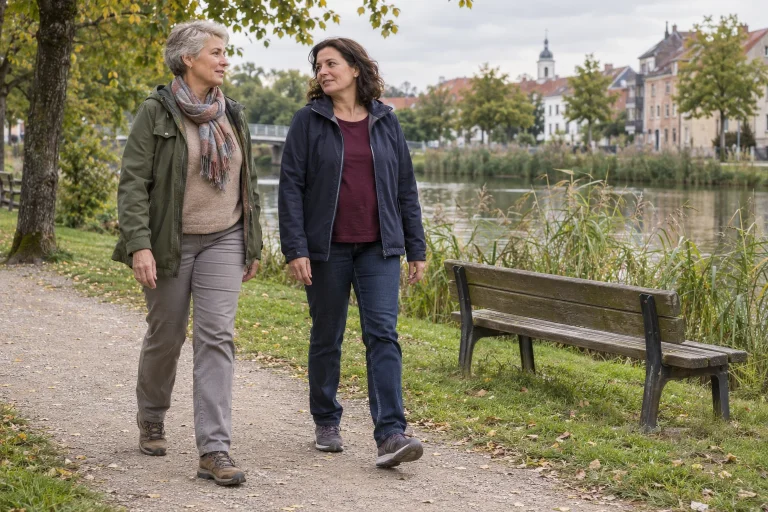
If a running companion is grieving, do not rely only on their previous habits. They may once have enjoyed talking throughout a long route but now want quiet company. Ask what kind of meeting would suit them and whether they want the loss mentioned at all. The answer may change from one occasion to the next.
The question does not require a long explanation. Offering three possibilities may be enough: moving together, a short walk or another kind of meeting. Leave room for none of these being right at present. Help is valuable because it connects with the other person’s actual need, rather than because the activity you chose necessarily takes place.
Choosing a route can have emotional meaning
A place holding shared memories, a former meeting point or a familiar race course can carry powerful associations. If you know this, do not surprise someone with that location even with good intentions. Ask beforehand whether the route is appropriate. The same place may offer an important connection for one person while feeling too much for another on that day.
You can build choices into your own outing too. For example, start somewhere offering a short return home, or choose between two familiar directions. This is an organisational framework, not a technique for controlling emotions. It allows a changing need without automatically creating a complicated decision on the spot or a long compulsory continuation.
 Enlarge diagram
Text version of the illustration
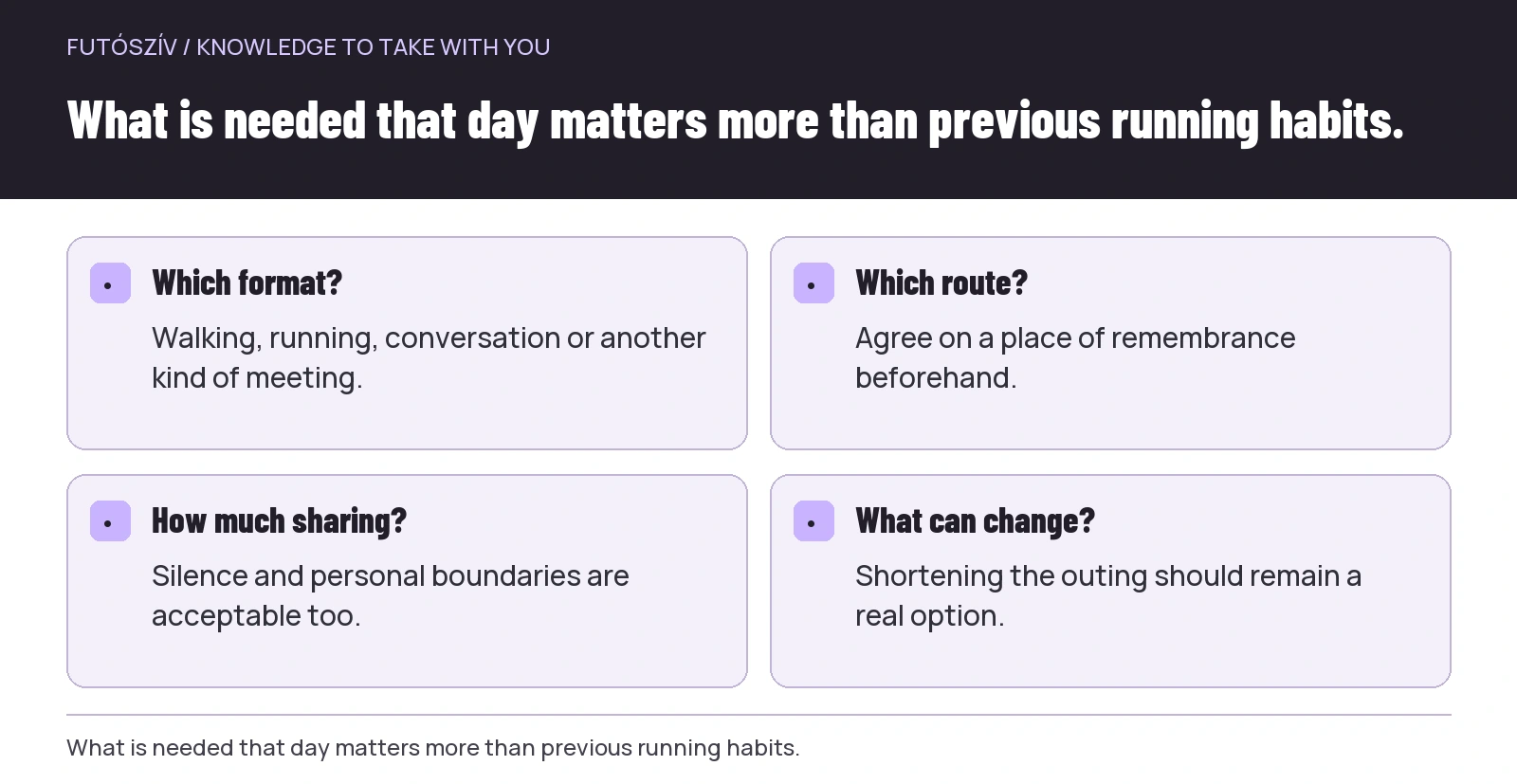
- Which format?
- Walking, running, conversation or another kind of meeting.
- Which route?
- Agree on a place of remembrance beforehand.
- How much sharing?
- Silence and personal boundaries are acceptable too.
- What can change?
- Shortening the outing should remain a real option.
Quiet presence can also be time together
As a running companion, you do not need to keep starting conversations. You can agree beforehand that moving together quietly is fine. If the other person wants to talk, listen attentively without looking for advice or a lesson in every sentence. Being present does not have to turn the loss into a problem to solve.
It is also fine if your own resources allow only a short meeting. Explain clearly how much time you have, rather than promising constant availability. Predictable contact that you can genuinely maintain may help more than a large offer you cannot follow through. The person providing support may need support of their own too.
Make a remembrance run an invitation rather than an expectation
An event in memory of a companion who has died can be important to a community. Participation, distance and publicity should nevertheless remain optional. Not every relative or friend wants to remember in the same way. Before organising it, ask those concerned which names, photographs and stories may be shared.
The programme can offer short or different ways to participate: meeting at the start, walking, quiet presence or joining the shared finish. No one needs to prove their relationship with the person who died by covering a long distance. Total kilometres and the number of social posts do not determine the event’s value.
Sharing photographs and stories requires separate consent
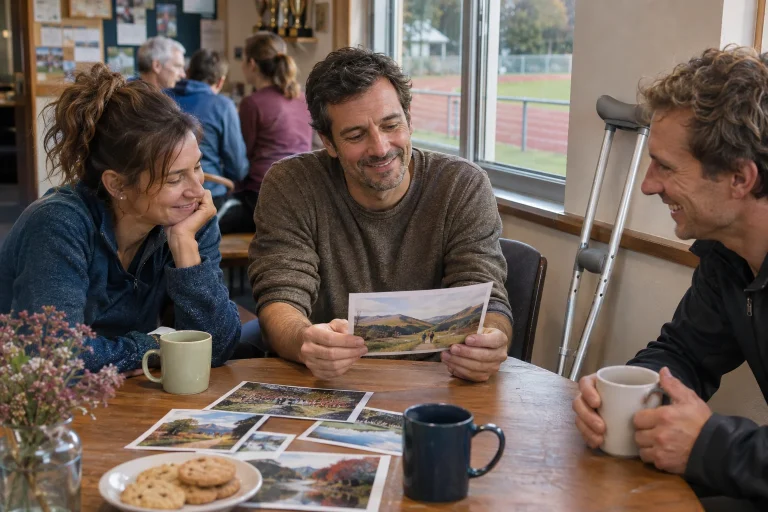
A photograph taken at a remembrance event may capture a sensitive moment. Do not assume attendance automatically gives permission for public sharing or telling a personal story. Ask who wants to appear in pictures and where the photograph may be published. Make it easy for someone to stay out of the picture.
Fundraising, memorial wording and using the person’s name may also require separate agreement with those concerned. Good intentions do not make these questions unnecessary. A community can remember thoughtfully even when little public content is produced. A personal relationship is not marketing material that must be turned into a visible result.
Allow several plans around an anniversary
Cruse’s page on anniversaries and reminders explains that significant dates can bring strong memories and different feelings. There is no single right way to experience that day. You can consider an option beforehand without making it compulsory if you need something else when the day comes.
In a running plan, this might mean a flexible meeting or an outing that can be shortened without explanation. If remembering together, agree whom someone can approach if they would prefer another form of participation. An anniversary need not become a sporting milestone. The day can be quieter, more social or entirely different from what you previously imagined.
You do not have to maintain your usual training load automatically
After a loss, daily routines, family tasks and opportunities to rest may change too. Telling your coach that your practical and health circumstances have changed and asking to review the programme may be enough. You need not share every detail of your personal story to discuss adjusting the plan.
Judge the extent of any change from your current situation and, when needed, healthcare advice. This article does not give a general training quantity for grief. What matters is that the former calendar does not operate as an unquestionable obligation. Professional support can be requested during a period when sporting goals temporarily move into the background too.
 Enlarge diagram
Text version of the illustration
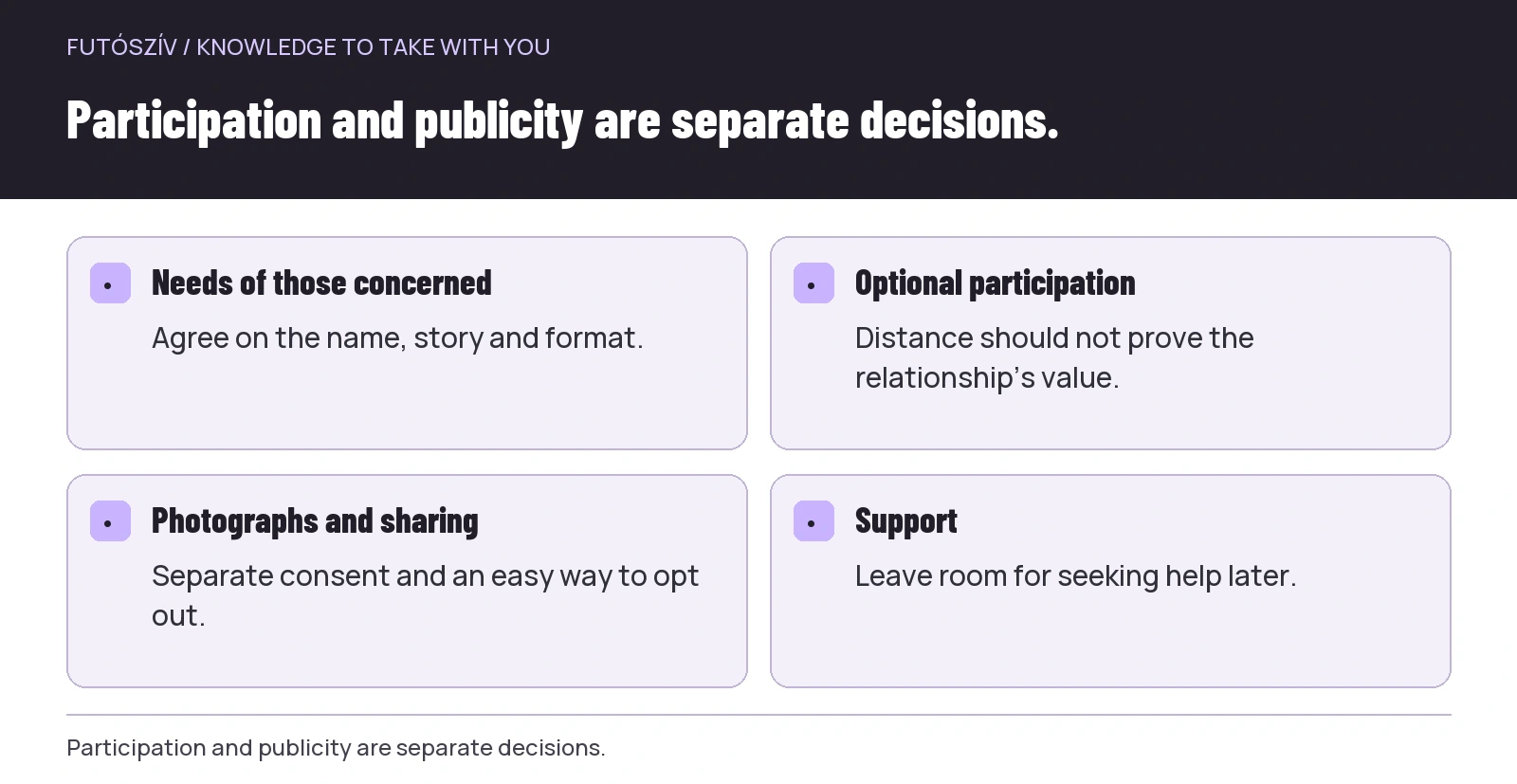
- Needs of those concerned
- Agree on the name, story and format.
- Optional participation
- Distance should not prove the relationship’s value.
- Photographs and sharing
- Separate consent and an easy way to opt out.
- Support
- Leave room for seeking help later.
Running should not be the only place where the loss can be held
If movement offers personal space, that can be valuable. Also consider which other relationships or support remain accessible when you cannot run. A family member, friend, bereavement-support group or professional can offer another kind of presence. You do not have to work through every feeling in the same activity.
Seeking support does not mean grief is wrong or unsuccessful. Cruse also discusses relationships and individual help in maintaining mental well-being. The appropriate form may differ: one person seeks conversation, while another initially needs practical assistance or calm access to information. Naming your own need does not require comparing your grief with anyone else’s.
When should you seek professional support?
If anxiety, low mood or difficulties in everyday functioning remain substantial, or attempts to manage independently are not helping, contact your GP or an appropriate mental-health professional. The NHS also highlights that medical help is available for difficulties associated with grief. You do not have to wait for a predetermined time because someone thinks discussing it is too early or too late.
Immediate danger to yourself or a mental-health emergency requires urgent help straight away. Do not automatically attribute a new, alarming physical symptom to grief either. Organising a running programme is secondary in these situations. Safety and access to care matter more than keeping a planned shared outing or remembrance event unchanged.
What can you say when you do not know what to say?
A short, honest sentence can be enough: I would be glad to meet you, and I want to ask what kind of meeting would feel right now. You do not need to find a lesson in the story or promise definite improvement. Avoid comparisons that use your own experience to tell someone else how much or what they should feel.
If you become stuck in the conversation, you can say that too. Uncertain but attentive presence may be better than avoiding the loss entirely. The other person can decide whether to talk now, and you can state your own limits. Reliability does not require always having the right answer; it comes from offering presence that is respectful and consistent with what you agreed.
The next invitation should not be an automatic booking
Even after a meeting that went well, ask what kind of continuation would be suitable. Regular invitations can provide support without committing every week to a programme. Agree on a simple message before the next occasion, to which saying yes, no or suggesting something else is easy. Freedom to choose remains important the following week, even if the previous meeting was a good experience.
An example of a manageable shared outing
Agree beforehand to meet at the park entrance and decide there between walking and a short run. Conversation is optional, the ending can change freely and photographs are taken only after a separate question. Afterwards, do not demand an account of how much it helped. At most, ask whether the format suited them and whether they would like to meet another time.
This is a possible organisational framework, rather than a therapeutic prescription. It prioritises choice, predictability and personal boundaries. Running can then form part of the relationship without being obliged to provide a solution. Needs can change alongside loss, and responding attentively may be worth more than a large gesture planned beforehand.
Sources and further reading
- NHS: Grief after bereavement or loss
- Cruse Bereavement Support: Grief and mental health
- Cruse Bereavement Support: Coping with anniversaries and reminders
How Futószív articles are prepared: our editorial guidelines.