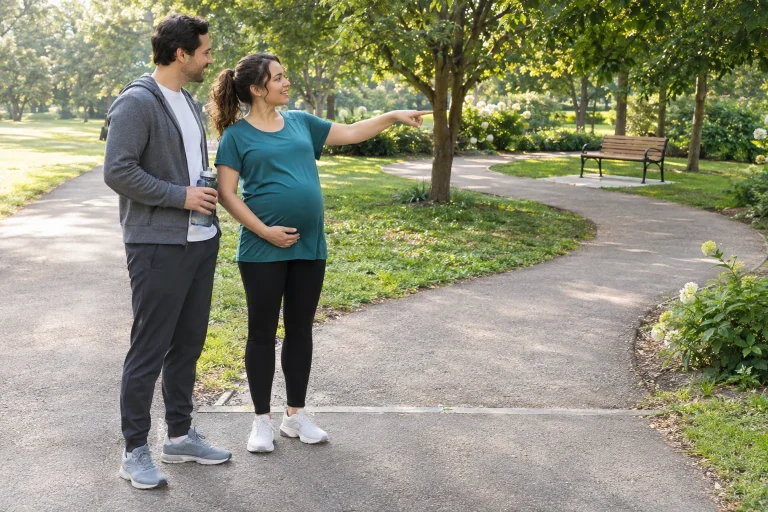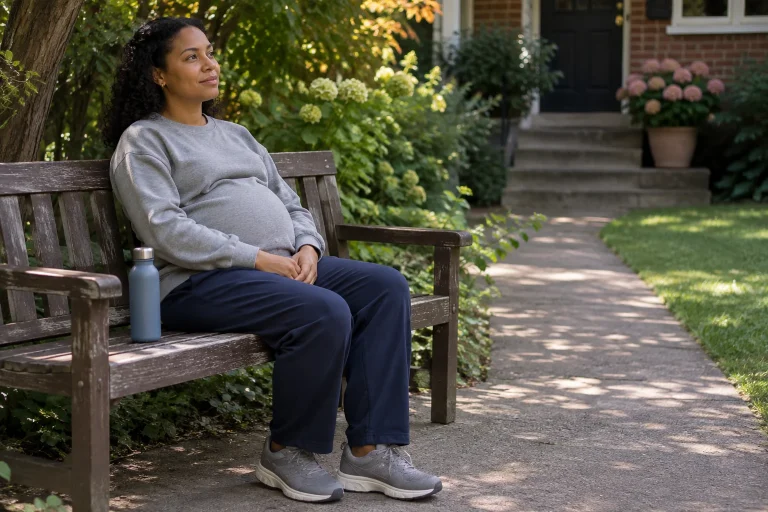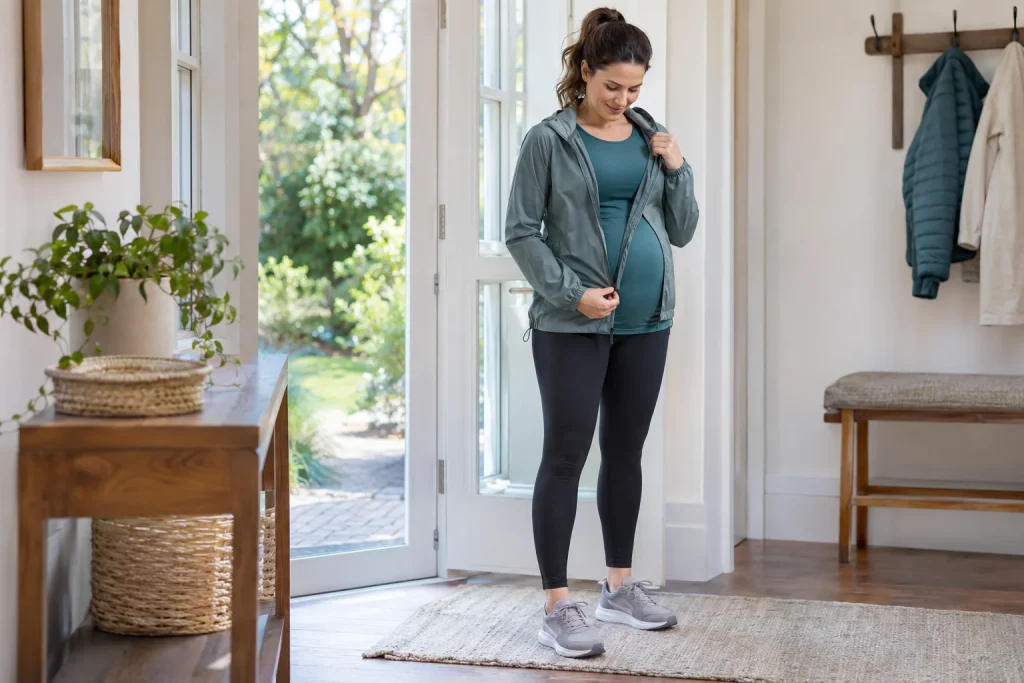
Good sports clothing should make movement easier, not preserve an old size
During pregnancy, previously comfortable trousers, sports bras or shoes may fit differently. You need not wait for a particular week to change them or buy an entirely new wardrobe beforehand. The useful aim is simple: comfortable clothing during the movement appropriate to your health circumstances.
The Australian Government pregnancy activity recommendation advises non-restrictive clothing, appropriate footwear and a supportive bra alongside avoiding overheating. A maternity or pregnancy label alone does not prove suitability for you. Actual fit and use matter more.
This article offers an equipment check without brands or a compulsory shopping list. It does not resolve medical symptoms through garments. Pain, pressure, dizziness or another unusual symptom during movement needs health clarification too; new trousers are not automatic clearance for sport.
First identify the activity needing clothing now
Different combinations may be comfortable for short walks, permitted running, water activity or physiotherapy. If your programme changed, former racing kit need not continue under every circumstance. Match purchases to real occasions in the coming period.
List troublesome points: pressing waistband, shifting underband, insufficient shoe room, difficult toilet use or an overly warm layer. Identify the one or two item changes offering most help. Replacing an entire wardrobe is often unnecessarily large.
An existing item can remain usable if comfortable and suitable for the activity. Another cut, borrowed top or more flexible layering may work too. A pregnancy label does not make clothing acceptable, and a higher price does not guarantee comfort.
Sports bra: support is more than strong compression
The US Office on Women’s Health pregnancy information recommends a well-supporting bra alongside breast changes. Size and sensitivity may change, making reassessment worthwhile. Do not assume a previously successful size must remain appropriate.
During a trial, check the underband, shoulder straps, side seams and centre chest. Raise your arms, walk and, if the activity is permitted, make a few easy movements. Do not decide only from a mirror or stationary standing.
An excessively tight band does not necessarily provide better support. If it digs in, rubs or obstructs comfortable breathing, seek another fit. Constantly slipping straps or a moving underband are not necessarily solved merely by tightening; cut and size matter together.
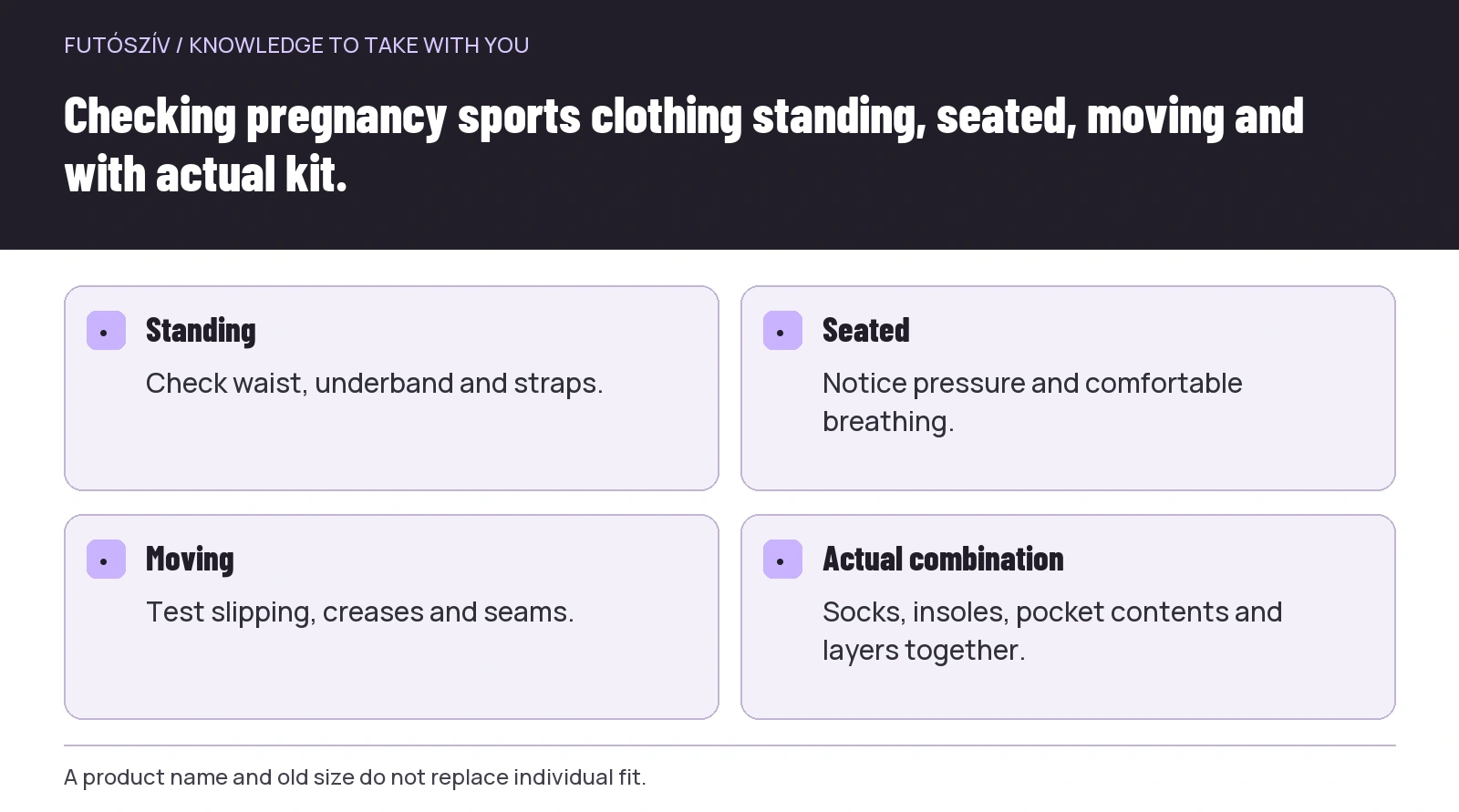 Enlarge diagram
Text version of the diagram
- Standing
- Check waist, underband and straps.
- Seated
- Notice pressure and comfortable breathing.
- Moving
- Test slipping, creases and seams.
- Actual combination
- Socks, insoles, pocket contents and layers together.
Later breastfeeding functionality is a separate consideration, not the only one
Some items can be used during pregnancy and later breastfeeding. This may be practical, but later functionality should not override present fit. An uncomfortable bra does not become a good sports choice because it promises several future uses.
Try clasps, adjustments and putting it on and off. Can you reach them easily, does hardware press and does a hard point remain against skin during movement? Daily usability matters even for short occasions.
You need not predict every future size or need now. Gradual purchasing can reduce the chance of several unsuitable later items remaining in the wardrobe. Clarify exchanges and hygiene conditions before buying.
Trousers: waist, abdomen and crotch fit matter separately
Both high over-bump panels and below-bump waistlines exist. Comfort can be individual and activity-dependent. Check whether edges press, trousers slip or a seam meets a sensitive point during movement.
Sit, stand, bend comfortably and walk a few steps. Trousers appropriate only when standing but pressing when seated or needing adjustment at every step provide important trial information. They must work in planned movement, not one selected position.
Load pockets with actual carried items too. A phone or key may pull the waistband down and feel different from empty pockets. If extra items trouble you, tighter trousers are not necessarily the answer; another carrying method or less equipment may be more useful.
Toilet use is a genuine kit test too
A layer difficult to remove, complex straps or several overlapping garments can make even brief activity uncomfortable. Consider how quickly and simply you can use the toilet. This particularly matters on routes with limited space or time.
Try the full layered combination at home. An attractive one-piece may be comfortable, but needing to remove every upper layer for each toilet visit may make it less practical for your routine. Simplicity is usability, not a lack of care.
Arrange menstrual, incontinence or other hygiene products according to your needs and instructions. If bladder-control or another symptom requires continual adaptation through additional layers, tell maternity care too. Equipment helps organise the day but does not replace symptom assessment.
Shoes: previous size can be reconsidered
Footwear fit may change during pregnancy, partly through swelling. The NHS recommends comfortable shoes and socks, avoiding tight or pinching areas. If a shoe presses now, do not try making it work through stronger lacing or curling your toes.
In a 2013 study completed by forty-nine women changes in foot length and arch characteristics were also found after pregnancy. This does not mean everyone’s feet change equally or everyone needs specialist insoles. It shows that old shoe size is not necessarily permanent information.
Try shoes with actual socks and insoles. Toe space, heel support and pressure across the top of the foot are separate questions. Comfortable length does not necessarily give appropriate width, and a larger size does not resolve every fit problem.
Swelling is not always a clothing question
The NHS explains that gradually developing foot and ankle swelling can be common, but suddenly increasing swelling may require medical assessment. Prompt reporting particularly matters with severe headache, visual changes, pain beneath the ribs or feeling unwell. Do not merely seek larger shoes then.
One-sided leg pain or swelling, chest pain, difficulty breathing and other severe symptoms call for appropriate prompt help. The HSE 2026 pregnancy information discusses such warning signs separately too. An equipment article cannot diagnose swelling’s cause.
Recurring shoe pressure, numbness or skin injury is also worth showing to a professional. With diabetes or reduced sensation, individual foot-care advice may be particularly important. Do not judge clothing comfort solely from absent pain where sensation has changed.
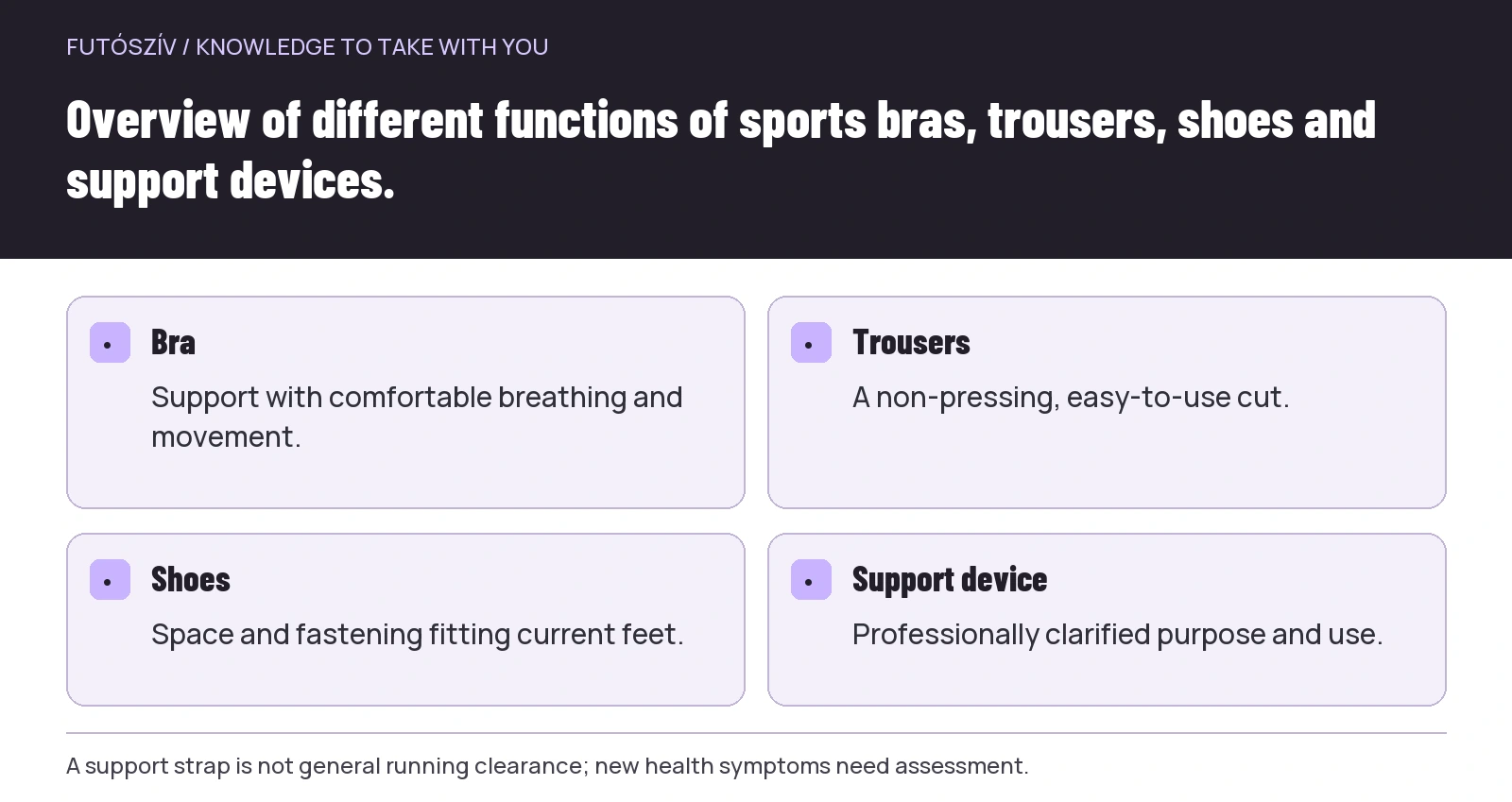 Enlarge diagram
Text version of the diagram
- Bra
- Support with comfortable breathing and movement.
- Trousers
- A non-pressing, easy-to-use cut.
- Shoes
- Space and fastening fitting current feet.
- Support device
- Professionally clarified purpose and use.
Layers: make removing them easy
Clothing apparently right at the start may become too warm. A layer easily opened or removed and stored is practical. Seams around neck, armpit and waist matter together; several comfortable items layered can create a new rubbing point.
Do not treat increased sweating as evidence of successful training. Pregnancy recommendations emphasise avoiding overheating. In hot or humid conditions, changing time, setting and activity form may matter more than buying another technical top.
In cold too, dress for actual movement: slower walking may feel different from former running. If your personal plan moves to shorter or easier activity, old racing-clothing routines may not fit. Easily adjustable combinations support adaptation.
Belt, vest and support strap: clarify intended use
A running belt carrying phone or bottle and a pelvic support device recommended for symptoms serve different functions. One need not perform the other’s task. If a device is considered for therapeutic purposes, clarify use with an appropriate professional.
Test a running vest with planned contents and notice where straps pull. Growing body dimensions and changed clothing layers may require new adjustments. Do not tolerate pressure or rubbing simply because an earlier setting worked.
Do not try silencing pain with ever-tighter fastening. If movement is uncomfortable without support, assess exercise demands and symptoms too. Support does not generally justify sacrificing breathing, comfort or intact skin.
A small trial, then reassessment
Use a new item first on a short occasion easy to stop, with movement fitting your health plan. Notice comfort and subsequent skin marks. Something not working is not a failed trial: you found where another size, cut or adjustment is needed.
Introducing several new items at once can make a troublesome element harder to identify. Change individually where possible and retain successful parts. A smaller reliable wardrobe often makes a day easier than many untested possibilities.
Something appropriate a few weeks ago may need changing again later. This need not mean a bad purchase; pregnancy is changing circumstances. Briefly check fit before the next use rather than treating an earlier trial as a final guarantee.
A usable shopping checklist
- Current need: which permitted movement and weather will you use it for?
- Fit: is it comfortable seated, standing and moving?
- Simplicity: can you manage putting on and off, toilets, layering and washing?
- Actual trial: does it work with real socks, insoles and pocket contents?
- Adjustability: are adjustment and exchange options available?
Pregnancy sports clothing helps when it takes less attention from your day. You need not follow the latest collection or retain an old size. A comfortable, easily adjusted combination supports appropriate movement while genuine health symptoms receive answers in appropriate care.
Sources and further reading
- Australian Government: Recommendations for pregnancy
- U.S. Office on Women’s Health: Body changes and discomforts
- NHS: Swollen ankles, feet and fingers in pregnancy
- Segal and colleagues: Pregnancy leads to lasting changes in foot structure, 2013
- HSE: My Pregnancy booklet, 2026
How Futószív articles are prepared: our editorial guidelines.