Absent bleeding may seem convenient, but its cause matters
Less menstrual logistics and less worry at races: when bleeding becomes infrequent or stops during intensive preparation, it may initially seem advantageous. The change is not evidence of fitness, however. If it is not the expected effect of a known life circumstance or prescribed hormonal method, clarify why periods are missing.
The ACOG information calls absent bleeding amenorrhoea and distinguishes the first period never starting from cessation of previously established bleeding. In runners, sport-related energy availability may be relevant too, but the symptom alone does not identify a single cause.
This article shows how uncertainty can lead to appropriate medical assessment and followable support. It gives no home hormone treatment, calorie target or body-weight prescription. The aim is attention to both sport and menstrual health, without using either as an argument against the other.
First question: compared with what has your pattern changed?
Useful history includes your last bleeding, previous regularity and when the pattern began differing from usual. If using hormonal contraception, explain the method and regimen too. Expected withdrawal bleeding and natural menstruation do not signal the same thing.
Breastfeeding, pregnancy, perimenopause and certain medicines can also change bleeding patterns. The NHS overview lists several possible causes and recommends medical discussion for new irregularity or recurring missed periods. You need not decide in your diary beforehand which explanation applies.
If pregnancy is possible, clarifying it is particularly important. Extensive running, low body weight or irregular bleeding is not reliable contraception. With abdominal pain, bleeding or feeling unwell, immediately tell the provider pregnancy is possible rather than describing the situation solely as a sport-related hormone question.
When should investigation start?
The Endocrine Society guideline on functional hypothalamic amenorrhoea recommends diagnostic assessment for affected adolescents and women with persistently longer-than-forty-five-day cycles or at least three months without bleeding. This is a professional reference point, not a compulsory waiting period for every symptom.
If you have concerning symptoms, notice substantial change or are unsure of the cause, you can seek advice earlier. A first period that has not started requires different age-related assessment from cessation of previously regular cycles. Do not infer an adolescent girl’s situation from an adult runner’s experience.
Investigation does not necessarily mean a permanent ban on running. It clarifies whether a cause needs treatment, the state of bone and general health and what exercise demands may be appropriate. A specific decision needs more information than weekly running kilometres.
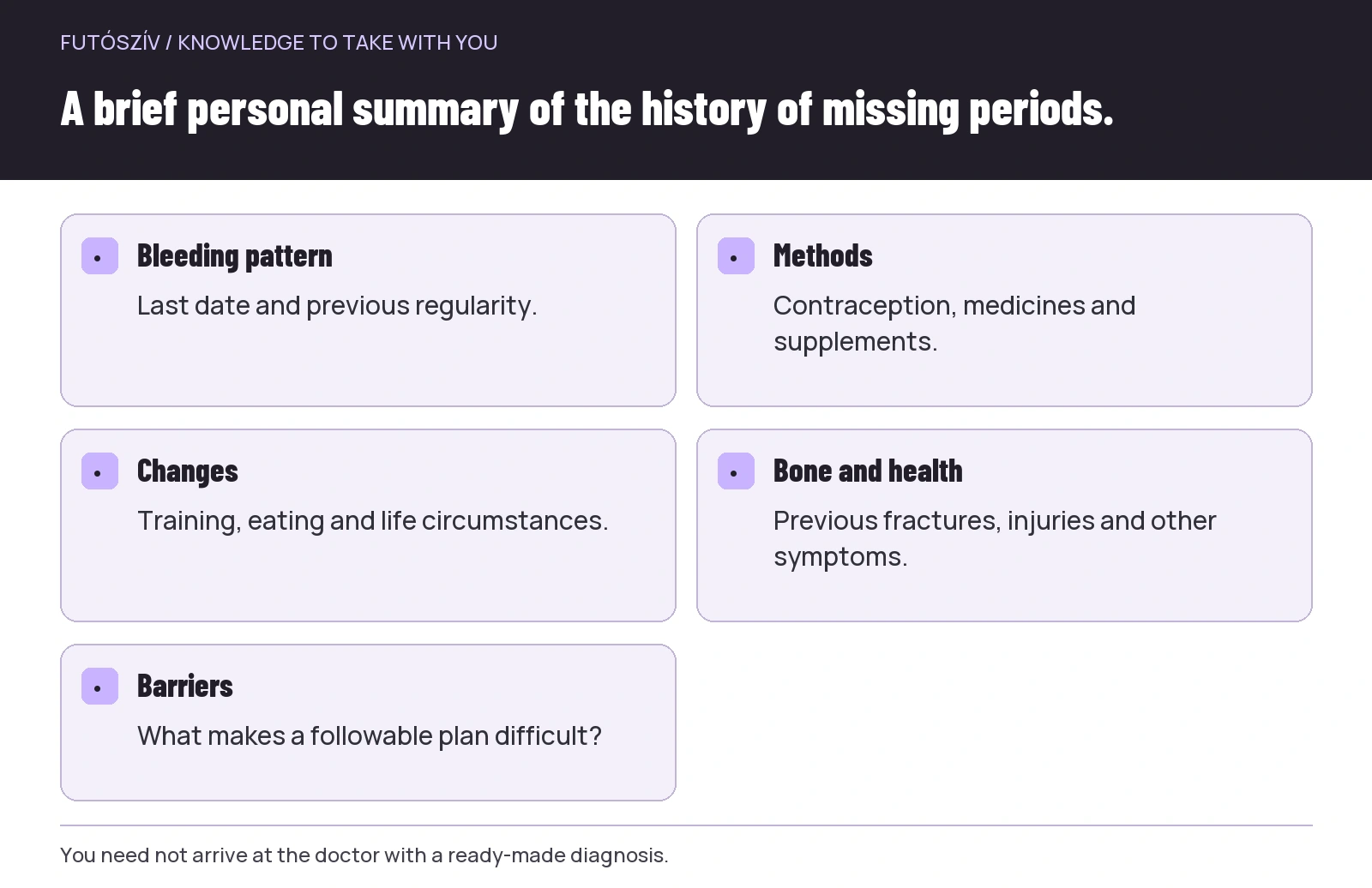 Enlarge diagram
Text version of the diagram
- Bleeding pattern
- Last date and previous regularity.
- Methods
- Contraception, medicines and supplements.
- Changes
- Training, eating and life circumstances.
- Bone and health
- Previous fractures, injuries and other symptoms.
- Barriers
- What makes a followable plan difficult?
What is functional hypothalamic amenorrhoea?
FHA is a condition involving functional change in the brain’s hormonal regulation, in which energy deficiency and psychological stress may play a role. The Endocrine Society emphasises that it is a diagnosis of exclusion: other organic and hormonal causes must also be assessed. Saying you exercise and therefore this must have happened is insufficient.
The 2025 female athlete triad consensus discusses the relationship between energy status, reproductive function and bones in detail. Responses are individual, and no energy threshold precisely valid for every athlete can be calculated at home. A formula assembled from a watch and food app cannot rule out the problem.
The symptom is not a moral judgement. It can occur with deliberate restriction, but also a busy schedule, access difficulties or eating not adjusted to exercise demands. Understanding causes is more useful than finding who messed up preparation.
Bone health matters even when nothing hurts
Disruption of menstrual function and energy availability may also relate to bone health. The triad consensus therefore monitors more than the return of bleeding. Previous bone stress injury, fracture or persistent pain around a bone is important history to mention during consultation.
The Endocrine Society also describes considering bone-density assessment after a certain duration of amenorrhoea and in some risk situations. A doctor decides whether and when it is necessary for you. You need not order imaging independently, but nor should the question wait until you break something.
Seek assessment for well-localised bone-area pain during running, worsening exercise tolerance or symptoms persisting during walking. Missing periods do not diagnose the pain but provide important background information. An approaching race does not reduce this signal’s significance.
What did the REFUEL study teach, and what did it not?
The REFUEL randomised trial tested increased intake in young, physically active women with exercise-associated menstrual disturbances. Supported nutritional intervention improved the likelihood of menstruation compared with the control group. Participants formed a selected group, so the result is not the same recipe for every case of absent bleeding.
The study provides no personal calorie target. The size of daily changes, eating routine and training adjustments must follow individual condition. It does not establish that everyone recovers in the same time, with the same food quantity and unchanged training.
The REFUEL bone analysis shows a particularly important limitation: despite improved menstrual frequency, adequate improvement in bone density was not demonstrated during the study period. Bleeding appearing is therefore not a single finish line closing every health question. Follow-up may extend to other areas.
An appropriate eating plan accounts for your daily routine too
With a dietitian, you can discuss not only nutrients but why meals are missed. No time after early training? No storage at work? Difficulty finding appropriate food during travel? Or anxiety about the amount of food and the idea of weight change? These require different kinds of help.
Reviewing a usual week may help: when training takes place, when you can actually eat and where long unplanned gaps occur. You need not measure everything in grams to notice a missing lunch. If detailed calculation is burdensome, explain that too; the monitoring method can also be individualised.
Eating-disorder symptoms, substantial body-image difficulties or compulsive compensatory exercise may require mental healthcare support too. Addressing eating is not merely a test of willpower. A safe plan may include cooperation between a doctor, dietitian and psychologist or psychiatrist as needed.
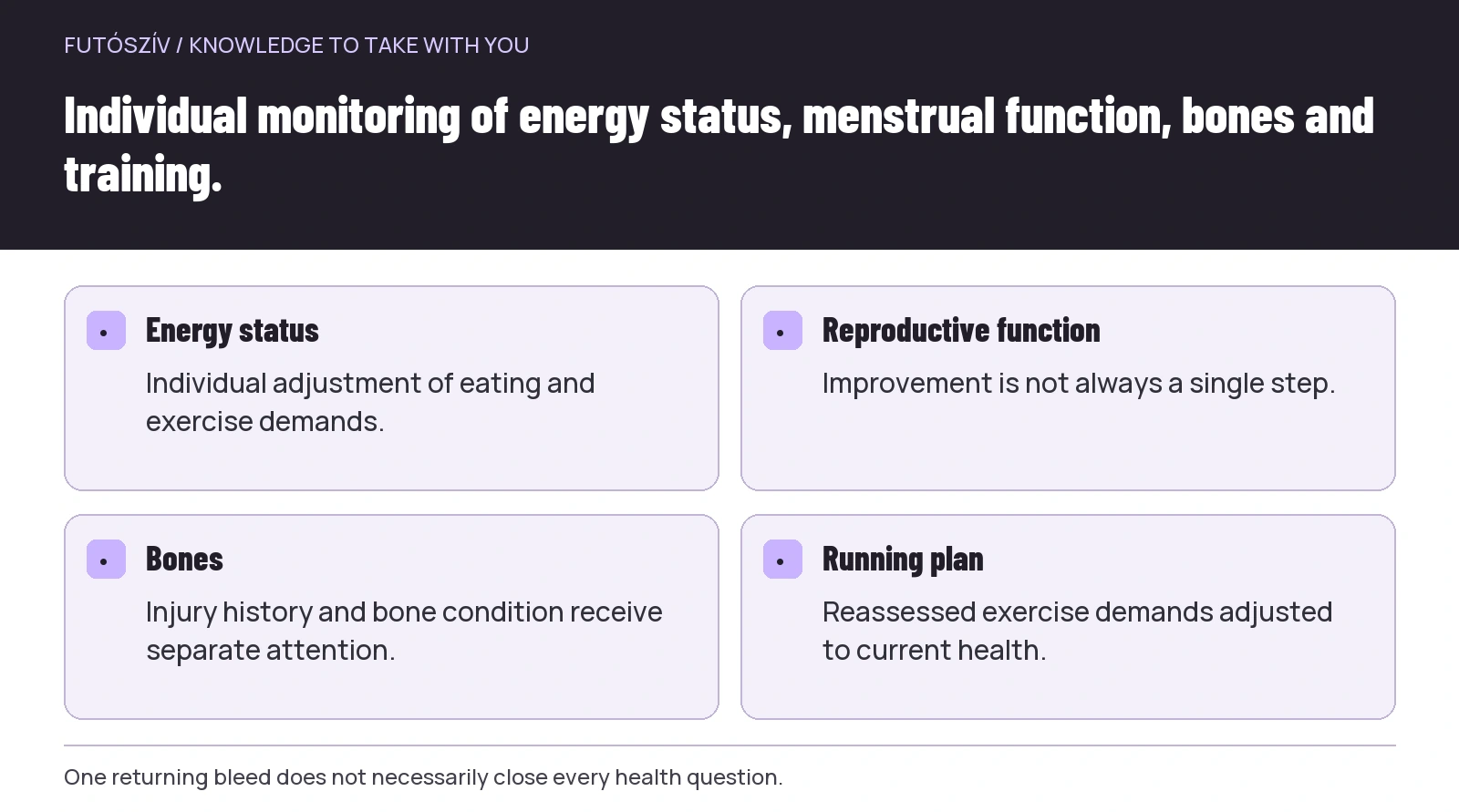 Enlarge diagram
Text version of the diagram
- Energy status
- Individual adjustment of eating and exercise demands.
- Reproductive function
- Improvement is not always a single step.
- Bones
- Injury history and bone condition receive separate attention.
- Running plan
- Reassessed exercise demands adjusted to current health.
Hormonal treatment is not home cycle repair
The clinical part of the 2025 triad consensus and the Endocrine Society do not regard the combined contraceptive pill as a general solution addressing the cause of energy-deficiency-associated amenorrhoea. Withdrawal bleeding does not establish restored natural function. Bone protection and any hormonal treatment require separate medical consideration.
This is not an instruction to stop your current contraception. If needed, its safety must remain addressed during investigation. Discuss the method and observational limitations with your provider rather than seeking a solution in a coaching cycle app.
Independent hormone replacement, cycle-restoring supplements or online laboratory targets do not replace assessing causes. Part of a symptom may appear to change while an underlying problem remains. A good plan also clarifies how genuine improvement will be assessed.
What might adjusting training mean in practice?
Medical and dietetic assessment may indicate reducing or reorganising exercise demands. There is no identical running ban for every missed period, nor safe unchanged continuation in every case. Health condition, any injury and the feasibility of addressing the situation all matter to the decision.
Agree specifically with your coach which sessions are omitted, which change and when to reassess. If less running is prescribed, do not secretly replace it with another equally demanding sport. The aim is not an administrative reduction in running kilometres but an overall load appropriate to the condition.
Connection to sport can meanwhile remain in different ways: community meetings, volunteering, being present at training or movement permitted in the individual plan. Do not experience this as compulsory substitute work. Share the emotional side of temporary adjustment with a supporting professional too.
What belongs on your consultation sheet?
- The last bleeding date and previous usual pattern.
- Contraceptive method, medicines and supplements.
- Recent changes in training, body weight, eating and life circumstances.
- Previous fracture, bone stress injury, illness and other symptoms.
- Practical or emotional barriers the plan needs to account for.
Body weight and eating can be discussed factually without blame. If weighing or sharing certain information creates anxiety, you can state this at the start of the consultation. Necessary healthcare assessment and respectful treatment are compatible.
Recovery may involve several steps
The 2025 consensus explains that bleeding returning does not necessarily mean ovulation and hormonal function have fully recovered. Follow-up therefore asks more than whether one period occurred. General wellbeing, exercise tolerance, nutritional circumstances and bone questions may also need monitoring.
The pace of change is individual. Do not measure yourself against another athlete’s story of a few weeks or regard the entire process as failure because of one late bleed. Report lack of improvement, new symptoms or an unmanageable plan. Follow-up aims to allow replanning rather than demand flawless compliance.
Menstrual health is not a task opposing running. Sustainable long-term sport includes noticing important changes, clarifying causes and receiving support in an acceptable, followable form. Missing periods need an appropriate response rather than an achievement grade.
Sources and further reading
- Endocrine Society: Functional Hypothalamic Amenorrhea Clinical Practice Guideline
- Female Athlete Triad Coalition 2025 update, Part 1
- Female Athlete Triad Coalition 2025 update, Part 2
- REFUEL randomized trial: Increased energy intake and menstrual recovery, 2021
- REFUEL randomized trial: Bone mineral density and increased energy intake, 2022
- NHS: Missed or late periods
- ACOG: Amenorrhea, Absence of Periods
How Futószív articles are prepared: our editorial guidelines.