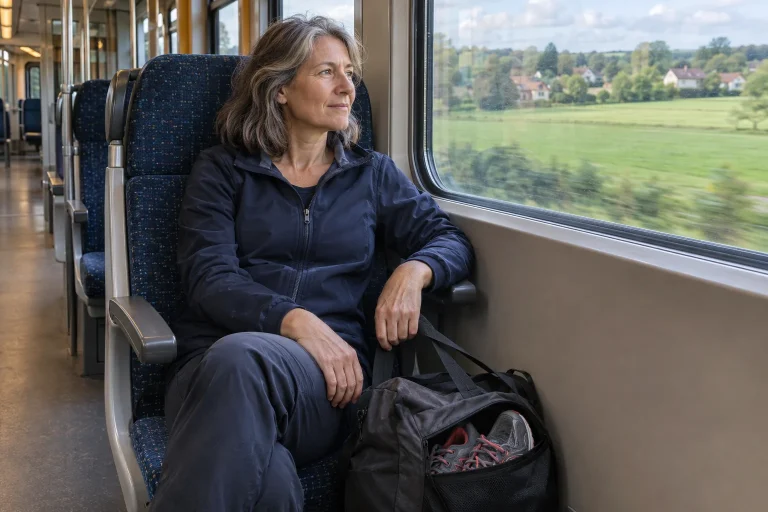
When preparing for a November or March race at Lake Balaton, familiar lakeside names can create false reassurance. You have visited in summer, remember the station and know which shore has the accommodation. Yet travel may not fit together the same way. Plan race-day transport, the final arrival section and the journey home separately. An off-season weekend works well when you are not filling gaps in summer memories while already setting off.
This guide recommends no specific service or accommodation. It offers a planning method into which you can insert your race’s precise details and transport information valid on the travel date. Checked, date-specific examples reflect 18 November 2026; they cannot establish timetables for a later race weekend.
Lake Balaton is not a single arrival point
“We are going down to Balaton” is fine in everyday conversation but insufficient for race travel planning. Which town you reach and which part contains your race are different questions. Station, accommodation, bib collection and start may be four separate places. Even if the event name contains a large town, parking or a side programme may not be in its centre.
First extract precise addresses or map markers from organiser information. Alongside the centre, find your distance’s start, the post-finish exit and baggage drop. If details are unclear, keep the question open in the plan too. An earlier photograph or map search result cannot identify this year’s entrance.
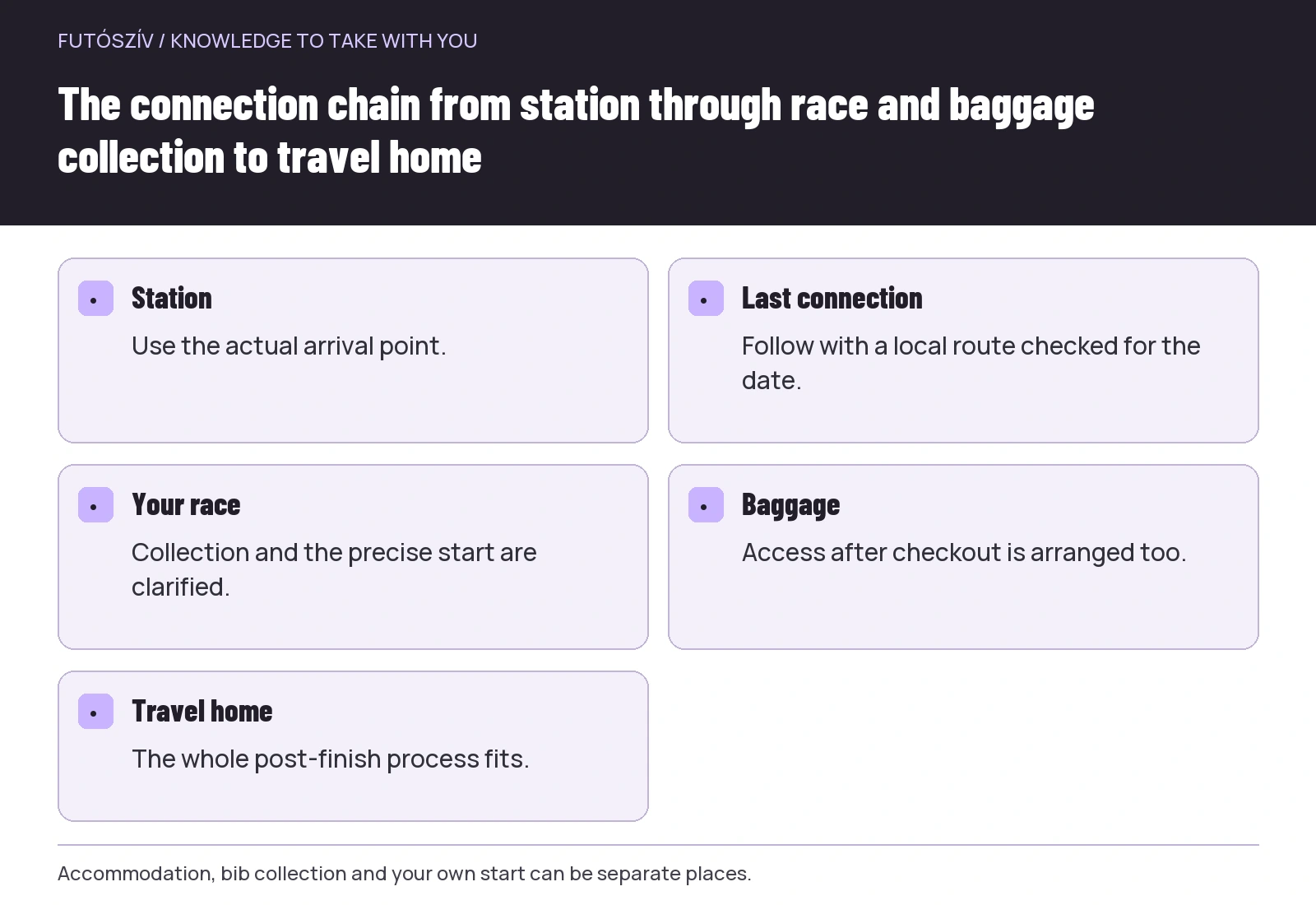
Write the arrival chain as home – interurban service – arrival station – local connection – administration – accommodation or start. Then give every arrow a checked solution. Matching town names alone does not resolve the last connection: it may require a longer walk, an infrequent local bus or luggage making even a short walk impractical.
Season is a timetable condition too
The MÁV information on Lake Balaton treats seasons separately and summarises winter transport information on a separate page. For planning, this means not treating a summer connection as an unchanged winter feature. Availability for the race comes from a search valid for the particular day, rather than the name.
Check validity even if the journey planner shows a familiar departure. “Next spring” contains two questions: which timetable period covers the day, and which daily service pattern applies within it? Sunday, holiday or transferred working-day services cannot be inferred simply from a weekday name. Group members may also travel on different dates, so the same screenshot may not suit everyone.
By November 2026, the 2026–2027 domestic public-service timetable page was available. A published annual schedule is a useful starting point but does not replace checks before travel. Date-specific changes and the actual connection still matter. Treat a timetable outline saved during booking as a plan to verify, rather than an everlasting promise.
 Enlarge diagram
Text version of the diagram
- Station
- Use the actual arrival point.
- Last connection
- Follow with a local route checked for the date.
- Your race
- Collection and the precise start are clarified.
- Baggage
- Access after checkout is arranged too.
- Travel home
- The whole post-finish process fits.
Replacement buses can change the entire journey
The importance of dates is illustrated by the official notice of replacement buses between Siófok and Szántód on 16–20 November 2026. This is an example for a defined period, rather than a general statement about later south-shore transport. The lesson is that knowing the line name and destination still requires information for the actual day.
With replacement transport, compare more than total journey time against the earlier plan. Check where you get off, where the next vehicle leaves and how you transfer luggage. If you intended to walk the last leg to the race, you may now need to calculate from another point. If a friend waits at the station, send the actual arrival location and revised time too.
A change like this does not automatically make the weekend a bad idea. The question is whether the revised journey still leaves manageable room for collection and the start. If arrival now fits only with fortunate connections, an earlier departure or arrival the previous day may be realistic. Decide from the whole chain, rather than the first train’s departure printed on the ticket.
Assess accommodation against the actual daily schedule
For off-season accommodation, how near the water it looks in a picture is not the main question. What matters is its connection to the race and journey home. A lakeside address may sound good while reaching your own start needs more organisation than from a less scenic but more convenient transport location.
Ask about arrival and departure conditions. How do you collect the room if arriving late in the afternoon? If you need luggage after the race, where can it stay meanwhile? Several hours may separate checkout and departure home. Having had a room near the start does not resolve that period.
Address food specifically, service by service too. You cannot generalise that everything closes out of season, or that a familiar summer place will certainly welcome you. Check current opening of your accommodation and chosen eating place. If leaving early, clarify what fits breakfast service times. The task here is planning access; do not invent individual dietary needs from a travel timetable.
| Accommodation question | Why does it matter on a race weekend? | Which answer is worth recording? |
|---|---|---|
| When and how can I check in? | Later arrival may fall outside usual administration hours. | Exact time window, collection method and necessary advance notice. |
| What happens to luggage after checkout? | You may need it between race and travel home too. | Where, until when and under which conditions it can be stored. |
| How do I reach my own start? | “Near the race” is not a precise route. | A checked entrance and walking or transport connection. |
| Until when can the booking be changed? | Travel plans may change, but conditions differ between providers. | Written rules for your own booking. |
Do not estimate travel around the lake from the map’s appearance
Two points on opposite shores may look close on a map. That does not make travel between them short or available at any time. If relying on a water crossing or several transport services, check each for your own travel day. Knowing that such transport exists at Balaton is insufficient.
This is particularly important when friends book accommodation in different towns. Shared dinner and departing together are two separate journeys. Plan indispensable connections to your races first, then leisure activities alongside them. A pleasant idea then does not become the weekend’s compulsory, difficult transport task.
Do not write “we will cross over” until you know by what means, from where and when. If a connection is only uncertainly verified, look for an accommodation or programme option working without it too. This is not abandoning the shared experience; it ensures running and getting home do not depend on an unconfirmed detail.
 Enlarge diagram
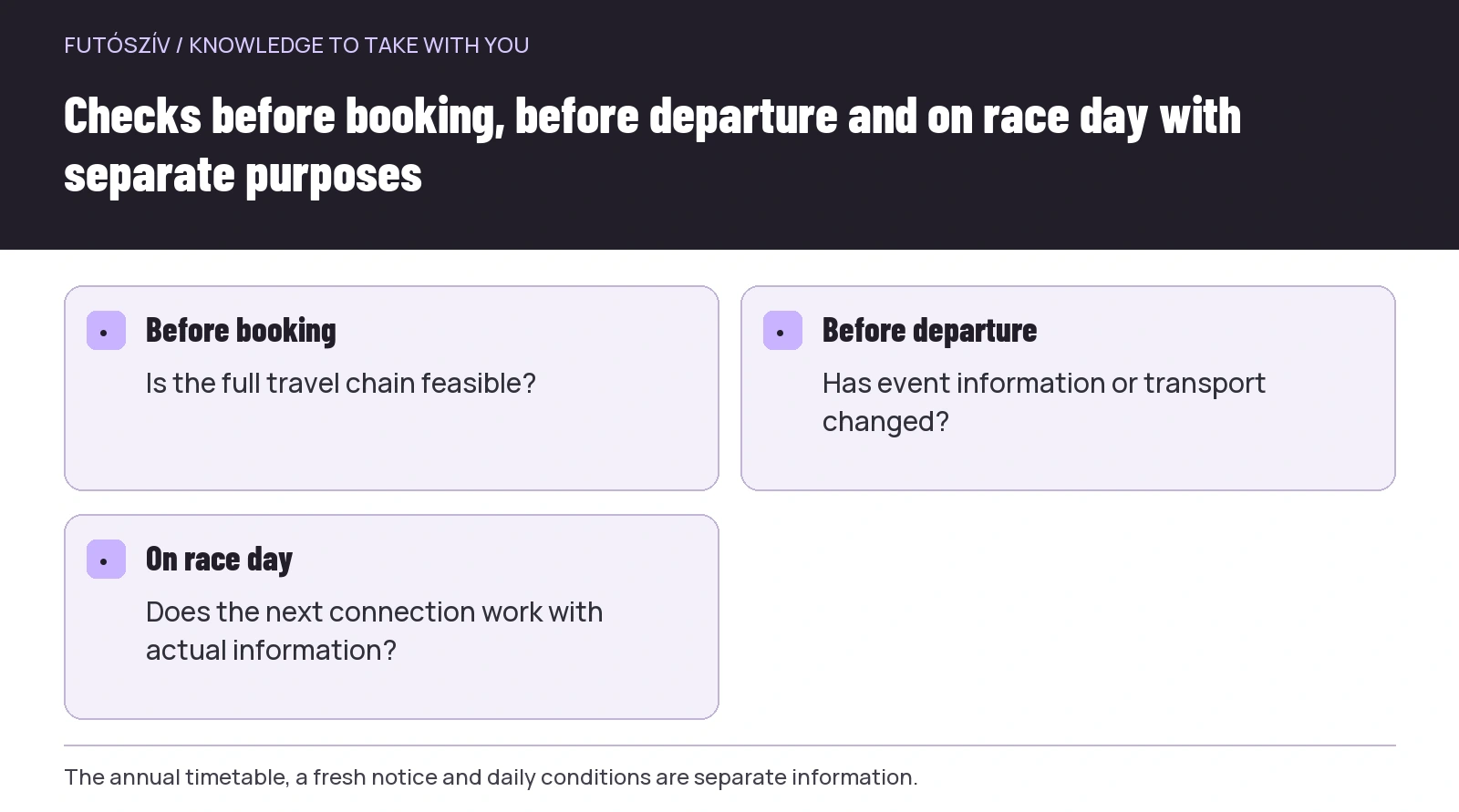
Text version of the diagram
- Before booking
- Is the full travel chain feasible?
- Before departure
- Has event information or transport changed?
- On race day
- Does the next connection work with actual information?
An imagined example: same-day travel or arrival the previous evening?
Imagine a race starting in the morning in a lakeside town. Your bib-collection deadline is before the start, according to the organiser, and you still need to reach the centre separately from the station. You examine two options: arriving that morning or staying the previous evening too. The example involves no real service number, race or recommended compulsory time margin.
For the first version, add leaving the station, the final connection and administration after interurban travel. Mark any part that is only an optimistic assumption. “Our friend will collect us”, for example, belongs to a working plan only if the friend also knows location, numbers and luggage space needed. A spare seat is not the same as transport clarified with bags included.
For the second, consider more than accommodation cost. Check whether collection can happen after evening arrival or remains for the next day. Examine Sunday checkout and luggage storage too. Arriving the previous evening does not solve every task by itself but places uncertainty elsewhere. The two versions are comparable clearly when they include the same steps.
A third version may help: fewer side activities, a simpler local route and later travel home. The best plan does not necessarily cram the most experiences into two days. It shows which programme you can undertake while reaching fixed commitments calmly.
Plan the journey home from the finish line
Several steps lie between finishing and station departure. You leave the finish area, recover stored belongings, meet companions and perhaps collect larger luggage from accommodation. Then comes the journey to the station and time needed there before departure. Consider these together, rather than only walking distance on a map.
If your finish time is uncertain, do not use only one favourable scenario. Prepare a journey home that also works with a later finish or slower administration. Learn actual ticket conditions: a later service existing does not automatically mean you can board with the same booking. Check flexibility and any reservations for your chosen product.
If several people travel home, decide beforehand whether staying together is essential. The weekend can remain shared if someone chooses a different departure. Separation conditions are easy to clarify during planning and harder on site with phones running down and bags being sought. Make the meeting place clear and accessible to someone finishing at another time too.
Three checks with three separate purposes
The pre-booking check concerns feasibility. Do you have the race date, your own collection arrangements, accommodation access and a working travel chain? Even establishing that missing organiser information means not finalising every booking is useful progress at this stage.
The repeat check before departure looks for changes. Has race information updated, is there a transport modification, are the entrance and administration location unchanged? Put the check date on your plan sheet too. Merely sending companions a link does not ensure everyone reads the same version or notices a new announcement.
The race-day check is no longer complete replanning. Watch actual departure and arrival details, on-site organiser information and changes. If something changes, update more than the first affected stage: consider its effect on the next connection, baggage access and travel home.
A short, usable Balaton travel sheet
The final plan need not be long. Include your race and its year, precise start and collection places, arrival station, local connection, accommodation access, luggage journey and two workable homeward options. Beside each transport fact, note the date it applies to and when you checked it. Mark open questions separately so they do not unnoticed become certain statements.
Add a short change-management line: if arrival is delayed, whom do you tell, which fixed point needs reassessing first and which alternative have you checked? You do not need a scenario for every possibility. Understanding basic connections and knowing where to find current information is enough.
Off-season Balaton can be a good running destination precisely because you encounter it at another rhythm. The travel plan’s job is to fit that weekend to your real circumstances. With places, validity periods and luggage-inclusive connections arranged, the programme rests on usable information rather than summer memories.
How Futószív articles are prepared: our editorial guidelines.