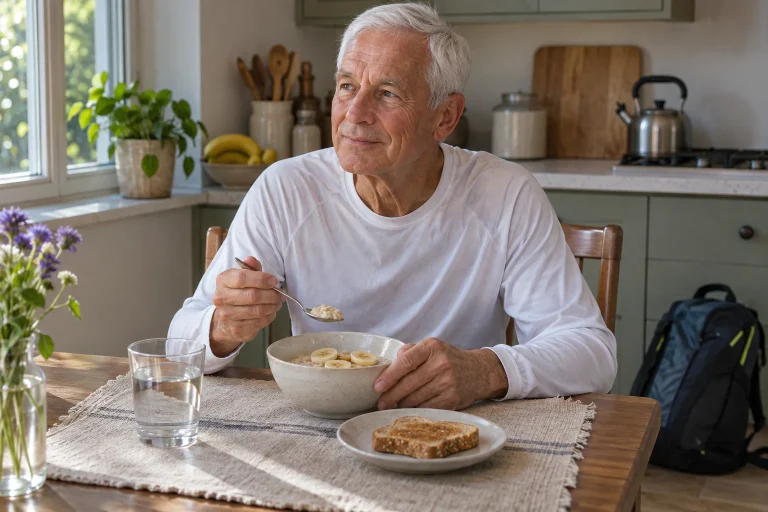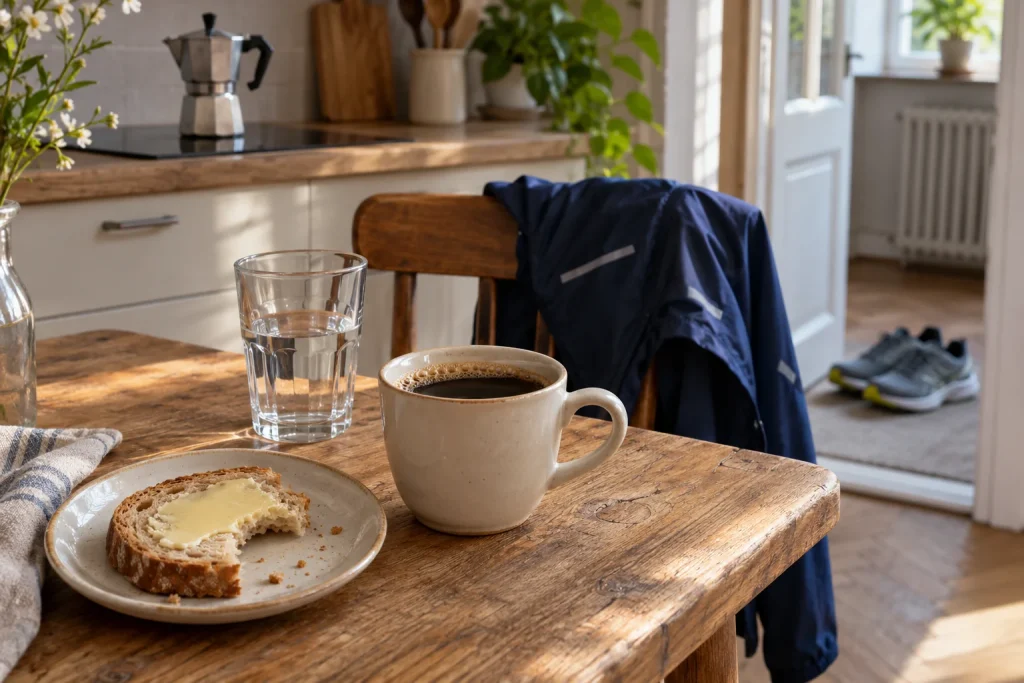
Morning coffee can be a favourite taste, a quiet break, a social occasion or a signal that the working day has begun. As a runner, you may easily connect it with performance too. It is worth separating enjoyment of a familiar drink from deliberately using caffeine for sport. The two situations raise different questions. The cup size of a café order does not, by itself, tell you precisely how much caffeine you consumed, and your individual reaction cannot be inferred simply from the name of the order.
This article helps adult recreational runners review everyday routines. It does not provide a caffeine dosing plan or recommend introducing a supplement. Discuss individual questions with a healthcare professional during pregnancy or breastfeeding, with illness or medication use, or if you have symptoms associated with caffeine. Reviewing the habit aims to help you know what you consume and when, so different sources do not accumulate accidentally on a running day.
First describe your own habit precisely
“One coffee in the morning” is useful conversational shorthand, but insufficient for comparisons. Do you pour it from a moka pot at home, use an automatic machine, drink a mug of filter coffee or order at the nearby café? What does a portion mean for you, and are extra shots added? Milk or another addition can change volume and flavour, while the coffee base is worth identifying separately. An accurate description helps compare your own mornings, rather than replacing a laboratory measurement.
Note when you drink it and how long it takes. A cup sipped while getting ready may have a different timing pattern from a drink consumed quickly before departure. Actual times matter more than the imagined morning plan. If running makes you wake an hour earlier, check how the entire sequence changes: waking, eating, coffee and leaving. You can consciously choose where the familiar ritual fits in this situation too.
Your own description may also reveal that the solution you expect from coffee is actually an organisational question. If there is no time to sit down for breakfast, a takeaway cup does not solve the meal. If you regularly rush out, preparing equipment and clothing the evening before may reduce morning demands. A favourite drink can be part of the morning, but the other elements of running and daily eating need organising separately too.
Why is a cup not a precise unit?
The Australian Institute of Sport material on caffeine also addresses the substantial variation in coffees’ caffeine content. Preparation and the particular drink mean an apparently identical order does not guarantee an identical amount everywhere. For a runner, this means that a precise sports calculation based on numbers of cups can easily suggest more certainty than the available information supports.
A smaller volume does not automatically mean less caffeine, and a larger milky drink does not automatically mean more coffee base. If a café drink’s composition matters to you, ask how many shots it contains and whether product information is available. That information, too, belongs to the specific drink, rather than every similarly named order. At home, consistently describing preparation and your usual portion helps, but still does not constitute a precise caffeine measurement.
A new coffee machine, different capsule, product advertised as stronger or larger mug can change the habit unnoticed. When making such a change, do not assume the same daily number of cups means the same situation. Review available product information and take your own reaction seriously. Descriptions such as “natural”, “artisan” or “for athletes” do not alone provide precise caffeine information or establish suitability for you.
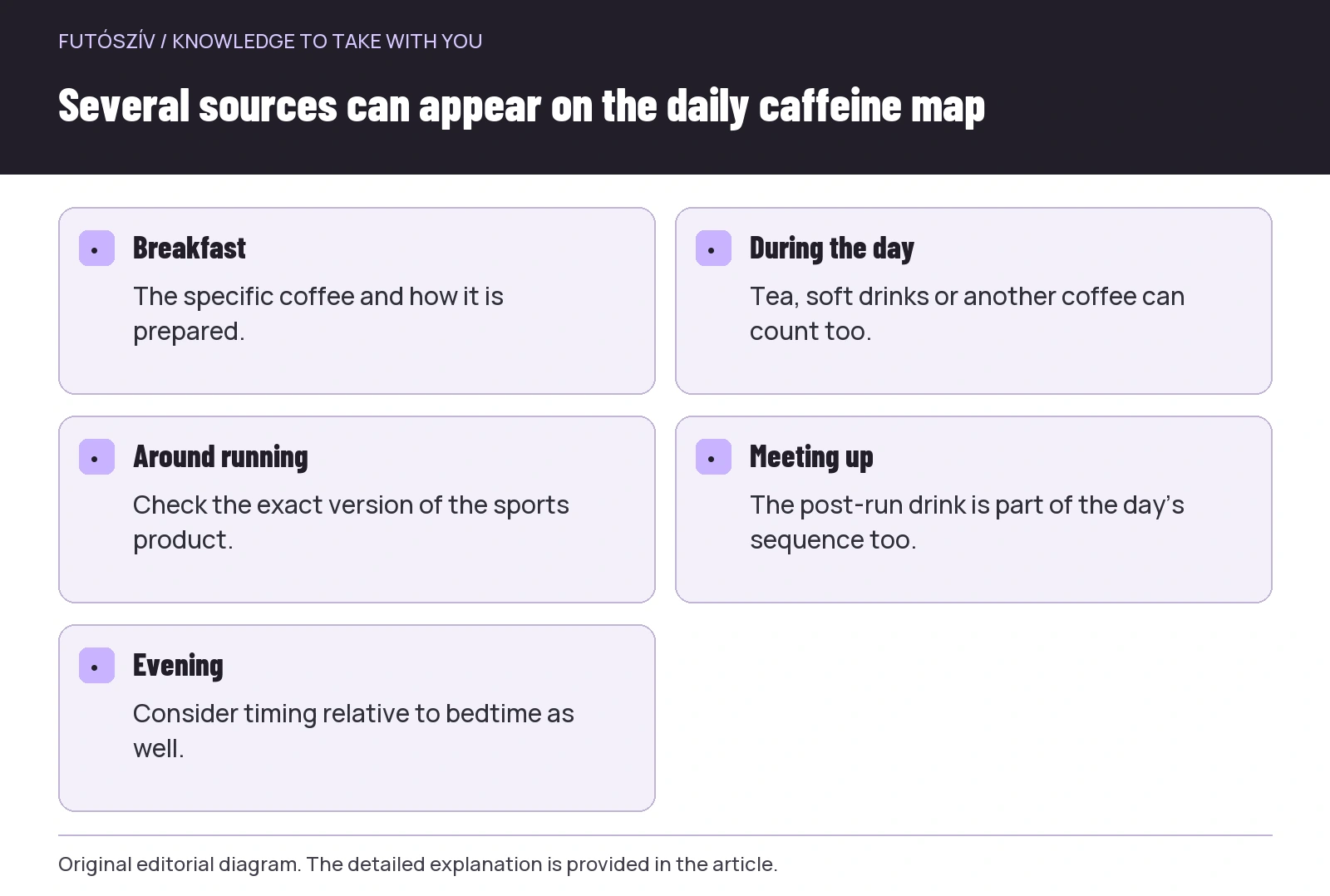 Enlarge diagram
Text version of the diagram
- Breakfast
- The specific coffee and how it is prepared.
- During the day
- Tea, soft drinks or another coffee can count too.
- Around running
- Check the exact version of the sports product.
- Meeting up
- The post-run drink is part of the day’s sequence too.
- Evening
- Consider timing relative to bedtime as well.
Count other caffeine sources throughout the day too
Besides coffee, tea, some soft drinks, energy drinks, chocolate products, sports foods and dietary supplements may contain caffeine. The FDA consumer information asks people to consider different sources together and check product information. Even coffee called decaffeinated can retain some caffeine. Your own daily map should therefore include more than coffee cups if you genuinely want to review your habits.
This may become particularly important on a running day. Alongside the usual morning drink, you may have a sample offered before the start, a caffeinated product chosen for the run and a post-run coffee with friends. Each may seem a small decision individually, but together they create a different daily pattern. Check the packaging for the version you have: products within one family can differ. Read the wording rather than relying on remembering a colour.
If the product lists a caffeine amount, check what it refers to: the entire pack, a serving or a specified volume. Do not confuse information for a multi-serving pack with the amount consumed at once. If information is insufficient, treat that as uncertainty rather than filling the gap with a figure found online for a similar product. The goal is a transparent decision. A sports dietitian can help consider the whole dietary and health picture when discussing caffeine use for sport.
| Situation during the day | What is worth recording? | Common misunderstanding |
|---|---|---|
| Coffee at home | Preparation and your own portion | A cup is the same unit everywhere |
| Café drink | The specific order and known composition | The size of a milky drink reveals the number of shots |
| Sports product | Exact version and label | All flavours contain the same caffeine |
| Post-run gathering | Another part of the daily sequence | Only caffeine before running counts |
Performance data and individual experience are different questions
Alongside possible effects of caffeine on sporting performance, the AIS overview emphasises differences in individual response. This does not imply that every runner should use caffeine. Group-level evidence, personal tolerance and the result of a particular session are three different levels. After a faster run, you cannot establish with certainty that the day’s coffee alone caused the change, just as a harder run does not automatically prove the opposite effect.
Wind, route, session type, company and earlier load can also affect pace. Nor should a change in a heart-rate trace become a diagnostic conclusion on the basis of one drink. If you notice troublesome symptoms around coffee consumption, take them seriously in terms of how you feel and discuss them with a professional where needed. Naming a definite cause may require more information than a watch screen and a memory of the morning.
Do not begin improvising sports use at a new, important event. An unfamiliar product, a larger coffee and an exciting race situation can introduce too many new circumstances together. Even a familiar ritual can change while travelling: you are served a different drink, consume it at another time and follow a different daily timetable. You can recognise these differences in advance without turning your morning drink into a complicated performance protocol.
Bedtime is part of the day when considering timing
When thinking about morning coffee, look at the end of the daily sequence too. Are there further afternoon or evening caffeine sources, and do they fall close to your usual bedtime? The European Food Safety Authority information on caffeine discusses possible effects on sleep too, and considers all dietary sources together. Individual sensitivity means a general number of hours may not describe everyone’s situation.
For your own observations, you can record actual drink times and important differences in your sleep routine separately. If late-evening training, work or stress changed too, do not remove those from the picture. Notes can help formulate a good question, but do not prove every worse night resulted from a single cup. With persistent sleep or other symptoms, do more than guess at coffee quantities: seek appropriate professional help.
When waking earlier for an early run, also notice whether the schedule consistently allows less rest. More coffee does not resolve the planning conflict. Coordinating sport and work, reconsidering training time or simplifying morning tasks remain separate jobs. A favourite drink should not be the only answer to every tired morning if the daily routine itself is regularly unsustainable.
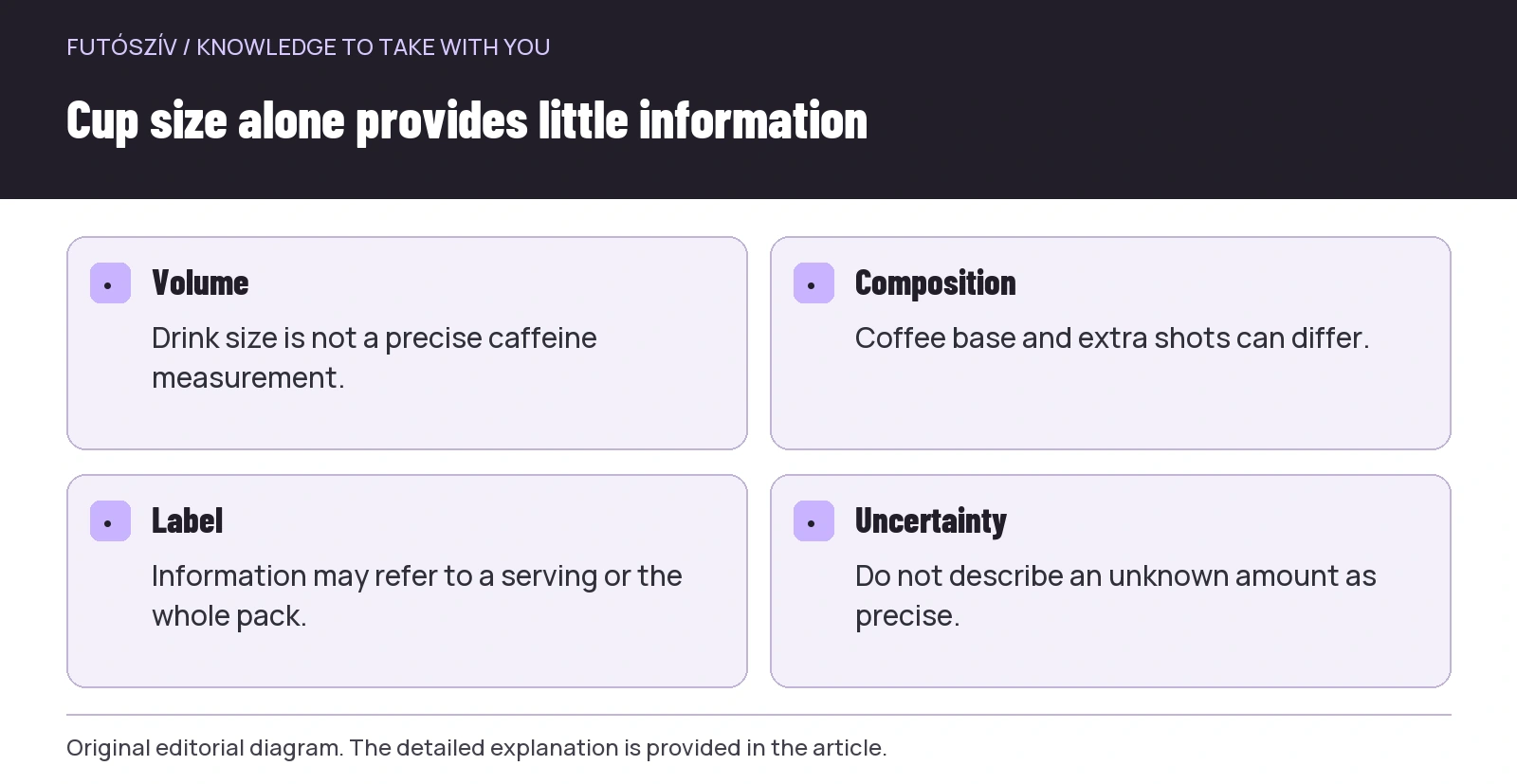 Enlarge diagram
Text version of the diagram
- Volume
- Drink size is not a precise caffeine measurement.
- Composition
- Coffee base and extra shots can differ.
- Label
- Information may refer to a serving or the whole pack.
- Uncertainty
- Do not describe an unknown amount as precise.
How can you observe your routine without excessive calculation?
Choose a few ordinary days and make a short caffeine map. The product or drink name, time, known quantity and important circumstance may be enough. Where the precise caffeine amount is unknown, do not enter an estimate that looks certain. Even so, the map can reveal a regular afternoon coffee or caffeinated product during a run alongside the morning drink. This is about making habits transparent, rather than collecting as much data as possible.
If you change a practical detail, name it first. For example, you might choose a drink without caffeine at the post-run gathering or ask about the precise composition of your café order. Do not change several products at once or increase consumption simply because a sporting account suggested it. If you want to reduce consumption, discuss the specific approach with a professional where needed, particularly with regular higher intake or a health question.
The observation sheet has room for experience too: the drink was enjoyable, the timing comfortable, it created a rush or it came with a troublesome sensation. Your own words may be more useful than a dozen automatically completed scales. You do not need to subordinate every session to investigating coffee. Once a consistent, calm morning routine is established and no question remains unresolved, you can stop recording.
Three common morning situations
The first is a familiar run from home, with coffee as part of breakfast. Here, learn the actual order of eating, drinking and departure. You do not need to add a new product to make the routine more thoughtful. If the familiar arrangement is comfortable, sustainable and fits your individual health boundaries, you need not change it merely because of a trend. The task is to identify any uncertainty, rather than continually redesign everything.
The second situation is a social run starting from a café. Think beforehand about whether you will eat at home, what you will choose there and how much time remains before departure. The group’s order is not a personal guide. You can request another drink without losing the social part of the event. If you sit down together again after running, that is a further part of daily consumption. Thinking through the timetable helps keep individual habits visible alongside the community experience.
The third is race travel, when the familiar drink from home is unavailable. You do not need to replace it automatically with an unfamiliar version advertised as stronger. You can check options at the accommodation or venue beforehand and follow your familiar plan. With a caffeinated sports product, consider the full daily picture and the exact label. Race excitement does not make the effects of a new drink or combination more predictable.
What question should you bring to a professional?
If you have recurring symptoms around caffeine, explain what you consumed, when, with which other products and in what situation. “One coffee makes me feel unwell” can be refined into a specific drink, portion and experience. Illness, pregnancy, breastfeeding or medication use are important health circumstances too. Without them, personalised advice could remain too general. The authority overviews mentioned in this article do not replace individual assessment.
It is also worth talking to a sports dietitian if you are considering deliberate caffeine use for sport rather than everyday coffee. The question is then more than whether caffeine was effective in a particular study. Your diet, health, daily load, sleep and appropriate product information also form part of the decision. Your familiar morning drink can remain a simple, enjoyable ritual. A transparent routine rests on understanding both the variables behind the cup and the limits of your own experience.
Sources and further reading
- Australian Institute of Sport: Caffeine
- FDA: Spilling the Beans: How Much Caffeine is Too Much?
- EFSA: Caffeine
How Futószív articles are prepared: our editorial guidelines.