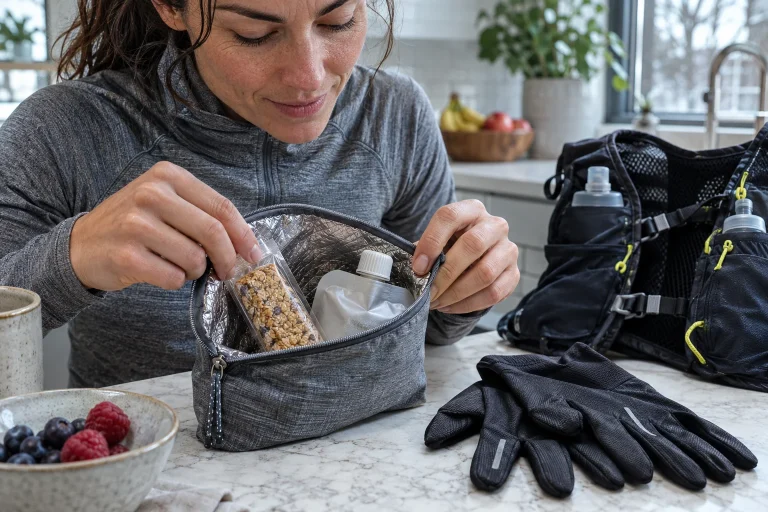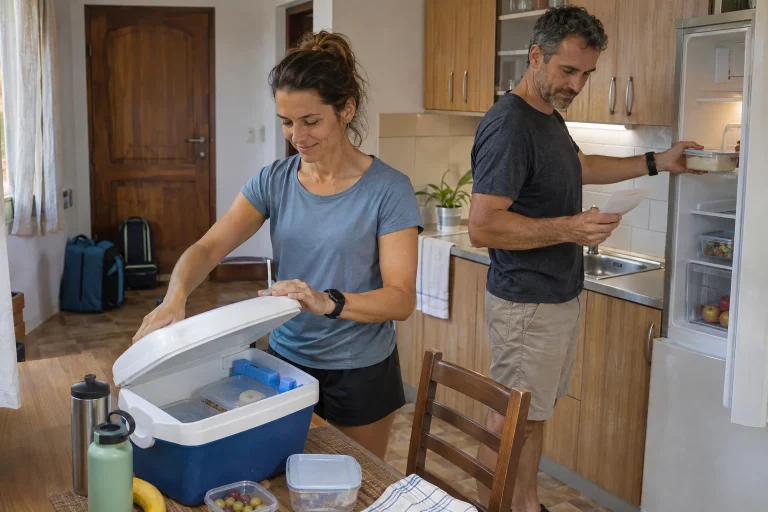
A longer weekend run can be a good opportunity to try out the practical details of your planned race breakfast beforehand. The purpose of a rehearsal is not to seek discomfort or introduce a completely new diet every weekend. It is to build a feasible, familiar routine from foods that already suit you. You observe the relationship between preparing and eating breakfast and starting the run, while respecting the boundaries of your own training plan and health.
This article offers an observation method for adult recreational runners. It is neither a personalised nutrition prescription nor a diagnostic test at home. If you have recurring or troublesome gastrointestinal symptoms, investigating them matters more than excluding more and more foods. Plan fluid and energy provision for the whole longer session; breakfast before departure is only one part. Fit the rehearsal into that complete picture.
Formulate one answerable question
“What is the perfect runner’s breakfast?” is too broad a question. It is much more useful to ask whether you can prepare your established combination when waking earlier, or whether the same food feels more comfortable at a slightly earlier time. Your question might be purely practical: whether cereal mixed ahead retains a suitable texture, or whether you can comfortably eat breakfast from the container intended for travel. A question like this can be linked to a specific observation.
Describe the starting version so you can recognise it later. Be clear about the ingredients, your approximate quantity, the preparation method and when you finished eating. You do not need to weigh every mouthful with laboratory precision, but “usual breakfast” is not very helpful if it means toast one day and a large fruit bowl another. Your own recipe card can use familiar household measures and a simple photograph too.
According to the Sports Dietitians Australia information on pre-exercise nutrition , food choice and timing are individual matters that need adapting to training circumstances. A practical rehearsal therefore does not mean copying another runner’s breakfast. You are looking for a version that works in your own situation, without assuming that a general time window guarantees identical comfort for every food, activity and person.
Identify what will stay unchanged this time
If you change the food, timing, run length, intensity and a new sports drink all at once, you will not know which change played a part. Conditions at home will never be entirely identical, but you can reduce uncertainty. Choose an already familiar run that fits your plan and change one breakfast detail. Keep the other ingredients and your usual departure routine as similar as possible.
Briefly record the unchanged parts as well. These might include the breakfast base, your usual drink, the character of the route and the planned session type. Do not add a new caffeinated product or unfamiliar topping out of curiosity on rehearsal day. A targeted change is not complete scientific control, but it helps keep later interpretation from being pure guesswork. If several things differed, simply note that.
There are circumstances you cannot order to suit you: the weather, the night’s sleep, a stressful previous day or an unexpected road closure. Treat these as background information rather than failure. Experience from an unusually warm morning after poor sleep may be valuable, but it is not the same as the outcome of a rehearsal on a cool, calm day. Recording conditions alongside the observations makes the limits of comparison visible.
 Enlarge diagram
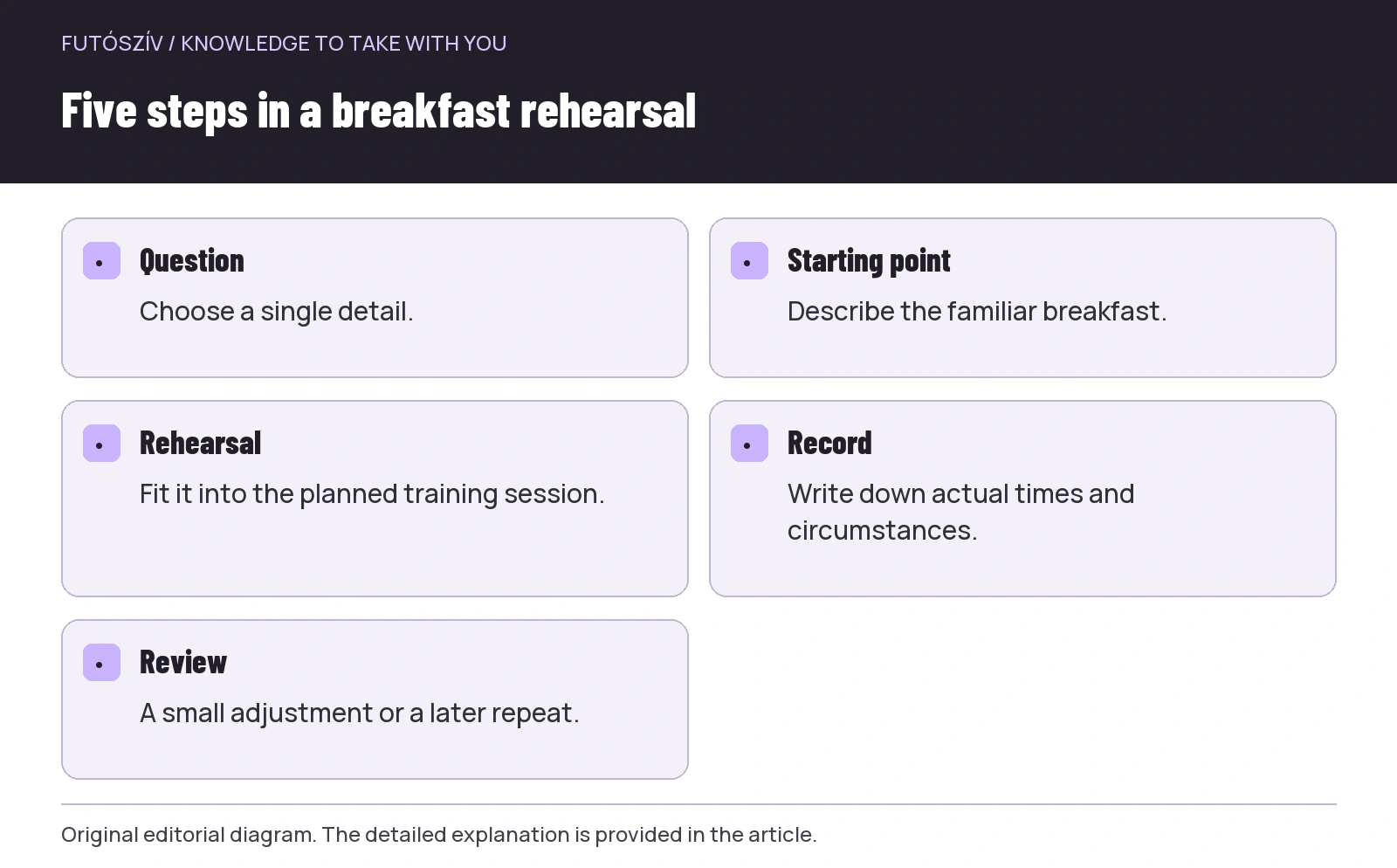
Text version of the diagram
- Question
- Choose a single detail.
- Starting point
- Describe the familiar breakfast.
- Rehearsal
- Fit it into the planned training session.
- Record
- Write down actual times and circumstances.
- Review
- A small adjustment or a later repeat.
The rehearsal begins the evening before
Prepare the equipment you need and check that you really have the ingredients. Running out of a familiar product can easily bring a completely new version into the morning. If you plan to pack food for travelling to a race, use that container, utensil and storage arrangement during the rehearsal as well. Experience of eating from a bowl in the kitchen does not tell you how the same food works at a cramped table or after travelling.
Review the next day’s run, the food and drink planned for it, and access points along the route. Do not arbitrarily increase training load for the sake of the breakfast rehearsal. If the planned event needs a complex fuelling strategy, a plan developed with a sports dietitian can help. Testing breakfast timing does not replace appropriate practice of eating and drinking during a longer run. They are separate questions, even though they interact in practice.
You do not need to change the previous evening’s meal drastically for the rehearsal. Following your familiar routine makes the next day easier to interpret. If the evening is unusual anyway, do not remove it from the notes. That circumstance may help explain why the morning differed. The value of observation comes from honestly recording real differences, rather than from flawless conditions.
Record actual times in the morning
Note when you woke, when you ate and when the run started. Use the actual time rather than the planned time. If breakfast took ten minutes longer or family preparations delayed departure, that is part of the experience. A routine becomes useful because it can work on a real morning, rather than because it fits neatly into a theoretical slot in your calendar.
You can also observe texture and the circumstances of eating. Was the chosen container comfortable? Did the food stay too hot, forcing you to rush? Did you forget to prepare a utensil? Many such problems can be fixed by changing the kitchen sequence and have nothing to do with a special sports nutrition product. One of the greatest benefits of rehearsal is discovering everyday obstacles on a less important day.
Before leaving, ask more than whether your stomach is all right. Consider whether you are hungry, comfortable and in a suitable condition for the planned session. You do not need to run through unexplained feelings of illness for the sake of the rehearsal. If your general condition means changing or skipping training, the rehearsal has not failed: you have learned something important about what is manageable that day.
A few well-timed observations during the run are enough
There is no need to score your body’s signals every minute. You can choose a few natural points, such as the end of the warm-up, a familiar route section and the end of the session. Briefly note whether you experienced hunger, fullness or discomfort, and when. If you make a voice note, stop somewhere safe first. Recording observations must not distract you from traffic or terrain.
If you eat or drink during the run, the timing and products used also shape the whole picture. A sensation appearing later cannot automatically be traced back to breakfast before departure. The same applies to a sudden hard pace, heat or a long descent. An observation is more accurate when you connect the sensation with its circumstances. “Breakfast was bad” provides too little information for the next decision.
The joint position statement from Sports Dietitians Australia and the Ultra Sports Science Foundation treats gastrointestinal problems during running as a multifactorial issue. The practical caution for this article is not to name a definite cause from a single symptom and occasion. Distinguish developing individual tolerance and managing symptoms from an everyday food-preparation trial at home; the latter is not a clinical procedure.
 Enlarge diagram
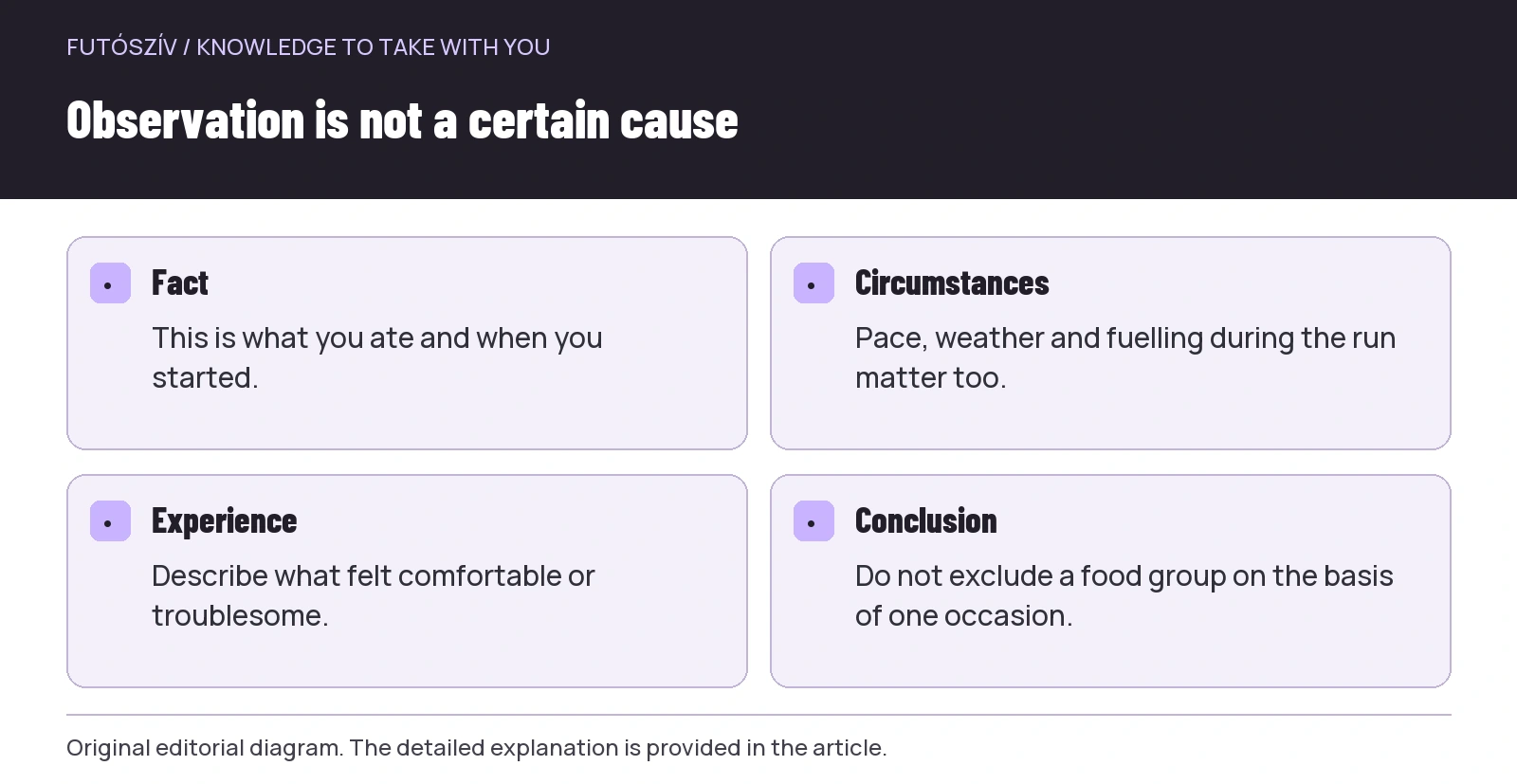
Text version of the diagram
- Fact
- This is what you ate and when you started.
- Circumstances
- Pace, weather and fuelling during the run matter too.
- Experience
- Describe what felt comfortable or troublesome.
- Conclusion
- Do not exclude a food group on the basis of one occasion.
Use a short, interpretable observation sheet
| Field | What should you enter? | Why does it help? |
|---|---|---|
| Question | The single detail being explored now | Keeps the variables from blending together |
| Breakfast | The combination and your approximate quantity | Makes the version recognisable later |
| Times | Actual eating and departure times | Shows what actually happened |
| Environment | Session type, weather and unusual circumstances | Makes the limits of comparison visible |
| Experience | Comfort and practicality in the kitchen | Helps you choose a specific adjustment |
A scale is useful only if you know what its categories mean. Three words may be enough: comfortable, noticeable, troublesome. The first means nothing interfered; the second that you noticed something without needing a change; the third that you had to modify things because of the session or how you felt. Use your own terms consistently. Numbers alone do not turn the record into a medical measuring instrument.
Record how practical the food was to prepare as a separate review point. The combination might have felt pleasant but required too much kitchen work for the actual departure time. That does not necessarily call for different ingredients: preparing equipment or using a similar, simpler method may help. A usable breakfast needs both food you enjoy and a manageable preparation process. The rehearsal can reveal these two aspects separately.
Two similar occasions may tell you more than one memorable run
If a version seems workable, you can try it again before a later, similar session. You do not need to optimise it further immediately. Repeating it helps you judge whether the routine is easy to use in everyday life. A pleasant experience is no guarantee for every race situation, but it provides a stronger basis than one morning that happened to go well. Repetition should fit your training plan; do not arrange extra load for the food experiment.
If two occasions turn out differently, look for known differences. Was the timing different? Did you undertake a substantially different load? Was there a new drink or unusual stress? You may not find a clear explanation. It is acceptable to acknowledge that too. Accurately recording uncertainty is more useful than a striking but unsupported conclusion that all runners should avoid a particular ingredient.
What should you take into the race, and what should you not infer?
Turn the experience that worked into a short action sequence: when to prepare the food, which container you need, where you eat, what stays separate and which detail you practised. On race day, an already familiar process is easier to use. If the travel situation differs, plan that separately. A rehearsal at home does not automatically check an accommodation’s breakfast room or refrigeration in the car; those need new practical checks.
The Australian Institute of Sport educational material on training and competition nutrition places nutrition within the whole process of preparation and recovery. Your breakfast rehearsal belongs within this framework too. One successful breakfast does not remove the need to eat later in the day, and a less successful running result does not, by itself, prove that you chose the wrong food. Many factors influence running.
Do not infer that a successful rehearsal means you must eat the same thing every day, or that your pre-run choice is compulsory across your whole diet. The goal is a tested solution useful in a particular situation. Varied everyday eating and a familiar routine before an important event can coexist. The rehearsal has done its job when fewer unresolved details remain for race morning and you also understand the limits of your observations.
Sources and further reading
- Sports Dietitians Australia: Pre-exercise fuelling
- Sports Dietitians Australia and Ultra Sports Science Foundation: position statement, 2025
- Australian Institute of Sport: Training and Competition Nutrition
How Futószív articles are prepared: our editorial guidelines.