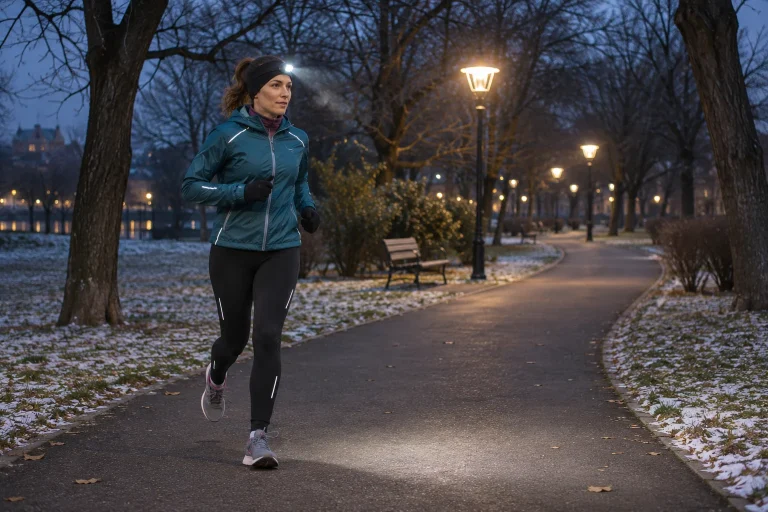
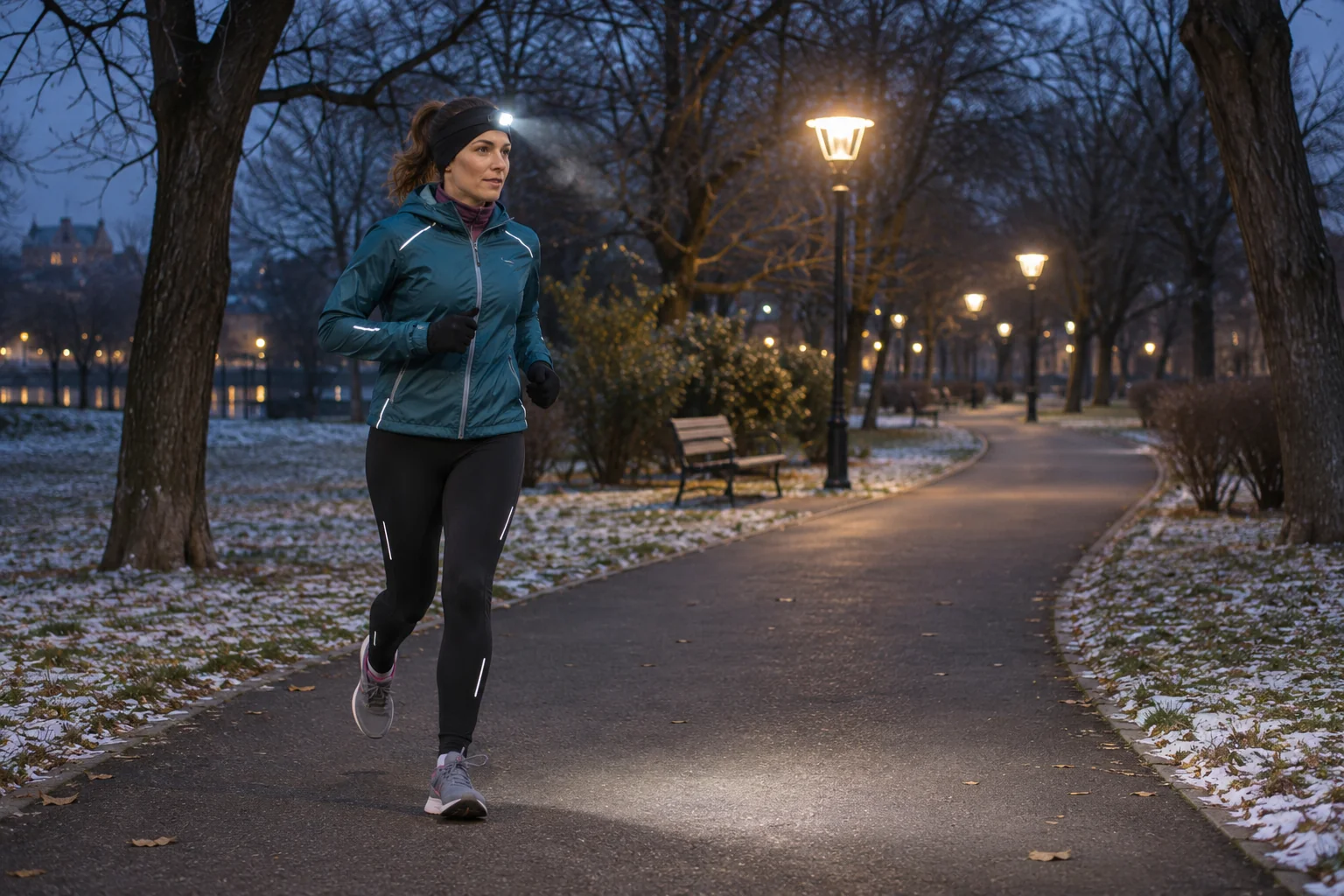
Your phone shows two figures: air temperature and feels-like temperature. Before a winter run, it is easy to regard the second as the true temperature and select a hat, jacket and gloves accordingly. Wind chill, however, is an index calculated under defined conditions. It provides valuable warning information, but does not specify exactly which garment will suit a particular person, pace and route.
The difference in the title is not a current Hungarian forecast or a claim that zero degrees usually produces a reading of minus ten. When numbers differ greatly, first clarify whether the field actually represents wind chill. ‘Feels like’ alone does not identify the app’s formula. This article connects interpretation of official wind chill, several original calculations and planning the entire outing.
What does wind chill condense into one value?
According to the US National Weather Service, the index is based on the combined effect of cold and wind on heat loss from exposed skin. Its description mentions a human-face model, wind adjusted from the usual measurement height to face height and conditions without solar radiation. The NWS limits use of the formula to air temperatures at or below 50 degrees Fahrenheit and wind speeds above 3 miles per hour. These correspond to approximately 10 °C and 4.8 km/h.
Do not therefore imagine the value as an average of thermometers placed all over your body. It is not measured air temperature underneath a jacket or an estimate of your core temperature. The number helps explain why the same air can create a different cold burden in stronger wind. It does not describe your full clothing system, running intensity or individual condition for you.
As a practical reading task, find the explanation of the feels-like field in the app’s help. Note the index name, unit and whether it is a present estimate or a forecast for a later time. If no methodology is described, treat this as an unknown condition. Comparing two apparently identical minus-ten fields remains limited until you know what was calculated behind them.
The index does not cool objects below air temperature
Canada’s environmental and meteorological information specifically emphasises that wind chill cannot be measured with an ordinary thermometer, and wind alone does not cool objects below the actual air temperature. Describing a cold sensation does not mean the index value can be measured on every nearby surface. An object cooling faster and reaching a lower final temperature are separate claims.
For runners, this means, for example, not using the feels-like number as a thermometer for whether pavement is icy. Surface condition requires considering its own circumstances; this article does not calculate road-surface temperature. Equally, whether a bottle’s contents freeze is not decided by wind chill being below zero. The bottle’s, liquid’s and environment’s actual temperatures cannot be read from a single feels-like field.
This distinction also helps equipment discussions. Clarify whether ‘I ran in minus ten’ refers to the air or the index. This is not splitting hairs: someone can use your clothing experience better when you provide the actual temperature, wind data and how the run unfolded. A shortened label may hide many important differences.
 Enlarge image
Original calculation: different weather can produce similar indices
The following three rows are original illustrative calculations using the published NWS formula. Air temperatures in Celsius were first converted to Fahrenheit and wind in km/h to miles per hour, then results converted back to Celsius. The table shows rounded values. It is not a measured workout, tomorrow’s forecast or a list of recommended running conditions: it reveals information lost through combining inputs.
| Air | Entered wind speed | Our calculated wind chill |
|---|---|---|
| −5 °C | 15 km/h | approximately −10.6 °C |
| −2 °C | 40 km/h | approximately −10.1 °C |
| −8 °C | 5 km/h | approximately −10.6 °C |
Results rounded to one decimal place match in the first and third rows, yet air and wind differ. The middle row pairs stronger wind with less cold air. The table therefore does not imply one common outfit or identical workout duration. In practice, route exposure, return options and clothing usability may raise different questions. The calculation does not assess those circumstances.
Try reading the data back in words: ‘the air is minus five, the stated wind is fifteen, and the calculated index is roughly minus eleven’. This is less snappy than one minus-eleven label, but retains more useful information. The NWS formula also does not entitle you to treat another provider’s unknown feels-like algorithm as identical. Method and inputs together make the result interpretable.
Conditions during running and afterwards are separate tasks
In Abedin and DenHartog’s clothing study, twelve men cycled in a controlled chamber at approximately 15 °C and 50 per cent relative humidity, followed by a windy drying phase. Long-sleeved tops of different materials were compared. Under those conditions, wool was associated with higher torso skin temperature and more favourable post-exercise comfort ratings. This was a small study in a defined situation, not a ranking applying to every winter running garment.
The study is relevant here because the situation changed. Clothing experience while running does not automatically cover what happens when stopping, changing or travelling home. This article neither calculates a wool thickness from the research nor promises protection from one material. Our planning question is instead: where will you be after the final running step, and can you access the dry items needed then?
Take two original organisational examples. One runner returns to their front gate; another still walks to a farther stop and waits for transport. Even with identical starting weather data and running pace, finishing logistics differ. The second person’s packing plan may separately include a dry layer for waiting and somewhere to change. The index cannot reveal this difference; knowing the whole outing can.
Make a workable clothing plan instead of a clothing chart
US NIOSH information for people working in cold conditions mentions several layers, protecting the head and extremities, breaks somewhere warm and spare clothing. This is occupational guidance, not a running plan. We distinguish the transferable organisational idea from workplace requirements: consider clothing and access to warmth together, adapted to the actual activity.
Begin your own clothing plan with functions rather than brand names. What covers your hands, and how will you handle necessary objects? What stays dry for afterwards? Where will you store a layer removed during the run? Existing clothes may already answer these questions. Buying another jacket does not replace finding out whether its pocket is accessible in gloves or a removed layer can be stowed.
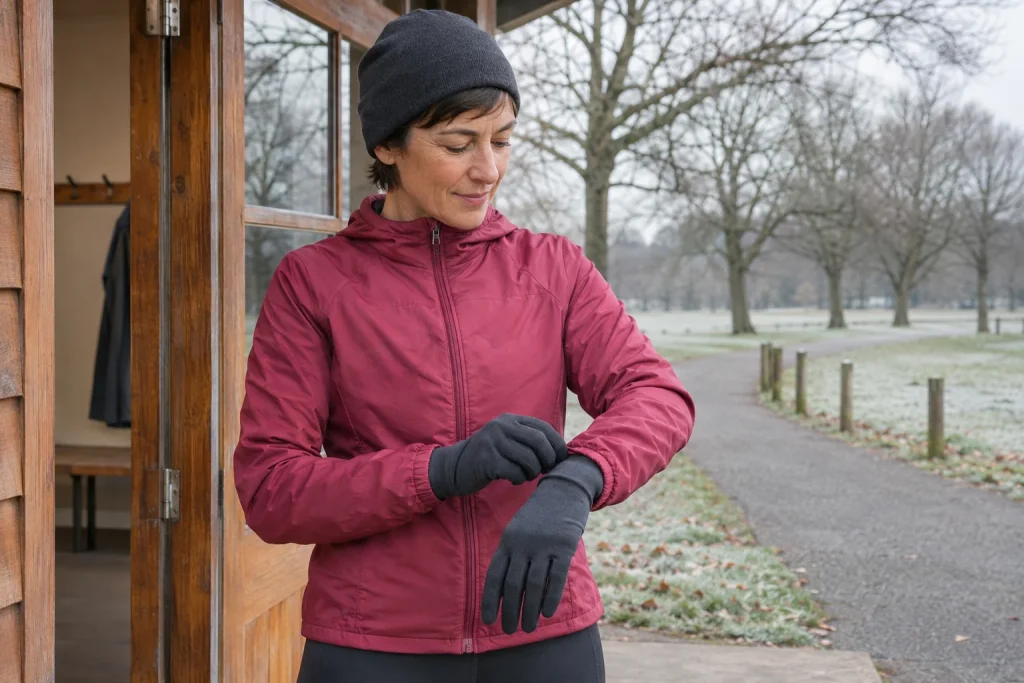
The simplest part of a trial can happen before leaving. Once dressed, check whether you can close the zip, reach your key and put a glove back on after briefly handling something. You do not need to test yourself in extreme cold. Establishing usability is tangible progress: a tight cuff or inaccessible pocket noticed beforehand is easier to address than a hurried situation during running.
A favourable number does not override your condition
The CDC explains that hypothermia can occur in cool conditions, not only extreme cold, especially when wet. Warning signs can include confusion, clumsy hands, slurred speech or unusual drowsiness. Suspected hypothermia is a medical emergency; stop the outing, find somewhere warm and sheltered and seek help if these symptoms occur. In Hungary, call 112 for confusion, impaired consciousness or feeling seriously unwell; do not wait for another phone index.
Do not base individual cold-tolerance decisions on the group’s most confident member. ‘This always works for me’ mainly describes that person’s own experience. With a known illness, previous cold injury or a condition affecting capacity for exertion, your clinician’s advice matters more than a general online clothing chart. This article is information, not individual medical clearance for winter running.
Do not combine frostbite and hypothermia into one ‘too cold’ label either. They are different concepts, and screen colours cannot exclude symptoms. Skin becoming numb, unusually pale, hard or waxy may require medical assessment. Do not try to confirm such a change by rubbing it or continuing to run. The physical explanation of objects and wind chill does not mean personal symptoms developing in cold conditions are harmless.
 Enlarge image
What should you record to improve the next decision?
A useful winter clothing note separates five details: air temperature, stated wind, index name, layers worn and how the outing ended. Add a brief observation, such as whether the inner top stayed damp until changing or the key was hard to reach. This is your own log, not a clinical test. Its aim is not to increase risk-taking, but to recognise the next everyday organisational problem.
If you use the same combination the next day, retain the differences too. A shorter loop, longer wait, different wind direction or another outer layer means you are no longer comparing the same situation. ‘With which clothes, after what outing, did changing remain comfortably manageable?’ is more precise than ‘good down to minus ten’. Gradually, this becomes your own experience tied to conditions, not a universal threshold.
Keep wind chill visible, then restore the other important information beside it. First identify the index, read it alongside actual air temperature and wind, then plan the whole outdoor outing. An appropriate clothing plan is not an automatic response to one number: it coordinates several tasks from handling layers to returning home. Understandable weather data help, but do not perform any of those steps for you.
Sources, calculations and health context
Checked: 21 November 2026. The table is an original calculation using the linked NWS formula; the two homeward-journey situations and clothing log are original organisational examples. This is not an independent product test or advice claimed to have medical review.
- National Weather Service: Understanding Wind Chill – conditions, formula and interpretation
- Environment and Climate Change Canada: Wind chill and the Wind Chill Index
- Abedin and DenHartog: Clothing impact on post-exercise comfort, Ergonomics, 2024
- The clothing study’s publisher DOI
- NIOSH: Cold Stress and Workers – organising activities in cold conditions
- CDC: Preventing Hypothermia – warning signs and seeking help
How Futószív articles are prepared: our editorial guidelines.