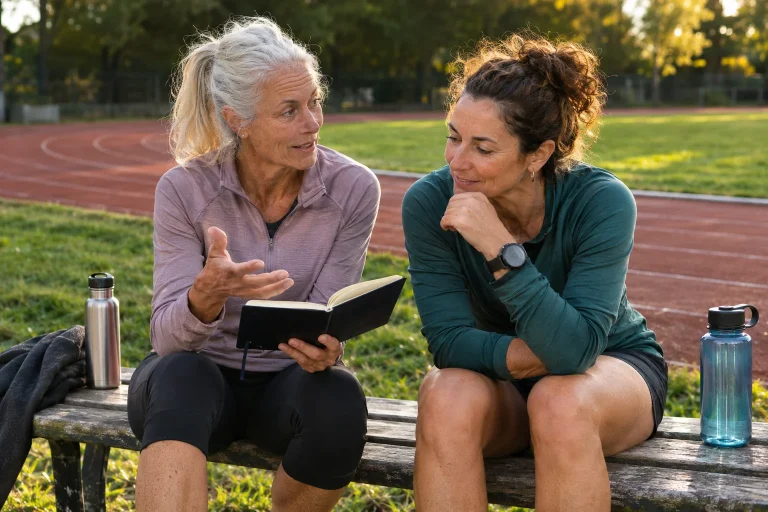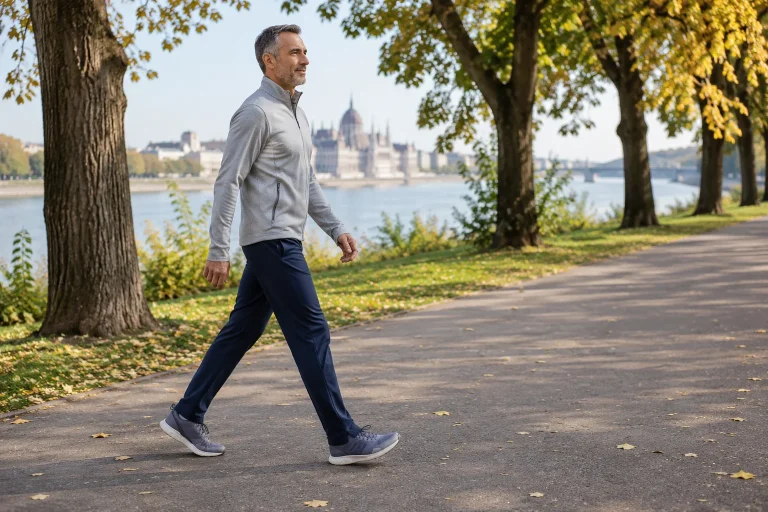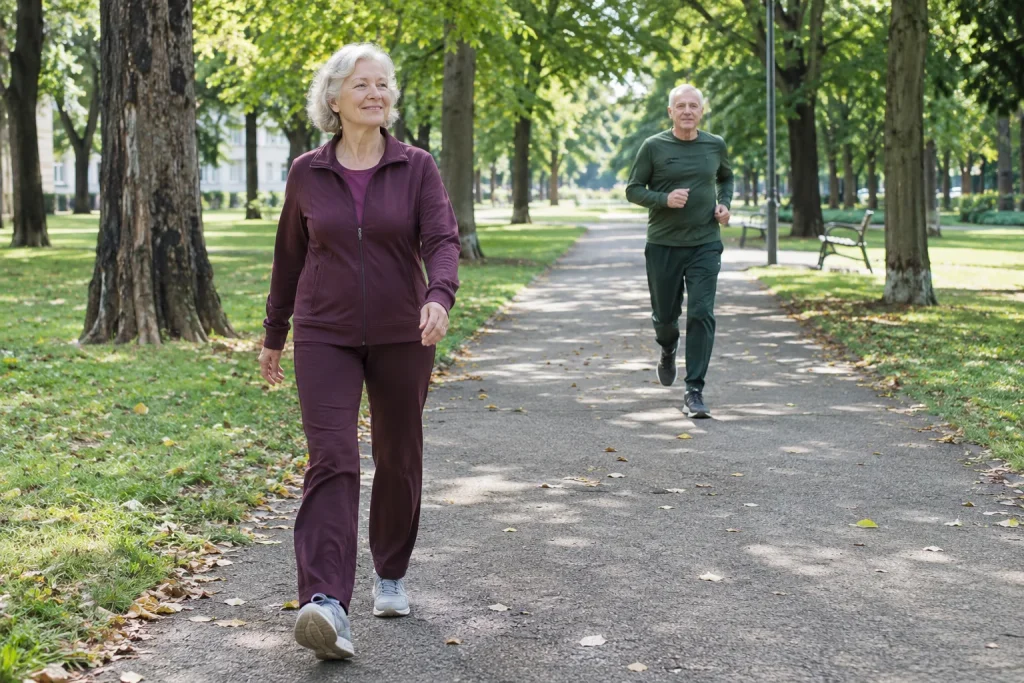
Two people of the same age meet in a park. One moves along chatting easily; the other prefers stopping after shorter stretches. Being born in the same year does not explain the difference. Sporting history, health, daily tasks and surroundings can create different stories. Calendar age is important information, but not a ready-made activity plan or personal prohibition or permission.
Age-based comparison can mislead in two directions. Someone may hesitate to seek new possibilities because they feel too old. Another person sees athletic examples in their age group and concludes they should achieve the same. A more useful question in both cases is: what do I want to do, how am I functioning now and under what conditions can I make a responsible decision?
Birth year does not summarise your life so far
The WHO information on ageing emphasises that age-related changes are not identical for everyone and are only loosely associated with chronological age. That does not mean passing time is irrelevant. It means an age label does not explain everything contributing to an individual’s possibilities today.
Consider two fictional sixty-eight-year-olds. One regularly visits the nearby market, has maintained a similar routine for some time and comfortably reaches the park. The other had surgery in the past year, moved home and is reorganising everyday life. This is neither a ranking nor a prognosis. It shows that the same birth year can involve different questions.
Comparisons also omit much background. A short social-media video does not show how much help, rest or earlier experience lies behind a movement. An impressive performance therefore does not mean copying it is appropriate for you. Equally, a peer who needs help getting around does not describe your coming years.
Three separate questions: how old am I, what can I do and what do I want?
Chronological age is a fixed piece of information. Current function appears in different situations: how you walk, steadiness when turning, managing stairs or a familiar daily task. Your own goal is different again: company, being outdoors, following a particular route or perhaps jogging. The questions connect but cannot answer one another.
If your goal is an easy community activity, for example, several solutions may exist. Preparing for a race brings very different conditions and decisions. Not every wish to move needs translating into a running distance. Meaningfully choosing to participate in something valuable to you is also a goal, without having to match an age-group result.
The WHO overview of functional ability connects healthy ageing with opportunities to do what people value. Interaction between environment and individual capacities also has a role. For runners, a practical implication can be adding ‘what kind of life do I want my movement to support?’ alongside ‘how much should I be able to manage?’
A condition’s name and everyday functioning are not interchangeable either. In the WHO approach, healthy ageing does not require the absence of every illness. That does not remove the need for personal advice about a particular condition, however. The practical question is how illness, treatment and available help together affect your situation, rather than how many labels appear on a report.
 Enlarge image
Changing the environment can be a meaningful step too
The same walk can require very different organisation in different places. One route is smooth, has benches and offers an easy way home. Another involves a rushed crossing, high kerb and a long section unsuitable for stopping. Finding the second harder does not simply establish declining capacity. First identify differences between the circumstances too.
Choose a specific situation uncomfortable for you. The problem may be a crowded entrance rather than walking itself, or uncertainty about somewhere to sit rather than distance. These can call for different solutions from increasing sporting volume. An easier-to-reach or calmer place can preserve the experience originally sought.
Examining surroundings does not mean neglecting health symptoms. New pain or feeling unwell should not be explained away solely by poor route choice. Two things can be true: a route could improve, and a change needs individual assessment. Modifying circumstances is one influenceable part of the situation, not a substitute diagnosis.
The same pace does not necessarily mean the same effort
Visible speed is easy to remember in a park; internal effort is less apparent. The CDC guide to measuring intensity distinguishes absolute from relative intensity: how difficult an activity is for an individual does not follow solely from its name or speed of movement.
Before a shared session, discuss more than how many kilometres it will cover. Can people stop, choose a shorter section or move at their own rhythm? The entire event need not be fitted to someone else’s visible pace. Seek concrete organisational answers rather than general encouragement that you will surely keep up.
Observing personal effort is not medical screening either. Comfortable movement does not rule out every health problem, and a harder day does not identify an illness by itself. Unusual symptoms have significance in their own right. A sports watch, companion’s view or age-group average cannot override what needs personal medical assessment.
Sporting results and everyday independence offer different perspectives
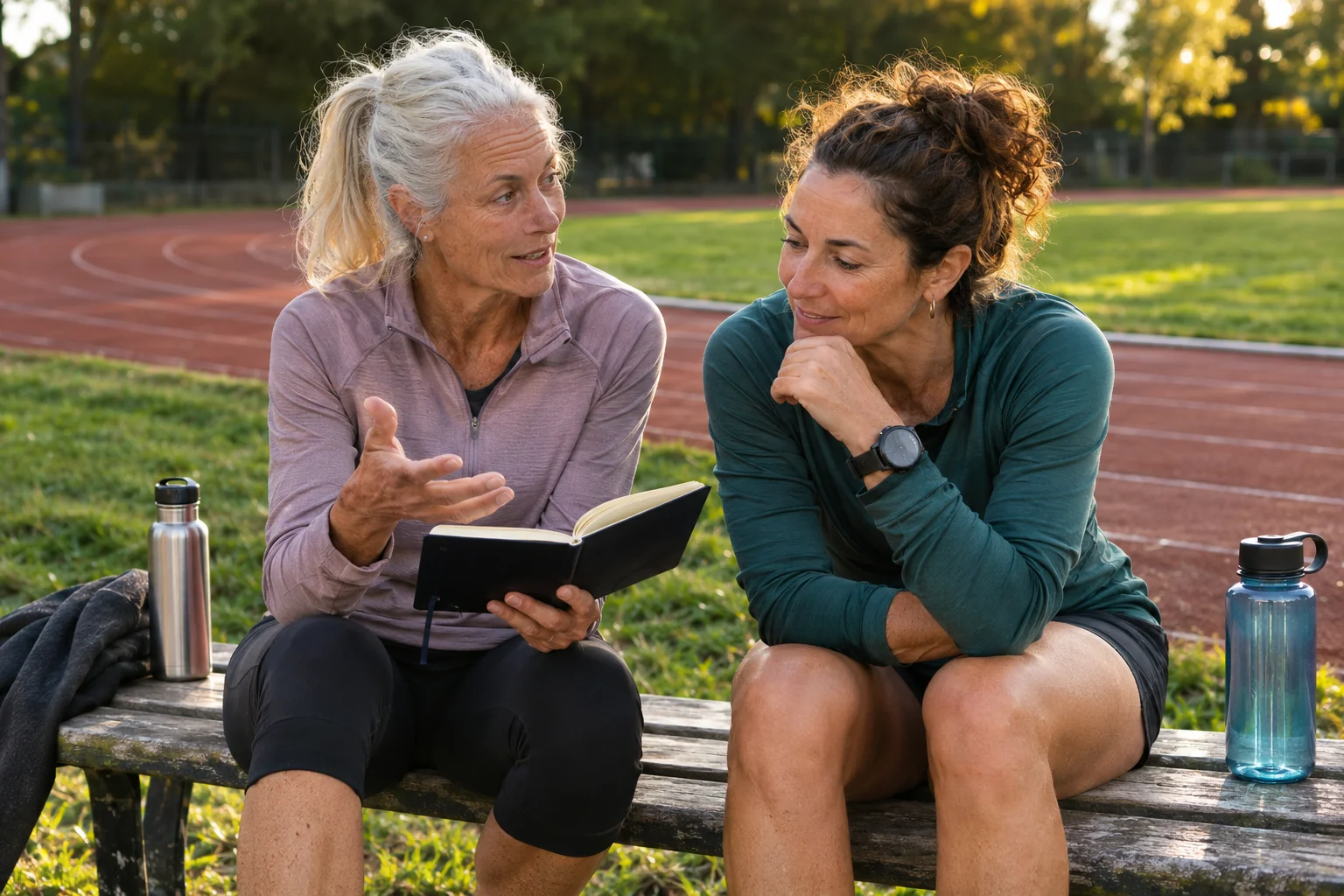
Someone may regard an earlier running result as success while now prioritising comfortably reaching a favourite place. Another may still think about racing. There is no need to assign one correct aim to everyone. Naming the goal helps distinguish genuinely important changes from others’ expectations.
Make two short columns for yourself. In one, list daily activities you want easier access to; in the other, experiences sought through sport. Stairs, shopping or reaching a friendly gathering, for example, involve different considerations from the excitement of a start. This is not an ability test or a score ranking people.
The care approach that also considers individual goals can be especially important with several long-term conditions. Treatments, appointments and activity advice then appear together in the schedule. A personal plan also needs to account for the attention and organisation healthcare requires; a sporting goal alone does not override that background.
Your own changes may say more than a stranger’s average
You do not need to turn every day into a measurement programme. Choose a few everyday situations in which to notice change: reaching the same place, why you stop and how easily you continue the day afterwards. An observation helps when its circumstances are recorded too. A journey in heat and one on a cool morning are not automatically equivalent comparisons.
Separate information from interpretation. The information might be needing to sit twice on a previously familiar route. Saying this definitely happened because of age is an interpretation. You can describe the first; the second may need clarification. A medical discussion can then examine a real change rather than defend an explanation already settled.
Do not fit sudden or substantial functional decline into an online ‘ageing curve’. The NHS information on dizziness, for example, emphasises discussing recurring symptoms and accompanying problems. If a change involves feeling unwell, judge the need for care from the situation rather than deriving it from birth year.
 Enlarge image
Support from family and community should not take over your decision
‘You shouldn’t do that at your age’ and ‘others your age run marathons’ can ignore the same individual story. Help is more useful when it begins by asking what you want, what worries you and what support you request. You may need company, a lift or an activity easier to reach. Help does not all need to be training advice.
Agree a specific task. A companion might inspect a route with you or help research access to a venue. Keep clear which questions belong to a professional and which decisions are yours. A relative’s good intentions do not make them a medical decision-maker, just as independence does not require solving every organisational barrier alone.
Ask the group for factual information too. Alongside ‘all ages welcome’, clarify stopping arrangements, whom to approach and what happens if someone chooses another activity. Inclusion becomes visible in practical details. An event is not respectful simply because it assigns the same athletic or fragile role to every older participant.
Choose a goal whose meaning you know yourself
Your goal may be small, complex or change over time. You may want to rediscover a familiar neighbourhood or meet a friend regularly. Getting faster is not necessarily the measure of those aims. If the original experience is possible through another form of movement or less organisational burden, include that among the options too.
Also define what you do not want to accept for the goal. Rushed travel, concealing pain or constant comparison may be examples. These are personal boundaries, not reasons for exclusion from sport. When health limits exist, professional discussion can clarify what can be modified and what needs another solution.
Birth year then stays in the story but takes its proper place: one piece of information alongside personal history, current function and life circumstances. You do not need to appear younger or conform to an age-group role for your wish to move to be taken seriously. A good question seeks the next possibility meaningful to you.
Sources
WHO: ageing and health; WHO: healthy ageing and functional ability; CDC: understanding physical-activity intensity; NICE NG56: personal priorities with multiple long-term conditions; NHS: dizziness. Checked: 20 November 2026. The everyday examples are original editorial illustrations, not real people’s medical cases.
How Futószív articles are prepared: our editorial guidelines.