
Give B12 an identifiable place in a plant-based diet
A well-structured plant-based diet does not become useful for runners by trying to provide every nutrient from the same plate. With vitamin B12, consciously planning a reliable source is particularly important. Varied vegetables, pulses and grains can be valuable parts of eating, but variety alone does not resolve this one question.
According to the US NIH overview , natural B12 sources are predominantly animal-derived foods. Vegetarians can also develop inadequate intake, while fortified products and appropriate supplements can help prevent deficiency. This does not mean everyone eating a plant-based diet is ill: it means the source needs to be present in the real diet.
This guide does not choose a product or dose for you. It helps identify where your B12 currently comes from, which uncertainties to resolve with a dietitian or doctor and why prevention differs from investigating a possible existing deficiency. Reduced running performance alone cannot establish either.
First identify what a plant-based diet means for you
“Plant-based” can mean a fully vegan diet, predominantly plant foods with occasional eggs or dairy, or a short meat-free period. The three situations cannot produce the same B12 plan. Rather than the label, what matters is what you eat regularly, what rarely and which foods you have recently replaced.
A practical first step is reviewing a usual week. You do not need to weigh every mouthful: describe common breakfasts, how lunch at work happens, dinner bases and fortified products actually used. Weekend exceptions and weekday routine can go on separate lines. If “I eat that” means once a month in practice, do not turn it into daily nutritional provision.
The British NHS information on a vegan diet highlights fortified foods and supplements where needed alongside variety. This is a planning question, rather than failure of a plant-based diet. As a runner, you need not defend your dietary identity by denying that a nutrient requires special attention.
Read the nutrient information rather than the front of the pack
“Plant-based drink”, “nutritional yeast” or “breakfast cereal” does not establish that B12 is present. NHS examples include cereals fortified with B12, some fortified plant drinks and fortified yeast products. Fortification is the decisive word: similar-looking products can differ in composition.
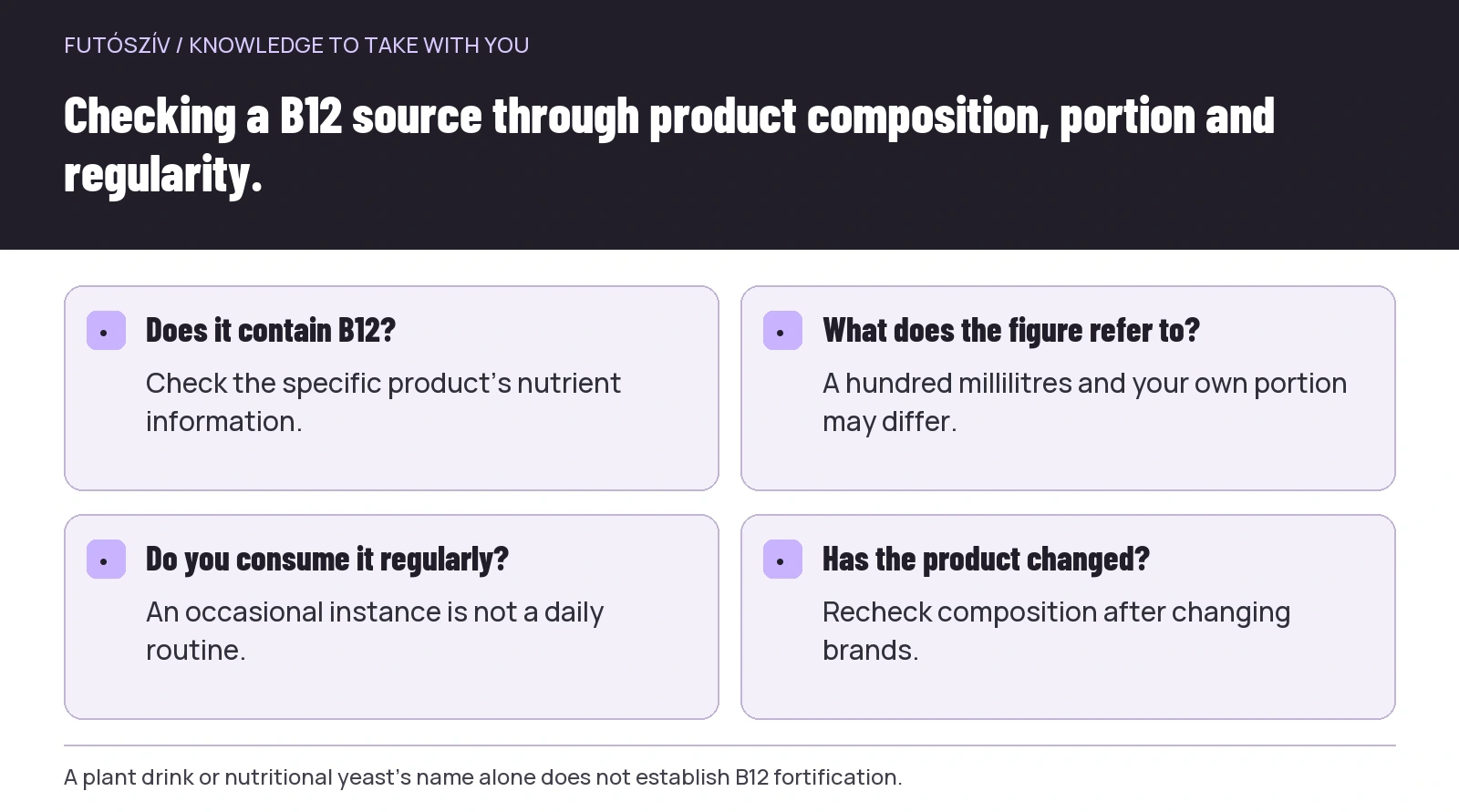
Check whether vitamin B12 appears on the label, what quantity the information concerns and the actual portion you regularly consume. A value per hundred millilitres and a little drink poured into your cup are not the same. The pack’s percentage of a daily reference intake is useful information but does not replace a deficiency treatment plan.
A simple photograph of the label while shopping may suffice to compare a familiar and new product later. A brand name alone is no guarantee: recipes may change, products sold in another country can differ and one product family may include both fortified and unfortified versions. Recheck the information after a substitution.
 Enlarge diagram
Text version of the diagram
- Does it contain B12?
- Check the specific product’s nutrient information.
- What does the figure refer to?
- A hundred millilitres and your own portion may differ.
- Do you consume it regularly?
- An occasional instance is not a daily routine.
- Has the product changed?
- Recheck composition after changing brands.
Two everyday situations in which an earlier source can disappear
The first example is a runner replacing a milk-based breakfast with a plant drink, then dropping fortified cereal after changing jobs. Individually, both decisions seem simple. Together, they may remove the routine on which B12 planning relied. The new breakfast is not “bad”; the lost source’s place needs resolving again.
The second is a travelling racer who consistently uses fortified foods at home but does not know whether products available elsewhere are fortified. A race weekend alone cannot diagnose deficiency, but a travel pattern lasting weeks can override familiar provision. Think ahead about what will be available and where a separate plan is needed.
The solutions need not be identical. One may focus on shopping and breakfast habits, the other on a reliable source maintainable while travelling. If supplementation is needed, settle its approach through individual advice. Frequency and dose should not be assembled from fragments of different online recommendations.
Prevention and treating deficiency are separate paths
The Vegan Society information likewise emphasises reliable B12 from fortified foods or appropriate supplementation. Long-term dietary planning for a symptom-free person and treatment of confirmed deficiency are not interchangeable, however. A product useful for prevention may not necessarily resolve the medical problem under consideration.
If deficiency was diagnosed before, bring the earlier report and prescribed plan to review. Do not assume that eating more salad or protein since then means everything is resolved. Equally, the presence of a general multivitamin does not establish that treatment considered necessary by the doctor was completed.
A dietary plan is useful when clear: what is the source, when do you use it, whom do you contact if you miss it or suspect a side effect, and when is reassessment needed? If you cannot fit the suggestion into your days, say so. A manageable solution is worth more than a plan perfect on paper but regularly missed in reality.
Fatigue and numbness: why is self-diagnosis unhelpful?
The NHS page on B12 deficiency symptoms lists fatigue and neurological symptoms, which may include tingling, altered sensation or worsening balance. These can have other causes too. Do not automatically blame a vegan diet or dismiss them as definitely normal from running.
The NICE NG239 guideline specifically warns that B12 deficiency cannot be ruled out simply because anaemia or an enlarged red-cell size is absent. This does not mean calling every feeling of illness B12 deficiency. It means symptoms, history and tests need evaluating together.
Seek medical help promptly for new or worsening altered sensation, unsteadiness walking or other neurological symptoms. Sudden one-sided weakness, speech difficulty or another severe sudden deterioration requires urgent care; do not wait for a vitamin trial’s result. The safe path is appropriate investigation, rather than still more detailed training-plan analysis.
What can make interpretation of a laboratory result uncertain?
Assessing B12 status is a medical task, and one number on a report is not a complete answer in every situation. NICE describes tests appropriate to circumstances and further assessment where needed. For a runner, the conclusion is not to order your own test package, but that you can ask about the meaning and limits of results.
Explain which vitamin, multivitamin, fortified food or other product you use and when you began. Do not conceal newly started supplementation to make the story “look better”. Stopping a product because of testing or treatment, or postponing against medical advice, is not a good idea either: the clinician decides the sequence.
Useful questions include: does this result decide the matter alone, or do my symptoms call for a further step? How do we judge whether the plan works? When should I get in touch sooner? These are not about memorising laboratory cutoffs. The aim is to know when a question is resolved and when assessment remains ongoing.
 Enlarge diagram
Text version of the diagram
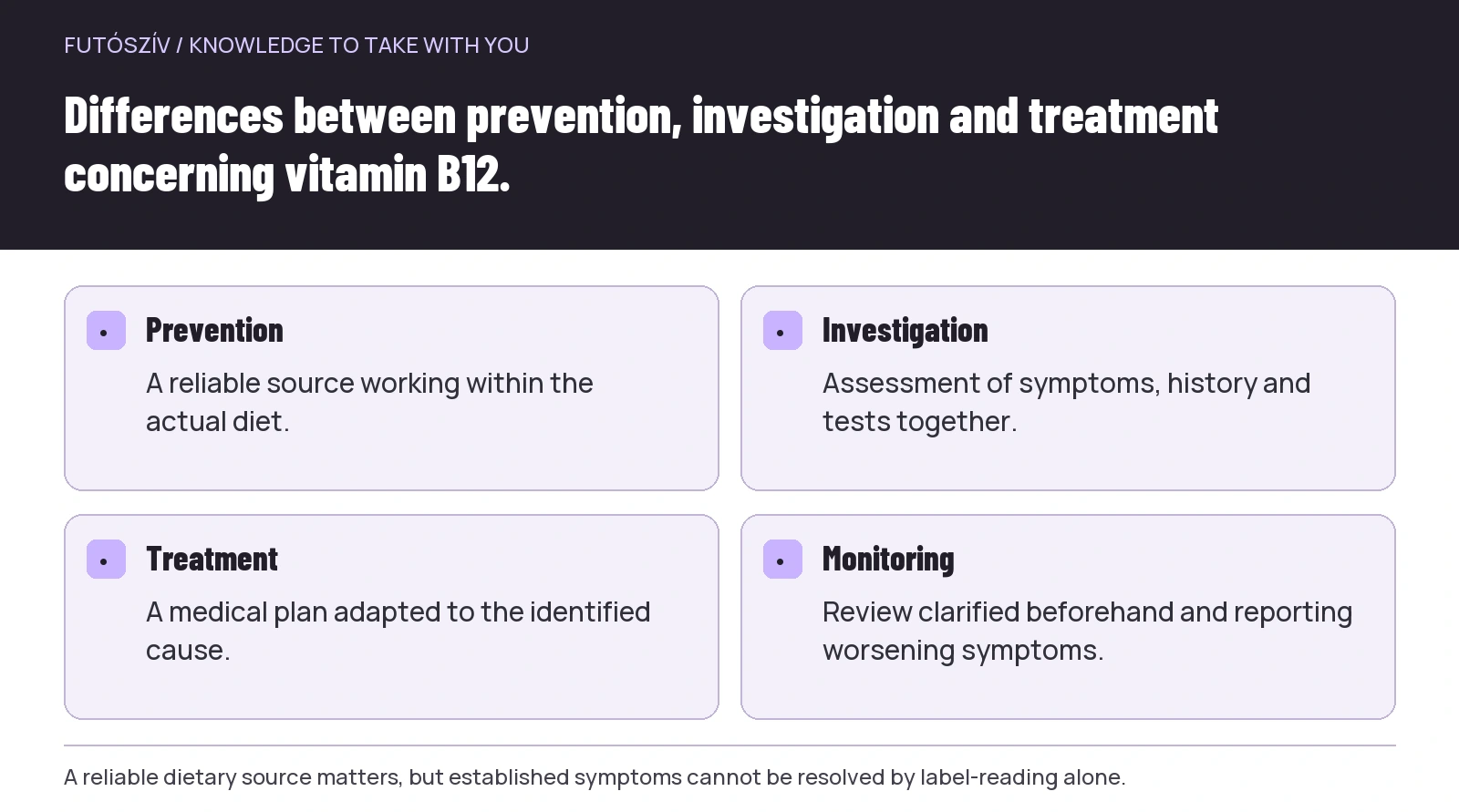
- Prevention
- A reliable source working within the actual diet.
- Investigation
- Assessment of symptoms, history and tests together.
- Treatment
- A medical plan adapted to the identified cause.
- Monitoring
- Review clarified beforehand and reporting worsening symptoms.
Other causes may need investigating alongside a plant-based diet
According to NICE, a vegetarian or vegan diet is not necessarily the only, or actual, cause of B12 deficiency. Conditions affecting absorption, previous gastrointestinal surgery and certain medicines may matter too. Simply saying “eat differently” and closing the question is therefore insufficient in every case.
Do not stop medicines because of this. Share the product list and previous illnesses with your doctor, who considers whether there is a connection and what to do. A similar condition in the family or persistent digestive symptoms alongside your diet may matter too. Do not try to arrange these into a causal chain alone.
As a runner, it is easy to view everything through training: high mileage, little recovery, variable pace. The complete medical history is broader. A sports diary can show symptom onset and progression, but does not replace reviewing dietary and medical history.
A B12 plan does not replace the runner’s whole diet
Having a reliable B12 source still leaves separate tasks of planning enough energy, varied protein sources, carbohydrate-rich meals and other important nutrients. One vitamin does not fix constantly missed lunches. Conversely, a successful pasta dinner does not prove B12 provision is arranged.
During race preparation, the daily schedule is often harder than theory. Keep a few quickly prepared foods at home and know where you can have lunch on a busy workday. Let the reliable B12 source be one part of the system, rather than a lone tablet on the counter replacing the whole nutrition plan.
During pregnancy, breastfeeding, adolescence or with complex health conditions, advice tailored to that life stage is especially important. The NHS also considers vegan pregnancy and breastfeeding separately. A general article for adult runners cannot establish appropriate requirements and treatment for a child or fetus.
Five things you can arrange before the next shopping trip
- Write down which regularly consumed food or product currently provides your B12 source.
- Check the actual product label, particularly after a change of brand or recipe.
- Consider whether the source is accessible while travelling, at work and at weekends too.
- With previous deficiency, new symptoms or an uncertain plan, seek individual medical or dietetic advice.
- Bring the product list and earlier reports to the discussion, rather than only the name of your diet.
Taking care of B12 is not a position for or against a diet. It is planning an identifiable, manageable habit. Joy, flexibility and running community can all have a place within a plant-based diet while questions needing evidence or individual assessment are resolved through more than guesswork.
Sources and further reading
- NICE NG239: Vitamin B12 deficiency in over 16s, recommendations
- NIH Office of Dietary Supplements: Vitamin B12
- NHS: The vegan diet
- NHS: Vitamin B12 or folate deficiency anaemia, symptoms
- The Vegan Society: Vitamin B12
How Futószív articles are prepared: our editorial guidelines.