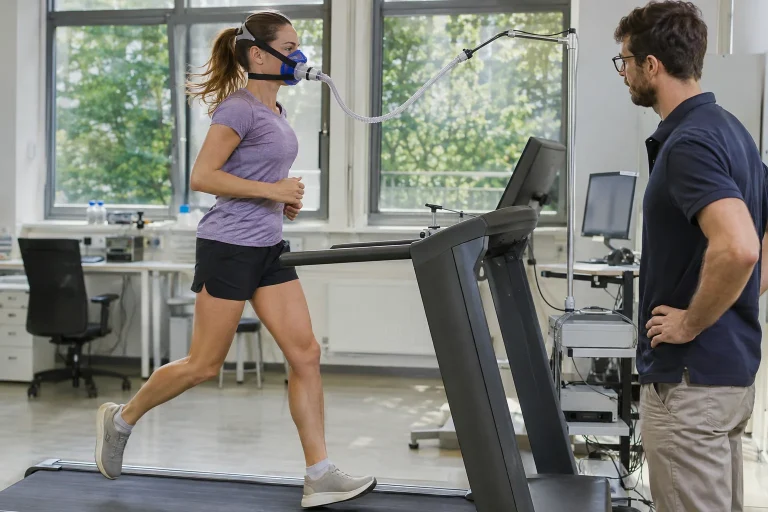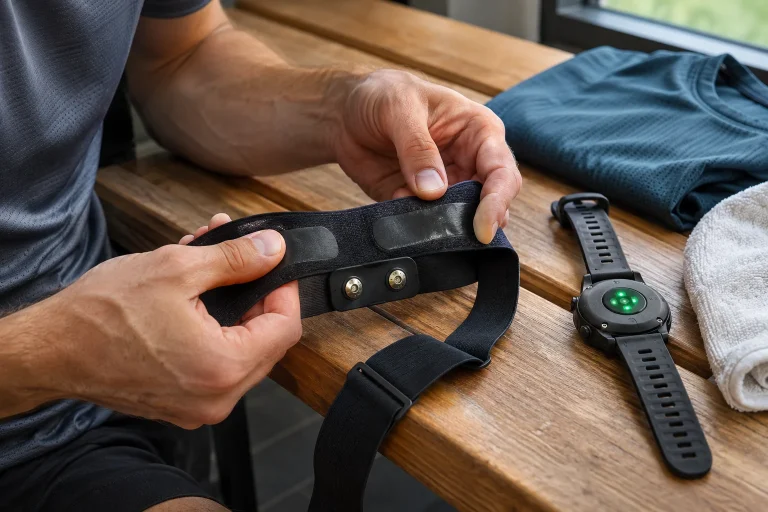
A shorter assessment is encouraging, yet the pace that once felt comfortable unravels at the end of a long run. This is not necessarily contradictory: fresh performance and performance retained after prolonged exertion are separate questions. Post-fatigue laboratory assessment may help identify more precisely what changed and what cannot be established from one heart-rate curve.
The question: how much of the initial ability remains usable?
A fresh test describes a particular condition in controlled surroundings. A marathon does not stop after its first successful section: the task continues for several hours. Durability examines how properties determining performance develop during or after prolonged exertion. A good starting value and preserving it well may relate, but are not the same thing.
Post-fatigue assessment is therefore more than a harder performance test. The aim is measuring selected properties comparably before and after a longer run. Seeing slower running at the end is important, but does not yet identify which physiological component changed. The laboratory can provide tools to break the question down.
This distinction helps in your own diary too. “I felt greater effort later” or “My speed decreased” accurately describes experience. The same observation cannot reliably establish that lactate threshold fell by a particular amount or economy deteriorated by a particular percentage. Those require separate measurements and clear definitions.
What did research comparing fresh and fatigued conditions examine?
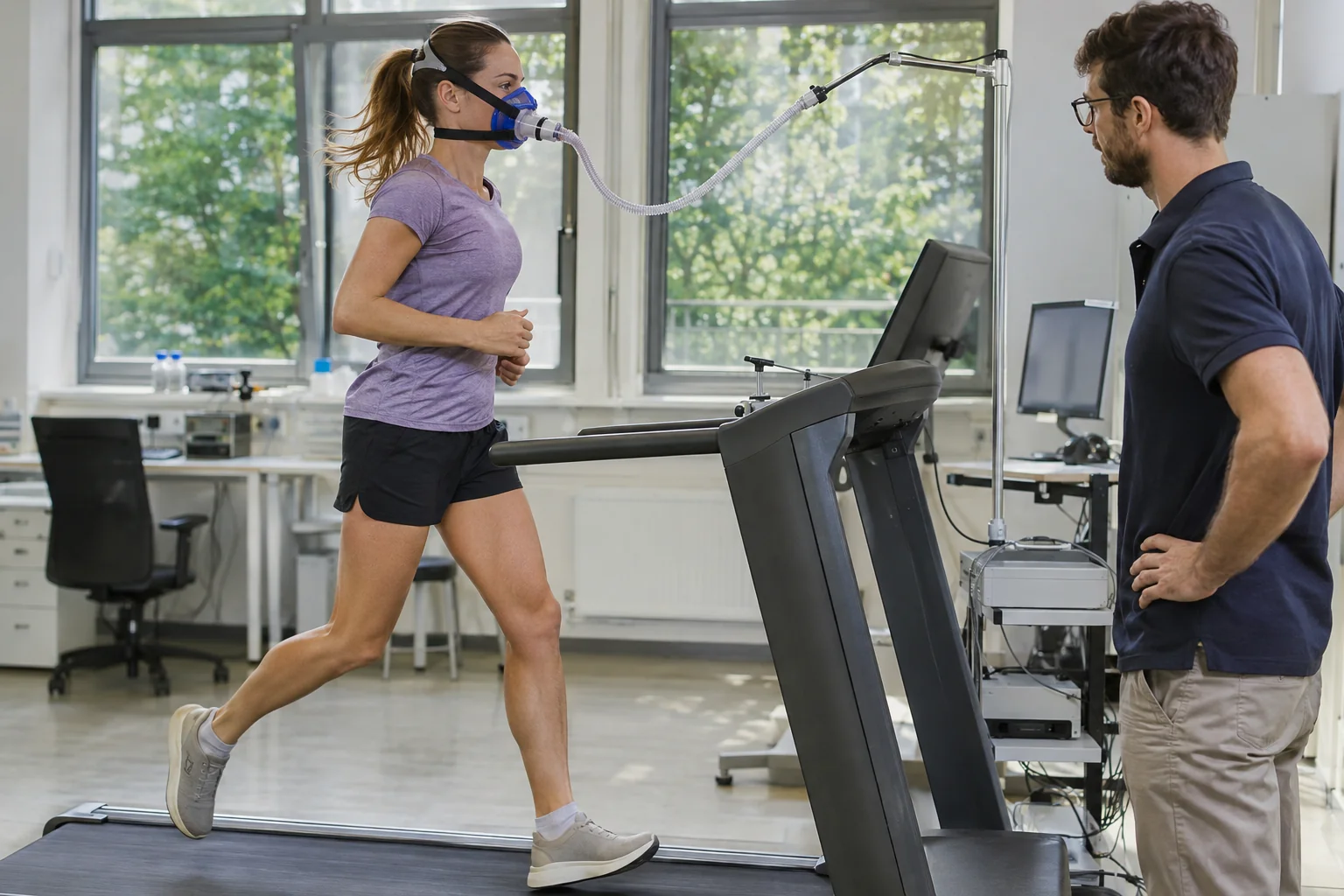
In the marathon-runner study published in 2025, 18 participants underwent laboratory assessment when fresh and after a specified 90-minute run. The longer run’s intensity was linked to previously determined lactate-threshold speed. Peak oxygen uptake and threshold speed decreased on average, while no significant change was detected in running economy or fractional utilisation at threshold.
Less deterioration in threshold speed was associated with a better marathon result in this sample. This concerns a particular small group, not a percentage prediction for every marathon runner. Participant selection and laboratory exertion are part of the study’s meaning. The association suggests considering the extent of change alongside the fresh value.
The research does not automatically become a home testing programme. Repeated assessment linked to prolonged exertion is a substantial undertaking, designed by researchers using preceding measurements. An online duration and a pace chosen independently create a different situation. The study matters here because it shows a measurement question, not because it is training to copy unchanged.
Three components to read on separate lines
Peak oxygen uptake describes how high oxygen uptake reached in that assessment. Fractional utilisation at threshold is a ratio: oxygen uptake at the named threshold relative to the peak. Running economy characterises the specified task’s energy or oxygen cost. They relate but are not interchangeable. If the report says only endurance worsened, ask which variable is meant.
Ratios can be particularly misleading. Imagine simplified fictional values: fresh peak 60 and threshold value 45, giving 75%. After exertion, peak falls to 56 and threshold value to 43. The ratio becomes approximately 76.8%, increasing while both absolute values fall. The higher percentage is not unambiguous improvement in this example.
Threshold speed is easier for a runner to picture directly, but still requires the method. Which threshold was determined, using which stages and calculation? If another assessment calls a different phenomenon threshold, the same name can produce a different number. Fresh-versus-fatigued comparison depends on tracking the selected variable with the same definition.
 Enlarge image
Reading an imagined pair of results step by step
Suppose a fictional runner’s named threshold speed is 13.0 km/h fresh and 12.5 km/h after controlled exertion. The difference is 0.5 km/h, approximately a 3.8% decrease relative to the fresh value. In pace, this is roughly 4:37 to 4:48 min/km. These numbers explain percentage calculation, not a normal or abnormal durability threshold.
First ask whether the pair is technically comparable. Was the point identified with the same method? Was signal quality appropriate? Did exertion proceed as planned? Then review the complete sheet. How did peak value, relative fraction and economy change? Alongside one highlighted speed, other variables help explain what the difference may relate to.
The third step is personal context. How does this relate to your long runs and races? A report’s change does not translate one-for-one into marathon slowing. A controlled laboratory task and road race differ. The aim is more information for interpreting preparation, not directly adding the laboratory difference to your target time.
Why is heart-rate drift not enough instead?
Changes in the heart-rate–pace relationship are accessible because many watches record both. The large data analysis of 82,303 marathon runners associated the extent and onset of decoupling with marathon results. This is valuable field observation, showing that a changing response during running can carry information about prolonged performance.
However, in the smaller laboratory study, heart-rate–speed decoupling was not associated with laboratory durability changes or marathon results. The findings came from different samples and designs. Practically, heart-rate drift should not be treated as a direct substitute for changes in threshold speed or economy. It may be a related signal, but is not the same measurement.
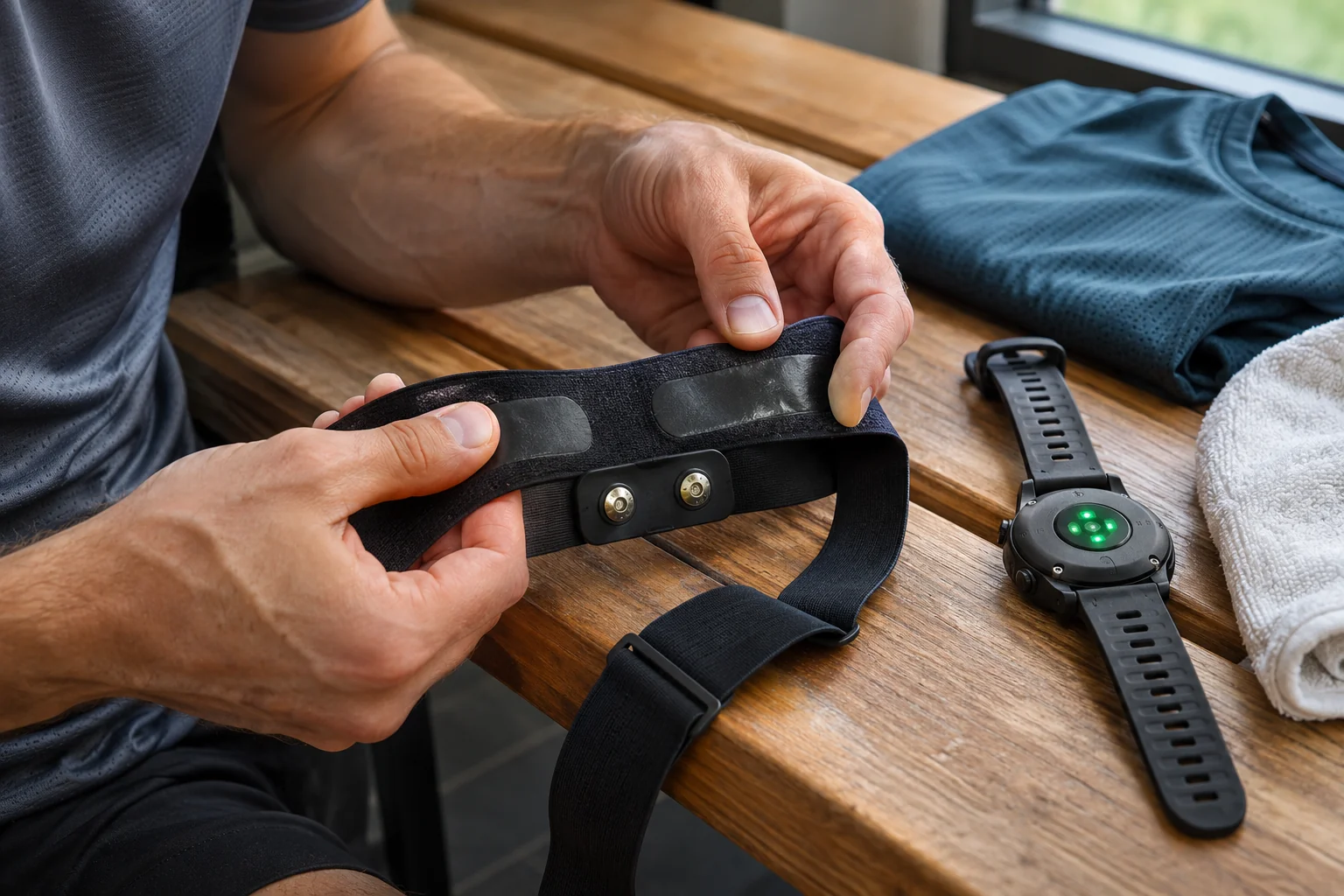
Use descriptive diary wording: heart rate rose in that section while speed remained similar, or I slowed at the same heart rate. Add terrain, stops and how you felt. Do not automatically give the curve a physiological diagnosis. A faulty heart-rate signal, changed environment or different task can alter the comparison; clarify these before conclusions.
Test footwear and the external task matter too
Durability testing must clarify what remains constant. Do you run at the same speed in both situations, or is intensity matched relative to individual measurements? This is not nitpicking: identical external speed and a targeted identical internal load create different comparisons. Only knowing the task lets you use the result for the right question.
A study examining footwear effects during prolonged running illustrates this by separately addressing identical external workload and relative intensity adjusted for footwear. The point is choosing the comparison: not every task called identical is identical in every respect. We do not turn that study’s specified footwear comparison in trained male runners into a purchasing promise for all runners.
For your own repeat assessment, ask about shoes and settings. Do you want the same ones, or is an equipment effect the question? Both can be meaningful, but should not be merged. Simultaneous changes in shoes, preceding exertion and method make attributing the result’s difference harder.
When might this add more than another fresh test?
Post-fatigue assessment may raise an interesting question if fresh ability is already adequately documented but longer performance remains unclear. Perhaps long races repeatedly underperform relative to shorter ones, or later running sections consistently show another response. Measurement then breaks down a particular problem rather than merely collecting more data.
First clarify whether the existing diary is interpretable. Are races comparable? Could an especially demanding course or exceptional circumstances explain the difference? Does the same phenomenon really recur in long runs, or are different days being forced into one shared fault? Choosing the laboratory task includes these questions too.
Not every runner needs this assessment. If preparation currently centres on establishing consistency or lacks basic fresh-condition data, a complex durability test may change few specific decisions. Its value lies not in protocol difficulty, but whether the next step becomes clearer afterwards. Ask this when discussing an appointment.
 Enlarge image
How should you discuss the report with your coach?
Begin by separating measured change from possible explanation. A measured finding may be a lower post-exertion threshold speed using the same method. Why this occurred in that runner is already a possible explanation. Modifying the training plan is a third step. Keeping these levels distinct reduces the chance of attaching a ready-made training recipe too quickly to one number.
Ask which observation to follow in subsequent weeks. It could be more controlled final sections of long runs, practical fuelling or recovery after exertion. Fit these within the entire week’s tasks. Making every long workout harder or its finish faster does not follow automatically.
Agree beforehand what counts as comparable experience when evaluating a change. A later laboratory comparison needs the same question and protocol. For field observation, clarify what you will observe and under which conditions too. The purpose is learning, not forcing the next occasion to produce a better number.
What should you take home from durability testing?
A good result is not necessarily a single readiness score. A clear description may be more useful: starting condition, controlled exertion, which variable changed and by how much, and which stayed similar. Stability is information too. If a property showed no clear change, do not invent deterioration simply because you felt tired at the end.
Ask for the protocol and main measurement points, plus an understandable interpretation of differences. Retain shoes, time of day and preceding circumstances too; these form the basis of later comparisons. Keep the report connected to the running story by adding relevant training and race experience, without merging laboratory results with watch estimates.
Post-fatigue testing’s main contribution may be a more precise picture of prolonged running. You ask not only how capable you are when fresh, but how that ability remains usable over time. The question relates closely to the marathon, yet answering it still requires several data sources, a consistent method and knowledge of your whole preparation.
Sources
- Hunter and Muniz-Pumares: durability of physiological parameters in marathon runners.
- Smyth and colleagues: decoupling of internal and external workload in 82,303 marathon runners.
- Madsen and colleagues: advanced footwear and running economy during prolonged exertion.
How Futószív articles are prepared: our editorial guidelines.