You would prefer to swim or cycle for a few days. Perhaps you want variety, the running weather is poorer or another activity belongs in an individual plan already established. The change can make sense in its own right. You need not, however, treat the new session as an exact copy of a missed run in a different setting.
The same duration, similar tiredness or apparently identical energy in an app does not mean every physical task is identical. Swimming, cycling and running require different skills and loading situations. For a useful choice, understand why you are switching, what you expect from the new form and which previous goal remains a separate question.
The reason for switching determines the next question
If you simply fancy a different outing, access and an appropriate start may come first. If you seek another sport because of injury, pain or a new symptom, clarify the individual condition first. A different movement is not automatically an appropriate solution for an unexplained symptom. I cannot run, so I will swim may omit the most important information.
If switching is part of professional advice, make its content clear. Which activity is included, for what purpose and within which framework? Aquatic exercise, independent swimming and a brisk group session are not necessarily the same. The form of cycling matters too. A sport’s name alone is insufficient to describe an individual task.
Acute illness or severe symptoms should not be addressed by trying a new sport. Nor does changing the environment override instructions to rest or restrict movement. The next occasion should fit the actual situation. Variety can be enjoyable, but is not a way around necessary care or individual instructions.
Aerobic activity is only one role
The National Institute on Aging discusses aerobic, muscle-strengthening and balance activities separately. One activity may serve several roles, but need not meet everything at once. Swimming or cycling can contribute aerobic activity without automatically replacing every other task in an individual plan.
The CDC intensity guidance also gives different examples of activity intensity and individually experienced effort. The same sport can be performed in different ways. A cycling or swimming label therefore does not reveal a session’s intensity by itself. Retain its content, circumstances and your experience together.
A running background can provide experience of regularity, preparation and describing your own signals. It does not automatically teach the new movement’s technique. You can be experienced in one sport and a beginner in another. Accepting this does not devalue previous work; it recognises which knowledge transfers and which needs separate learning.
 Enlarge image
Preserve the distinction in bone-loading tasks too
The NIAMS material on bone health and exercise discusses combining weight-bearing, resistance and balance activities. Mechanical loading of bones differs between sports. An aerobic switch should therefore not be interpreted as automatically settling an individual question about bone health too.
The NHS Wales information on osteoporosis does not classify swimming and cycling as weight-bearing activities. That does not make them worthless or mean everyone must run instead. The distinction means understanding the activity’s own effects separately from the other elements in an individual plan.
With known low bone density, osteoporosis or a situation after a fracture, appropriate loading needs individual planning. Do not independently add jumping or running to swimming merely because a general list included a bone-loading example. Coordinating goals does not mean piling every kind of activity into one day; it means a plan suited to your condition.
A swimming-pool visit involves tasks outside the pool too
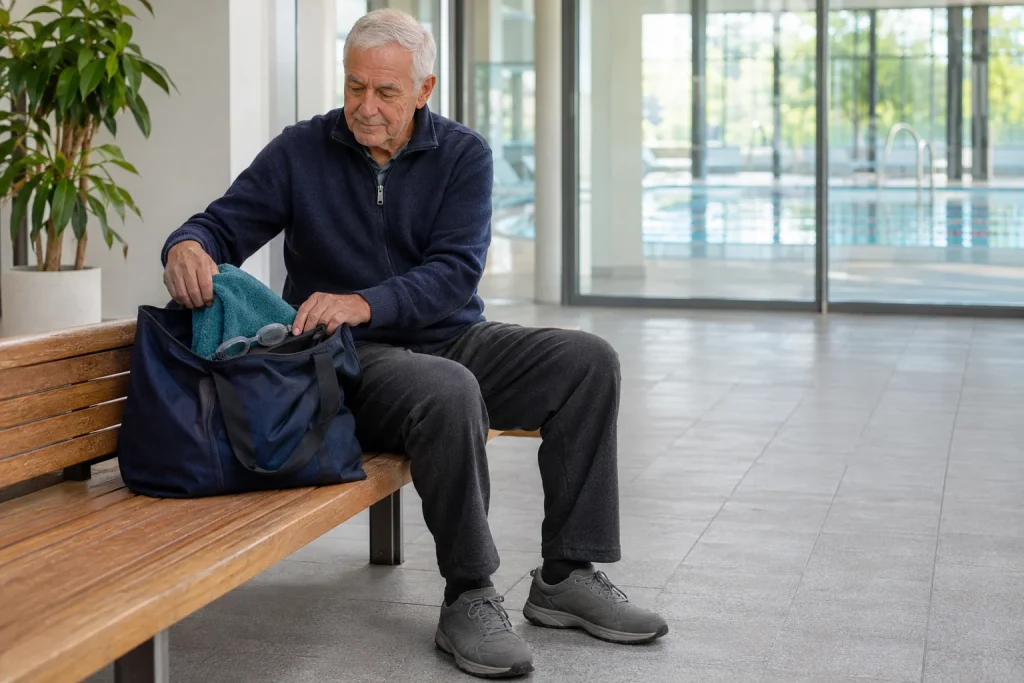
If you have not visited a pool for a long time, first get to know the whole location. How do you enter, where can you change, how do you reach the chosen pool and what assistance is available? Time in the water is only one part. Changing rooms, wet circulation surfaces and conditions for getting in and out also affect usability.
Clarify which activity is available at the chosen time. A public swimming lane, a led session or a separately designated area may require different prior knowledge. Local rules and available support cannot be invented from an old photograph. If your swimming ability or personal options are uncertain, finding appropriate help matters more than immediately completing a set distance.
An aquatic environment is not a general safety guarantee for every condition. You need not transfer the duration or effort familiar from running straight into the new session. Getting acquainted can have its own goal: understanding the setting, instructions and individual framework. That differs from trying to fill a missing part of a running programme at all costs.
Handling a bicycle may require separate learning
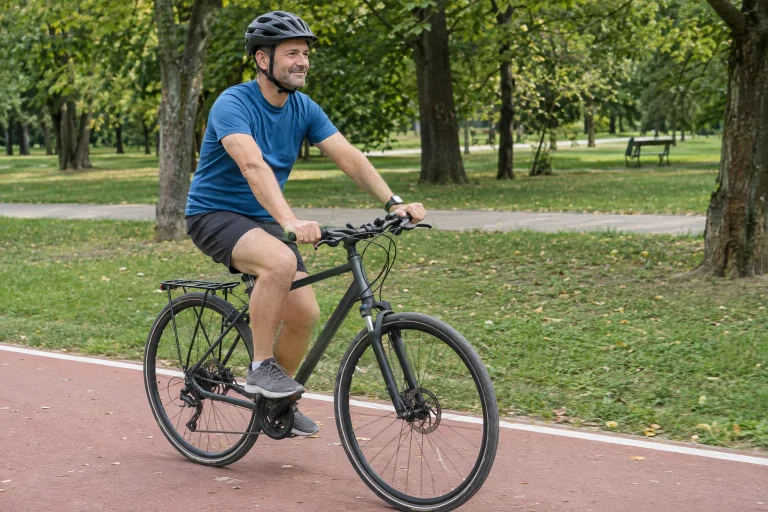
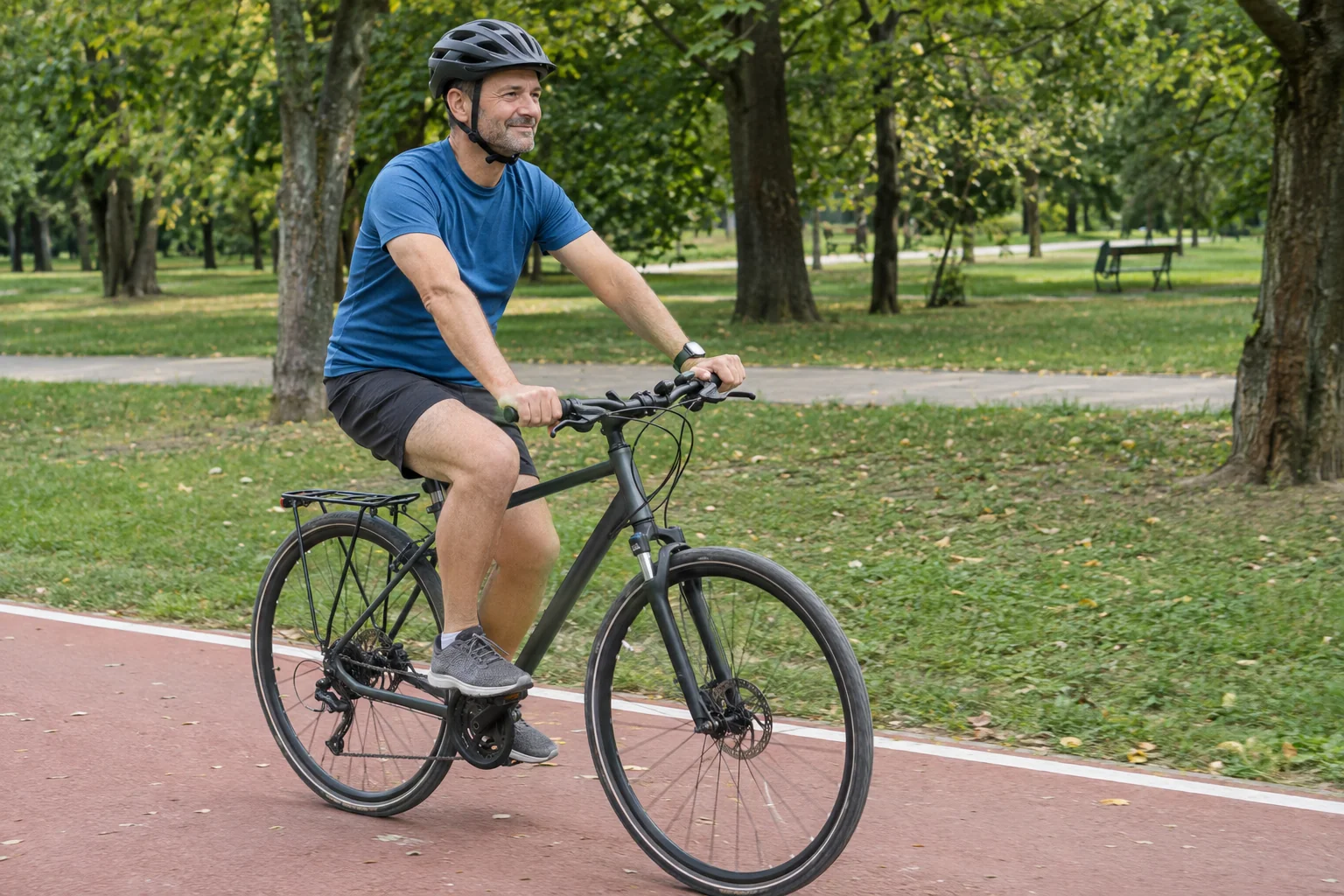
Outdoor cycling includes using the vehicle, stopping, observing surroundings and selecting a route. Running endurance does not automatically solve these tasks. If you have not cycled for a long time, restarting safely requires considering skill and equipment suitability alongside your condition.
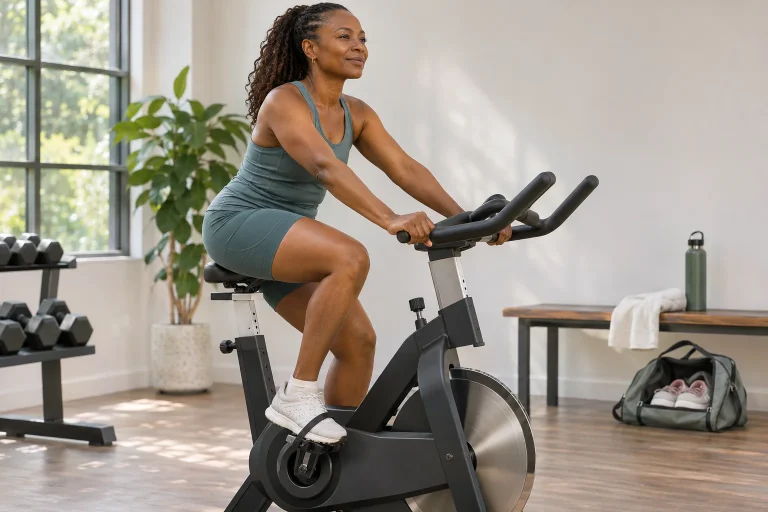
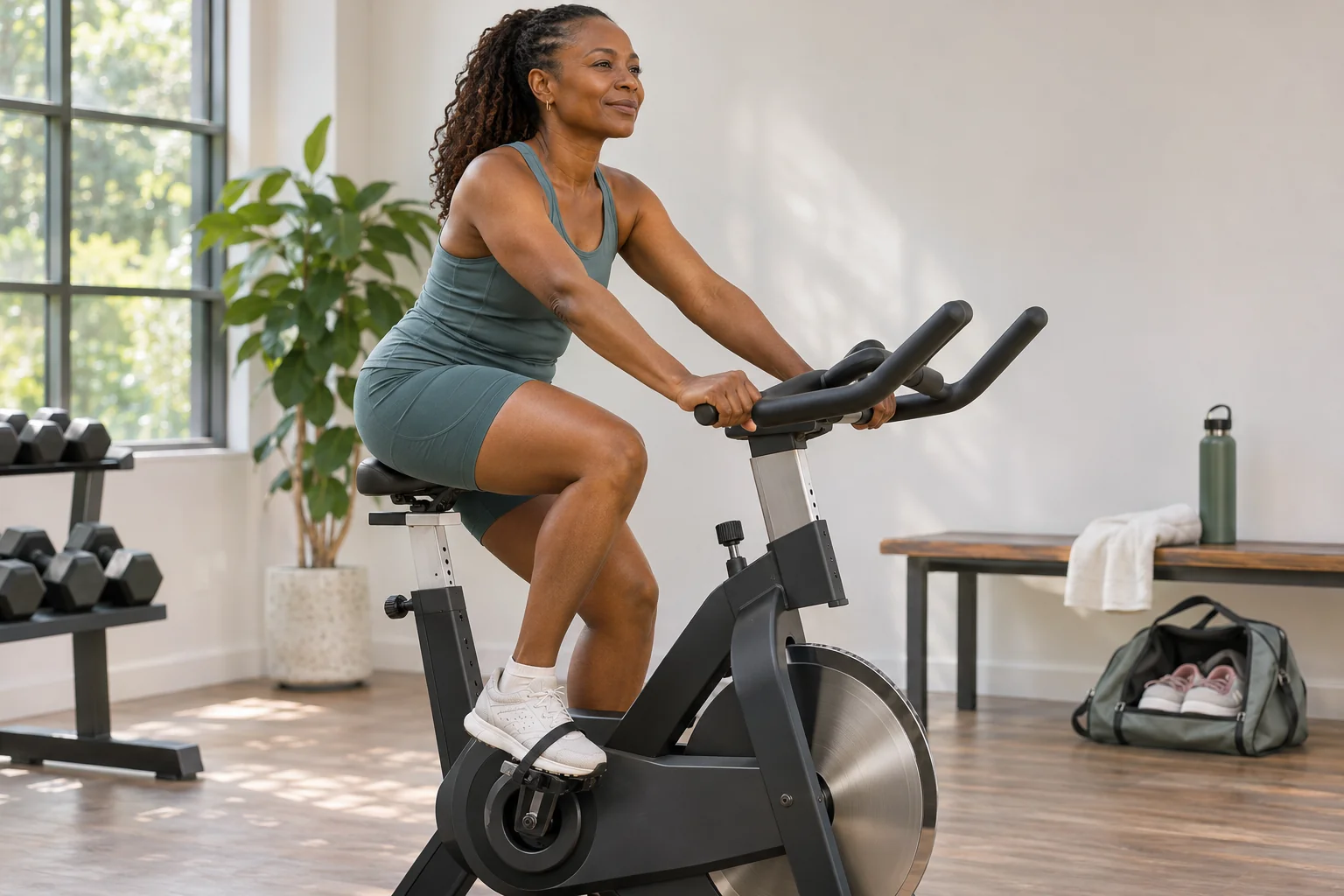
A stationary bicycle may reduce the role of certain external circumstances, but does not remove the need to learn its use. How is it adjusted, how do you get on and off, what are the controls and whom can you ask? Resistance or a programme name cannot simply be translated into your previous running pace. The new equipment has its own operation to understand before planning its load.
If using a borrowed bicycle or new machine, do not take other people’s settings as your baseline. Individual fit and appropriate support matter more than joining quickly. In a shared outing, also agree how you stay together and what happens if plans change. Just an easy ride does not adequately describe the actual task.
Separate technical and physical questions with the chosen equipment. If a setting is unclear or handling unfamiliar, request a demonstration; more force is not the solution. If pain or illness occurs, however, do not automatically regard it as the natural price of learning a new sport. These two difficulties may need different help. Naming them accurately also helps you tell the on-site instructor or healthcare professional what you actually experienced.
Social arrangements can be renegotiated too. A former running partner may be far more experienced on a bicycle or want a different pool session. The shared rhythm established in running does not automatically transfer. Discuss the meeting, any separately performed parts and the finish, so changing sport does not quietly introduce a new performance expectation.
Why is there no meaningful general kilometre conversion?
Distance in running and cycling is produced by different movement tasks. Lengths measured in water also relate to another technique and environment. A general ratio could easily hide differences in purpose, difficulty and individual conditions. Name why you chose the new activity rather than converting the numbers.
Duration can be useful descriptive information, but does not make programmes identical by itself. A first swimming visit full of learning and stops differs from familiar continuous activity. Retain the form and circumstances in your own diary rather than simply finding a multiplier for a shared total. A clear distinction may offer more for later planning.
| What you can record | What you need not automatically infer |
|---|---|
| Activity, duration and important circumstances | Equivalent running kilometres. |
| Your own effort and experience | Identical physical loading in every respect. |
| The individual programme’s purpose | Completion of every other activity task. |
A watch or app’s combined weekly summary can be convenient, but should not lose individual sessions’ meaning. Easy data handling does not prove physiological equivalence. If a professional plan requires another way of monitoring activity, clarify that framework. The diary should describe the actual programme, rather than determine it the other way around.
 Enlarge image
The switch should not become hidden extra training
Sometimes a new activity chosen because of a missed run ends up involving more tasks than the original day. Longer travel, learning technique and an unfamiliar setting may occur together. Adding all of this alongside the old programme can make the label easier misleading. Review the entire day rather than only the activity type.
Decide beforehand whether the switch replaces a particular session, is an enjoyable outing in its own right or belongs to another part of the individual plan. Becoming equally tired does not make the choice correct. Your own goal and an appropriate framework give it meaning. If your condition that day or the outing’s circumstances differ from the plan, this can justify modification.
Returning to running later does not always mean simply continuing where the calendar left off. If injury or a health reason prompted the switch, follow individual conditions. If it was merely variety, planning should still reflect the current week and experience. A number completed in another sport does not automatically write your next run.
A good switch can have its own success
An imaginary man in his seventies explores swimming-pool options for a few days. He clarifies local arrangements beforehand, allows comfortable arrival time and does not immediately try to repeat his familiar running load. The first visit’s value lies in understanding the environment and a suitable programme. Zero running kilometres does not make it an unsuccessful day.
Another person uses a stationary bicycle in an already individually developed plan. Success may mean settings and execution become clearer and the programme is manageable within the whole day. The two examples differ, so they need not be compared through the same outcome measure. Take the new activity’s own goal seriously.
Swimming and cycling can thus be valuable parts of an older person’s activity without automatically replacing every other kind of movement. Recognising differences does not devalue them. It clarifies what you expect from a session, which support it needs and how it connects with your whole week.
Sources
NIA: different forms of activity; NIAMS: exercise and bone health; NHS Wales: differences between weight-bearing and other activities; CDC: intensity and individual effort. Checked: 21 November 2026. The swimming-pool and cycling stories are original editorial examples, rather than individual rehabilitation or sports programmes.
How Futószív articles are prepared: our editorial guidelines.