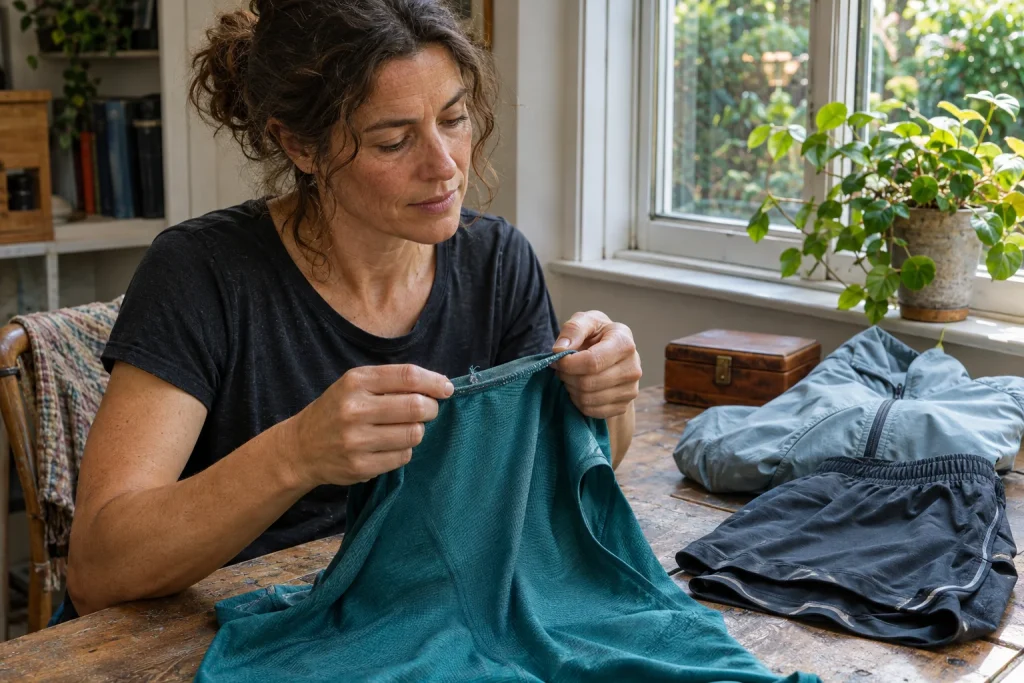
It is easy to make sustainable running equipment another shopping list, yet most decisions begin with things you already own. A rarely worn technical top, forgotten vest or jacket set aside with a small fault may offer more possibilities than a new collection. The aim, however, is not using anything indefinitely. Function, comfortable fit and safe condition matter equally. Considered care means knowing your kit, noticing faults in time and asking real questions before repair, passing on or replacement.
The most useful first step is an honest inventory
Bring out regularly used running items and organise by task rather than brand or colour. What serves easy summer runs, cool mornings, rain, evening visibility and longer routes? Note what works, needs repair or always stays in the wardrobe. Rare use does not necessarily mean unnecessary: an item may be important backup for particular conditions. But ask why you have several products for the same everyday task that you do not actually enjoy wearing.
The inventory can identify gaps before buying, or reveal no real gap. Perhaps you need the existing jacket’s care instructions and a zip inspection rather than another jacket. A running vest may remain unused because of adjustment, not insufficient features. Distinguish product faults from use problems. A small, targeted change can restore a whole item to the daily routine. An inventory’s value is not a perfectly arranged drawer, but a more accurate next decision.
Longer use: an important aim, not a magic word
The European Commission textiles strategy treats longer product use, reuse and repair as parts of a circular approach. For runners, the practical principle is avoiding unjustified replacement of usable items. It does not make every old object suitable for every situation. Reflective surfaces, grip, attachment and electronic condition are functional questions needing separate assessment alongside environmental aims.
Precisely quantifying environmental savings requires reliable data specific to the product and situation. Do not automatically claim a particular carbon-dioxide saving for a home repair. The everyday choice can still be sensible: a garment appropriately repaired and usable again need not be replaced for a minor fault alone. The aim is extending actual use, not attaching “sustainable” to more objects. Look beyond labels to results: does it work, do you use it and what did the decision replace?
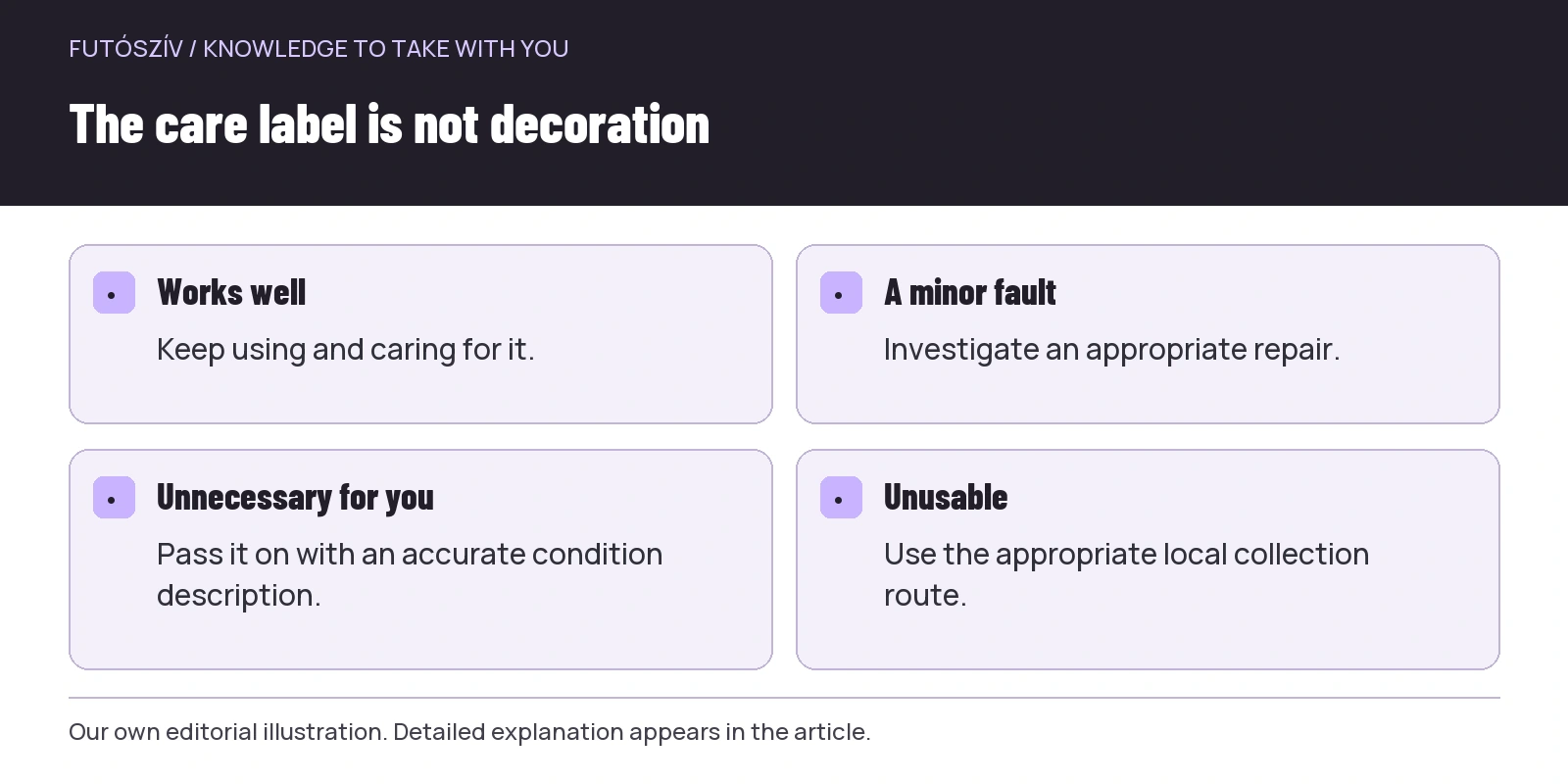
The care label is not decoration
Fibre content alone is insufficient for correct washing. Bonded parts, coatings, elastic fibres, zips and inserts can all affect treatment. Read the specific garment’s instructions and find official manufacturer guidance if unclear. The Patagonia care and repair resources offer help for different materials and problems, for example. They are a manufacturer source, not a washing recipe for every brand. A programme working for another top is not automatically universal.
Overly harsh treatment can be as poor care as omitting cleaning entirely. Do not randomly raise temperature or detergent quantity because the result disappointed. First check the correct product and programme, adequate rinsing and whether the garment’s actual problem matches the chosen method. Technical clothing should not be a constant experimental surface. The goal is clean clothing functioning as intended, not a domestic chemistry contest to erase every trace.
 Enlarge diagram
Text version of the illustration
- Works well
- Keep using and caring for it.
- A minor fault
- Investigate an appropriate repair.
- Unnecessary for you
- Pass it on with an accurate condition description.
- Unusable
- Use the appropriate local collection route.
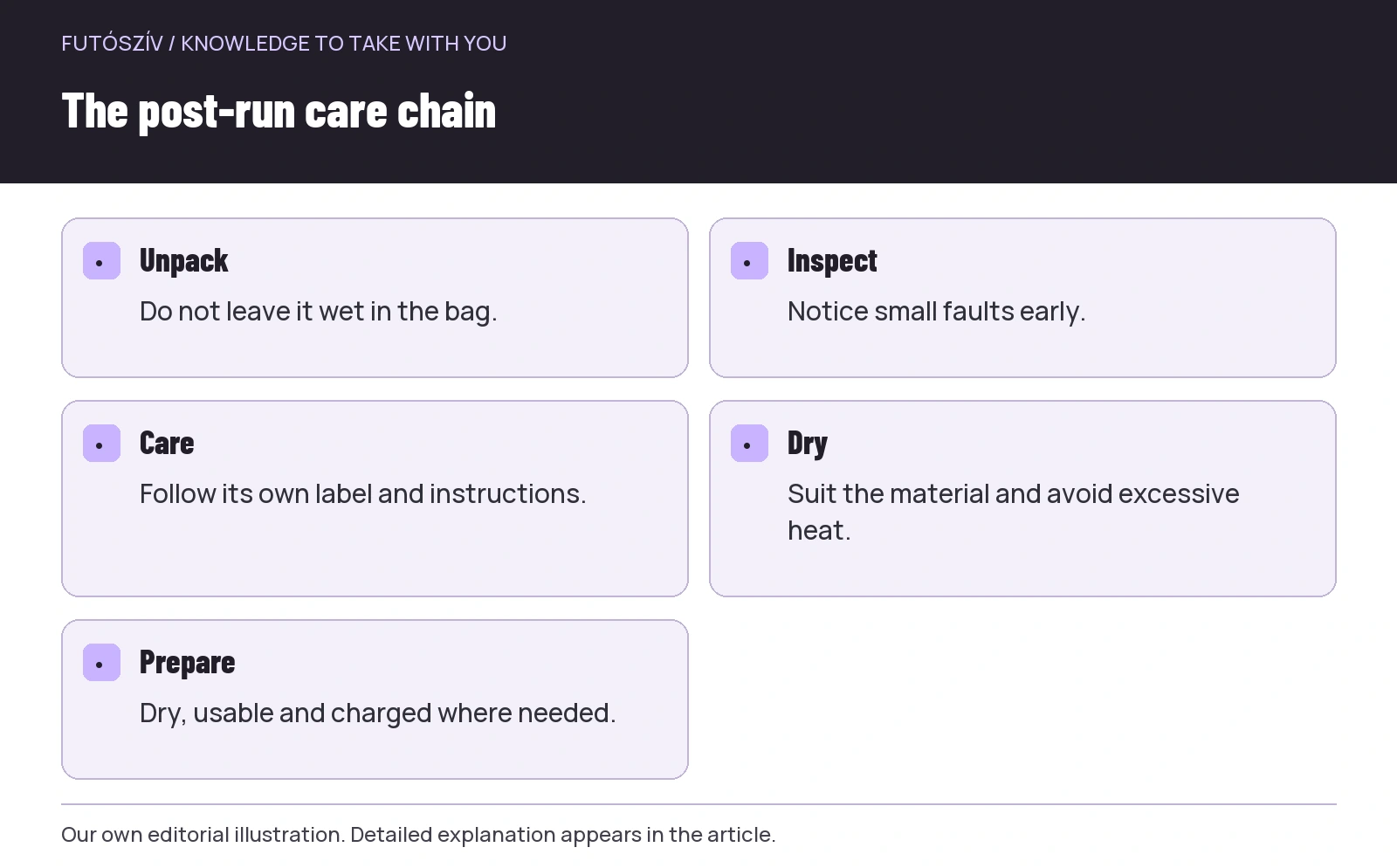
Five minutes after a run can save many items
Do not forget wet kit in a closed bag. Open it out, treat as instructed and allow proper drying. Check hidden areas particularly: bottle pockets, vest straps, shoe interiors, headtorch bands and watch straps. Persistent damp and deposits often remain there rather than obvious large dirt marks. Consider the drying location too. Hot radiators or strong direct heat do not suit every material. Follow your product’s instructions instead of shortening drying time at any cost.
Create a simple ventilated place in the hallway or near the bathroom where used equipment stays separate from dry items. A good system works when you are tired. It needs no sports laboratory: a few hooks, a cleanable surface and consistent order can suffice. Think separately about electronics awaiting charge and wet clothes. In one pile, a battery is more likely to remain uncharged or a strap wet until departure. Organisation is therefore also usability.
A small fault is cheapest when noticed
An opening seam, damaged zip pull or small tear may be easier to address before complete failure. Document it clearly and investigate warranty, manufacturer or local repair options. Material and function determine repairability. A simple fabric top and waterproof membrane jacket pose different tasks for a sewing workshop. Explain use, fault location and properties to preserve. “Just stitch it up” is not always precise enough.
The GORE-TEX repair information treats repair as part of extending useful service and provides appropriate service options. A temporary patch can differ from a lasting repair restoring function. Do not claim a jacket has regained original protection simply because the hole looks gone. Bonding, seam sealing and material condition matter too. If clothing provides important weather protection, assess the result against that task.
What is worth doing at home, and what is not?
Simple, well-documented textile repair may have a place at home with suitable knowledge and tools. The Patagonia European repair guides describe particular products and faults, for example. Learning is worthwhile, but do not randomly alter safety-related components. A light mount, battery casing or load-bearing buckle is more than decoration. If you cannot judge repair consequences, seek manufacturer or appropriate specialist help.
Reversibility matters in experiments too. Removing a cuttable label differs from piercing a membrane or opening a watch case. Your intervention can affect warranty options, so read current terms first. Do not charge or use a damaged battery merely to avoid replacement. Sustainability does not mean overlooking functional and safety faults. Good repair restores a useful role rather than merely postponing a decision.
| Condition | First question | A possible route |
|---|---|---|
| Usable but rarely worn | Does it fit poorly or lack a real task? | Adjustment, another use or an honest handover |
| A minor textile fault | Can the required function be retained? | Appropriate home or specialist repair |
| Uncertain protective function | What does the manufacturer or repairer establish? | Inspection and a task-appropriate decision |
| Electronic or attachment damage | Is use safe at all? | Manufacturer support, specialist service or replacement if needed |
Electronics: an accessory may be the problem
A watch failing to charge is not necessarily at the end of its life. Cable, contacts or contamination can contribute. The Garmin charging-contact cleaning guide provides specific supported steps for its products. Do not substitute metal scraping or unknown solvents. Other manufacturers’ own official guidance applies to their devices. Perform supported troubleshooting before deciding larger repair is needed.
Bands, buckles, charging cables and replaceable accessories can wear separately. Before buying, check replacement availability and serviceability. Repairability need not override every other consideration, but is real decision information. An inexpensive device may be less favourable long term if one small failure makes it unusable. Yet a repairability promise alone is insufficient: check where and under what conditions the service is available to you.
 Enlarge diagram
Text version of the illustration
- Unpack
- Do not leave it wet in the bag.
- Inspect
- Notice small faults early.
- Care
- Follow its own label and instructions.
- Dry
- Suit the material and avoid excessive heat.
- Prepare
- Dry, usable and charged where needed.
Second-hand equipment: an opportunity with a known purpose
For clothing, buying second-hand can make sense based on size, material condition and actual need. Request pictures of wear areas, checking zips, elastic and seams. Ask not only age but how it was used and cared for. A sound jacket may help, while protective equipment of uncertain history needs stricter judgement. Used running shoes can be especially hard to assess because a clean exterior does not reveal their whole history.
Be precise when selling or giving away. Disclose repairs, faults, worn areas and known limitations. “No longer enough for my running” differs from “perfectly good”. Clean as instructed and, for electronics, handle personal data according to manufacturer guidance. A watch may retain account connections, route logs or other personal information. Passing it to another user requires resolving data handling as well as functional condition, not merely wrapping a parcel.
Collection and recycling: ask what is accepted
Textile collection, reuse and material recycling are different. Always check a collection point’s current rules: accepted condition, material, cleanliness and what happens afterwards. Do not assume every bag becomes a new running shirt. Equipment combining many materials and bonded components can be complex to process. A genuinely usable product can be passed on through a different route from waste collection. Do not label unusable equipment a donation merely to make parting easier.
Handle electronics and batteries through relevant local collection arrangements, not textile bins or mixed equipment packages. Actual options can change, so find current provider information. Mark items awaiting repair or disposal separately at home to avoid accidental reuse. A damaged light beside ready kit is more than untidiness: hurried departure can produce the wrong choice. Properly closing an item’s useful life belongs to careful use as much as its first wash.
Make repairability one of several purchasing questions
When replacement is genuinely needed, describe the task and the previous item’s problem. Ask whether you can clean it appropriately, replace wearing parts, access repair and understand manufacturer support. Even material advertised as exceptionally sustainable helps little if poor fit means barely wearing it. Specific durability, function and handling information outweighs a generic green label. Do not buy equipment to solve a task another existing item already serves equally well.
A workable collection is not necessarily small or new. It consists of things whose task, condition and care you know. Review occasionally, repair faults in time, stop forcing unusable items and pass on or dispose of surplus honestly. Less spectacular than a new collection launch, this directly improves everyday running organisation. Sustainability here means many precise, consistent use decisions rather than one perfect purchase.
Sources and further reading
- European Commission: strategy for sustainable and circular textiles
- Patagonia: product care and repair
- Patagonia Europe: repair guides
- GORE-TEX: repair information
- Garmin: cleaning charging contacts
How Futószív articles are prepared: our editorial guidelines.