Feeling more tired while running raises a question, not a ready-made iron diagnosis
If your usual pace feels harder, you tire sooner or want more rest, it is understandable to seek an explanation. Iron deficiency may be one possibility to assess, but symptoms alone do not identify the cause. Sleep, load, infection, another health condition and several factors together may contribute. Running-watch data are not an iron blood test.
The NHS information on iron deficiency anaemia describes possible tiredness, breathlessness and palpitations, but diagnosis requires investigation. Discuss new, persistent or worsening symptoms with a doctor. Do not explain sudden severe breathlessness, chest pain or fainting through presumed iron deficiency: urgent help may be needed; in Hungary, call 112.
This article helps you understand assessment questions and the history to bring to your healthcare provider. It gives no individual laboratory cutoff, supplementation dose or treatment pathway. The goal is appropriate clarification of deficiency and its cause, rather than choosing a product sold with a performance promise.
Haemoglobin, ferritin and serum iron provide different information
Haemoglobin is a protein involved in oxygen transport, whose value matters in assessing anaemia. Ferritin is one of the main laboratory markers used to assess iron stores. Serum iron is not equivalent to either total stores or an anaemia diagnosis. Related-sounding names conceal different measurement questions.
The NIH overview of iron notes that providers may use several measurements together to assess iron deficiency. Interpret results alongside the clinical situation. Deciding treatment yourself from one line marked low or high on a laboratory sheet is not a good method.
Check units and the laboratory reference range when comparing earlier results too. A number cropped into a screenshot can lose important context. Bring the original report and ask what the value means for you. A reference range and a supposedly “runner-optimal” target circulating on a community forum are not the same.
Can iron deficiency occur without anaemia?
Yes: depleted stores do not always already involve low haemoglobin. The Australian Institute of Sport iron guide discusses iron deficiency without anaemia separately from the later situation involving anaemia. This does not mean every instance of fatigue with a normal blood count is iron deficiency, however.
The individual questions are which tests are needed and how symptoms fit the results. Diagnosis and treatment cannot be derived solely from sporting goals. A pregnant person, someone with chronic illness or a runner with inflammation may need different assessment from routine checks in a symptom-free athlete.
If you previously had confirmed deficiency, report it, but do not automatically request the same treatment for current symptoms. Describe the earlier cause, supplementation and review as far as known. Return or recurrence may raise the need to clarify the cause again, rather than simply buy the same product.
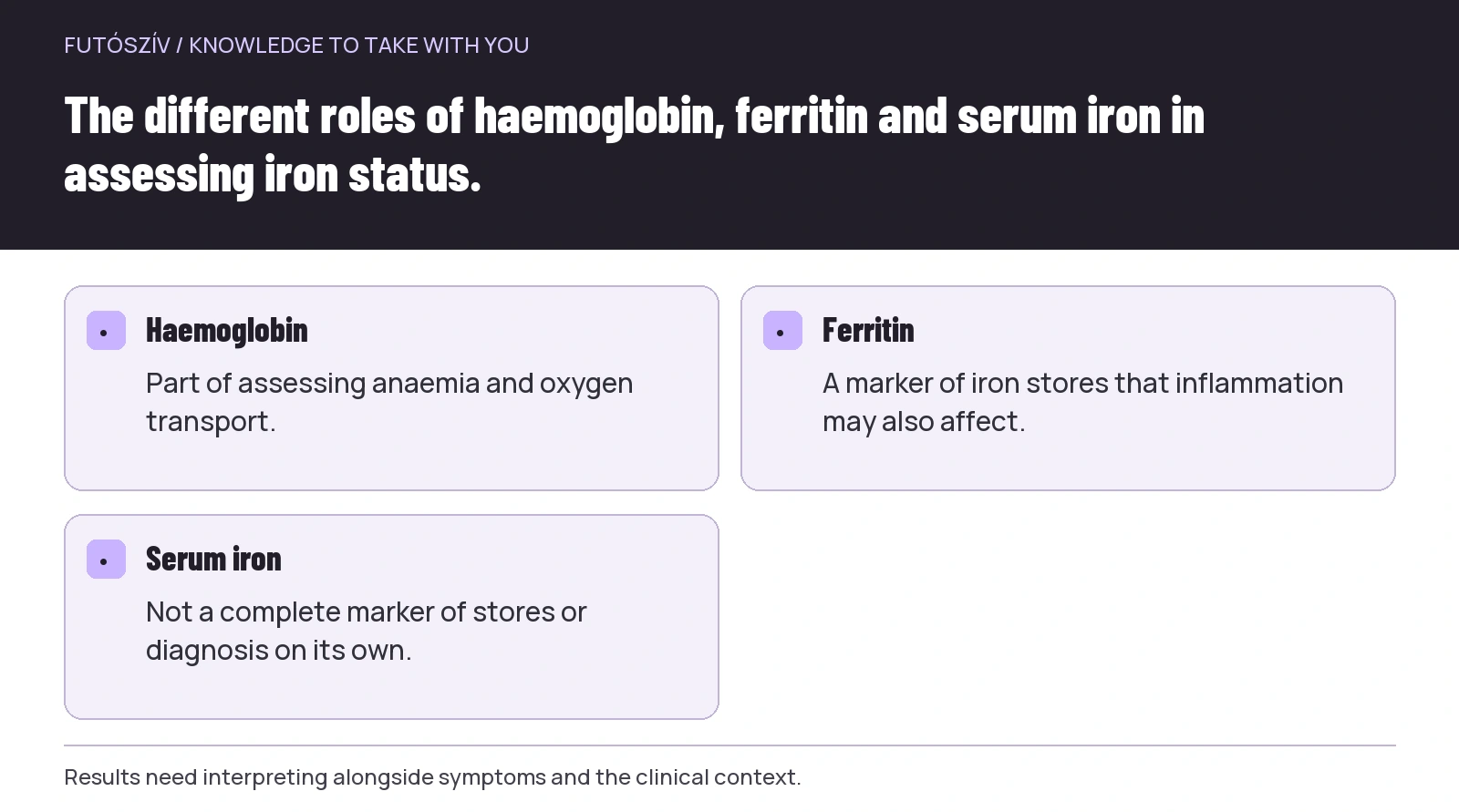 Enlarge diagram
Text version of the diagram
- Haemoglobin
- Part of assessing anaemia and oxygen transport.
- Ferritin
- A marker of iron stores that inflammation may also affect.
- Serum iron
- Not a complete marker of stores or diagnosis on its own.
Why do inflammation and current condition matter?
Ferritin can rise with inflammation, so interpreting an apparently adequate value is not always straightforward. The 2026 ASH diagnostic guideline considers ferritin and transferrin saturation use in inflammatory situations separately. This illustrates why laboratory decision rules are not identical for everyone.
Before blood sampling, mention a recent infection, chronic inflammatory disease or another relevant condition. Follow laboratory and doctor instructions for preparation. Do not independently try to “clean up” results by fasting for several days or stopping medicines.
Interpret differences between recent and earlier results alongside circumstances too. Report measurements made in another laboratory or a different health situation. The aim is not to obtain one perfect number, but to understand whether deficiency exists and which further action is appropriate.
The cause also needs investigating
Blood loss, low intake or an absorption problem may all be involved. The British gastroenterology guideline emphasises investigating the cause of confirmed iron deficiency anaemia. Necessary tests vary with age, sex, history and other clinical considerations; an article cannot produce an identical referral list for everyone.
Heavy periods are important information, but should not automatically close every question. Equally, for a male or post-menopausal runner, simply naming sport or diet as the cause without investigation is insufficient. Mention digestive symptoms, observed bleeding, blood donation and dietary changes too if present.
Targeted questions do not mean the most serious possibility is definitely present. They help ensure a treatable cause is not missed. If you do not understand why a test is recommended, ask for the reason and the next decision. Addressing deficiency and addressing its cause can belong together.
When discussing menstruation, say more than that it is heavy. Describe what changed from the earlier pattern, whether it interferes with work or movement and whether it has already been investigated. This helps the clinician ask more precisely; you do not have to estimate blood loss numerically at home.
Make the dietary history specific and free from judgement
Tell the healthcare provider or dietitian what a real day looks like. Are meals missed, has training increased, has your diet changed and are there food groups you avoid? The aim is not to present a perfect eating picture, but to make the relationship between requirements and what actually happens understandable.
Animal and plant foods can both contain iron, but absorption and meal composition matter too. The NIH overview discusses different forms of iron and factors affecting absorption. A diet’s name alone establishes neither deficiency nor adequate status. Individual planning needs to review the whole diet.
The AIS page on concerns and considerations highlights addressing nutritional questions and other underlying causes. Supplementation may not resolve irregular meals or insufficient total energy intake. Dietary support aims for a solution genuinely sustainable alongside work and running.
Supplementation is not harmless performance insurance
Do not start iron simply because it helped someone on the team or the product markets itself to runners. Too much iron and inappropriate use can cause problems too. The NIH information also explains safety and interaction considerations. Need, form and monitoring require individual decisions.
The AIS treats iron as a medical supplement within its sports nutrition system. Several approaches may be considered according to severity and history, but that does not mean starting with an infusion or using another athlete’s dose. This article gives neither oral nor intravenous doses.
If you have already received a product, ask how to take it, which other medicines or eating circumstances need coordinating and when review is due. Report side effects to the appropriate professional. Do not increase the dose because a race is approaching or stop solely because of a better run.
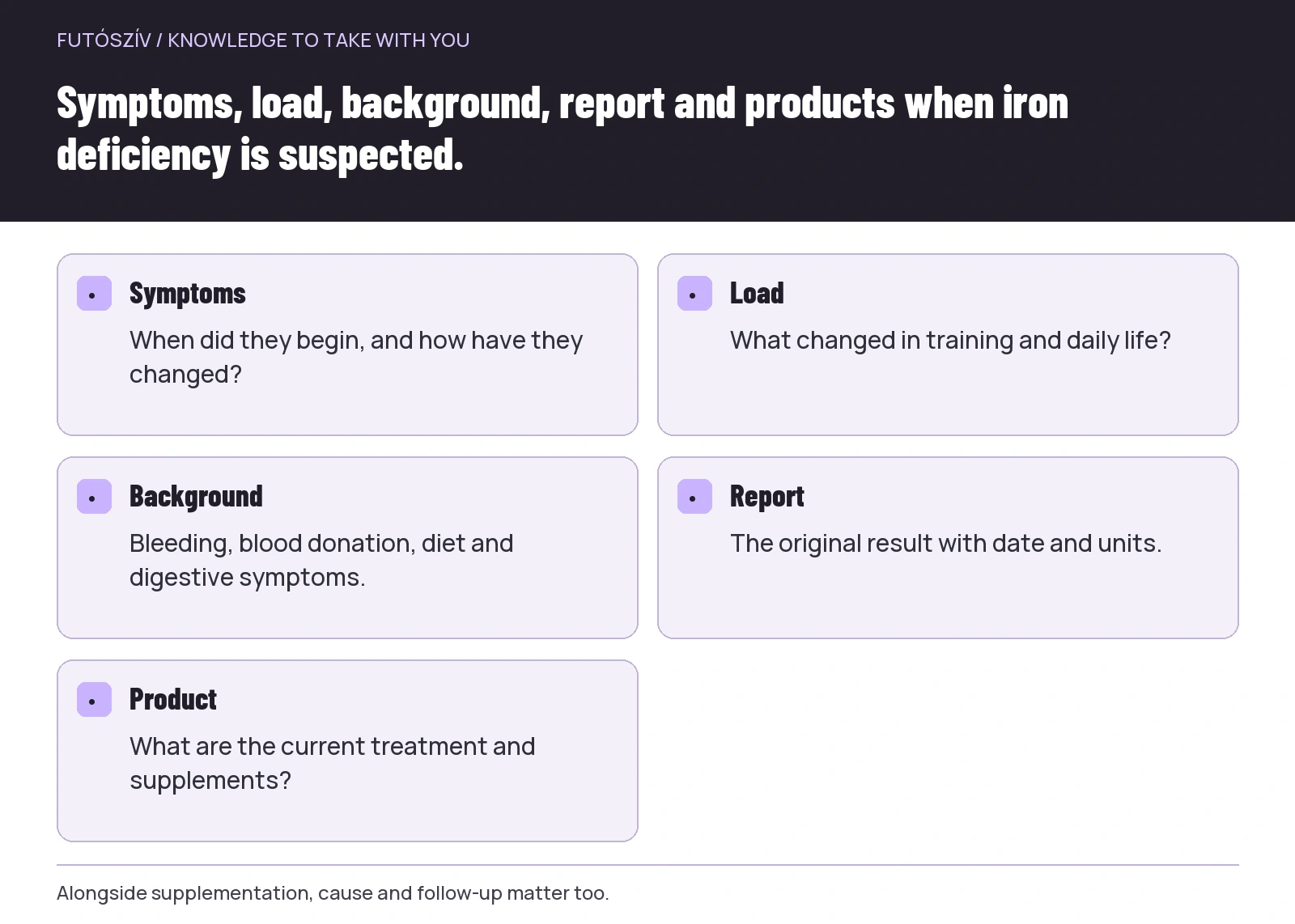 Enlarge diagram
Text version of the diagram
- Symptoms
- When did they begin, and how have they changed?
- Load
- What changed in training and daily life?
- Background
- Bleeding, blood donation, diet and digestive symptoms.
- Report
- The original result with date and units.
- Product
- What are the current treatment and supplements?
Better performance does not replace follow-up
A better session can have several causes, just as a harder day can. How you feel is important feedback, but alone does not reveal iron stores or resolution of the underlying cause. If you received treatment, follow its monitoring plan. The clinician determines review timing and the contents of the next measurement.
The reverse also applies: if you do not feel the expected improvement, do not automatically choose more supplementation. Discuss what changed and which symptoms remain. Results, use or other possible causes may need reassessment. Fatigue does not become simpler because an explanation has already been attached once.
A few manageable points are enough in a diary: how you feel, load, important daily function and a treatment-related question. You do not need to derive laboratory conclusions from every kilometre. A useful observation is one you can connect with test results through your healthcare provider.
What should happen to training meanwhile?
Appropriate load depends on severity, symptoms and the medical advice received. With confirmed deficiency or anaemia, ask which movement is appropriate, what needs temporary modification and which signals mean seeking help. Do not calculate a weekly mileage allowance from the laboratory sheet alone.
Give your coach the activity framework, without needing to share every health detail with the group. Planning is not about rapidly forcing back performance lost through deficiency. An approaching race does not make the same load compulsory if your condition requires a different programme.
Discuss preparation for altitude training or another special sporting goal in good time too. A protocol for elite athletes is not a general supplementation guide for every recreational runner. Your own checks and plan matter more than reaching a target found online.
Five elements of a good appointment sheet
List symptom onset and progression, important load changes, bleeding or dietary history, previous reports and current products. Add your most important question. Bring the original report, rather than only the line marked low.
By the end of the discussion, be clear whether deficiency is confirmed or further investigation remains, what may be causing it, which plan follows and when review will happen. If instructions are unclear or impractical in your day, ask for clarification. You do not have to become an expert beforehand to cooperate effectively.
Information about iron deficiency helps runners when symptoms become organised questions, reports become interpreted results and treatment becomes a manageable individual plan. A community target number or rapid performance promise is not the endpoint. Your own condition and clarified background provide the basis for the next sporting decision.
Sources
- NIH Office of Dietary Supplements: Iron, health professional fact sheet
- American Society of Hematology: Guidelines for diagnosis of iron deficiency, 2026
- Australian Institute of Sport: Iron
- AIS: Iron, concerns and considerations
- British Society of Gastroenterology: Iron deficiency anaemia in adults, guideline
- NHS: Iron deficiency anaemia
How Futószív articles are prepared: our editorial guidelines.