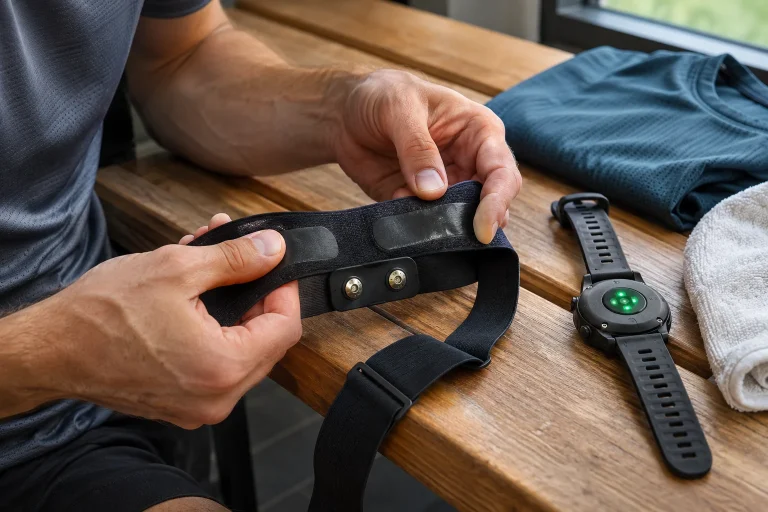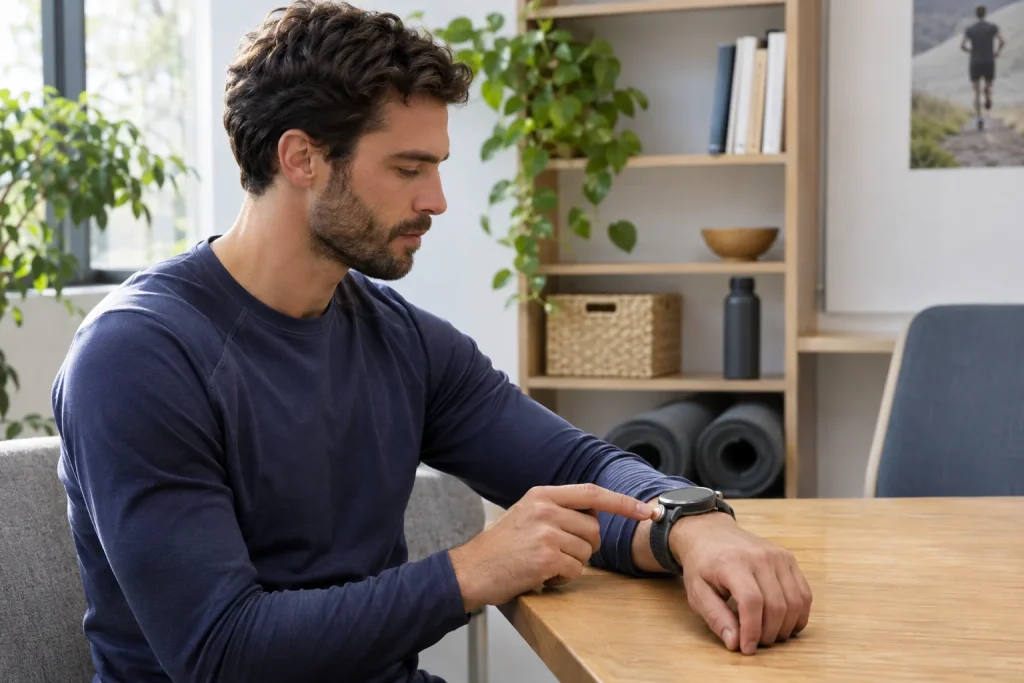
The ECG label alone does not explain a feature’s purpose
Two sports-watch specifications list ECG and both display a waveform, yet the features may serve different purposes. Recording method, manufacturer-defined intended use, automatic interpretation and availability may differ. Runners can choose and use them sensibly by treating these as separate questions. The appearance of a trace does not replace the precise feature description.
An ECG records the heart’s electrical activity. NIH’s heart-tests overview describes clinical ECG as examining the timing and characteristics of electrical signals within a specified examination setup. A consumer feature cannot be assigned to this simply by its name. Its manufacturer documentation establishes the recording and interpretation supported. Source: NIH NHLBI, heart tests.
The practical questions are brief: what does the device sense, when should the signal be recorded, what result does it provide and what does the manufacturer not intend it for? Consider conveniences such as saving and sharing afterwards. Your purpose before reading specifications matters too. Tracking resting sports-physiology data differs from seeking a particular medically evaluated feature. Do not silently infer one from the other.
Optical pulse and electrical signals follow different measurement paths
Beats per minute on the watch do not prove an ECG is currently being recorded. Optical measurement uses light to track changes associated with the pulse wave; ECG records an electrical signal. They may provide related timing information but are not the same physical measurement. Displayed heart rate may be a much narrower summary than the original waveform. Check the label and active measurement feature.
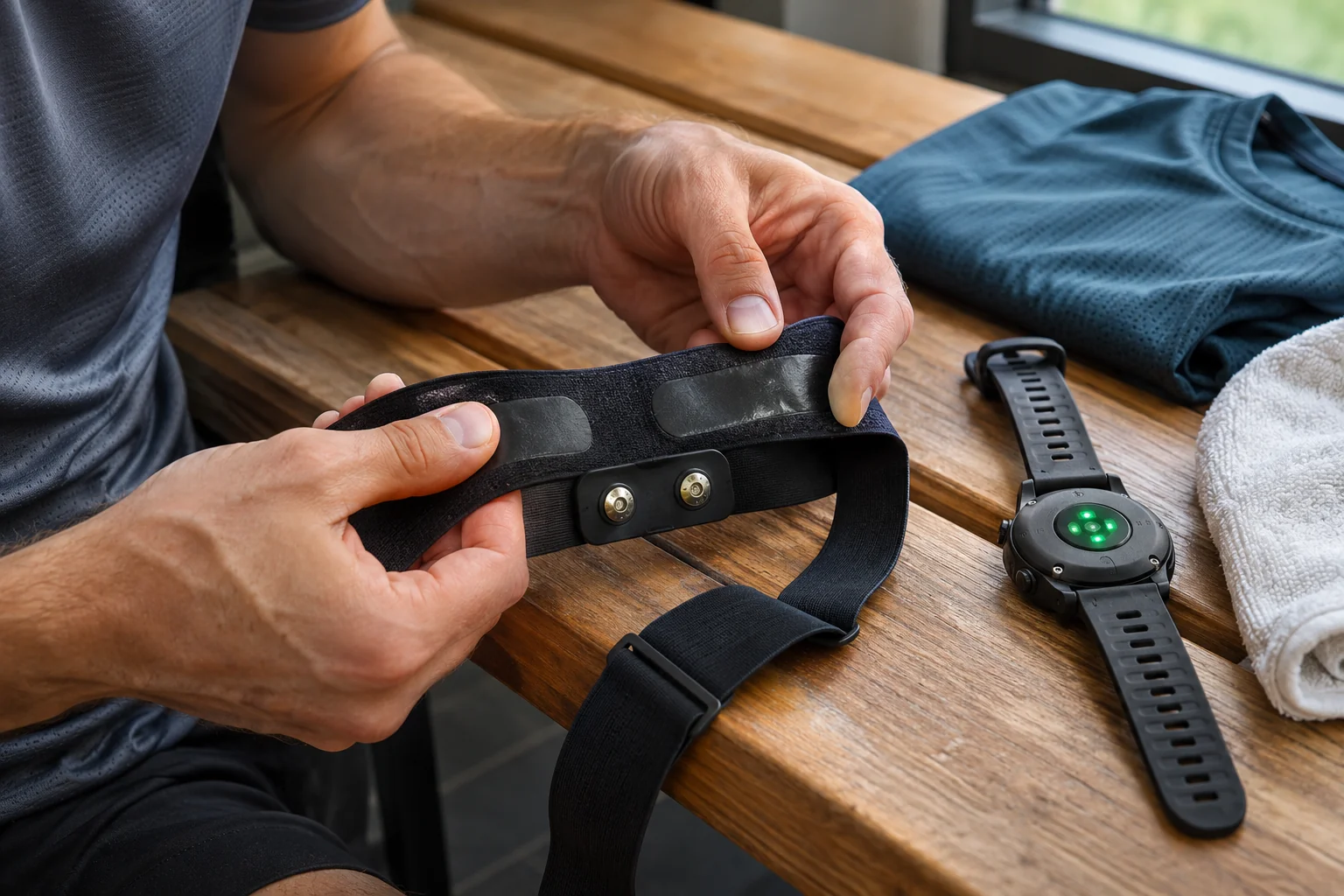
Johansson and colleagues’ HRV study included separate ECG, a chest strap and a phone-camera PPG app. The research likewise treated them as separate measurement paths rather than displays of one procedure. Comparing short, controlled recordings in 37 trained participants does not investigate every wrist product’s complete functionality, however. It illustrates methodological distinctions rather than unlimited product promises. Source: Johansson and colleagues.
In a simple situation, the watch shows heart rate while running, then you start a resting ECG from another menu. The results are not two automatic views of the same session. If resting recording needs a finger of the opposite hand touching a contact, the feature requires a separate measurement action. Continuous optical recording during running does not establish continuous electrical recording. Read the specific device’s support rather than inferring from features sharing the wrist.
 Enlarge image
Polar’s resting ECG example: signal and sports data with a stated purpose
Polar’s Wrist ECG page describes a signal derived from voltage difference between two electrodes on listed compatible models. The test takes 30 seconds at rest; the manufacturer supplies a trace and related metrics. The same page clearly states that the feature is not intended for medical or diagnostic use. Intended use is decisive information rather than a minor note below an impressive graph. Source: Polar wrist ECG.
This does not mean the data must be worthless. Understand which claim may be attached to them. A resting signal recorded as documented can be retained and followed, but cannot be renamed automatic arrhythmia diagnosis. Associated heart rate or HRV does not replace medical interpretation either. Sensible use and overextending purpose are different things.
Follow the current procedure for your model. Polar requests a stable seated posture and still arm, and specifies contact location. Do not seek another brand’s button or crown in the same place. Similar gestures on two watches do not establish identical sensors or algorithms. Use steps are model-specific; a reliable recording requires understanding them rather than imitating a general wrist measurement from the internet. Source: resting measurement conditions.
Apple’s example also contains another interpretation feature
On compatible equipment, Apple’s ECG app guide describes a recording similar to one lead and specific rhythm classifications, including assessment for atrial fibrillation. Availability depends on region and conditions; the support page says it is not intended for users under 22. This describes a particular app rather than every sports watch labelled ECG. Source: Apple ECG app.
Comparing these manufacturer examples clarifies categories. One names non-medical resting signal recording, while another also supports rhythm classification under defined conditions. This need not produce a winner in every property. Seek the particular capability you actually need and read its intended use. A general “has ECG” tick does not answer the difference.
Before buying, check the current regional document and exact model. A feature appearing in a demonstration video does not establish use on your own device and in your country. Phone system, app and settings conditions may matter too. Request a specific manufacturer-support answer for unclear requirements. Do not count a future or other-market capability as certainly available today.
One lead and clinical examination are not the same recording
Apple separately explains that the app records a signal similar to a single lead, whereas a usual clinical twelve-lead ECG examines electrical activity from several directions. It is not simply a smaller screen showing the same picture. The recording arrangement differs. One trace does not automatically supply all information investigated in another setup. Source: how the ECG app works.
An analogy of one view of an object versus several views can help. It is neither an anatomical ECG model nor a ranking of examinations. It reminds us that information may come from different directions. A small device’s convenience can be useful without changing the recording’s viewpoint. Physical wearability and the content of examination information are separate questions.
Healthcare examination also involves more than producing a trace. NIH describes specified examination surroundings and electrode placement for clinical ECG. Symptoms and other information also belong in interpretation. Preserve a home recording in its original context rather than converting it to a diagnosis through internet waveform reading. If showing a professional, supply circumstances alongside the file. Source: clinical ECG examination.
A good recording also needs a reliable signal path
Do not confuse measurement quality with intended use. A stable, neatly drawn signal does not gain a new diagnostic scope. Conversely, an uncertain recording may prevent even a suitable feature producing an interpretable result. Ask both what the system was designed for and whether it worked appropriately in this measurement. One condition does not repair absence of the other.
Following manufacturer wearing instructions is fundamental. Apple’s general measurement guide also stresses appropriate fit and sensor-use conditions. This is model-related technical information rather than one universal solution for every wrist feature. Your ECG feature’s detailed instructions come first. If results are repeatedly uninterpretable, check documented steps instead of trying to “correctly interpret” the waveform freehand. Source: Apple measurement conditions.
Keep date, time, exact device, app and a brief circumstances description alongside the file. Was it recorded at rest, was there movement and what automatic result appeared? Do not retrospectively rewrite observations to match expectations. An unreadable recording or one with an error can remain labelled as such. Selecting one attractive trace for success shows less of real use than a traceable original series.
 Enlarge image
A favourable watch result does not override symptoms
Apple explicitly states that the ECG app cannot detect heart attacks or exclude several other conditions. A favourable classification is therefore not a negative result for every heart disease. Polar’s discussed feature is not intended for medical diagnosis in the first place. These boundaries define use. A good display result should not become complete health clearance. Source: ECG app limitations.
With chest pressure or pain, severe breathlessness, fainting or another serious worsening episode of feeling unwell, do not spend time repeating watch tests: urgent help may be needed. Graph colour does not decide symptom assessment. Seek appropriate healthcare evaluation for less acute but recurring concerns too. A sports-device recording may inform care without replacing care suited to the situation.
Avoid overinterpretation in the other direction too. An unclassified or unusual watch recording alone is not a completed disease diagnosis. Do not start treatment yourself or label yourself from online waveforms. Preserve result and circumstances and arrange interpretation with an appropriate professional. Technical troubleshooting and symptoms are separate tasks; symptoms need not wait until a software question is finally resolved.
A purchasing and use checklist with four questions
The first field is measurement principle: optical pulse, electrical signal or a metric derived from them? Second is intended use: exactly what does the manufacturer intend and exclude? Third is result: trace, numerical summary, specified classification or a combination? Fourth is availability: can you actually use it with your model, region and system? These answers say more than one ECG tick.
Share deliberately too. Do not automatically upload a health-measurement file to a public running group because many members have similar watches. Use an appropriate channel for a professional conversation and include necessary circumstances. For product support, supply only required technical information. The trace is personal information rather than another version of a daily running photograph.
A watch ECG feature’s value comes from understanding its precise role. Measurement principle, recording situation and interpretation together determine the result’s meaning. Reading these prevents overvaluing an impressive trace or rejecting a genuinely useful option without justification. The feature remains what it was designed for in the running log: data produced under known conditions, from which appropriate conclusions belong in the appropriate setting.
Sources
- Polar: wrist ECG
- Apple: ECG app
- NIH NHLBI: heart tests
- Johansson and colleagues: HRV measurement paths
- Apple: measurement conditions
How Futószív articles are prepared: our editorial guidelines.