Soup can be a comforting, adaptable part of a day that includes running. But the name covers very different foods: a thinner broth with a few vegetables, a dish with grains or potatoes, a smooth pulse-based soup or a substantial combination of many ingredients. To give it an appropriate role in your day, examine actual composition and accompanying foods. A deep plate alone does not identify the complete meal you are eating.
This guide offers adult recreational runners ideas for everyday cooking and serving without personal portion recommendations. Adapt composition and quantity to your needs, diet and load. With a known allergy or prescribed diet, check every ingredient and addition, including stock and spice-mix labels. Soup is not a general substitute for a sports drink or therapeutic food simply because it is warm. Establish its place within your overall eating and fluid plan.
Identify what is in the soup
Review the main elements: vegetables, a starchy base, a protein source fitting your diet and further additions. A soup may contain several of these; at other times an accompanying food completes the combination. Diluting or thickening changes texture, but the full recipe’s contents need knowing separately. If water quantity changes while cooking, a larger bowl does not necessarily mean more original ingredients.
The NSW Institute of Sport guide collecting meal ideas presents soup alongside other foods in combinations of several food groups. In your kitchen, therefore, treat bread, a sandwich or another chosen accompaniment as part of the meal too. A generic photograph or pot size does not determine the right amount. Individual requirements and that day’s load matter together.
If soup alone seems insufficient for your meal, formulate the question specifically. Which part of your familiar appropriate combination is missing? Bread, another dish or changing one recipe component may offer different kitchen solutions. You do not need to make every soup a thick all-in-one dish at all costs. A lighter soup can be a first course while other components complete the whole meal.
Serving time shapes the choice too
At lunch, soup and its accompaniment can form part of your usual main meal. After running, it can be one element of dinner fitting your plan, if appropriately accessible and prepared. Immediately before training, however, consider your own tolerance and the whole combination. A large soup with many new ingredients is not automatically a comfortable pre-departure choice because it is more liquid.
Appropriate temperature affects serving comfort too. Piping-hot soup is hard to eat in a rush, and that needs adding to departure timing. Fit appropriately prepared and handled food into a situation where you can eat calmly. If soup would have only two minutes before training, reconsider the schedule. The time food needs is a real part of the plan, rather than an unnecessary circumstance.
Soup can be easily portioned at a shared meal after a group run, but make allergens and appropriate handling clear. Information beside the pot should refer to the actual recipe. For someone with a different diet, a separately served topping or another dish may work with appropriate preparation. A shared programme is no reason to omit individual needs or safe-serving details.
 Enlarge diagram
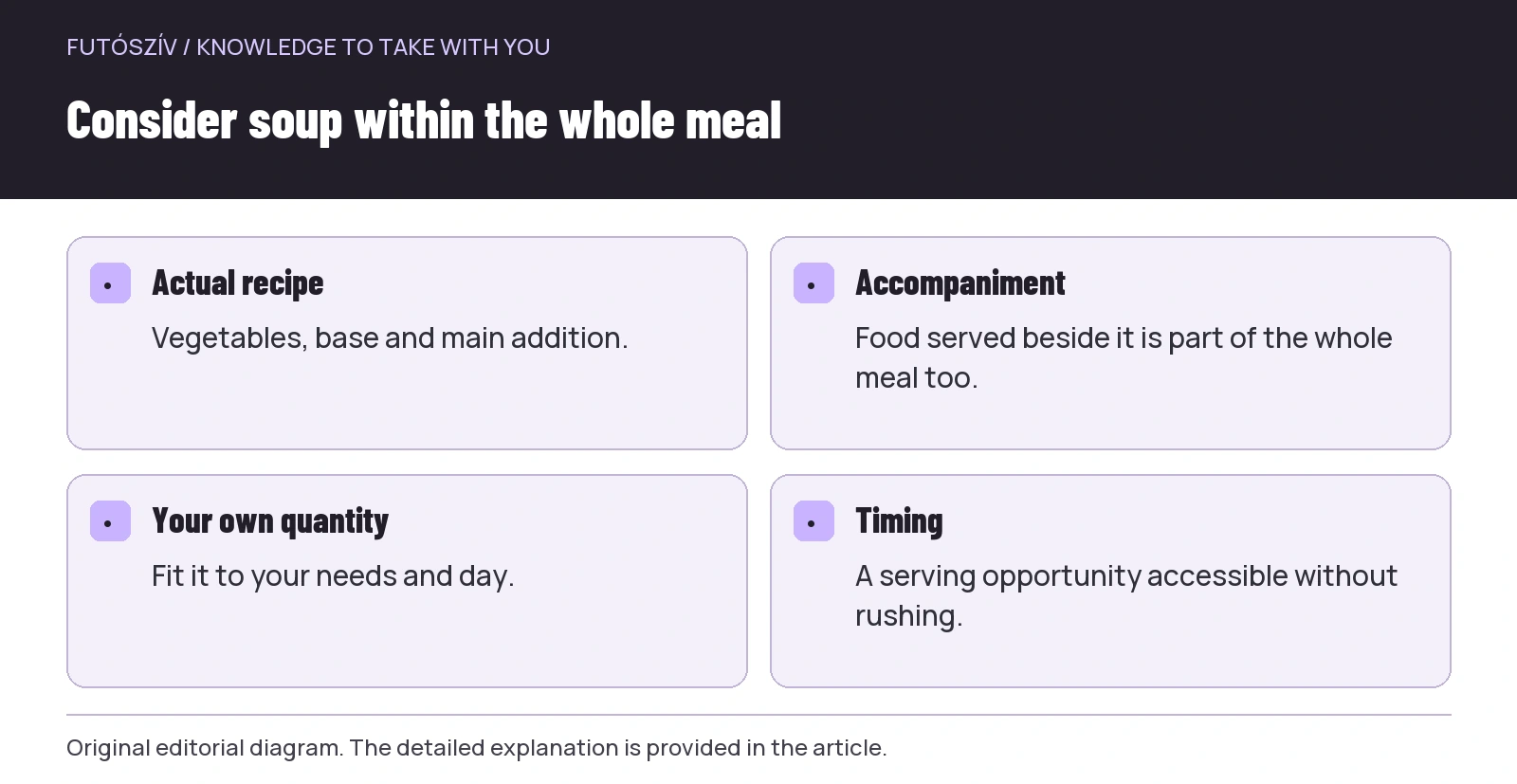
Text version of the diagram
- Actual recipe
- Vegetables, base and main addition.
- Accompaniment
- Food served beside it is part of the whole meal too.
- Your own quantity
- Fit it to your needs and day.
- Timing
- A serving opportunity accessible without rushing.
Chunky or smooth: texture is a kitchen decision
Choose vegetable size for the desired serving. More evenly sized pieces can make the process manageable, while blending creates a more uniform texture. The name cream soup alone does not tell you whether dairy or another thickener was added. Know the recipe and ingredients, particularly with an allergy. A silky texture is not nutritional information or proof that everyone will tolerate it more easily before running.
Follow appliance instructions when blending hot food. A stick blender and jug blender cannot be handled identically in every situation, and splashing can cause burns. Prepare a stable work surface and work only in ways suited to the appliance. Safe kitchen operation matters more than a recipe’s theoretical speed. Develop the desired texture gradually and plan later storage of the finished food too.
For chunky soup, pieces comfortably eaten with a spoon are practical. Long strands or oversized chunks can be harder to manage from a workplace container than a plate at home. If making it to take away, utensils and container are part of the recipe too. Add separate toppings when you want the desired texture. Mixing in a crunchy accompaniment early changes the experience, but separate packaging does not replace appropriate food storage either.
Four everyday soup directions
For a vegetable-based soup, use preferred, appropriately cleaned ingredients in a familiar recipe. Plan the accompaniment too. If bread and another component fitting your diet make the meal complete for you, do not leave them to chance afterwards. You can adapt vegetables to home supplies, but do not hide leftovers no longer safe to use in soup. Cooking does not automatically erase an ingredient’s uncertain history.
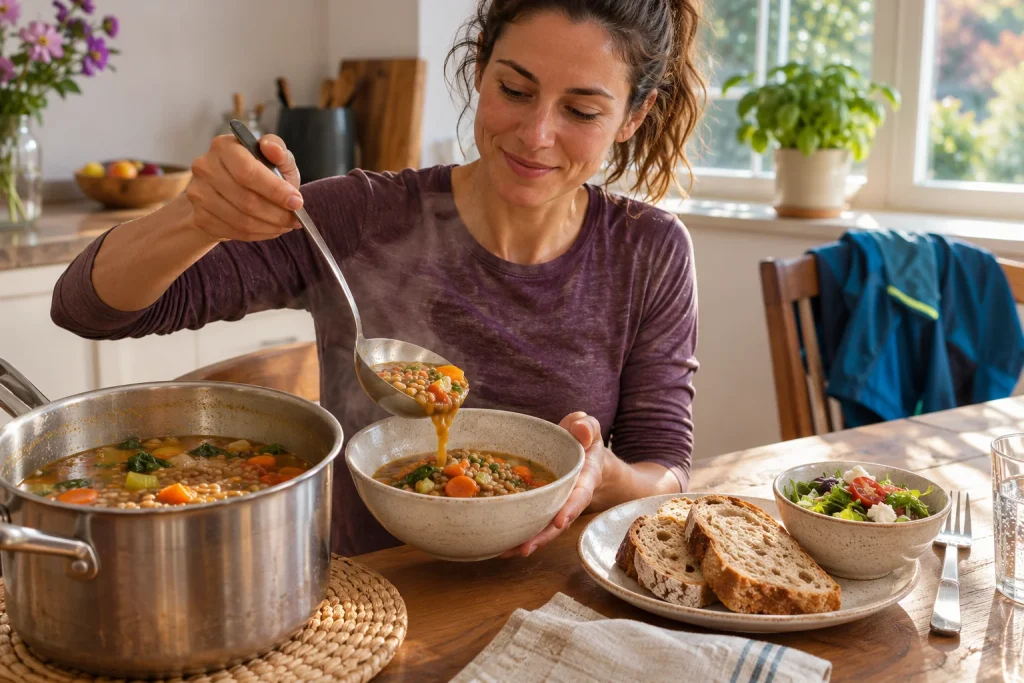
For lentil or another pulse-based version, use preparation instructions for the actual product as the basis. Dry ingredients and prepared canned foods need different handling, so do not substitute them in the recipe without checking. The NHS vegetable and lentil soup recipe offers a family example combining vegetables and pulses in one dish with a separate accompaniment. Its stated serving is not an individual diet prescription for adult runners; the idea can be adapted to personal needs.
For a chunky soup containing potatoes or another suitable base, consider cooking order for different ingredients. Parts of different sizes and types may not finish together. Follow your established recipe’s steps and assess the entire dish at the end. If you make soup intended for another meal thicker or thinner, mark that on the recipe card too. The texture change helps explain a different serving experience later.
For soup with meat or another animal-derived ingredient, appropriate thorough preparation and prevention of cross-contamination are particularly important. Handle utensils for raw and ready-to-eat components appropriately. A topping added to finished food brings its own storage and dietary conditions too. A dairy or egg addition changes the full dish’s composition even afterwards; include it in allergen information.
| Soup format | What should you plan alongside? | Kitchen checking point |
|---|---|---|
| Lighter vegetable soup | Accompaniments for your own complete meal | Actual ingredients and quantities |
| Pulse-based soup | Serving fitting your personal diet | Instructions for dry or prepared products |
| Chunky, more substantial version | An addition fitting the particular recipe | Piece size and order of cooking |
| Smooth soup | Separately chosen topping and accompaniment | Blending safety and knowledge of ingredients |
Stock, spice mix and toppings: small elements count too
Check the stock or cube label as you do larger ingredients. Products can differ in allergens and composition, while strong flavour alone does not identify nutritional value. If replacing a prepared product, do not transfer the amount remembered from the earlier recipe without checking. Start with the actual product’s instructions and a version suited to your taste and diet.
Bread, seeds, cheese or other additions can be offered separately as toppings. This makes shared serving more flexible, but clean separate utensils and allergen information should be clear. Treat extra toppings as part of the whole meal. You need not fill every soup with every possible addition. Preferred flavour, appropriate composition and your own quantity together create a useful combination.
 Enlarge diagram
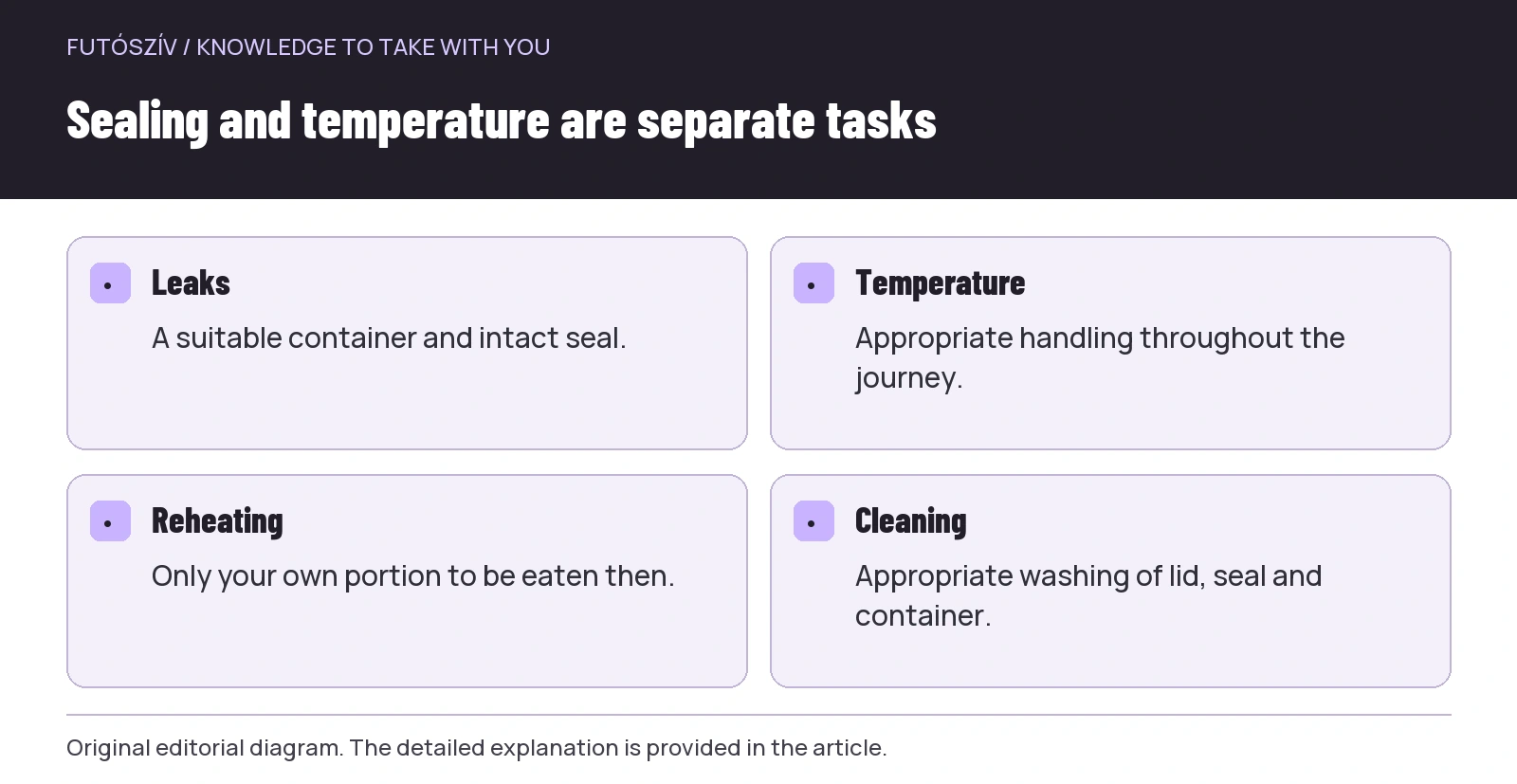
Text version of the diagram
- Leaks
- A suitable container and intact seal.
- Temperature
- Appropriate handling throughout the journey.
- Reheating
- Only your own portion to be eaten then.
- Cleaning
- Appropriate washing of lid, seal and container.
Cooling a large pot needs planning beforehand
Handling leftover soup is still part of cooking. The NSW Food Authority guide links dividing leftovers into smaller portions with faster cooling and calls for appropriate refrigerated storage. Under the general home routine followed here, after cooling and covering, food should be in the fridge or freezer within two hours, with refrigerated storage below five degrees Celsius. Stricter conditions for a particular ingredient may take priority.
Prepare appropriate containers and label contents and preparation time. Do not begin arranging food left in a large pot only when getting ready for the next day. Smaller containers also make taking out individual portions clearer later. Use consistent labels understandable to other household members. Do not arbitrarily write a new expiry date on leftovers of uncertain age because you have only just remembered to put them away.
Take out only the portion to eat then for reheating. The Food Standards Agency cooking information emphasises reheating only once and heating food thoroughly in the centre too. With microwave heating, stirring suited to the appliance and food can help reduce uneven heat distribution. Reheating does not automatically make previously mishandled food safe. Handle the whole history appropriately.
During transport, liquid and temperature are two separate tasks
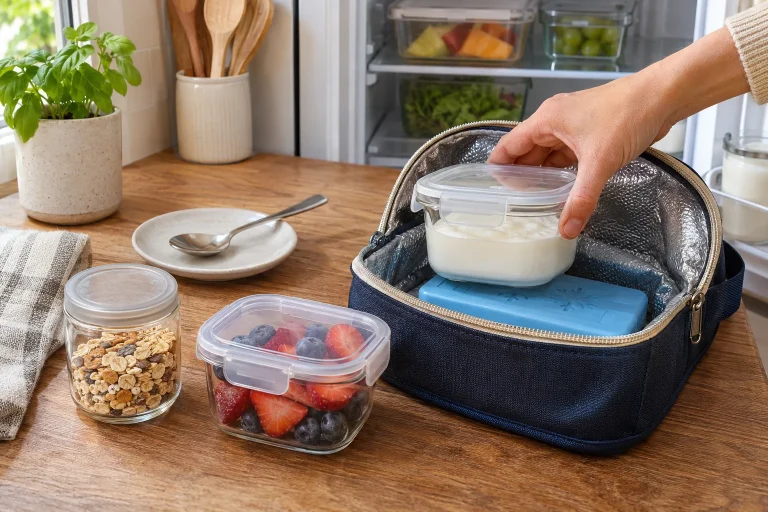
Use a securely closing container suitable for food and the intended use. Check the seal’s condition and cleanability too. You can test for leaks using clean water before packing food, then clean and dry the container appropriately. A good seal helps prevent spilling but does not, by itself, provide appropriate storage temperature. Arrange the journey of chilled food separately.
If using a food flask, follow manufacturer instructions and food-safety conditions together. A vessel called a thermos does not establish safety for every filling and duration. If appropriate hot-holding conditions cannot be checked, choose another handling routine. A workplace fridge and later suitable reheating may provide another plan, but the intervening transport stage still needs arranging.
A usable soup routine for the running week
Choose a few established recipes with different roles: a lighter first course, a more substantial combination and an everyday version easy to serve. Add the accompaniment, utensils and storage steps to each. Fit cooking day to intended consumption and safe handling of the specific food. Preparation can mean arranging ingredients and equipment too; every soup need not be fully cooked many days ahead.
Soup in the right place forms part of your own complete meal. You know its ingredients, what accompanies it, when you can access it and how to handle leftovers. This routine can easily produce varied dishes while keeping personal timing and quantity questions around running in place. The useful goal is a preferred, appropriately assembled meal you can eat calmly on a real workday or an evening at home after running.
Sources and further reading
- NSW Institute of Sport: 38 Balanced meal ideas for athletes
- NHS: Hearty vegetable and lentil soup
- NSW Food Authority: Leftovers
- Food Standards Agency: Cooking your food
How Futószív articles are prepared: our editorial guidelines.