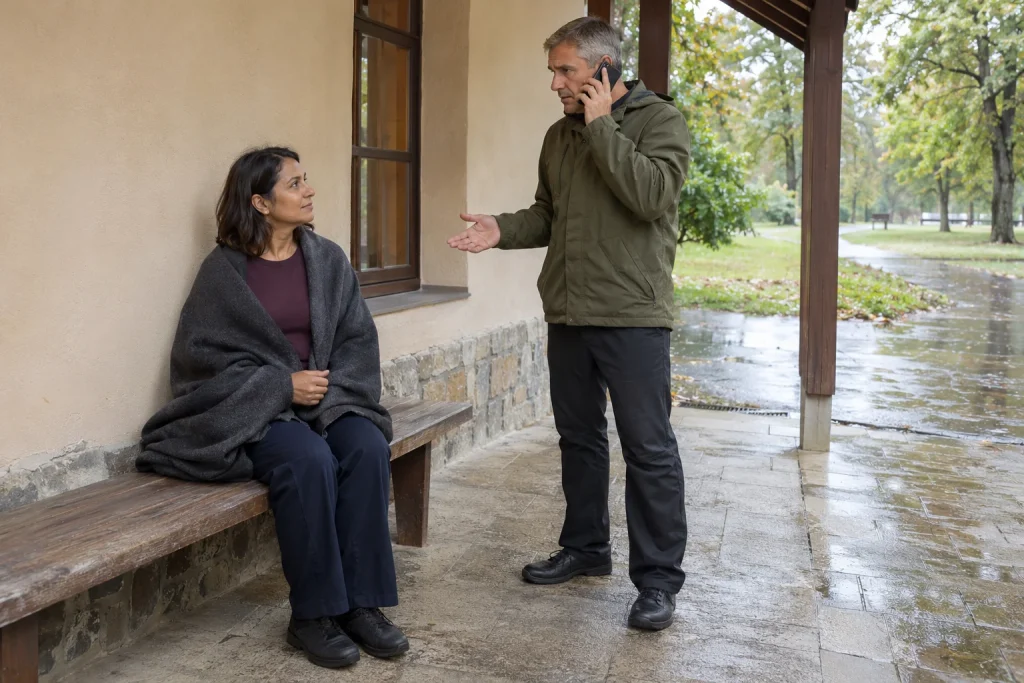
If a soaked, chilled runner becomes confused, struggles to speak, grows clumsy or unusually sleepy, do not treat it merely as discomfort. Hypothermia is possible and needs urgent medical care. In Hungary, call 112, do not leave the person alone and follow the operator’s guidance. Reaching a dry, sheltered environment matters, but does not replace seeking help. NHS: hypothermia.
This article explains why moisture, surroundings and behavioural change matter together. It does not teach diagnosis at the scene or recommend warming up by running. With serious symptoms, real help and observing the current condition come first; reading more of the article does not precede the call.
Hypothermia can occur without snow or freezing conditions
The CDC explains that hypothermia can develop in cool conditions above freezing if rain, sweat or cold water makes someone wet and chilled. An absence of a wintry landscape therefore does not rule it out. Consider actual circumstances: moisture, time outside and the person’s condition matter together. CDC: circumstances and signs of hypothermia.
As a runner, this history can follow an autumn or spring outing in rain. ‘It was not really winter’ does not explain a companion’s illness. Describe the circumstances and changes. Not knowing the precise outdoor temperature does not prevent seeking help, and this article gives no external temperature threshold labelled safe.
The final section of the programme and waiting afterwards also belong in the account. What happened during movement is not all that matters. If someone stays in wet clothes in unpleasant surroundings and deteriorates, describe that whole process. Stopping the running watch does not end environmental exposure.
Changes in orientation and speech are distinct signals
The CDC lists shivering, exhaustion, confusion, fumbling hands, memory problems, slurred speech and drowsiness among adult warning signs. Hypothermia can affect judgement and movement, so the person may not recognise what is happening. This makes a companion’s observations important.
Do not immediately classify unusual responses as stubbornness or natural end-of-session low spirits. Someone may not understand the situation, struggle to follow conversation or be unable to handle something normally. Communicate the change simply. You do not need to invent a home neurological examination.
There is no need for calculation, memory or walking tests. The question is not whether the person passes an improvised task, but that unusual deterioration has followed becoming cold. Seek help if the symptom is concerning. Present safety takes priority over a test to complete or a car park to reach.
Do not dismiss shivering or draw certainty from its absence
According to the CDC, shivering can be an important sign of heat loss. It should not be treated as weakness or insufficient willpower. If the person’s condition changes further, describe the complete account when seeking help. One sign’s presence or absence does not replace assessment.
The OSHA cold-stress guidance also notes that shivering can stop as hypothermia worsens. ‘They are no longer shaking, so they must be better’ can therefore be a dangerous interpretation if sleepiness or confusion increases. Do not judge improvement from one visible detail. OSHA: cold stress and hypothermia.
Preserve the sequence in your observations. Did they first feel cold and later change their speech or responses? Report that rather than choosing a reassuring detail against the other changes. Dispatch can ask about the current condition. You do not need to name a severity level beforehand.
 Enlarge image
Shelter helps protect against further cooling
St John Ambulance emphasises shelter outdoors, protection from wind and insulation from the ground. Reach an indoor environment if possible; otherwise organise protection available locally alongside help. Movement must fit the person’s condition and the instructions received. St John Ambulance: outdoor first aid.
Shelter should be real, not merely the name of a distant destination. If the person deteriorates, a long run back should not be the plan. Tell the operator about entrances, covered areas or other accessible places and the help available. Dispatch can give further guidance based on actual conditions.
If several people are there, divide tasks. Someone stays with the person, another handles the call and, if needed, a helper shows the approach. Do not let a shared outing become a situation where everyone searches for equipment and nobody watches their companion. Organising help and staying beside them both matter.
Replace wet clothes gently with dry protection
The Resuscitation Council UK 2025 first-aid guidance mentions gently removing wet clothing and replacing it with dry clothing to prevent further cooling. It also highlights scene safety, an early call and interventions appropriate to your training among first-aid principles. RCUK: 2025 first-aid guidelines.
A dry blanket, sleeping bag or other suitable layer is neither decoration nor a diagnostic sign: it supports protection. If a full change is unavailable, tell the operator which resources are present. Do not improvise something without suitable space, help or knowledge. Necessary actions need to fit the condition.
Keeping helpers warm matters too. St John Ambulance specifically warns against making yourself vulnerable by giving away your own clothing. Support works when helpers can still phone, observe and follow instructions. Access to spare clothes and blankets for a shared outing can be reviewed later; in the acute situation, start from actual resources.
Not every warming idea is appropriate first aid
For suspected hypothermia, the NHS does not recommend a hot bath, direct hot-water bottle or heat lamp. It also says to avoid rubbing limbs and giving alcohol. Familiar ideas promising rapid warmth must not replace appropriate help. Follow emergency-dispatch instructions informed by the person’s condition.
‘Warming up’ through running is not recommended here either. Do not persuade a confused or clumsy person into further exertion to reach the finish. The task is not making up missed activity but obtaining appropriate care for deterioration. Do not reinterpret the situation as sporting performance.
First-aid sources consider a warm drink only for someone fully alert and able to swallow safely. Do not force drink or food on a confused, drowsy or unconscious person. Do not delay seeking help for a drink either. This article provides no quantities-based drinking or warming protocol.
No thermometer must not mean no emergency call
The NHS relates hypothermia to abnormally low body temperature and treats it as an emergency. But a number in the definition does not require a non-professional to prove the suspicion with a measurement first. Deteriorating orientation or responsiveness after becoming cold should be reported immediately.
Outdoor temperature, clothing surface temperature and body temperature are different data. If any measurement is available, identify its device. Do not treat a sports-watch or outdoor-display figure as a certain medical judgement. A favourable-looking value does not make new confusion or speech difficulty insignificant.
Helpers do not need a complete measurement series before calling. Location, present condition and circumstances leading to cooling can be described without exact data. State missing details as missing. Healthcare’s role is appropriate assessment and determining care.
A mental-state change does not prove a single cause
Cool, wet surroundings are important history, but alone do not explain every episode of confusion or changed speech. St John Ambulance also warns that hypothermia can mask another serious condition. Non-professionals need not distinguish every cause at the scene. Recognising urgency is the task.
On the phone, therefore, describe symptoms first, then circumstances. ‘We came back from a rainy outing; now they are more confused and struggling to speak’ communicates the account. ‘They are just cold’ prematurely closes an uncertain cause. Your observation is enough to seek help; a certain explanation is unnecessary.
If responsiveness or breathing worsens, tell dispatch immediately. For someone unresponsive and not breathing normally, follow instructions on resuscitation and necessary positioning. This article provides neither a remote diagnosis nor one position for every situation. Telephone guidance is particularly important as the condition changes.
 Enlarge image
Give scene information simply, in sequence
The following aid may help during the call or handover to medical staff. It is not an emergency examination to complete: do not wait to gather every detail. First say someone is unwell and where you are.
| Information | Useful detail |
|---|---|
| Exact location | Town, route point, entrance and access possibilities. |
| Current condition | Are they responsive, how do they speak and breathe, and which changes stand out? |
| Environmental history | Rain, wet clothes, wind, time outdoors and the known programme. |
| Available help | Who stays with them, and are shelter and dry layers available? |
| New change | Report worsening responsiveness, breathing or general condition immediately. |
A companion can help recall the history. You do not need every running file or the route’s entire story. Care professionals’ questions can guide detail. Brief task allocation among helpers is worth more than several people simultaneously trying to interpret the same symptom reassuringly.
Improvement under a blanket does not erase earlier warning signs
If the person responds better in dry shelter, tell helpers too. Do not decide from the first improvement that assistance is unnecessary. Clarify next steps with professional guidance informed about the condition. This article provides no clearance to run again or drive home that day.
A soaked runner becoming disoriented therefore means more than discomfort. Environment, moisture and mental state together can indicate an emergency. A prompt call, a companion staying beside them and protection from further cooling according to instructions jointly help obtain appropriate care.
Sources
- NHS: Hypothermia
- CDC: Preventing Hypothermia
- OSHA: Cold Stress Guide
- St John Ambulance: Hypothermia
- Resuscitation Council UK: First Aid Guidelines 2025
How Futószív articles are prepared: our editorial guidelines.