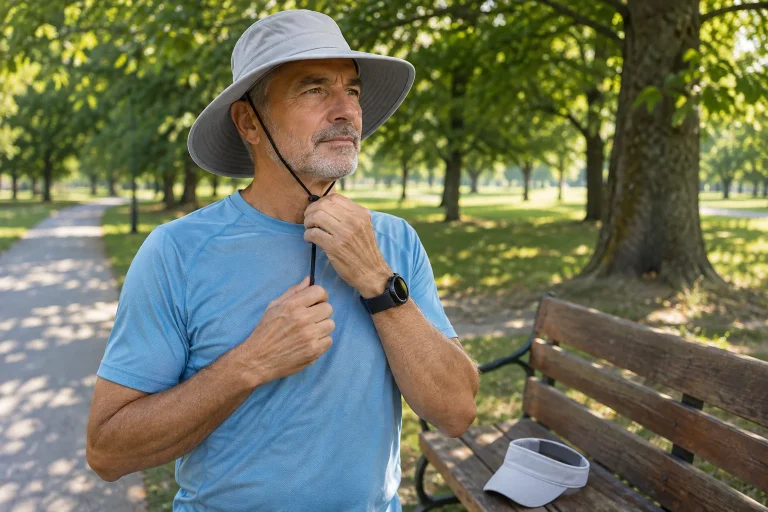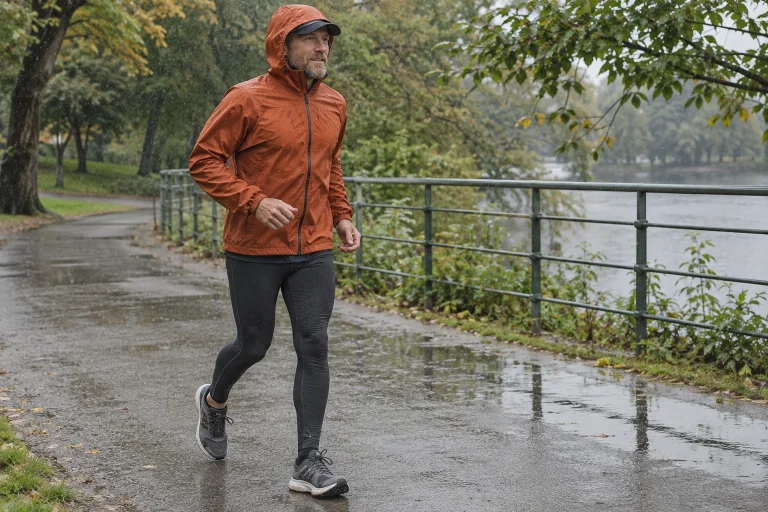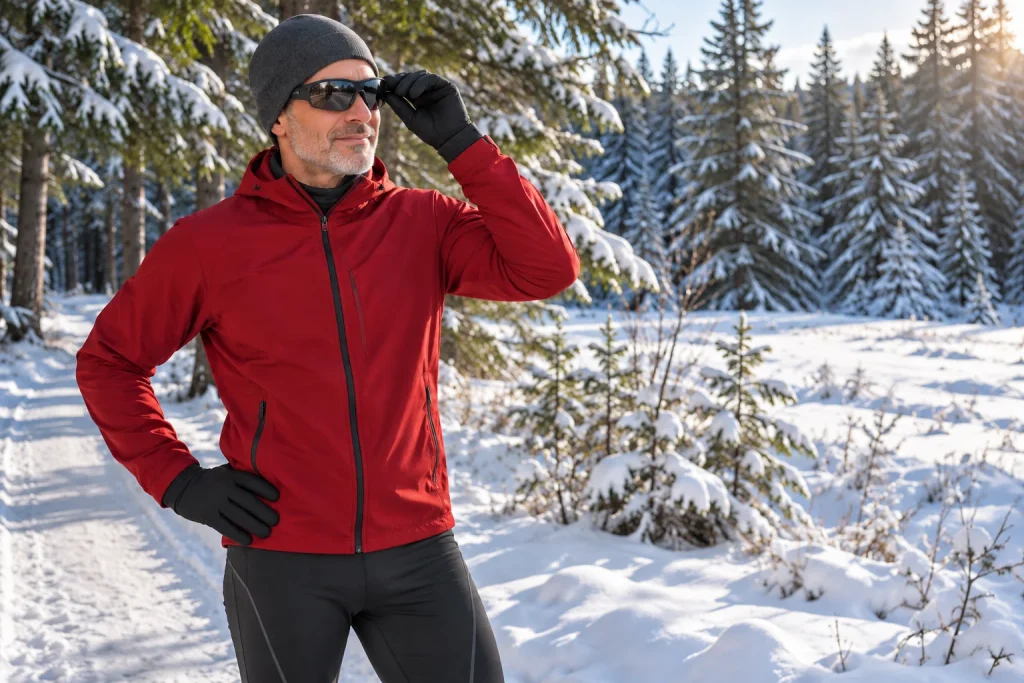
A sunny, snowy landscape is especially inviting for a runner: the forest edge is bright, the air fresh and winter clothing covers much of the skin. Sun protection can still matter. Snow reflects some radiation, so the environment around your eyes and exposed skin is shaped by more than the sun directly above you. Cold air and a comfortable thermal sensation do not provide a UV measurement instead.
Preparing for a snowy run therefore involves separate checks of current UV conditions, actual coverage and the glasses’ documented protection. If eye pain, marked light sensitivity or blurred vision appears after time outdoors, do not treat it simply as a memory of the bright landscape: seek prompt eye assessment, and urgent care for sudden loss of vision. What follows is general information and practical preparation examples, not an individual eye diagnosis or a safety rating for every snowy route.
Snow is part of the radiation environment, not only ground cover
WHO names reflection from the surface among the factors shaping UV exposure. Fresh snow can be a particularly strong reflector; a possible proportion in general guidance is not a constant for every snow cover and location. Do not use that number to multiply your own run manually. The point is that reflected radiation can arrive from other directions in snowy surroundings, rather than thinking only about the direct direction of the sun.
This distinction also helps interpret equipment. A cap peak may provide shade in a particular direction, for example, but does not tell you everything about complete protection of your head and eyes. The shape of glasses and side coverage may be separate questions. You do not need to draw every radiation path to account for this: consider the chosen equipment’s documented properties and its fit on you together for snowy conditions.
As our own planning example, distinguish a short loop within enclosed woodland from a longer outing also crossing open snowy clearings. We have not assigned UV values to them in advance, since those need checking for the actual place and period. The example shows that ‘a snowy run’ is not a single uniform environment. Alongside distance, planned outdoor time and the character of the location help you formulate protection questions more precisely.
Glare, visible light and UV protection provide separate information
Uncomfortable glare from bright snow and UV radiation are not the same thing. The darkness of sunglasses lenses relates to reducing visible light, while UV protection comes from the appropriate lens property. ARPANSA explicitly separates these two questions. Merely looking at a dark lens therefore cannot establish whether it provides the documented UV protection you need.
Health Canada’s guidance also emphasises that price, colour and darkness do not reliably determine UV protection. When buying, check the label and manufacturer documentation for the particular model. An attractive, very dark lens may feel comfortable, but its verifiable property needs separate checking. Keep existing glasses identifiable by model so you can ask targeted questions about them later too.
Do not automatically treat features reducing strong glare as a new UV rating either. If the product mentions polarisation or changing tint, look separately for UV protection in its description. A more pleasant view during use can be a real advantage, but is not an instrumental measurement of transmitted UV. Placing both kinds of information alongside each other helps: what does the manufacturer state, and how do you see in your own planned environment?
 Enlarge image
Fit: check coverage around the lenses on your own head
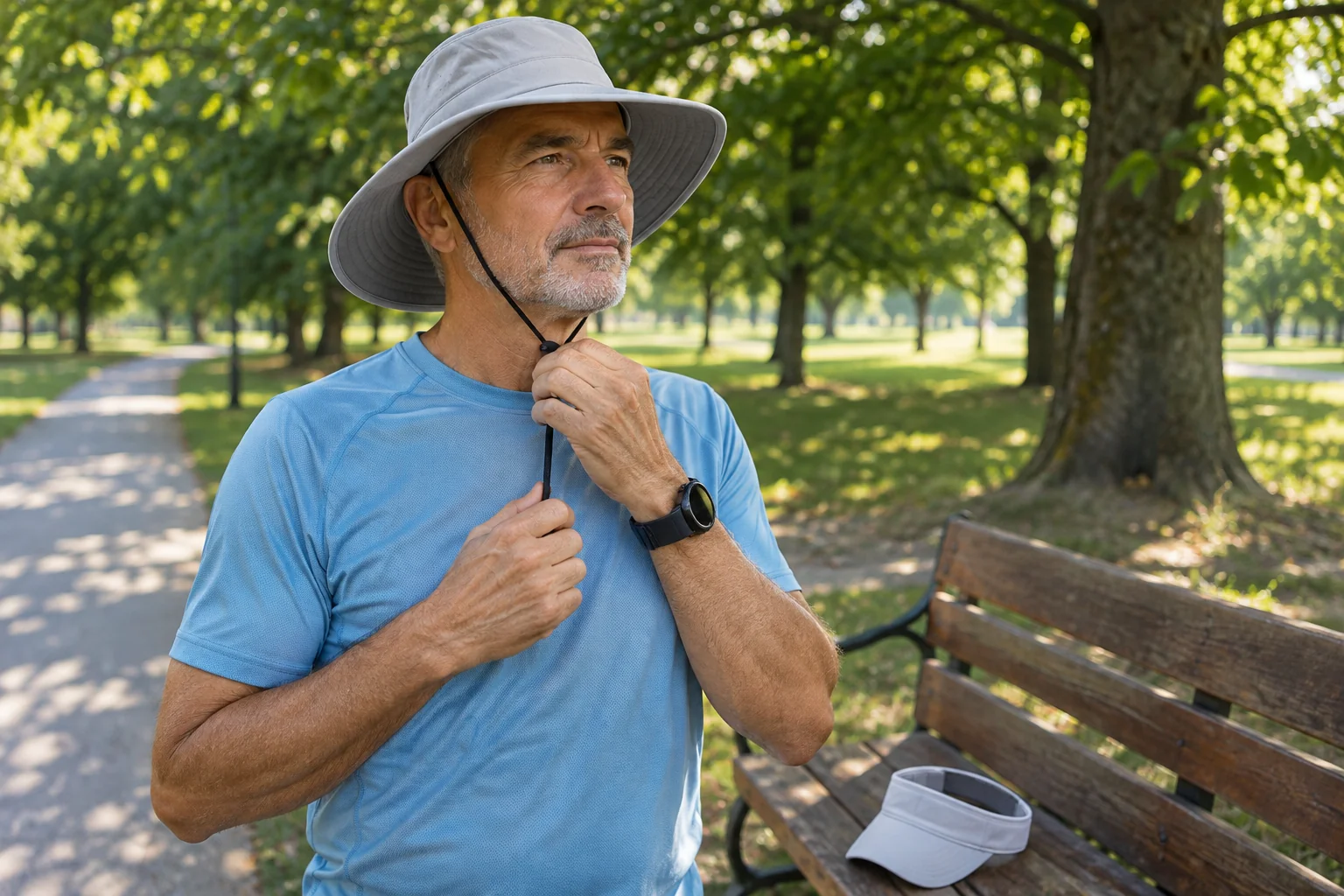
Alongside sound documentation, it matters how the glasses sit on you with your actual winter outfit. The hat, ear warmer, hood and frame go on your head together, so try them together. While standing calmly, notice whether the arms are comfortable and whether the frame shifts during your usual head turns. Fit at the bridge and sides is a personal practical question a catalogue photograph cannot solve for you.
ARPANSA’s eye protection information also emphasises considering radiation arriving from the side. Do not think about frame and lens shape only in terms of style, therefore. Your own fitting still does not measure the radiation dose reaching your eyes. You can observe how the frame sits, which area it covers and whether it interferes with looking around. Documented protection and comfortable, appropriate use remain two separate checks.
If you use prescription lenses or another individual correction, you can clarify snowy sporting conditions with an optical or eye-care professional too. Describe the particular task: a woodland route with changing light, longer time outside or another environment of your own. There is no need to improvise an unknown dark lens over existing glasses. An appropriate solution considers vision, protection and comfortable fit together.
Between open snow and shaded woodland, usable vision matters too
A route can alternate between very bright and more shaded sections. Your chosen glasses need to make sense beyond a single moment in an open clearing. Check the particular model’s conditions of use and intended environment. A very dark specialist lens is not automatically a general running choice simply because the outing involves snow. Finding your way over terrain in changing light is a practical task in its own right.
During a safe, stationary fitting, notice whether you can interpret the surroundings ahead clearly. If glasses leave you seeing uncertainly in a particular situation, do not try to get used to them while running. Adapt the programme, equipment or route accordingly. The purpose of a clothing or optical fitting is not to preserve the original plan at all costs, but to make your vision and navigation usable in the real environment.
Keep other limitations in the lens instructions in mind too. Glasses chosen for running or special light conditions may not suit every task on the journey home, such as driving. Follow the particular product’s label rather than adopting a general rule from another lens. You can then think through the day from arriving to getting home while treating running use and transport use separately.
Winter clothing can still leave skin exposed
Warm, long clothing can cover many areas, but actually check the face, ears, neck and backs of the hands too. A high jacket collar or hat alone does not mean every part is protected equally. Coverage may change during movement and after adjustments. You can calmly check this during a fitting in the shade; there is no need to wait for skin redness as late feedback.
A garment’s UPF label relates to the documented material property and covered skin. It does not extend to exposed areas because a top with a good protective value lies beside them. Alongside glasses and headwear, a combined sun protection plan can therefore include appropriate care of exposed skin, shade and timing. Apply sunscreen according to the instructions of your own product, taking the planned outing into account.
If you change something in your winter equipment, recheck the meeting points too. Another hood, pair of glasses or hat can create a different arrangement around the face. Checking coverage can be a simple movement after getting dressed. It does not calculate a personal UV dose; it helps you notice what remains exposed and what else your routine needs to address for the particular snowy environment.
Snow blindness symptoms may appear later too
The American Academy of Ophthalmology describes snow blindness as a form of photokeratitis: UV exposure can affect structures at the eye’s surface. Radiation reflected from snowy and icy surroundings may contribute. Discomfort does not necessarily become noticeable during the exposure itself. Being symptom-free during the run therefore does not by itself establish that your chosen eye protection was appropriate in every respect.
Seek eye-care help for pain, redness, watering, blurred vision, a gritty sensation or marked light sensitivity, particularly after an outdoor outing in snow. Do not diagnose yourself with definite snow blindness: other eye-related causes may also need assessment. Sudden deterioration in vision or loss of sight requires urgent care. In this state, do not use further running or driving to try the equipment again.
Based on the professional guidance, avoiding further UV exposure and not rubbing the eyes can be important initial steps, but a professional should decide your own treatment. The article does not recommend antibiotics or other prescription eye drops. For prevention, the aim is appropriate UV-protective equipment and understanding its use, rather than learning from pain already experienced how long you could have stayed outside in snow.
 Enlarge image
Current local data and the whole outing: two simple preparations
Check fresh UV information for your run’s place and period, and clarify whether it shows a daily maximum or another time-based value. Do not copy a value from the previous outing, another town or an old screenshot onto the new programme. Feeling cold remains important feedback for clothing comfort, but is not UV data. You can address both questions in parallel: suitable winter clothing and sun protection appropriate to the situation.
The whole time outside may include walking to the location and waiting afterwards. Do not mentally link the glasses only to the run recorded on your watch if you remain in the bright, snowy environment afterwards. Think through your routine beforehand: where will you put them on, where can you adjust them safely and how will you store them when moving into another environment? A specific routine helps more than equipment that is suitable in principle but forgotten in a bag.
If travelling to mountains, altitude and a different location are separate circumstances. Do not treat it as a simple copy of your usual urban winter run. Local information and using equipment appropriately for the task together offer a starting point. The article does not designate permitted high-mountain routes or establish suitability through an equipment list; sun protection is one important element of a more complex winter outing.
Official sources and interpreting our own examples
The background on reflected radiation comes from the WHO information on UV health effects, while lens properties are explained by the ARPANSA guide to sunglasses and the Health Canada consumer guide. For the symptom section we used the American Academy of Ophthalmology information on photokeratitis. Background on clothing coverage comes from the ARPANSA clothing guide. Checked: 21 November 2026. The fitting situations are our own editorial examples and do not replace an individual eye examination.
How Futószív articles are prepared: our editorial guidelines.