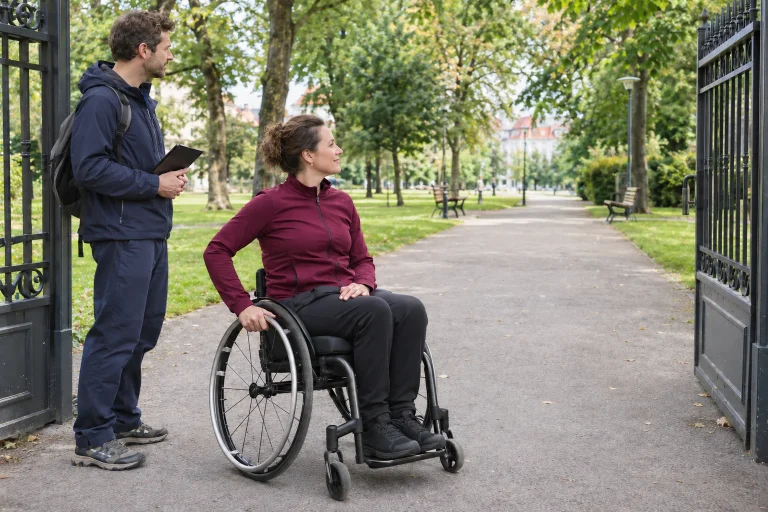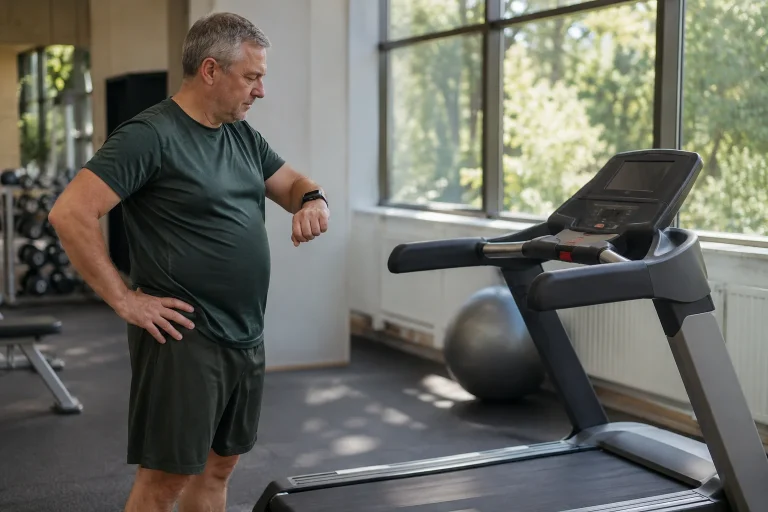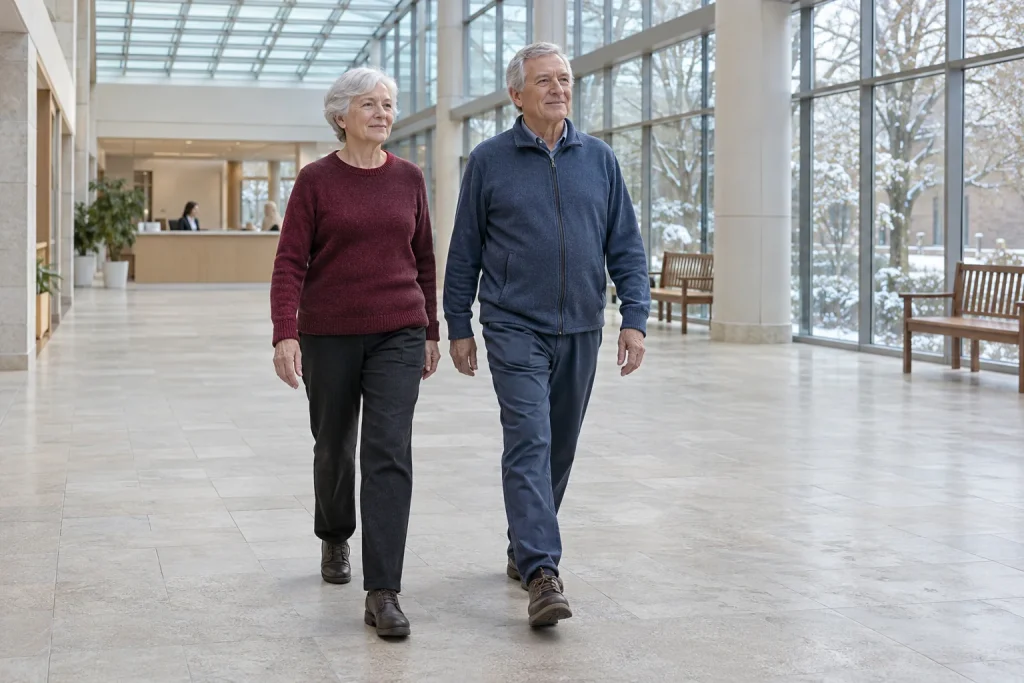
Your usual loop has become icy or slippery, so you are looking for another option today. A bright indoor route may be useful, but a gymnasium, community building, indoor track and shopping venue are different settings. Learn about an appropriate alternative through the whole situation of using it, rather than choosing it merely because it has a roof and heating.
The aim of the first visit can simply be a walk-through. You check how to enter, where you can move, which rules apply and whether the space is usable within your own activity framework. There is no need to complete a full workout immediately. Getting to know the venue is a useful task in its own right, particularly if you might go there regularly in poor weather.
Missing an outdoor session and daily activity are separate questions
The National Institute on Aging information on cold weather includes falls on winter surfaces among the hazards. Avoiding an uncertain route need not be considered weak willpower. Choosing another environment can be a deliberate organisational decision, while the individual form and amount of activity remain suited to your own situation.
If illness, injury or another condition places restrictions on your movement, being indoors does not override them. A change of location is not an automatic response to new symptoms or feeling unwell either. An indoor option arises when the chosen activity itself is appropriate and you are seeking workable conditions instead of the outdoor environment.
The CDC page on activity for older adults also mentions indoor walking or an appropriate home programme in bad weather. This is not a compulsory replacement rule. You do not have to recreate the duration of a missed outdoor run indoors at any cost, particularly if the indoor activity has a different purpose and character.
List not only building names among your alternatives, but how you would use them: an indoor walking route at a quieter time, a group session arranged in advance or a supported gym programme. You then have a clearer expectation before leaving. If the chosen venue is closed or crowded that day, there is no need to immediately start another unfamiliar task there. Changing the plan may mean another day or a familiar home option appropriate for you. An indoor alternative helps organisation when it does not create another pressure to complete something.
Clarify beforehand what the building can be used for
An open door does not mean unlimited opportunities for sport. Ask the operator or organiser whether your planned activity is allowed, in which area and at which times. A circulation corridor, training track and event hall may operate under different rules. A space suitable for walking does not necessarily permit running.
Ask about actual opening hours, entry conditions, charges, cloakroom facilities and any group programme. An old photograph or post found on social media does not replace current local information. An event, cleaning or maintenance can change the area available. A regular alternative needs information you can genuinely rely on within your schedule.
There is no need to choose the biggest or most impressive venue. A nearer building that is easier to reach and operates with understandable rules may be better for your purpose. Usability includes how much organisation every visit requires. If entering is already a long and uncertain undertaking, the alternative can easily remain accessible only on paper.
 Enlarge image
The real route starts at the entrance
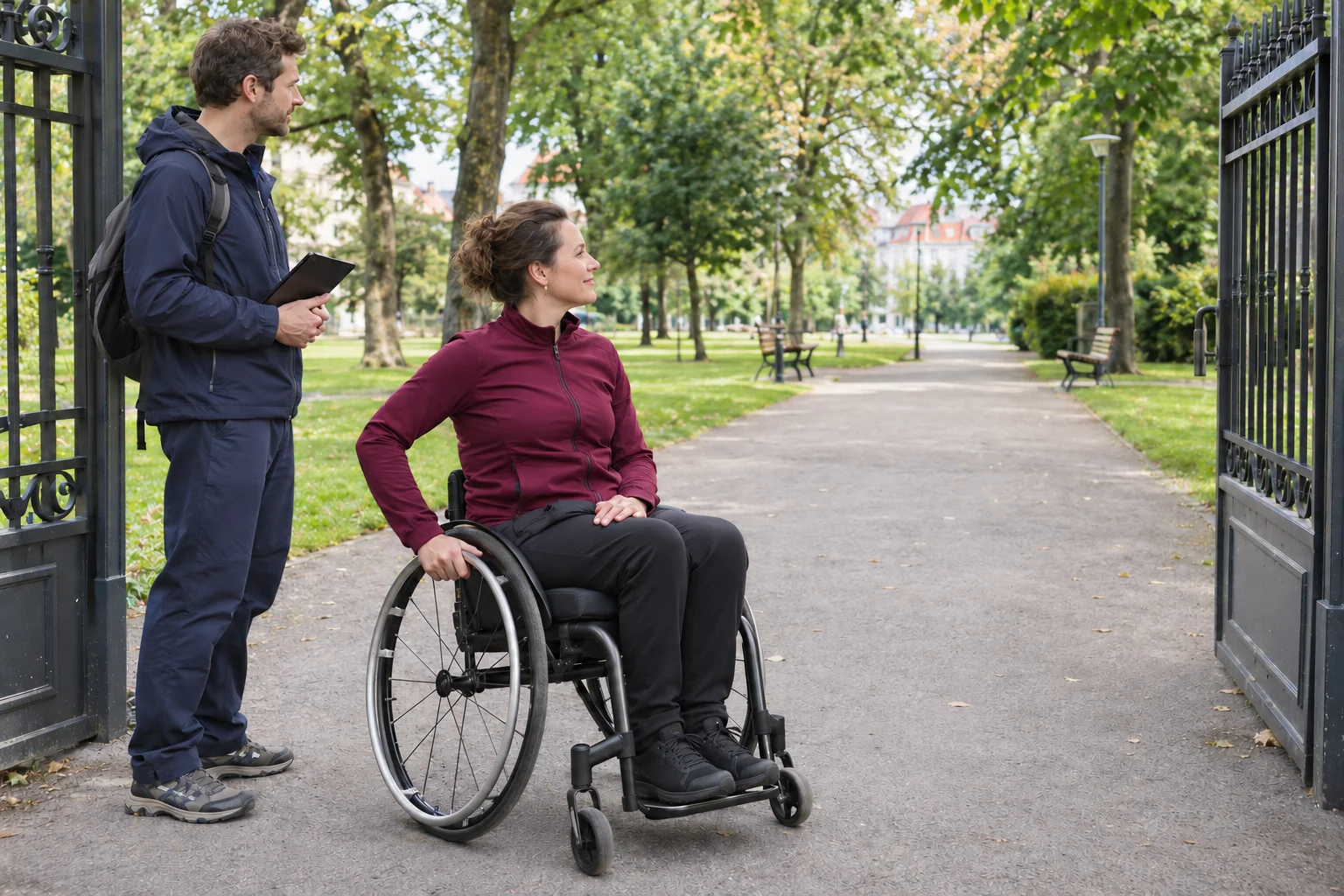
The journey from home to the building may still be slippery. Think through the approach from the stop or car park, the stairs, ramp, door and lobby. If getting in is the hardest part, the interior has not yet solved the day’s problem. A different arrival method, help or postponing the visit may be needed.
Moisture brought inside and congestion in the lobby may need attention too. Where can you stop, remove a coat and change shoes if necessary without balancing in other people’s way? Arriving without rushing is not an extra service, but one condition of the whole outing. It helps to know beforehand which area can be used calmly for this.
The CDC falls prevention information highlights environmental obstacles alongside personal factors. This does not mean you must conduct an official safety audit. You are, however, entitled to understand whether your own route is usable and report a specific obstacle to the operator or programme organiser.
Flooring and the actual route say more than square metres
Check which surface you would use and whether there are thresholds, level changes, cables, tight turns or temporarily placed objects. Even a long corridor is not necessarily a simple route if several doors, a steep ramp or busy junctions interrupt it. Follow the actual passage available rather than the longest line on the building’s floor plan.
The CDC information on indoor walking mentions wide, level, illuminated surfaces and available seating as attractive features. Check these on site. Not every shopping venue or community building has the same facilities, and traffic at the particular time of day can change usability too.
A short route with clear sightlines can have advantages: it is easier to understand where to turn back and where to stop. This does not automatically make the exercise workload appropriate, but organisation becomes clearer. There is no need to add sections merely to make a loop look longer when they bring more uncertainty than value.
Light, noise and crowds can change with the time of day
An empty corridor in the morning may be a different environment from the same building during an afternoon event. Ask when traffic is heavier and, if possible, view the place at the time you would actually use it. Experience at your own time is more precise than a photographic impression. Moving through a crowd can require different attention from a straight, clear stretch.
Glass surfaces, strong backlighting, shiny flooring or hard-to-see edges may bother you personally. If something is difficult to see, do not try to bridge the uncertainty by moving faster. Ask about another route or time. New or persistent visual symptoms may be a separate professional question that simply changing the venue does not necessarily resolve.
Noise and loud music can also make communication harder. If you go with a companion, know where you can stop to talk without blocking the way. There is no need to communicate everything while moving throughout the session. A brief, calm discussion can be clearer than someone turning backwards while trying to work out the next step.
A place to rest and toilets belong in the plan
Knowing there is a seat somewhere is not enough. Where is it relative to your chosen route, is it easy to reach and can you use it? The same applies to toilets. Somewhere distant and accessible only on another floor calls for different arrangements from a facility directly beside the activity area.
If bringing equipment, a coat or a bag, clarify storage too. You should not have to carry something throughout the session that was not originally planned as part of the task. If suitable storage is unavailable, that alone can influence the choice. An indoor option does not become better by treating practical obstacles as invisible.
Individual needs can differ. Different things matter to someone using a walking aid, someone using a wheelchair or someone who wants to sit down more frequently. Instead of a general promise of accessibility, understand the particular conditions of your own route. Not every need for help has to be improvised on site; a precise advance question can make organisation easier for everyone.
 Enlarge image
Covered walking, a gym and a treadmill are different choices
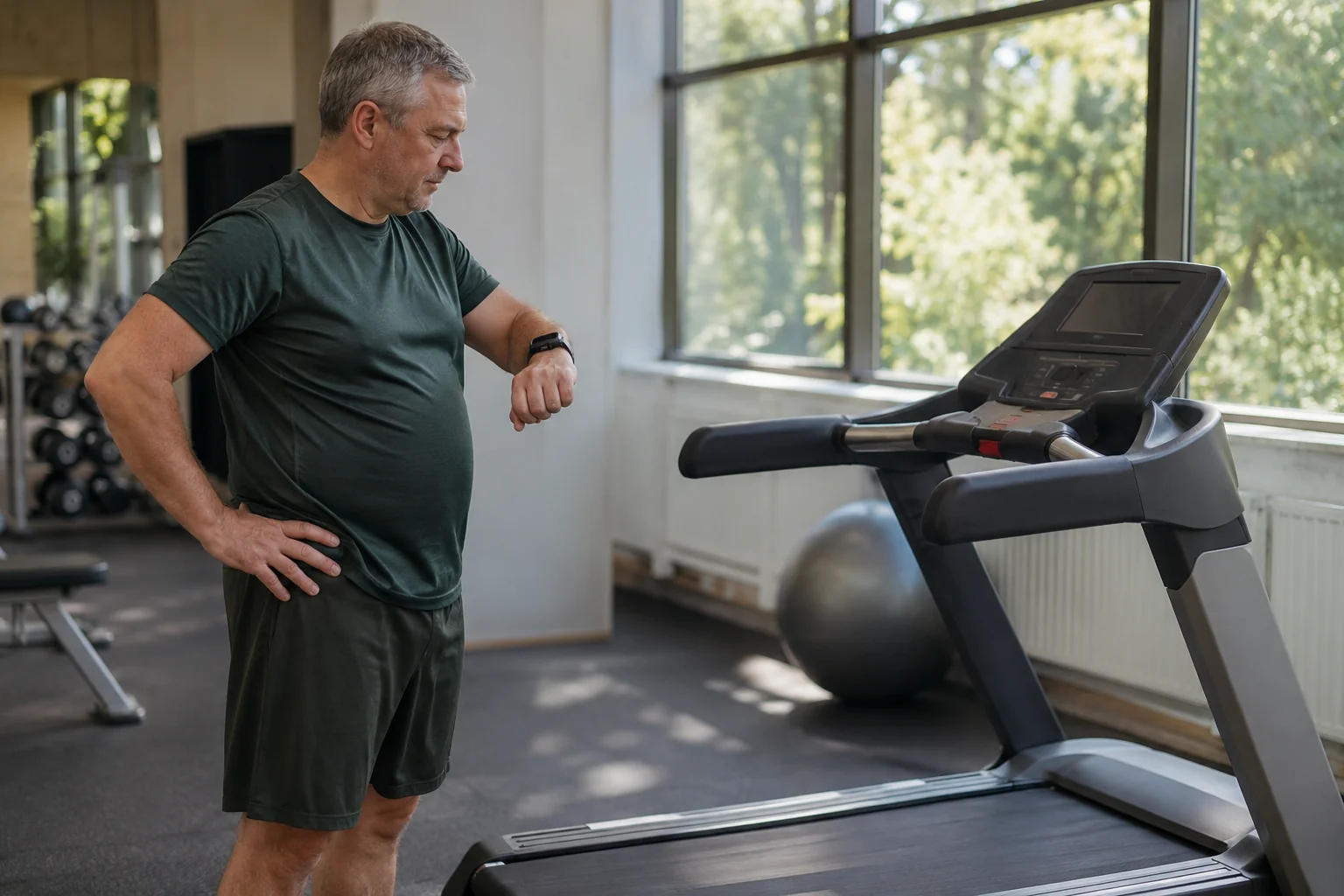
Looking for another activity location because of the weather does not mean immediately switching to a treadmill. Knowing how the device works, getting on and off, using controls and asking for help are separate tasks. If considering this solution, an on-site demonstration and clarification of individual suitability form part of the choice. Level indoor walking and a moving belt are not interchangeable environments.
At a gym, ask about support on first use, staff availability and what happens if something is unclear. A distance or programme name on the display does not establish what is appropriate for you. You do not have to prove you can use new equipment through previous outdoor performance, or immediately match its speed to your old pace.
Connect the choice to a purpose. Today may allow a calm indoor walk and a social meeting; another day may suit an individually planned gym session. The two programmes can have different meanings. A change of venue is useful when you preserve that distinction, rather than trying to make every form a copy of the same missed run.
A few precise details are enough after a walk-through
A fictional couple first visits the nearby community building. They learn that a short internal route can be used in the morning slot, but traffic is heavy during afternoon sessions. They examine entry, toilets, seating and the journey home. They do not complete a trial workout; they establish under which conditions it makes sense to plan around the venue at all.
- At which times and under which rules can the chosen area be used?
- Are access, flooring, light and the actual passage suitable?
- Where are seats, toilets, help and appropriate storage for belongings?
- What may change by the next visit, and where can current information be checked?
The notes need not become a scored venue rating. If a condition is unsuitable, name why: another time, another entrance or an entirely different place may be the next choice. One walk-through does not guarantee identical conditions on every later day. Regular use should still allow room to notice reality.
A slippery outdoor loop therefore need not end all activity options, but neither does it make any indoor venue compulsory. A good alternative is accessible, suited to your own purpose and actually usable. A walk-through helps you choose it on specific details rather than the assumption that ‘everything indoors must be fine’.
Sources
NIA: cold weather and hazards on winter surfaces; CDC: falls prevention; CDC: characteristics of indoor walking venues; CDC: activity options for older adults. Checked: 21 November 2026. The walk-through example and questions are our own editorial aid, not a venue safety certificate or individual activity prescription.
How Futószív articles are prepared: our editorial guidelines.