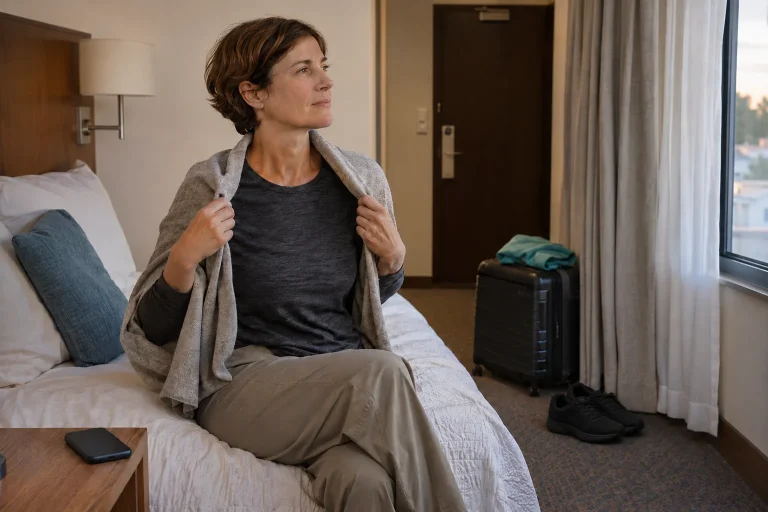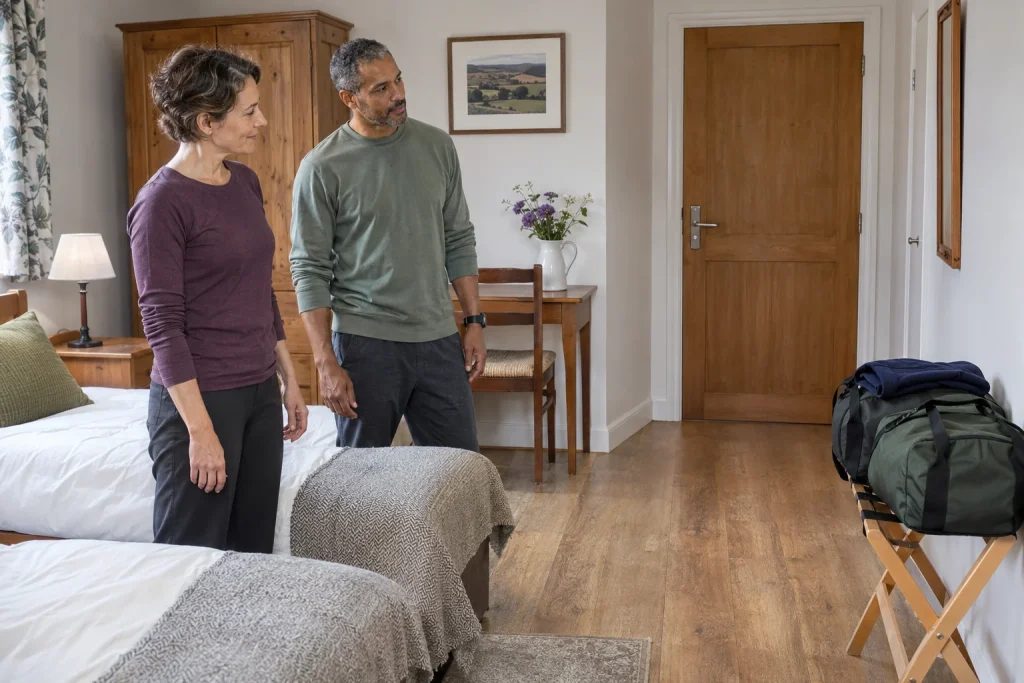
With known sleepwalking, a race weekend involves more than travel and start-line logistics. An unfamiliar room has doors, bathroom and stairs in different places, while floor-level luggage creates unusual obstacles. Useful preparation begins calmly during daylight: what happened before, is there an individual care plan, and how can accommodation be reconciled with safety?
The aim is neither all-night watchkeeping by a companion nor a promise that one room checklist prevents sleepwalking. Frequent, seriously sleep-disrupting or injury-prone events need individual medical assessment. The NHS recommends investigation in these situations. Travel preparation can connect existing care with reducing environmental risks; it is not fitness-to-run clearance. NHS: sleepwalking and seeking help.
Moving does not mean someone is fully awake
During sleepwalking, someone may sit up, leave bed and perform apparently ordinary activities while not fully awake or responding normally. The NHS says it often occurs early in the night, associated with partial awakening from deep sleep. The person may not remember it in the morning. Open eyes do not reliably establish fully conscious orientation. NHS: what happens during sleepwalking?
MedlinePlus explains that movement during sleepwalking can cause injury, for example through tripping or losing balance. Frequent, persistent or dangerous episodes need discussion with a provider, with other conditions excluded if necessary. Earlier episodes always ending without harm do not guarantee reassurance. MedlinePlus: safety and medical assessment.
Tell a travelling companion more than “I sometimes sleepwalk”. A short specific account is more useful: have you remained within the room, opened doors, fallen or encountered other dangers, and when did you discuss this professionally? You choose how much personal information to share, but the other person needs to understand what they are and are not agreeing to.
Your own history and care plan matter before departure
If you received individual advice, revisit it when organising travel. New, more frequent or different episodes should not automatically inherit earlier reassurance. Planned accommodation and travel schedules may be worth discussing beforehand with the provider. General suggestions here do not override instructions for your condition.
NHLBI includes sleep patterns, health history, medicines and daytime function in assessing sleep problems. A brief diary may help show sequence, while a professional decides whether further investigation is needed. You need not complete a personal experiment before departure or deliberately provoke an episode to have something to report. NHLBI: assessing sleep difficulties.
Make questions travel-specific: which environmental arrangements are recommended, which changes should prompt earlier contact, is an individual plan for a companion needed, and under what conditions is this accommodation appropriate at all? These start from your history. You need not disclose every earlier event or result to the whole running group.
 Enlarge image
Ask specific accommodation questions before booking
An appealing photograph cannot show every room and route detail. Ask about bed position, immediate stairs, a mezzanine or balcony door and how help can be reached at night. These do not form one approval list for everyone. Different people may need different arrangements according to individual risk and agreed care.
AASM Sleep Education safety information highlights obstacles, sharp or breakable objects, bedside furniture and exits where movement occurs without full awareness. Steps should fit actual behaviour and surroundings. A safer room cannot replace medical assessment. AASM: considerations for preventing sleep-related injuries.
A booking message can be brief and factual: you need a room whose arrangement and access can be discussed to suit personal health considerations. Do not request an unauthorised extra lock or a solution overriding fire safety. Knowing that accommodation cannot meet necessary conditions before travelling is better than improvising late on arrival.
Environmental protection and escape must work together
The U.S. Fire Administration’s accommodation guidance emphasises learning escape plans and identifying nearby exits and alarms. For rented accommodation, everyone should know the address and ways out, with outward doors and windows openable. These are general fire-safety considerations, rather than sleepwalking treatment instructions. USFA: hotel and short-term rental safety.
Do not barricade the room door with furniture, tie an exit shut or lock anyone in so they cannot escape an emergency. Environmental sleepwalking protection must remain compatible with fire safety. Clarify specific door or window arrangements with the provider and host, rather than invent home-made restraints.
AASM’s safety page explicitly opposes tying someone to bed or restraining them, because sudden movement can make this dangerous. Focus on reducing hazards and professional assessment. A travelling companion must not become an overnight physical-restraint supervisor. If matters seem unmanageable without improvisation of that kind, reconsider the travel and care plan. AASM: safety instead of restraint.
Review the room in daylight on arrival
Look around together before unpacking. A sports bag, charging cable, shoes or open suitcase can become new obstacles. The aim is a simple clear route between bed and necessary room areas, rather than a dramatic security renovation. Alter furniture only with the host’s permission, and never disable an alarm or other protective equipment.
| Detail to review | Practical question | Improvisation to avoid |
|---|---|---|
| Floor and luggage | Where can bags, shoes and cables stay out of the way? | Equipment left in the walkway overnight. |
| Bed surroundings | Are sharp, heavy or breakable objects within reach? | Attaching the person to the bed. |
| Doors and windows | Which agreed arrangement permits safe escape? | Barricades, unauthorised extra locks or other traps. |
| Reaching help | How can reception or local help be called at night? | Unagreed full supervision assigned to a companion. |
| Alarms and exits | Do you know the escape plan and required route? | Disabling alarms or closing escape routes. |
The table is a general discussion aid. Five checked rows do not make previously dangerous events safe. If an important individual requirement cannot be met, the next step may be a room change, another accommodation or reconsidering travel following provider advice. A paid race entry does not oblige you to accept an uncertain overnight situation.
Inform a companion with their agreement
Explain beforehand what the companion needs to know and ask what they can undertake. The phenomenon may be new to them, including when to call for help. A short agreement can identify the personal plan, provider instructions and ways to reach accommodation staff. Do not reveal an expectation of night supervision only on arrival.
The NHS says someone sleepwalking can be guided calmly and gently back to bed; if waking is necessary, try gently because abrupt awakening may cause confusion or fear. This is general information, rather than a script for every dangerous situation. Immediate danger or injury makes safety and appropriate help the priority; call 112 for a life-threatening emergency. NHS: what can be done during an episode?
You need not ask a companion to record or prove an episode. A short account afterwards may help, but the phone camera must not direct safety. Agree who may receive personal information and who acts as contact if care is needed. Privacy can coexist with practical knowledge that prevents misunderstanding.
 Enlarge image
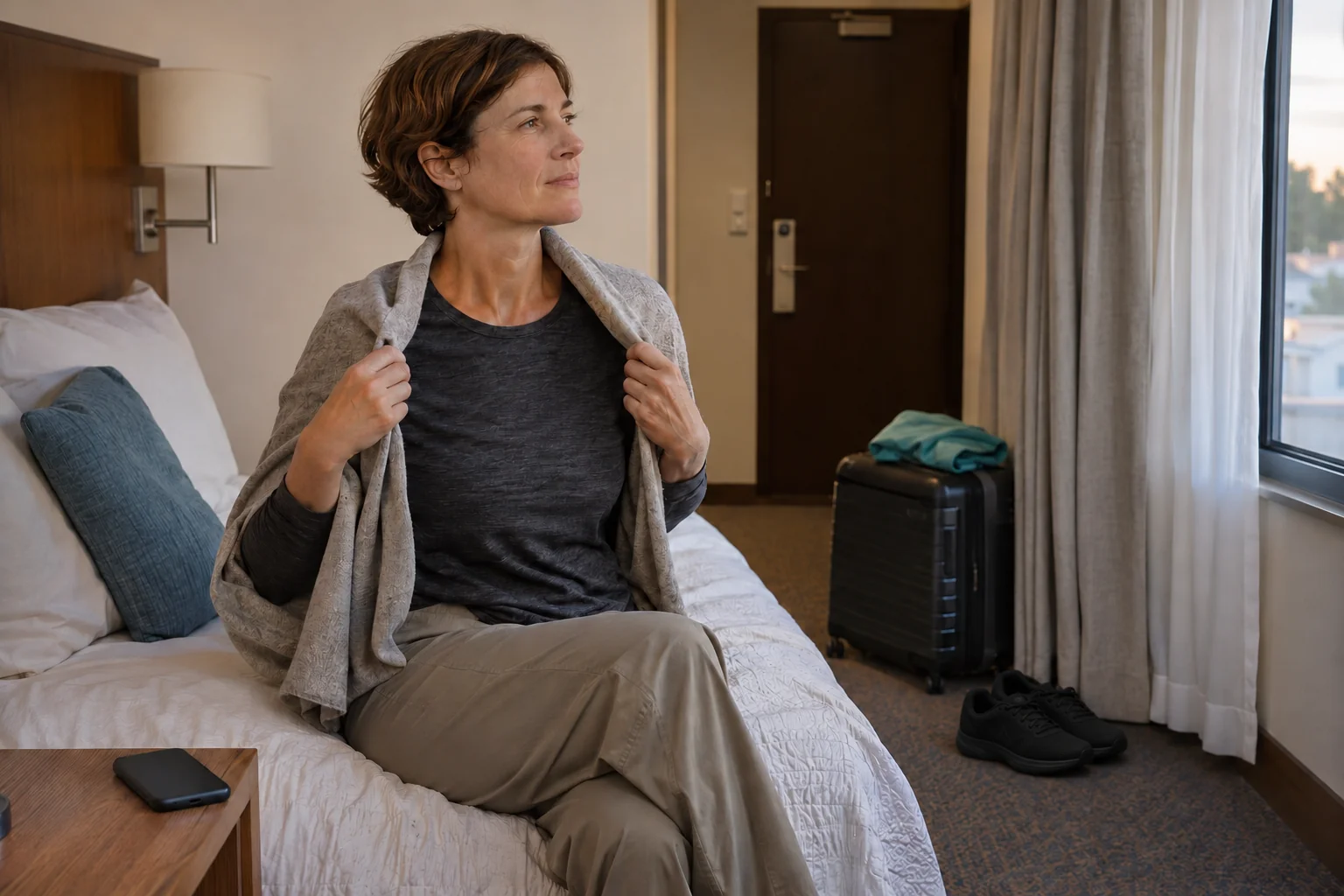
Do not spend the pre-race night experimenting
MedlinePlus lists sleep loss, fatigue, anxiety, alcohol and some medicines among factors associated with sleepwalking. This establishes neither a certain cause in your case nor a duty to treat everything yourself. Discuss medication with the provider and do not change prescribed treatment for race weekend. MedlinePlus: history and circumstances.
Early travel, departure after a long working day and a dawn race can jointly leave little room for sleep. NHLBI says regular sleep loss accumulates and notes people with limited time and shift work among those affected. Ask how much genuine room remains for rest, rather than how thoroughly to exhaust yourself before bed. NHLBI: sleep opportunity and sleep deficiency.
If considering a new sleeping medicine, alcohol or a product supplied by a friend at unfamiliar accommodation, pause and discuss it professionally instead. The NHS explicitly advises against independently changing medication over sleepwalking. An agreed plan matters more than improvising under the pressure to “sleep at any cost before the race”. NHS: medicines and sleepwalking.
Report changes in the story after an event
If an episode occurs, first deal with injury and immediate circumstances. Afterwards, briefly note differences: leaving the room, a fall, stronger movement or endangering others. This is not an exhaustive overnight record or independent diagnosis. Significant changes can help decide with the provider whether the plan needs earlier reassessment.
The next morning, review more than the start list. Pronounced sleepiness, confusion or injury should alter transport and race arrangements too. NHS insomnia guidance says not to drive when sleepy. Handing over a driving role or cancelling can be a practical safety decision, rather than proof of a sleepwalking diagnosis. NHS: sleep difficulties and daytime safety.
A well-prepared race trip brings history, accommodation and the companion’s manageable role into one discussion. The agreement need not be complicated, but should be real and clear. Unobstructed routes and information shared in advance help; individual assessment of frequent or dangerous sleepwalking remains separate. Overnight conditions then receive deliberate attention alongside the race start.
Sources
- NHS: sleepwalking
- MedlinePlus: sleepwalking
- AASM Sleep Education: a safer sleep environment
- US Fire Administration: fire safety in hotels and rented accommodation
- NHLBI: assessing sleep difficulties
- NHLBI: sleep needs and missed sleep
- NHS: insomnia and daytime safety
How Futószív articles are prepared: our editorial guidelines.