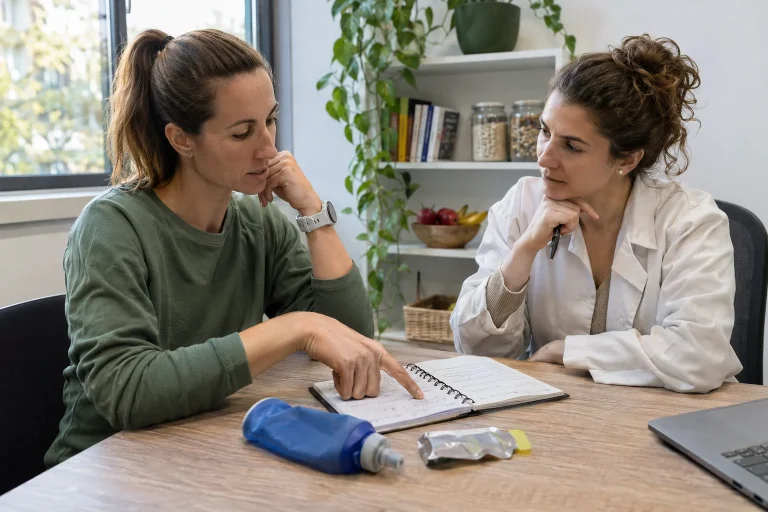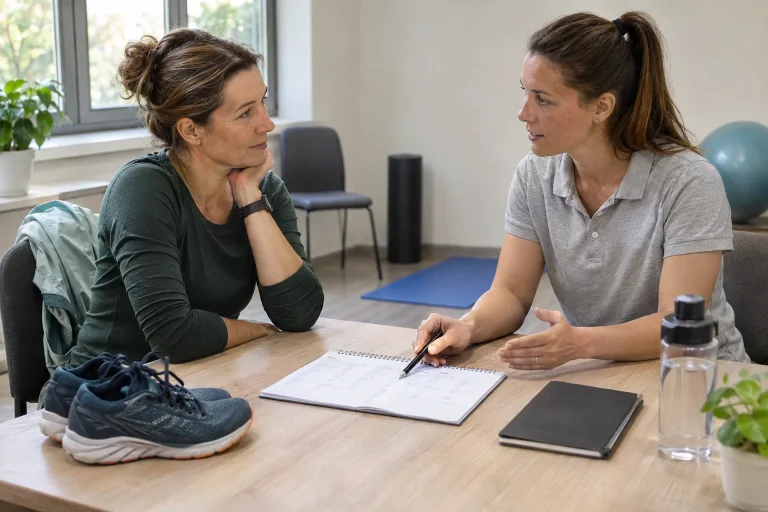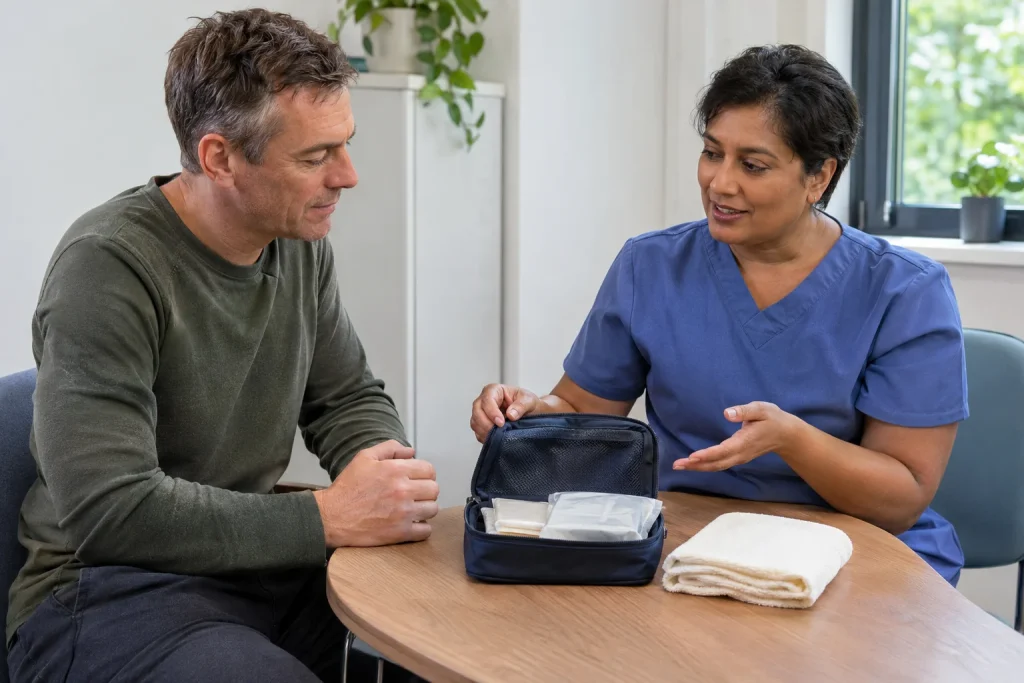
With an ileostomy, questions about running can involve recovery, stoma care, clothing and fluid loss at the same time. A comfortable belt or well-prepared spare-supplies kit may be a useful practical detail, but it does not answer every health question. Your programme needs to connect with your own surgical history, current condition and the advice received through your stoma care.
This article helps you prepare for an individual discussion. It does not give a date for starting running after surgery, a pouch-fitting technique, a medication dose or a fluid-replacement recipe. The important aim is for a planned session to involve more than shoes and a route: the care you have learned, your personal fluid plan and access to help also need to work in real conditions.
The type of ileostomy is the starting point for discussion
An ileostomy brings part of the small intestine to an opening made in the abdominal wall, allowing bowel contents to empty into an external collection appliance. This is not the same situation as other types of stoma. In its explanation of stomas, St George’s Hospital distinguishes types involving the small intestine, large intestine and urinary drainage. St George’s: stoma types and everyday activity.
As a runner, you should therefore not assume that all advice about ‘sport with a stoma’ applies equally to you. Your type of operation, underlying condition and current care matter. Seeing another athlete’s equipment does not reveal that history. At the start of the discussion, explain which procedure you had and which team currently monitors your condition.
The description temporary or permanent does not constitute a personal sports plan either. Ask which current circumstances affect activity and which questions should be answered by the surgeon, stoma nurse or dietitian. Clarifying responsibilities helps ensure that a question about fluids does not get lost behind clothing advice.
Postoperative recovery is a separate question from longer-term activity
The NHS recovery page distinguishes the early period, gentle movement and strenuous activity. This matters because returning to everyday tasks is not automatically the same step as returning to running. What can come next needs to be clarified using your own surgical instructions and individual assessment. NHS: recovery after ileostomy.
Take your actual goal to the follow-up appointment. A short activity near home is a different discussion from planning a longer outdoor event. Also explain how you will get there, what you need to carry and how long you would be away from the care conditions you have learned at home. An exercise day includes more than the time spent running.
If earlier information covered walking or lifting, ask about running separately. Do not fill in a missing answer with an internet timetable. Time since surgery is important, but the procedure’s details, the course of recovery and your own restrictions are also part of the account. You do not need to follow another patient’s pace.
A fluid plan means more than a bigger bottle
The NHS specifically discusses maintaining hydration among the possible difficulties of an ileostomy. Tiredness, a dry mouth and increased output through the stoma can be signs for which professional advice is needed. During running, this must not be reduced solely to a question of sweating. NHS: possible complications of an ileostomy.
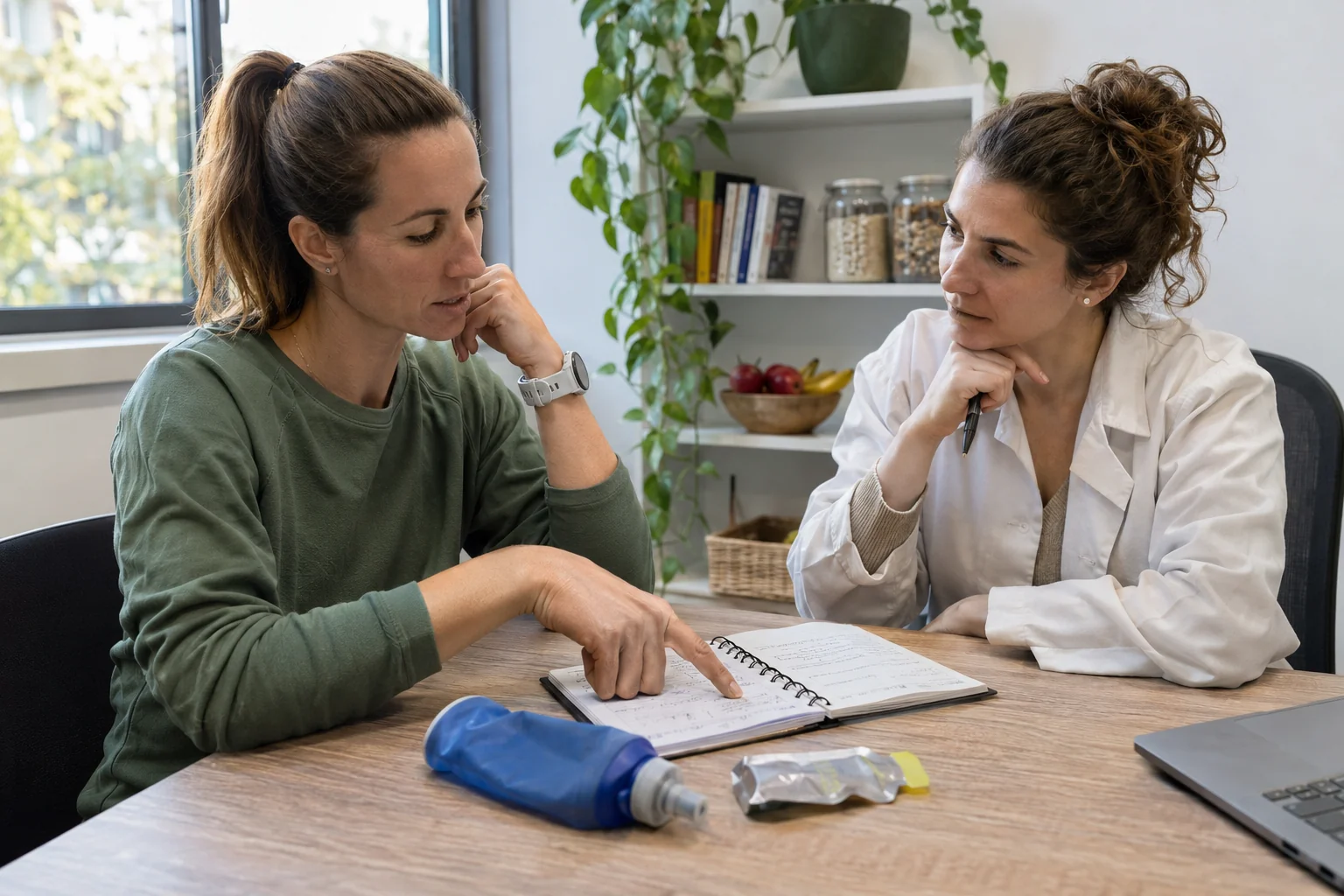
Understand what fluid has been recommended in your own plan, how it should be prepared and what quantity framework you have been given. This article does not establish that framework. If the guidance concerned only days at home, ask how to discuss warmer weather, longer periods outdoors and your planned activity. Do not independently revise earlier instructions using a running calculator.
A general training app or another runner’s bottle schedule does not know your stoma output or your overall condition. The bottle is a practical tool; your individual plan is a matter to clarify within healthcare. First understand the guidance to follow, then choose manageable storage, access and a way to return.
 Enlarge image
High output may require specific professional guidance
The Cambridge University Hospitals information on a high-volume stoma or fistula discusses water and sodium losses, dehydration and absorption difficulties. It describes individually determined fluid management in this situation. That does not imply a self-imposed restriction for everyone with an ileostomy; it highlights the importance of assessment by the appropriate team. CUH: high-output stoma and fluid management.
The information also distinguishes ordinary drinks from a prescribed oral rehydration solution. In this particular care setting, it does not consider the sports drinks mentioned an adequate replacement for the prescribed solution. A label saying ‘contains electrolytes’ therefore does not by itself establish that a drink sold to runners serves your individual medical purpose.
If you have received such instructions, keep the exact preparation method and your personal quantity guidance. This portal does not provide a homemade solution recipe or recommend restricting fluids or adding extra salt yourself. Tell your care professional if you cannot follow the instructions or your stoma function changes. Rather than improvising around running, your plan needs appropriate clarification.
Discuss the pouch and clothing together with your own system
Start equipment questions from the system you already use. Where do the waistband of your trousers, a belt or a vest meet your appliance? Can you access care as you have been taught? Show these details to your stoma nurse using the actual clothing and appliance. This article does not choose a support or protective device for you.
You do not need to begin by looking for an eye-catching sports product. First clarify the task: comfortable positioning, access, keeping your own system in place or another individual difficulty. A product described as tighter or more athletic is not automatically better. The appropriate choice depends on your own fit and professional guidance.
The St George’s information on activity with a stoma also emphasises individual advice from a stoma nurse. This allows general comfort ideas to be interpreted in your personal setting. If you notice skin irritation, leakage or a new problem, do not simply try to conceal it with new clothing; ask your care team for help.
Spare supplies should make familiar care accessible
Before an outdoor outing, consider what your own usual care tasks require. You do not need to buy a generic list of products; you need to know the spare supplies for your system and how to carry out your care. If the amount or storage of any item is uncertain, clarify it at your next stoma-care discussion.
The kit must be accessible, not merely present. If the car stays elsewhere, can you reach your supplies during the session? If a companion carries them, can you stay together, and can you access them yourself when needed? These are organisational questions. They do not automatically make that run appropriate from a health perspective.
There can be a difference between the routine learned at home and what is possible outdoors. A toilet with handwashing facilities, privacy and suitable space is a different setting from a location whose availability is uncertain. Check the venue’s actual facilities and explain any difficulty during your care discussions. You do not need to abandon your learned care routine and improvise for the sake of an event.
Review all the time you will spend away
Between leaving home and returning, there may be several periods your running watch does not call exercise. Travel, meeting others, waiting and changing are all part of the time during which your personal care and fluid plan needs to work. Describe this whole outing during planning, not only the expected running distance.
For example, a nearby session and an event requiring travel can involve the same running distance but very different access. The questions then concern toilets, your own drink, spare appliances and available help. This is not a comparative fitness test; it shows why a single kilometre figure does not give a complete picture at a consultation.
Think through the option of stopping too. If your condition means plans must change, how will you get back, and whom can you tell? Your backup route should be feasible at the actual location, not merely theoretical. Organisation does not replace individual exercise advice, but helps prevent practical barriers to following it once you arrive.
 Enlarge image
Which changes should prompt earlier help?
The NHS includes heavy bleeding, signs of dehydration, a high temperature or shivering, and severe cramps, nausea and vomiting among situations needing urgent assessment. A significant decrease or absence of stoma output also needs reporting, especially alongside other symptoms. Do not wait until a planned running session has ended.
Within your own care, know which contact to use for which symptoms. In a serious emergency in Hungary, you can call 112. This article does not provide a time-based waiting rule or recommend abdominal massage or other home treatment for a suspected blockage. Appropriate assessment of the current symptoms comes first.
Also discuss less urgent but recurring leakage, skin symptoms or difficulty managing your appliance with your care team. A familiar system having worked well before does not mean you must solve every new problem alone. Describe what you have noticed and ask for help with the appropriate adjustment.
Five specific connections for your next discussion
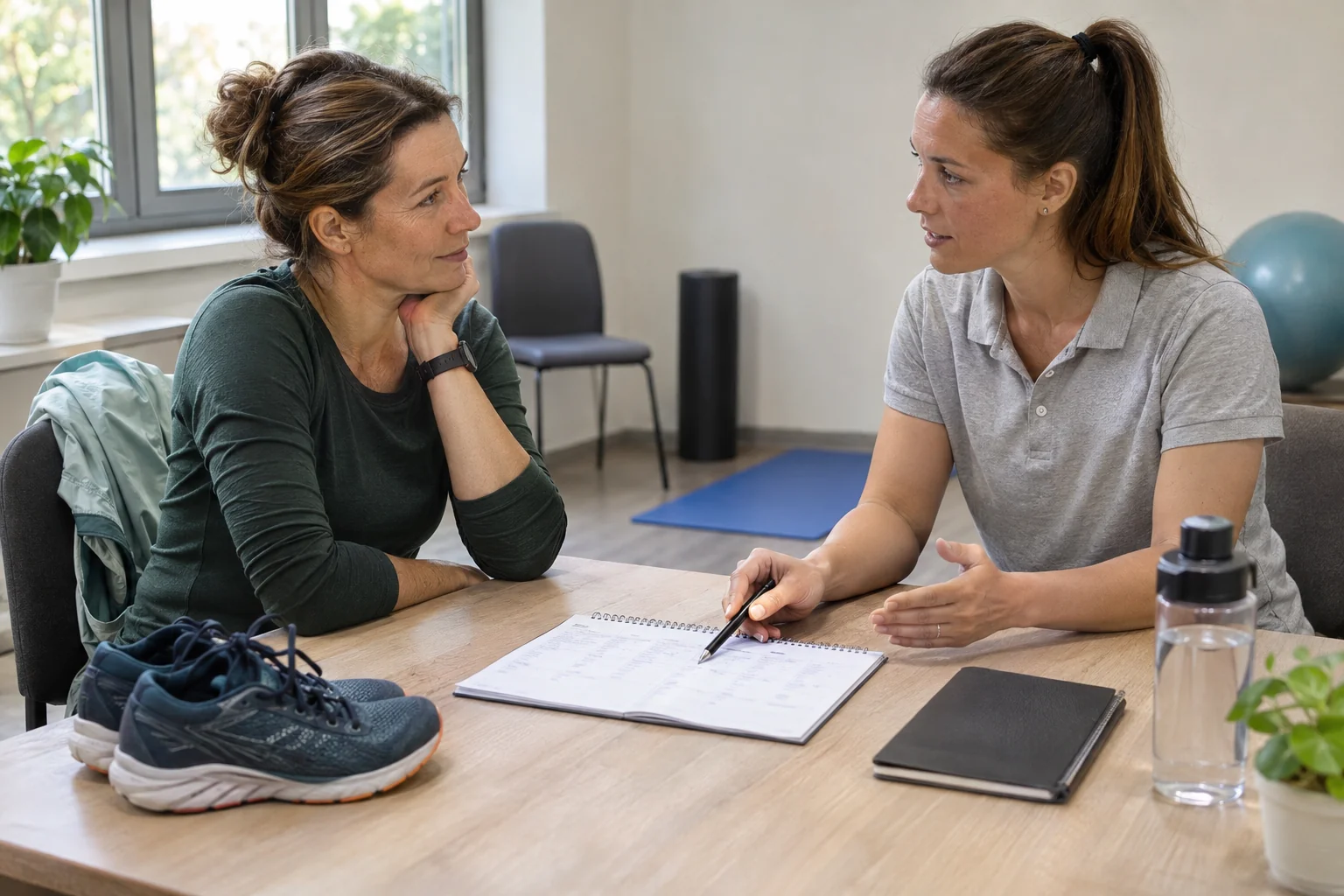
The table is not a packing or fluid-replacement prescription; it helps you clarify your own programme. Complete the answers using information from your care. You do not need to do a trial run simply to have a new experience for every row.
| Topic | A connection to clarify individually |
|---|---|
| Recovery | What activity fits your own surgical history and current condition? |
| Fluid plan | How can your personal instructions remain manageable in the exercise setting? |
| Appliance and clothing | Where and how can you access your own system while wearing the actual clothing? |
| Outdoor care | Are a suitable toilet, spare supplies and the conditions for your learned care routine available? |
| Change | Which new symptoms require help, when and from whom, and how can you stop the session? |
At the end of the discussion, separate individual answers from general information. If you received personal fluid guidance, its exact name, preparation and use should not become confused with a sports-drink label. If running remains an open question, say so; a good kit and a clear health plan solve two different tasks.
With an ileostomy, it is worth discussing an activity you enjoy in the context of the whole day and your own care. Clothing, spare supplies and a route help when they connect with your individual recovery, stoma care and fluid plan. The aim is a clear, workable personal framework that also leaves help accessible when new symptoms arise.
Sources
- NHS: Recovery after ileostomy
- NHS: Complications of an ileostomy
- St George’s: Stomas
- CUH: Diet and fluid advice for a high volume stoma or fistula
How Futószív articles are prepared: our editorial guidelines.