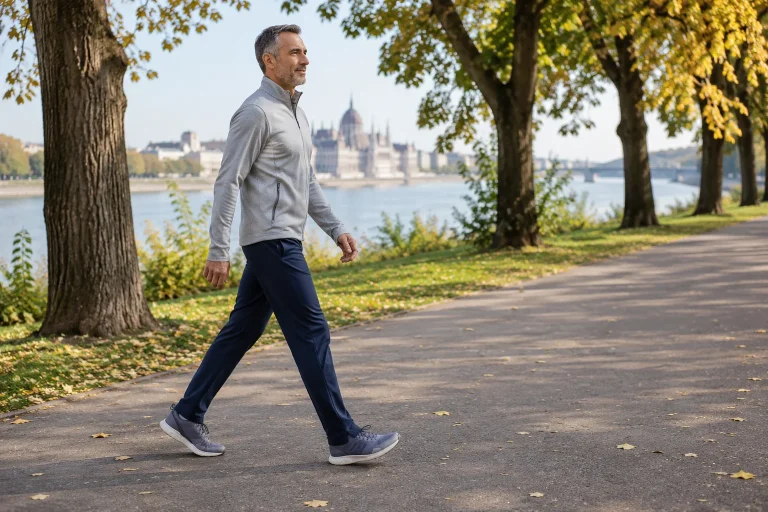
After an enjoyable group run, the day feels more ordered, conversation comes easily and you are pleased you went out. A question naturally follows: does this help my thinking too? Research on movement and brain health is important. Interest does not, however, make running individual insurance against dementia.
Discuss the topic with hope and precise language together. Running need not become worthless because it guarantees no result decades later. Everyday enjoyment, activity suited to your possibilities and social connection can matter in their own right. Evidence for these answers a different question from preventing dementia.
What is cognitive health?
The National Institute on Aging information on cognitive health highlights the ability to think clearly, learn and remember. This is one part of wider brain function. It differs from feeling alert after a run and cannot be read from one sporting result.
Everyday functioning includes following conversation, arranging travel, learning a new device or remembering an agreement. These involve different abilities and circumstances. One forgotten name or a well-completed workout does not summarise the whole picture. A change’s meaning should not be reduced to one moment.
Sporting language often uses a fresh brain or keeping the mind young. These make sense as personal experiences but need precision as health claims. Saying a morning walk leaves you more willing to begin the day describes a specific experience. Inferring certain dementia protection would be a very different claim.
A new symptom is not a training task
Seek healthcare assessment for noticeable, worrying changes in memory or thinking. The NIA memory information mentions getting lost in previously familiar places, repeated questions and difficulty following everyday tasks, for example. These are not items in a home diagnostic list, and you need not wait for every one.
Sudden confusion, speech difficulty, one-sided weakness or another serious new symptom may require urgent help. The NHS guidance on stroke symptoms emphasises prompt assessment of sudden neurological changes. Do not expect running, sleep or improvement at the next workout to settle the situation.
Memory changes can have several backgrounds, making both it must be ageing and it must be dementia premature conclusions. A sporting lifestyle does not make a necessary examination redundant. Continuing to run a familiar loop does not automatically answer a new question about thinking.
 Enlarge image
What does a favourable association in research mean?
An observational study may find greater activity accompanying a favourable later outcome. This can provide an important signal but does not independently reveal what causes the difference. People may differ in many other characteristics, and emerging health changes can themselves influence how much they move. Researchers try to assess these possibilities.
A randomised study can answer another question: did a specified programme differ from a comparison programme in the selected participants over the stated period? Its answer concerns the task studied. Not every movement study examines running, and not every cognitive-test result means a dementia diagnosis or its absence.
Look for three details: who participated, what was compared and what was measured? If an enthusiastic report omits these, do not supply assumptions. A change in a short attention task does not automatically become proven lifelong disease prevention. The precise result can still be interesting.
Two studies helping put results in place of exaggerated promises
The LIFE study published in 2015 allocated 1,635 previously insufficiently active people aged 70–89, at risk of impaired walking but still able to walk 400 metres, to groups. A two-year programme including walking, strengthening and flexibility tasks was compared with health education. This did not examine a running club’s training.
Overall, the movement programme showed no advantage over the comparison programme in the reported cognitive outcomes. Do not rewrite this as every participant deteriorating or movement having no value. The conclusion concerns those groups, programmes, duration and measurements. Adjusting the finding to fit a positive sporting story would mislead just as much as complete dismissal.
In another randomised study published in 2026 513 people aged 60–85 without dementia were enrolled; hypertension, family history and/or personally perceived cognitive change featured in eligibility. Aerobic training, intensive vascular-risk reduction and their combination were examined. Over two years, no statistically significant group difference in cognitive improvement was found.
These examples do not summarise the entire scientific field. They show that a favourable theoretical explanation does not guarantee a detectable clinical result in every programme. Neither provides an individual running dose or justification for independently altering medication. Retain each reported conclusion within its proper scope.
Do not let one distant promise carry all the value of movement
If running’s only justification were certain protection against disease, every uncertain report would remove its meaning. A favourite route, regular meetings or enjoying movement may be more useful individual goals. These need not be sold as dementia-prevention outcomes to belong in your life.
Keep accounts of experience proportionate. You can say the morning was more pleasant, you enjoyed conversation or were satisfied with the outing. Every good feeling need not have a brain mechanism and measured result attached. Everyday experience can be real without supporting a long-term health conclusion.
Activity can take different forms too. Someone who enjoys running may have a running-based programme, while another chooses walking or something else. Individual options and health circumstances matter. I must run to protect my brain may impose unnecessary pressure when running is unsuitable or unenjoyable.
Do not turn more and harder running into a ladder promising better brain protection. The relationship studied supplies no such individual dosing rule. An exhausting week does not become more valuable merely through mileage. Decide loads within your own movement plan, condition and everyday possibilities.
Look at the whole day rather than the workout field alone
The NIA overview of healthy ageing connects several areas: physical healthcare, sleep, mental and social life, and activity. One habit does not automatically replace the rest. Running does not substitute for managing an existing condition or discussing a new problem.
In practical planning, ask more than which day still has room for training. A shared outing may include calm conversation, while travel may consume time for another important activity. Organising your week is not a scientific experiment: seek coexistence of valued activities without one sporting goal displacing everything else.
A new hobby, book club or shared learning can enter your calendar without being a guaranteed treatment. Choose them for interest and relationships too. Do not turn every leisure occasion into a performance test. A sports-watch cognitive label or daily app score need not determine where you find enjoyment.
 Enlarge image
What should you do with advertising promising brain protection?
When a statement promises certain effects, a precise personal risk reduction or a running dose for everyone, find the claim’s origin. A product advertisement differs from the original study. If participant and comparison details are absent, do not treat an impressive percentage as an account of your own future.
| Statement | A more precise question |
|---|---|
| This training preserves your brain. | Which outcome was measured, and over how long? |
| Active people performed better. | Was this observation or a randomised comparison? |
| The group improved by the end. | Was there also a difference relative to the other group? |
| Every older person needs this. | Who actually participated in the research? |
The table supports media literacy rather than scoring research quality. You need not settle an entire scientific debate as a layperson before walking. Its aim is to prevent buying hope in product form because of an uncertain claim or feeling obliged to increase training. Seek understandable professional explanation for an important question.
Blaming an athlete with an illness for not running enough can mislead too. Data about a risk factor are not a moral judgement. Some habits being changeable does not make people responsible for every later illness. A respectful running culture includes participation and support for people living with disease.
How can your programme remain realistic?
An imaginary seventy-year-old runner initially plans more hard sessions after reading about brain health. They reconsider: the study did not examine that programme or offer individual protection guarantees. They retain an appropriate activity framework and leave time for friendly conversation alongside the shared outing. Running does not become a compulsory test driven by fear of a distant disease.
If they also notice a striking change in familiar administration or finding their way, they name it separately and seek help. They do not wait for a programme to put it right. The story shows parallel tasks: organising a worthwhile personal life and appropriately assessing a new health question. Neither makes the other unnecessary.
Running can be enjoyable, social and suited to your circumstances. Scientific interest in brain health may be an interesting part of it, but every step need not carry a certain prevention promise. Accurate claims, realistic personal goals and taking symptoms seriously together provide a more useful foundation.
Sources
NIA: cognitive health in older age; NIA: healthy ageing; Sink and colleagues, 2015: cognitive results from LIFE; Zhang and colleagues, 2026: aerobic training and vascular-risk reduction; NIA: assessment of memory changes; NHS: stroke symptoms. Checked: 21 November 2026. The weekly-planning story and advertising questions are original illustrations rather than individual risk estimates.
How Futószív articles are prepared: our editorial guidelines.