Your knee feels unstable or painful, and movement finally feels more controlled in a brace. It is tempting to think that if it supports your knee, perhaps you can keep running. But a knee brace is neither an independent diagnosis nor general sporting permission. To understand its use, first establish the problem, purpose and activity it was chosen for. A soft sleeve and a range-limiting device adjusted after injury do not serve the same task.
Severe pain after a recent injury, substantial swelling or bruising, visible deformity or inability to bear weight on the leg needs medical assessment. Do not hide the change with a tighter device. The NIAMS information on sports injuries emphasises that working through injury pain is unwise; having a brace does not override that.
Name the problem before the product category
‘I need something for my knee’ can cover many situations. You may want comfort, feel instability, be undergoing rehabilitation or have been instructed to restrict a movement. These do not lead to one device choice. Product-search labels such as ‘for running’, ‘stabilising’ or ‘sport’ do not explain symptoms or identify the function actually needed.
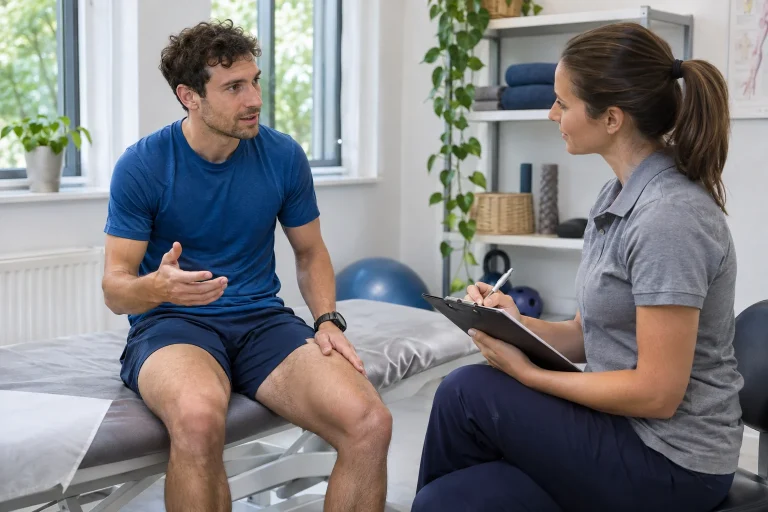
Start from your situation: which knee, during which activity, after what onset and with which change? Add an example to ‘unstable’. Stepping cautiously because of pain differs from a knee unexpectedly giving way. Neither needs to become a diagnosis at home. A precise account supports the assessment to which a device’s purpose can later be linked.
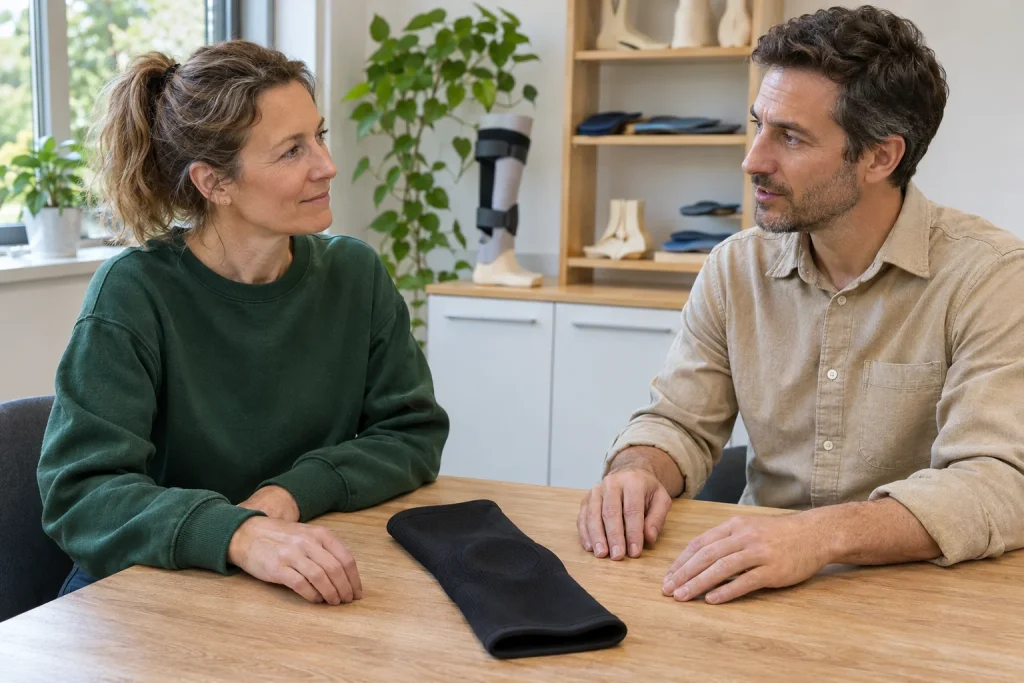
If already given a brace, start with its name in the document and who provided instructions. A shop-bought sleeve you chose yourself has a different background from an orthosis adjusted as part of care. Price and appearance do not decide that. What matters is a defined individual purpose, understandable usage plan and access to checks of fit or function.
Comfort, stability and restricting movement are different
A more pleasant knee sensation can be real without proving injured tissue has recovered. Feeling more confident in a device does not identify recommended loads either. Keep the sensation as feedback, but do not immediately turn it into a performance conclusion. A longer braced run does not become a medical assessment because it felt good.
The Rotherham NHS information on a range-of-motion knee brace describes a device whose settings can restrict knee flexion, for example to protect an injury or surgical repair. A professional makes the adjustment. This shows that a brace may deliberately limit movement rather than enable greater sporting performance.
The distinction matters daily too. If the task is to protect a defined range, that does not mean allowing more movement for running. Do not alter a personally set hinge or movement limit on your own initiative. If it obstructs an important task, tell the clinician: the obstacle warrants discussion, not a secret adjustment.
 Enlarge image
Osteoarthritis does not automatically indicate a brace either
The NICE guideline on osteoarthritis does not recommend routinely providing support devices to everyone affected. It considers specified circumstances, such as instability or abnormal biomechanical loading, difficulty doing therapeutic exercise without a device and expected improvement in movement or function. ‘Osteoarthritis’ alone does not select a knee brace.
This recommendation concerns a particular condition. It does not imply an orthosis is never needed after injury or surgery. The reverse argument is also wrong: a brace indicated in an acute injury does not become suitable for every knee symptom during running. Its indication is part of care, not a universal attachment to the word knee.
Ask more than whether a type is ‘good’. Ask what task you aim to support and how usefulness will be judged. Easier walking, completing rehabilitation and protecting movement range are different goals. Without stating them, success can easily become merely being able to start a run that day.
Fit is part of ongoing use, not a one-off purchase detail
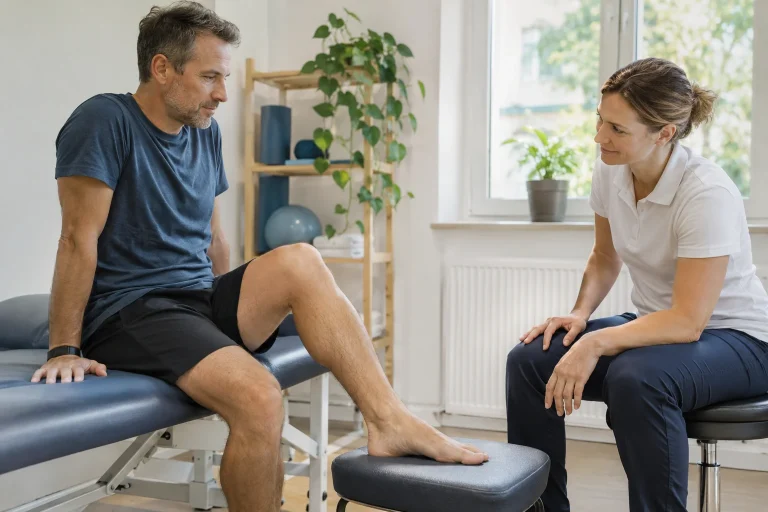
A device can cause practical problems even if nominal size seems right. It may move, rub, be difficult to put on or feel different during the day. Describe these precisely. Instead of ‘it is not right’, explain where, when and in which situation the problem occurs, and whether swelling or daily activity changed.
For its particular device, the Rotherham information specifically advises contact about persistent skin irritation, blisters, increasing swelling, rubbing or damage. This does not invite borrowing an online fitting method. Know the instructions for your own device, including skin checks, putting it on and taking it off, and who helps with problems.
‘Tighter must support better’ is not a usage rule. If a device is uncomfortable, tightening harder is not the answer. Equally, independently discarding a protective brace is not the appropriate response. Clarify the problem and action with the provider who knows it. Sizing, settings and loading instructions belong together but are different tasks.
Plan the whole day as well as putting it on
A brace is not present only during sporting minutes. You may wear it at work, travel with it, need different clothing or help handling it. After a brief clinic demonstration, some questions become visible only at home. Mention hand symptoms, visual difficulty, housing or scheduling barriers to a step when it is supplied.
For example, someone may put it on easily in a calm room but have no workable changing arrangement at work. Another’s usual trousers may make part of it slip or press. This does not establish poor cooperation. These are usage circumstances needing solutions through the device’s own instructions and professional help if necessary.
Use specific instructions for care and damage checks too. Do not assume every material washes identically or every home repair is suitable. If a component is damaged, a promotional photograph cannot tell you whether it still performs its task. Save the contact somewhere accessible before use becomes unreliable.
What should you observe without creating a test?
Following use does not require repeatedly testing the knee with the same painful movement. Experience from permitted activity already completed is information. Note whether the device stayed in position, rubbed and which task you completed as agreed. Those differ from pushing the boundary with progressively longer runs.
| Observation | Why does it help? |
|---|---|
| During which task did you wear it? | Links experience to the device’s agreed purpose. |
| Did it shift or rub? | Can identify a specific fit problem for review. |
| What changed in function? | Says more than the general phrase ‘it felt better’. |
| Did a new symptom appear? | Helps distinguish a usage question from a new health change. |
Observation and diagnosis remain different. You can report less fear of a movement without declaring stability restored. Report worsening without having to name the cause yourself. A factual account supports assessment; a confident but unproven explanation may conceal an important detail.
 Enlarge image
Do not change the device and training all at once
If someone buys a brace, puts on new shoes, changes route and increases distance, it becomes hard to describe which situation the experience belongs to. This is not a controlled study and need not be. But avoid attributing everything to one device when other things changed. At least name the changes separately.
A sport-programme adjustment may be part of rehabilitation, but buying a brace should not automatically signal a start. ‘Made for athletes’ describes a product, not your condition. If an activity was not advised before, independently trying equipment does not move it into another category. Understand use and return conditions together.
Running partners can help with staying in touch or temporarily missing programmes. They cannot replace injury care by pointing to someone who raced in a similar brace. Diagnosis, settings and follow-up are not visible externally. A striking image therefore cannot prove the same advice applies to you.
The end of use needs an understandable plan too
Clarify the next review when receiving a device. When will you assess whether it achieved its purpose, and what if it does not help or is hard to use? Personal instructions on removing it, changing wear and expanding movement should not dissolve into ‘when you feel better’. Improvement needs a condition-specific meaning.
If you cannot explain the purpose in your own words, say: ‘I want to understand what this protects or supports, what I can do in it and what to report back.’ This is more specific than buying another product. Uncertainty may remain after clarification, but you will know whom to ask and about what.
A knee brace’s value is not determined by how much farther it lets you run. The question is whether it supports the agreed task in the condition concerned, is usable appropriately and fits the overall care plan. Take a more comfortable feeling seriously while keeping injury recovery and the running decision separate, alongside professional assessment.
Sources
- NICE NG226: devices in osteoarthritis
- Rotherham NHS: purpose and checks for a specific range-of-motion knee brace
- NIAMS: sports injury assessment and rehabilitation
How Futószív articles are prepared: our editorial guidelines.