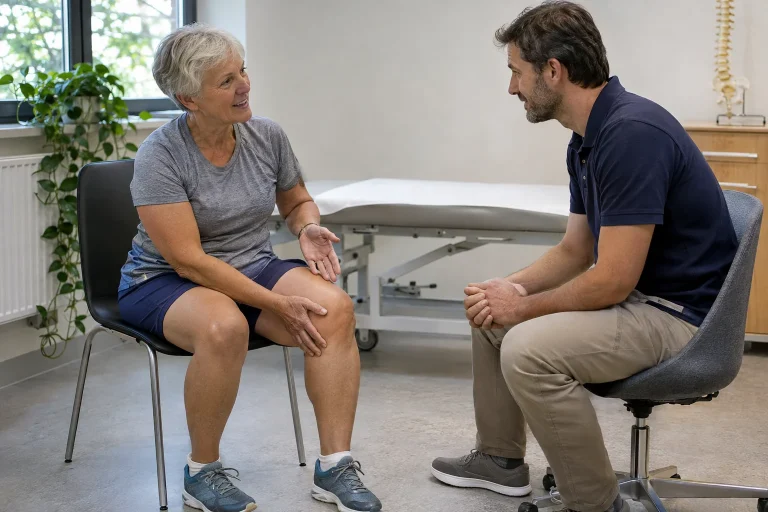
Before surgery, even a short walk may have hurt. Now walking and standing up are easier, and passing a familiar park path prompts a thought: could I run too? Improvement understandably brings new plans. But everyday wellbeing alone cannot answer the question of running after knee replacement. The surgical outcome, current rehabilitation and the proposed sport’s characteristics each matter.
After recent or earlier surgery, seek prompt medical assessment for new or increasing pain, redness or discharge around the wound, fever, or new or substantial lower-leg swelling. Sudden breathlessness or chest pain requires immediate emergency help; do not drive yourself. These are not situations to clarify through a trial run. The AAOS postoperative information specifically highlights possible signs of infection and blood clots.
Feeling well matters, but is not a full sports-medical assessment
Everyday improvement has value in itself. Easier shopping trips or rising from a chair are not ‘merely’ intermediate steps towards running. They can directly affect quality of life. But what happens under a sport’s repeated loading is another question. Comfortable walking does not automatically describe jogging, descending or sudden direction changes.
Make ‘it does not hurt’ specific to a situation. Does it mean sitting, walking at home, a longer city journey or a defined rehabilitation task? These are different experiences. An accurate account of which activity became easier helps the team more than independently trying further tests to prove you can tolerate everything. Describing function differs from a home fitness-test series.
Do not hide the wish to run because it seems too much to ask. If you say only that you want to stay active, discussion may remain general. Say specifically if you mean running. That enables a clear conversation about what is advised, what is not recommended, what remains uncertain and which goals might be met differently.
A replacement is not simply your old knee without pain
Knee replacement is surgery in which artificial joint components participate in movement. The AAHKS professional organisation’s patient information emphasises that forces during sport matter for the implant too. A decision about your knee therefore requires exact knowledge of the operation; someone else’s successful return cannot answer your situation.
‘I had knee surgery’ is too broad. Ligament reconstruction, meniscus treatment, partial replacement and total knee replacement are different procedures. The AAOS and AAHKS information cited here chiefly concerns activity after total knee replacement. Do not transfer advice between procedures merely because both involve the knee.
Bring surgical documents to follow-up, particularly when speaking to someone other than the surgeon. You do not need to rate implants, compare materials or decide from an image whether everything is fine. The aim is for the clinician to know the procedure’s background, additional treatments and earlier restrictions. An online brand description cannot replace that information.
 Enlarge image
What do official resources say about running?
AAOS generally favours lower-impact sports over higher-impact activities including jogging. The AAHKS patient resource says most doctors do not recommend high-impact sports after total knee replacement. This is important context: running should not be considered the automatic next level of postoperative activity.
But a general resource is not your surgical report. Clarify a specific recommendation with the orthopaedic team and ask exactly what it covers. ‘You can exercise’ may mean continuing agreed rehabilitation or approval for certain sports; it does not necessarily approve any running workload. Replace vague expressions with specific activities.
Handle evidence limitations precisely too. The cited AAHKS patient page was published in 2017; do not quote it as though it reports fresh long-term comparisons for every current implant. This article does not calculate wear per running kilometre or expected lifespan. A professional recommendation, a patient’s account and individual implant follow-up are different sources of information.
Explain what you want to regain from running
Running can represent several goals: being outdoors, meeting friends, preparing for a race, keeping a regular routine or measuring performance. Name them separately. This does not trivialise the sport; it makes personally important aspects visible in the decision. One sentence about wanting to run can conceal many needs.
Imagine someone chiefly missing the Sunday club meeting, while another wants to regain previous speed. Both name the same sport, but their goals differ. The first may find a form of community participation without running. The second needs an honest discussion of performance demands and how they fit postoperative recommendations.
An alternative matters only if it connects to your goal. If company is important, a wholly solitary home programme may not address that need. If fresh air matters, say so too. Personal preference is not an incidental reward at the end of treatment; it helps identify realistic, manageable activity.
A sporting history is not automatic permission
If you ran a lot before surgery, thinking of it as familiar movement is natural. Describe that experience: frequency, surface and goals. But it does not erase the surgical change. Having once performed a movement well differs from its being recommended now with an implanted joint and your overall condition.
Sporting habits can bring ambiguous language to follow-up. ‘Just an easy loop’ may mean a short flat section to one person and a longer hilly route to another. Do not rely on ‘easy’, ‘light’ or ‘small’ for understanding. Describe movement, environment and purpose, and discuss workload details with someone who knows your condition.
If you did not run before surgery, reduced symptoms do not create new running suitability either. Enjoy improvement without immediately proving it through an unfamiliar sport. Choosing appropriate activity is not a bravery test. Individual advice is useful when related to current condition, surgical background and actual experience.
Take three separate questions to follow-up
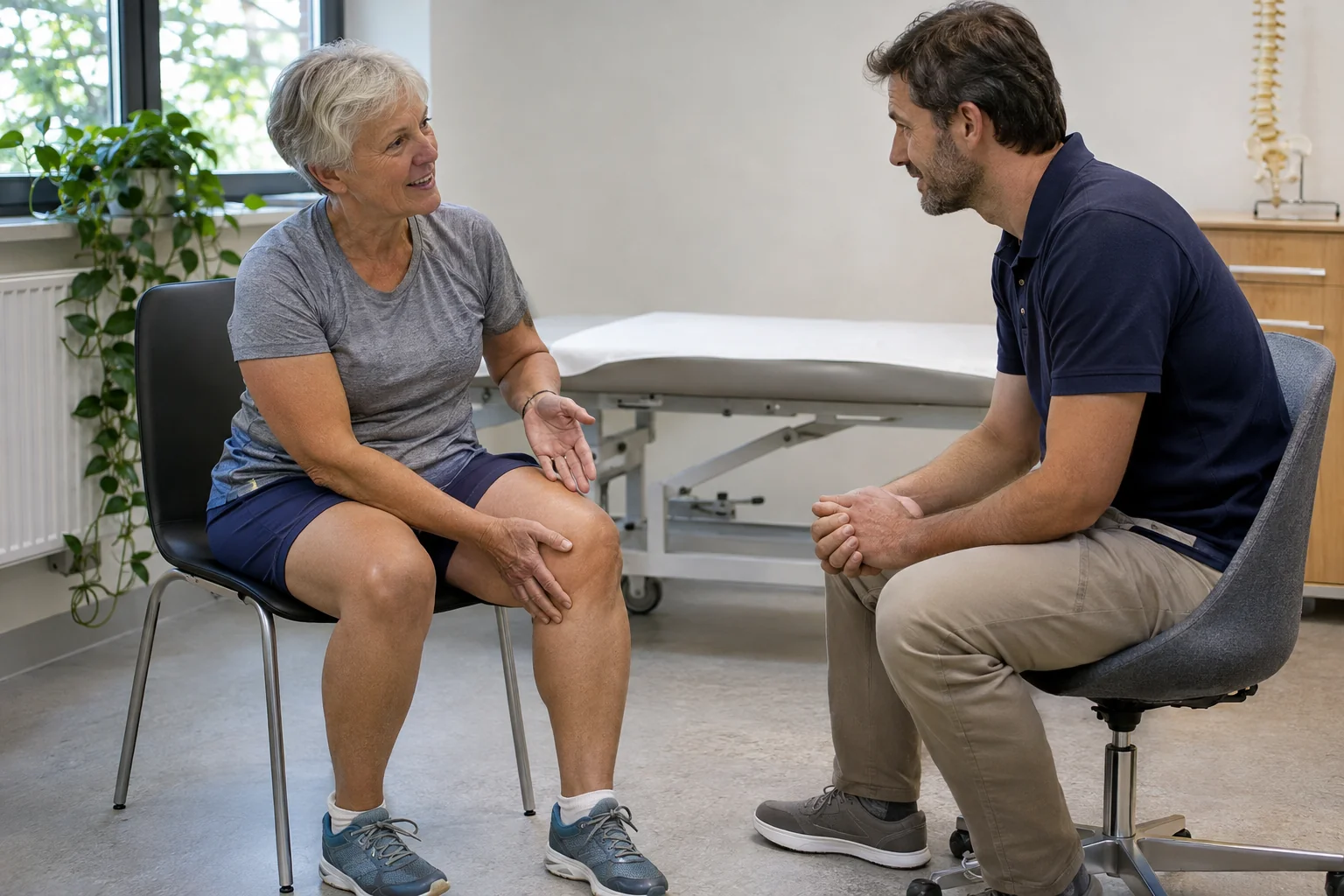
The first concerns the current position: what are rehabilitation’s results so far, and what still needs follow-up? The second concerns the chosen activity: is that specific sport advised, and if not, why? The third concerns future review: when and after which changes should you seek further discussion? This avoids reducing the conversation to extracting one yes or no.
| Topic | Clarifying question |
|---|---|
| Surgical background | Which features of my procedure and condition inform the recommendation? |
| Sporting goal | Which options instead of running should be considered for what matters to me? |
| The recommendation’s boundary | Which form of the agreed activity does the advice cover, and which does it not? |
| Follow-up | What should happen with new symptoms, changed function or practical difficulty? |
The NICE shared decision-making guideline emphasises discussing options’ benefits, risks and consequences in the person’s important life context. This does not make every desired sport equally advisable. It means receiving an understandable answer and explanation, with personal priorities included in the decision.
 Enlarge image
An alternative sport is not a consolation prize, but still needs a personal plan
Official resources mention several lower-impact options, such as cycling or swimming. This does not mean every version at every time is appropriate for everyone after surgery. Access, surroundings and current rehabilitation recommendations still matter. A sport’s name alone does not describe the task awaiting you.
Think through the complete programme. A pool outing includes travel, changing and getting in and out, not only swimming. Cycling includes mounting, dismounting and the route environment. These are not predetermined prohibitions, but circumstances worth discussing. A good plan describes an activity you can actually perform, rather than giving a general list of sports.
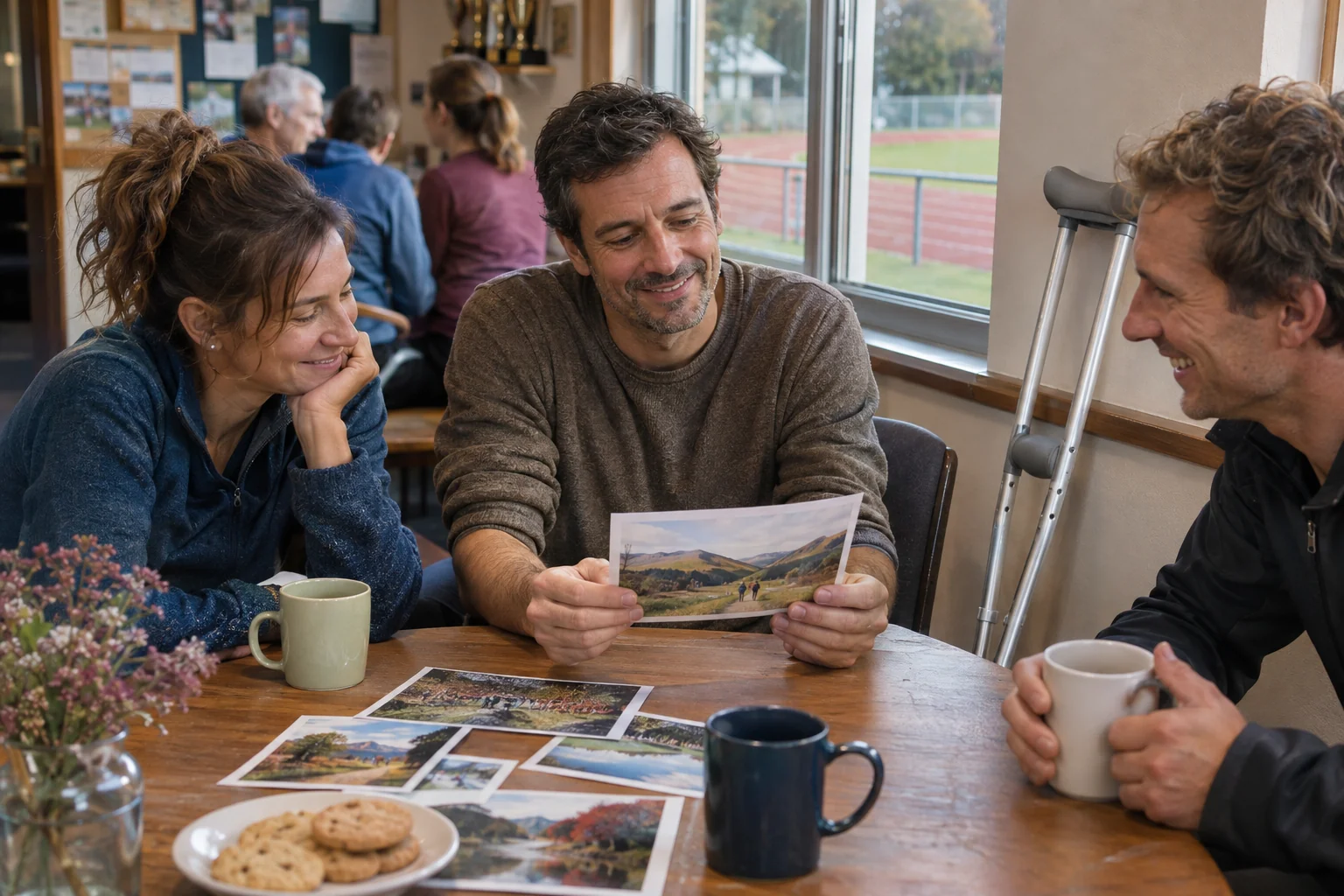
You can remain connected to the community if running is not advised. An agreed meeting, conversation or another role fitting your activity plan may work. This need not become a compulsory positive story: change can also involve loss. Sporting decisions should not become measures of personal worth or community membership.
One good day does not replace follow-up
Getting around well one day is welcome, but does not override earlier instructions. The same applies to a running video on social media: you do not know the procedure, follow-up or later condition involved. A striking comeback story cannot yield a number for your risk or implant lifespan.
Tell the team if activity has changed or you want a new goal. Do not discuss sport only when a race entry forces urgency. If advice is unclear, repeat in your own words how you understood it. Clarifying general activity, rehabilitation tasks and running can prevent a politely phrased statement becoming much broader permission.
A useful goal need not be an exact restoration of previous running performance. It may be a reliably manageable, enjoyable active life suited to your surgical situation. Which activities belong requires individual discussion. Feeling well is important experience, but interpret the running decision alongside surgical background and professional advice.
Sources
- AAOS OrthoInfo: activities after total knee replacement
- AAHKS: sports after knee replacement, patient information
- NICE NG197: shared decision-making
How Futószív articles are prepared: our editorial guidelines.