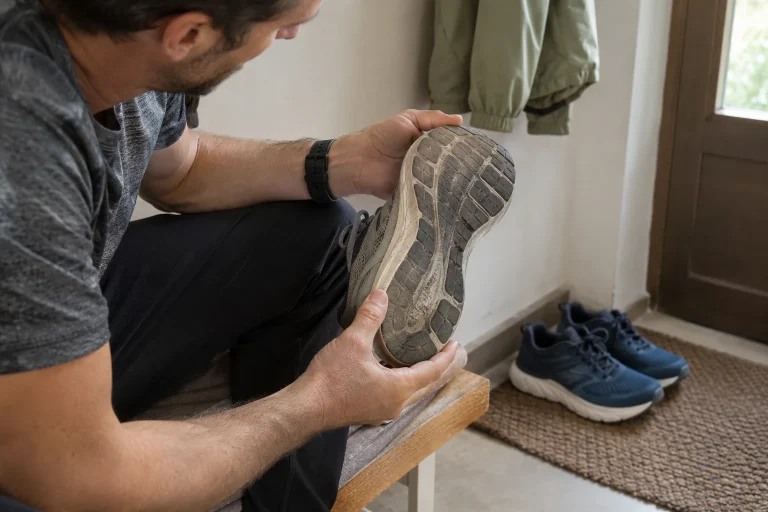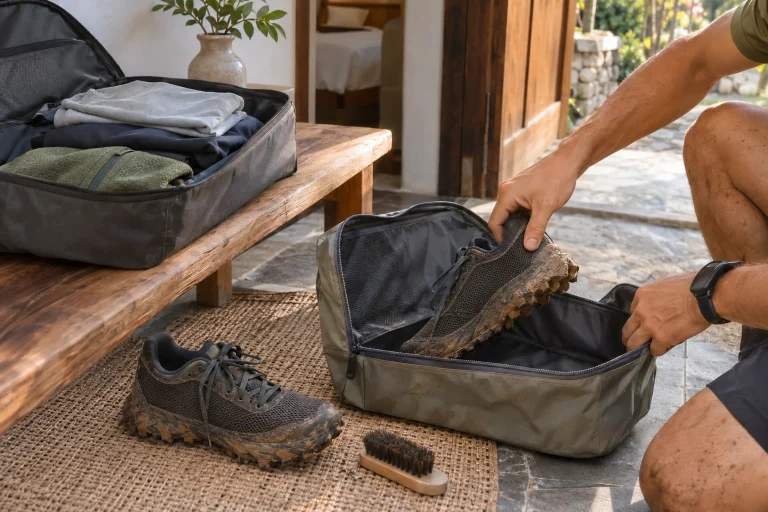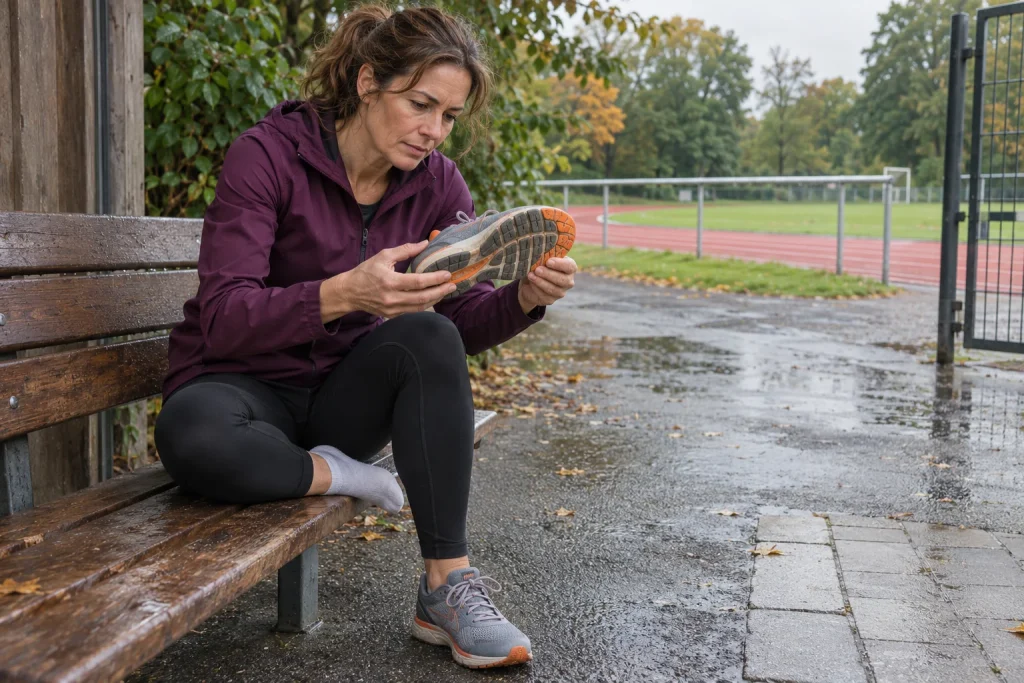
You are running in the same shoes on the same rainy morning, yet one part of the pavement feels quite different from another. Rougher asphalt gives way to a smooth paving slab, followed by a muddy park entrance. It is easy to blame a single component: the rubber is too hard, the tread too shallow or the lugs too large. A useful question is more precise: which sole, in what condition, meets which surface, and what layer lies between them?
This article is neither a wet-grip shoe ranking nor instructions for a home slip test. It helps you question product claims meaningfully, distinguish your own observations from measured results and identify uncertain sections of a route. You need not slip to leave a location out of your training. The following practical note-taking and buying considerations help you think through equipment; they do not establish a safe speed for you.
Rubber and tread do not compete for a win: contact depends on conditions
The British HSE workplace slip-prevention guidance considers both sole material and tread important. It highlights the role of the surface and contamination, and notes that footwear suited to a wet environment may be unsuitable with another contaminant. This is workplace information, rather than a running-shoe test; we do not turn its footwear markings into running-performance ratings. Its basic idea does, however, help us ask our question properly: the word grip alone conveys little information.
Imagine two different tasks. In one, you move along a dirt trail; in the other, you want to turn on wet, smooth paving. In the first, discussing grip into the ground may make sense; in the second, you would need to understand contact with the solid surface. A conspicuously deep tread does not tell you how the sole behaves in the second situation. We therefore do not derive a general rainy-street ranking from the lug size in a photograph.
When identifying your own shoe, record the exact version, rather than just the brand or series. Road and trail versions in one family may differ, and a new edition with the same name is not necessarily identical to its predecessor. If a salesperson shows results for another model, ask what connects them with the shoe in your hands. A shared rubber brand or similar colour does not demonstrate identical behaviour of complete shoes.
A rubber compound name is not a test report for the complete shoe
Vibram presents its Megagrip compound as a product intended for dry and wet terrain. This is the manufacturer’s own technology description and should be read accordingly. Naming the compound alone does not provide a result applicable to every running shoe, every wet surface and every movement. A precise comparison would require separate knowledge of the construction of a particular finished shoe and the testing conditions behind the specific claim.
Before buying, it helps to put three kinds of information into separate columns. The first is the stated material or technology name. The second is an actually identifiable test reported for the particular shoe. The third is suitable fit and usability for you, which you can check in a shop. Do not fill a missing second column with confidence borrowed from the first. A comfortable shop fitting is an important personal observation, but it does not become measured grip data for wet asphalt either.
A material name can still be useful without a publicly available full report: it helps identify the model and formulate a question to the manufacturer. You might ask: On which surface, in dry or wet conditions, was the sole of this exact version tested, and what was it compared with? This requests substantially more verifiable detail than asking which shoe has the best grip. If comparable data are unavailable, leave that as an uncertainty.
 Enlarge image
Large lugs may serve a different task from a wet pavement
A trail appearance often inspires confidence, but first describe what makes up your own route. A run to an urban park may include a long asphalt approach, a short gravel section and one muddy access path. That needs a different description from a mountain trail on loose ground throughout. The label trail running can hide the fact that smooth paving before the park is what actually feels uncertain. Connect your search for shoes with this real task.
Describe the dominant surface separately from the critical one. The dominant surface is where most of the outing takes place; the critical one is a short section you would rather avoid because of its conditions. They are not always the same. One shoe need not cope everywhere imaginable for your route to have a sensible solution. You may be able to replace the critical section with another entrance or an entirely different loop, making the equipment-selection task clearer too.
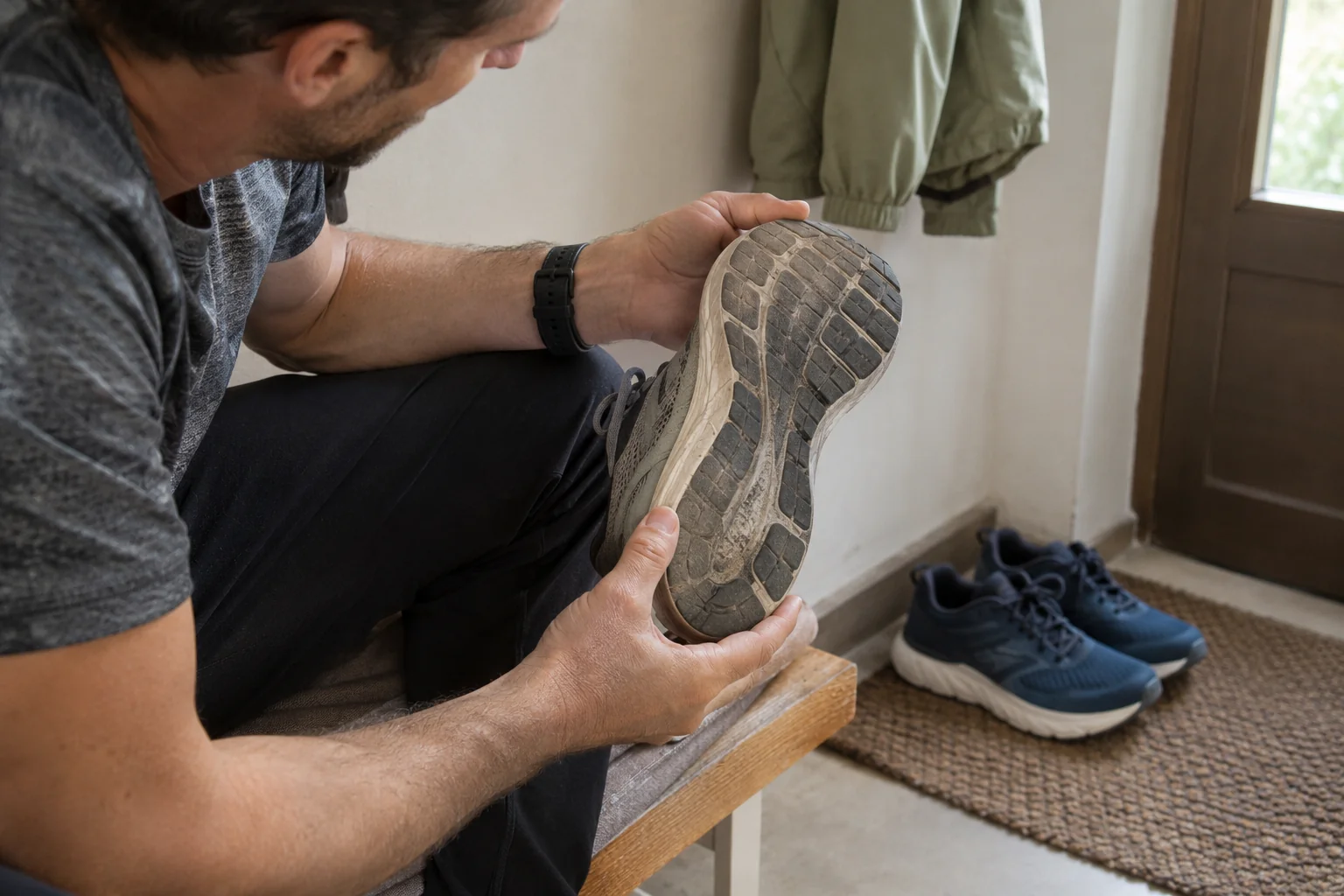
You can view the tread from the side and underneath, but do not invent laboratory results from its appearance. The positions of grooves, rubber-covered areas and contamination trapped between them can be described. A shop photograph cannot, however, quantify the force at which a shoe would slip on a particular wet surface. Use photographs to follow condition: they should help retrieve changes in the same shoe over time, rather than judge other models without seeing them.
Alongside rain, note what else is on the surface
The HSE information on contamination lists oil and dust alongside water, for example, and specifically warns about risks on smooth surfaces. For outdoor running, this does not mean you can always identify the composition by sight. That is precisely why a more accurate location description may be more useful than a note saying it was wet, without trying to identify an unknown material from dangerously close up. Do not seek your shoe’s limit on uncertain contamination.
In your route notes, use simple observable descriptions: a layer of fallen leaves, a muddy entrance, a water-covered hollow or an unknown shiny patch. These are not materials-testing results. They can, however, help you consider the location next time as well as the weather forecast. When water hides the surface, you need not make optimistic assumptions about its unseen condition to complete a planned distance.
A map annotation in your running diary can help you find a point again, but do not put your full home address or daily departure time in a public post. A section identified in your own private notes may be enough. A useful lesson might simply be: After rain, I bypass this short passage using another street. The observation then supports a specific decision, rather than becoming a general judgement that the same shoe is unusable throughout the city.
Wear and cleaning: the same model is not always in the same condition
HSE explains that wear can change slip-resistant properties, and clogging of the tread needs particular attention. Record condition alongside the exact model of your own equipment. An old photograph of the new sole does not demonstrate how your shoe behaves now. Months of use and kilometres logged on a watch may help retrieve its history, but neither produces a general threshold for wet grip.
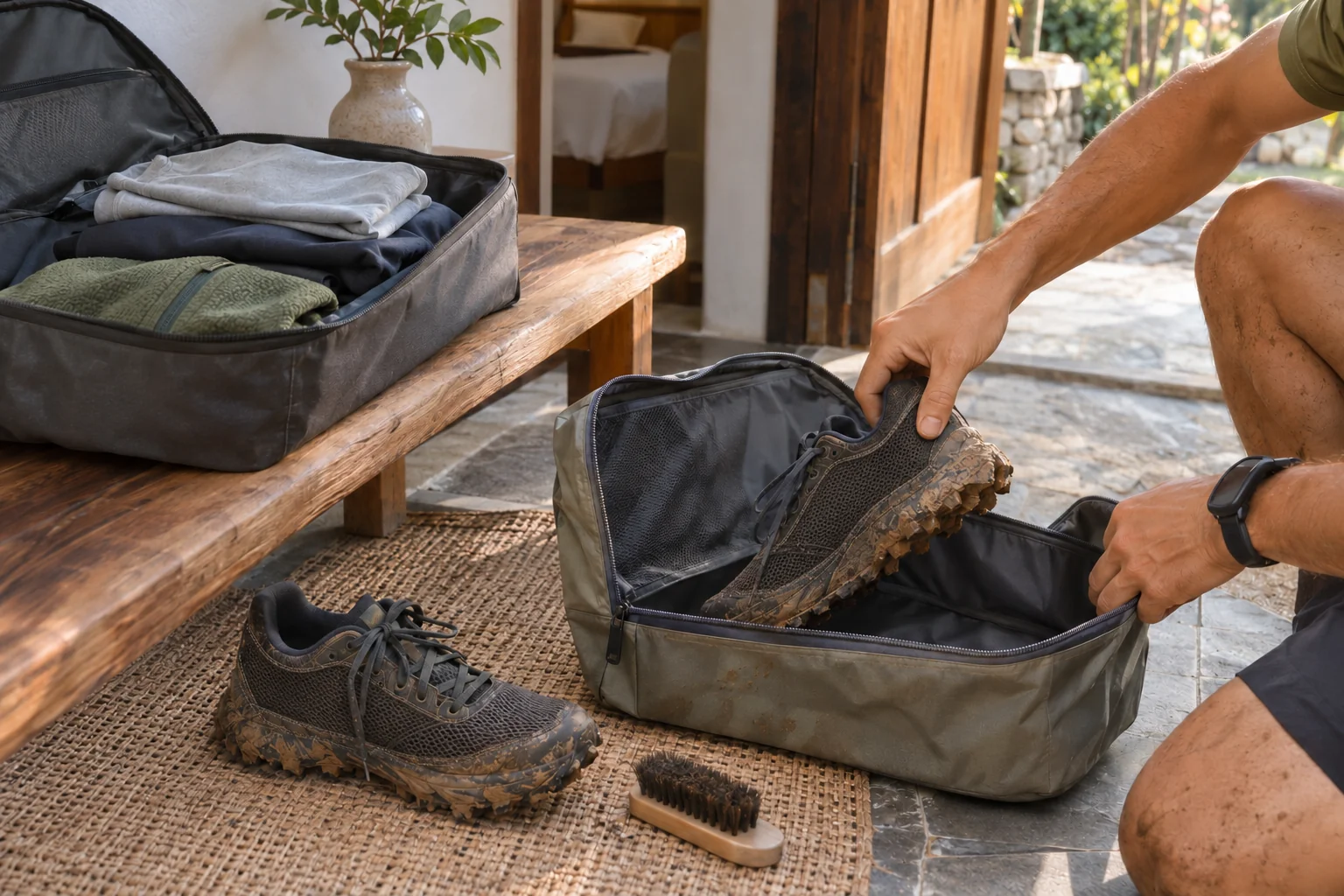
Choose a quiet, appropriately lit place for visual inspection, rather than beginning on a busy pavement. Look at the sole, visible damage and material trapped in the tread. Clean according to the specific shoe manufacturer’s instructions; do not use unknown solvents or sanding in hopes of improving grip. If a part is coming away or damaged, ask the manufacturer or retailer for help with that item. This article provides no home repair procedure.
A picture taken from the same side and a date may be enough for comparable personal photographs. Do not claim in a caption that the sole has lost a given percentage of grip: you have not measured that. Instead, record what is visible and how it changes your use. Different wear at the heel; I am requesting a specialist-shop check is more accurate and useful than an invented remaining mileage. Wear is not a diagnosis of running movement either.
What should you ask when a product promises better wet grip?
The first question concerns the comparison baseline: better than what? If the product is compared with an earlier edition, the data do not necessarily rank all other shoes on the market. The second concerns the situation: which surface, moisture or intervening material was involved? The third concerns the type of result: was a material sample, a finished shoe or a task involving people assessed? Use these as your own buying questions, and do not replace missing answers with advertising language.
| Information provided | What still needs finding out? | What we do not infer from it |
|---|---|---|
| A compound or technology name | In which finished model and with which sole design is it used? | Identical behaviour of all shoes sharing that material name |
| A percentage improvement | What are the baseline model, method and tested surface? | The same percentage improvement in safety on your street |
| A runner’s personal account | Which route, condition and task informed the account? | A repeatable instrument-based comparison |
If you receive a numerical friction value, compare methods before placing the numbers side by side. With different testing environments, the larger number may not suitably rank the two complete shoes for what matters to you. Every buyer need not become a specialist laboratory expert: an accurate question to the retailer and accepting uncertainty are also progress. If there are no data under identical conditions, say so in the comparison rather than naming a certain winner.
 Enlarge image
Gather personal experience rather than seeking the moment of slipping
You need not choose the hardest wet section of a route for a new shoe’s first outing. You can observe comfort and access to your equipment in a familiar environment appropriate for you. Avoiding an uncertain or slippery section, changing the outing and turning back when necessary remain options. A planned pace or a workout running on your watch does not exempt you from assessing the current situation. No technology name changes that.
Do not arrange a sloping test at home, oil a surface or keep accelerating until the shoe slips. Such an experiment does not replace controlled testing, while its consequences can be real. Likewise, do not practise sudden braking among other pedestrians. For your own notes, it is enough to record where and under which conditions movement felt uncertain, then choose a subsequent outing that does not require repeating it.
Do not identify a definite cause from a single event. If you slipped, several details involving the shoe, surface, intervening material and movement may remain unknown. Recording the incident does not make you a shoe tester, but can help you reconsider your own route and equipment. Seek appropriate help for an injury or persistent symptoms; a photograph of the sole does not replace assessment of your health.
Plan for a route rather than an all-powerful sole
Before your next rainy outing, prepare three brief answers. Which route will you choose under the actual conditions? Which shoe, suitable for you and in what condition, will you use? Where is there a section you would rather leave out? Together, these questions address the situation. You need not load the whole task onto a single purchase, or justify new shoes’ price by using them everywhere you previously needed to avoid.
If you have several pairs, name their intended uses in your own records rather than assigning a general first, second and third place. A pair used for a familiar, mainly asphalt loop and a pair kept for loose-ground routes are understandable descriptions. Weather, route condition or shoe damage can override even an intended use considered appropriate. Thinking of equipment as a system means leaving room for a fresh decision that day alongside previous good experiences.
Discuss wet grip through an exact model, a named surface, known condition and clarity about the kind of data. Rubber compound and tread are not mutually exclusive explanations, and neither removes the need to consider the environment. Your own observation is most valuable when it helps establish a better route and use pattern, without becoming a measurement claim you have not actually verified.
Sources and limits of interpretation
HSE: Slip-resistant footwear – workplace footwear guidance on the relationship between soles, surfaces, contamination and wear; its older standards references are not used as present-day running-shoe ratings. HSE: Contamination – surface contamination and slip prevention. Vibram: The Megagrip Sole – the manufacturer’s own compound description, rather than an independent ranking of finished shoes. The checking questions, table and personal note-taking method are practical editorial suggestions; the article reports no grip experiment of its own.
How Futószív articles are prepared: our editorial guidelines.