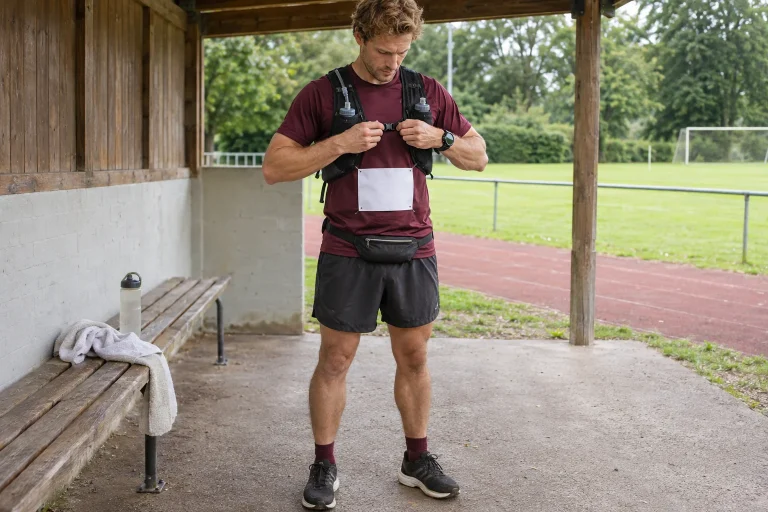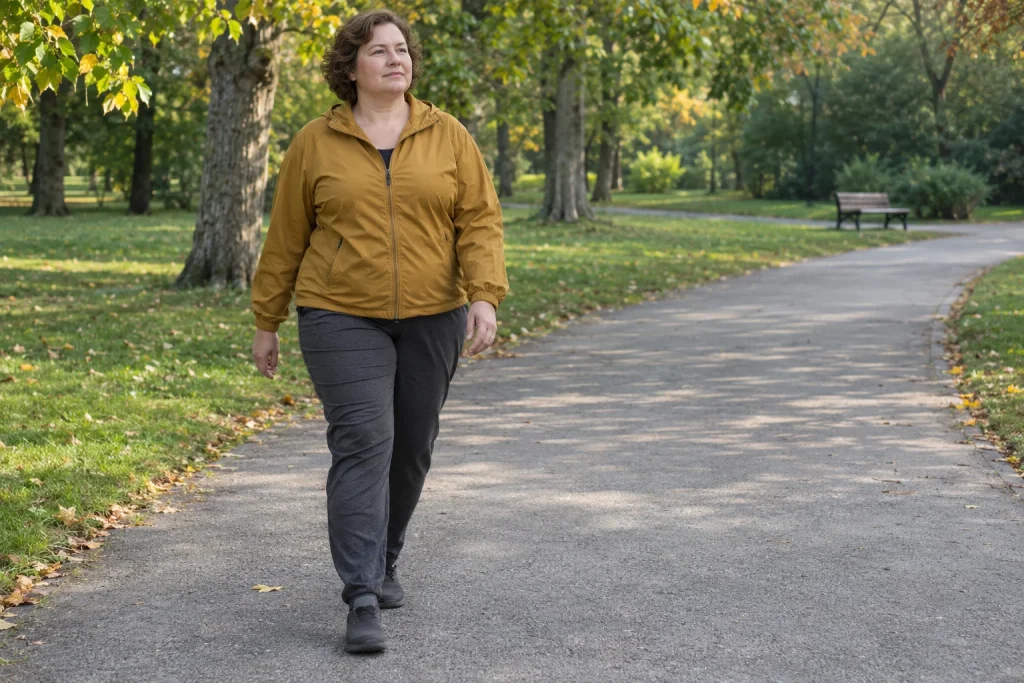
You still have your old running jacket, the park entrance is in the same place and you know the bends of your favourite route. Yet setting out feels different. Your clothes sit differently, your stride rhythm feels less familiar, or stopping feels right somewhere other than before. On returning, it is easy to compress all this into a single judgement: I have lost my old fitness. But several separate questions need new answers, and you can understand some of them better through simple, attentive trials.
Learning what feels comfortable now is not about validating past performance. It means finding a manageable way to move with today’s clothes, equipment, schedule and condition. Familiar enjoyment and new needs can coexist. A change in your body does not necessarily mean improvement or loss in every function: an item of clothing may be less comfortable while you know much more clearly what company you want during exercise.
Let old memories provide ideas, not a compulsory benchmark
A former route often comes with a pace, time of day and social role. Perhaps you showed the way or always ran at the front. Those memories can make returning appealing, but also turn into an unspoken assignment. Before setting out, separate out what you actually miss. The path among the trees? Conversation? Time alone? The rhythm of running? Naming it makes it easier to choose a session that can still offer some of it now.
You do not have to complete the same loop for a former favourite place to become part of your day again. A section near the entrance, another direction or a comfortable walk can reconnect you with it. The old full loop can retain its value as a memory without becoming something you demand at the end of every new outing. Today’s experience need not compete with an earlier day whose best parts may be all you remember.
The NIDDK guide to starting physical activity emphasises enjoyable activities, a feasible plan and considering practical barriers. That can be a more useful starting point for returning than a deadline to repeat an old result. Your own goal might be to set out calmly, try a comfortable outfit and spend enjoyable time in your chosen place.
How clothes fit is not a judgement of your body
An old top or pair of trousers can carry both memories and frustration. If it pinches somewhere else, rides up or chafes, the first information you gain is about that garment: it does not currently fit as you would like. You do not have to reshape your body to its former size to move comfortably. A new size, different cut or alternative layering can all be valid choices, whether or not you plan any weight change.
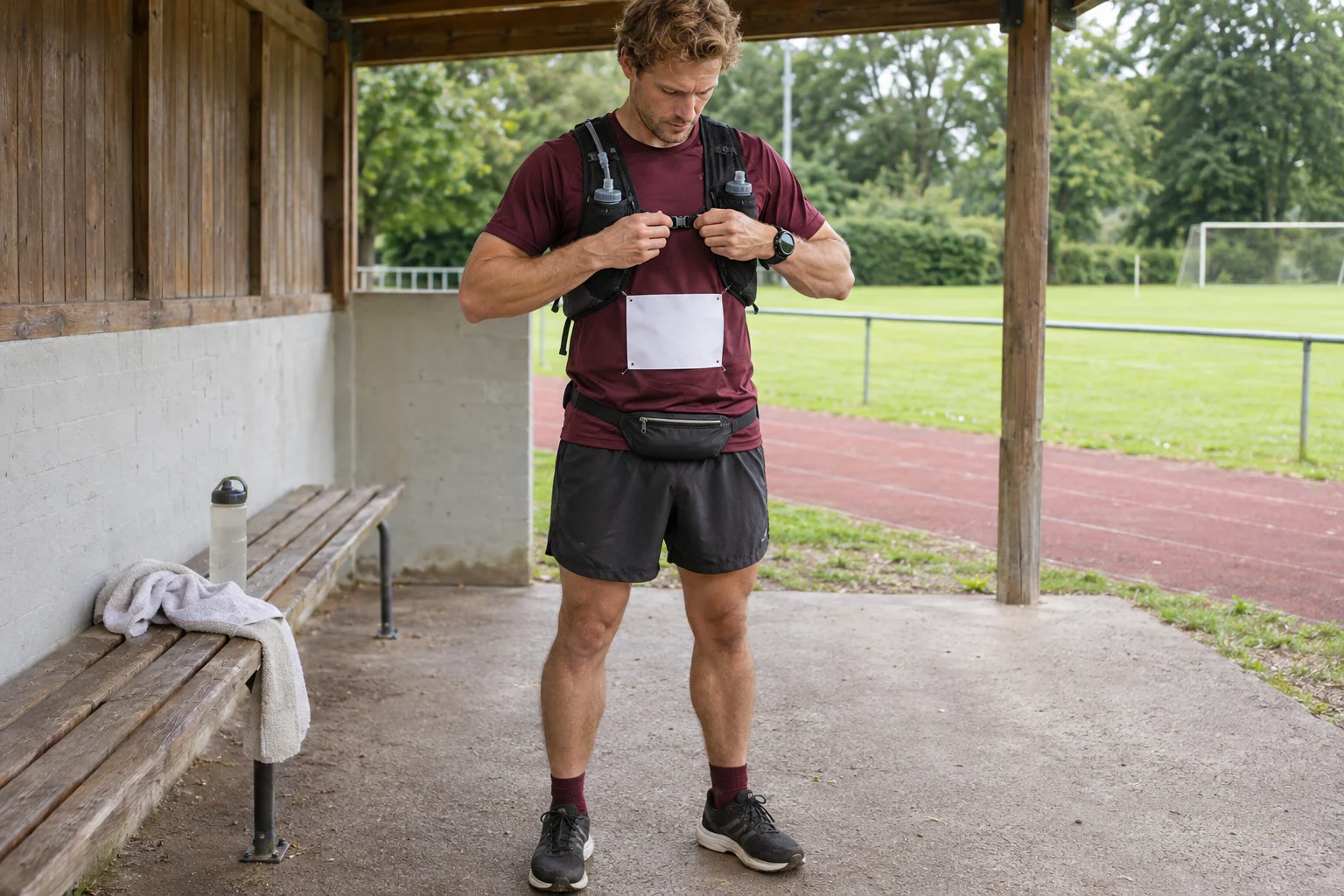
Do not try clothes only in front of a mirror. A zip, waistband or pocket may behave differently when you put your shoes on, sit down or perform your own familiar movements. A phone’s weight can also alter how otherwise comfortable trousers stay in place. Trying clothes at home can therefore simply mean checking how your intended kit works together before you need to adjust it on a route farther away.
If several items are questionable, you do not need to replace everything at once. Choose one specific irritation, such as a top pulling across your shoulders or storage that keeps shifting. That keeps the question you are testing clear. However, do not automatically classify bodily pain, numbness or breathing symptoms as clothing faults. Identifying an uncomfortable strap does not prove it caused every symptom occurring at the same time.
 Enlarge image
Look for today’s fit rather than the shoe label
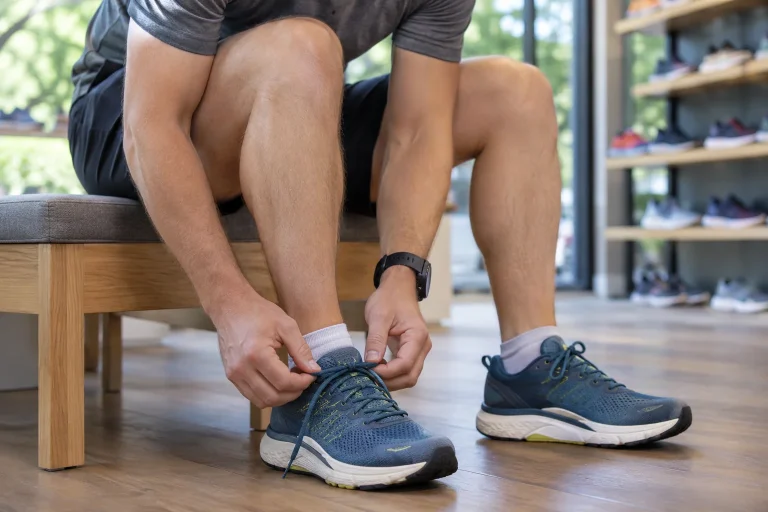
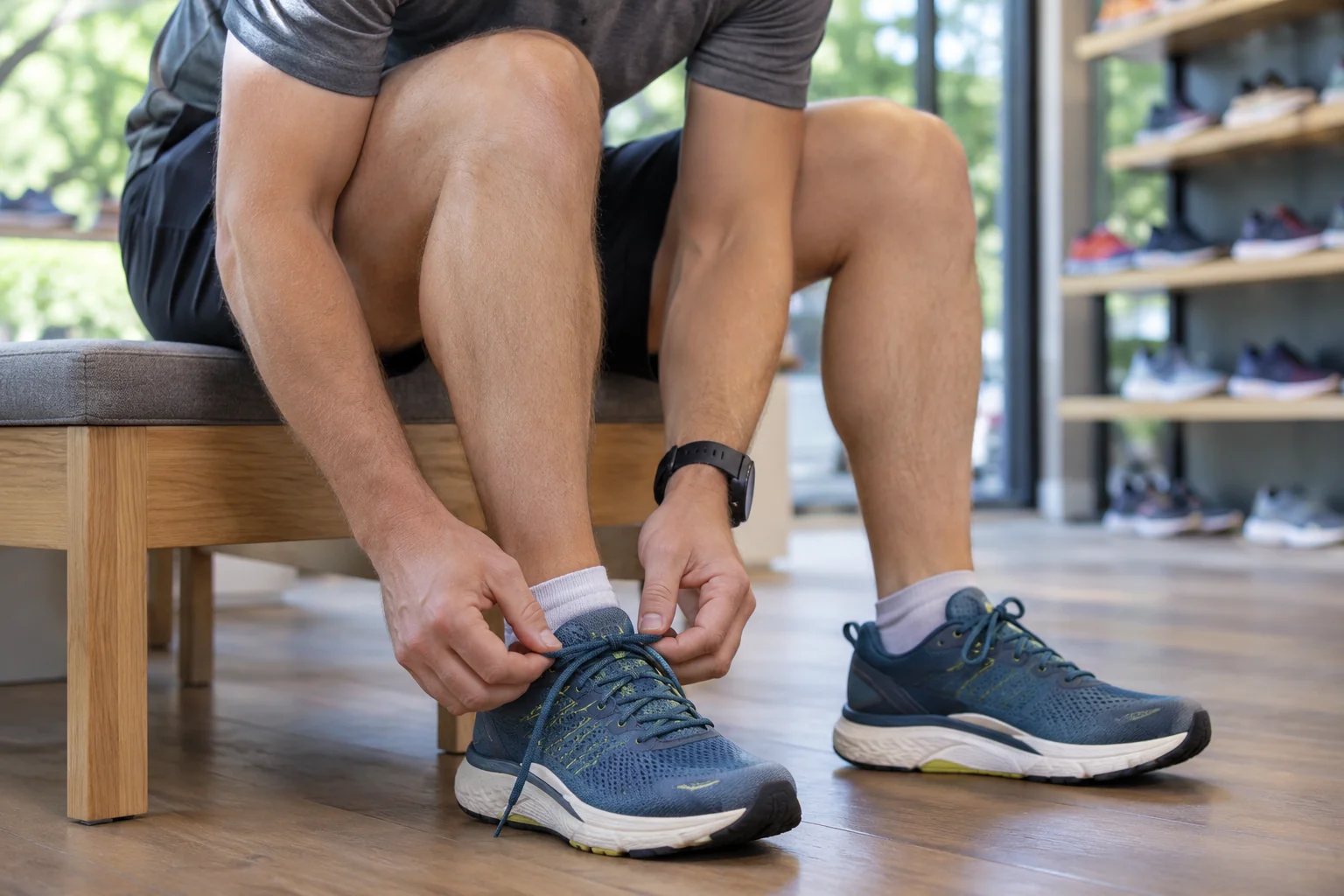
The size printed on a shoe and memories of buying it are not enough to judge its current fit. The AAOS information on choosing shoes highlights actually trying them on, choosing for your foot shape and considering the socks you intend to wear. Choosing a longer shoe in a narrow design does not necessarily solve a width problem. Reassess the relationship between your foot and shoe now, rather than defending your previous size.
It is useful feedback if you can identify the exact place: pressure at the front, tightness at the side, heel movement or tension across the upper. ‘My foot is no good any more’ does not identify where a different solution is needed. In a shop, you can ask for another width or shape and about trial and return conditions. You do not have to buy immediately the model associated with a good memory.
You can keep a former favourite shoe as a memory even if it is no longer your equipment for moving now. A new pair’s price or softness does not guarantee freedom from injury. If you have foot symptoms, especially recurring symptoms, numbness or symptoms affecting everyday walking, seek individual professional help. Trying shoes clarifies comfort; it does not investigate the cause of a symptom.
Speed is only part of what you are trying
When returning, it is easy to slow below your old pace and assume the whole programme is now definitely easy. Yet you may stay out longer, use a different route or add more sessions to the week. Speed, duration, distance and frequency are separate measures. Changing one does not make the others irrelevant. To learn about your current comfort, also identify which of these is genuinely new.
A 2018 study following 914 novice runners described their self-selected running during the first week. Higher-BMI groups ran more slowly, while weekly distance and time were similar between groups. This is a short observation of beginners, not an individual training prescription for returning runners or proof of an injury cause. It does, however, illustrate that a slower pace and a smaller total amount are not the same claim.
You can adapt your watch display accordingly. If old split times constantly invite competition, a simpler screen or recording afterwards may feel more comfortable now. This is not a ban on data. It is about having the device support the question you want to answer. At the end of a short session combined with trying an outfit, a pocket and top working well may mean more than which kilometre was fastest.
Create an outing you can actually learn from
A trial is easier to interpret when you do not have to manage many new conditions at once. You can choose a familiar, accessible place with an easy return home. Decide your main question in advance: the whole outfit, shoe fit or the convenience of your chosen time. This is not a clinical exercise stress test, nor evidence that a subsequent longer programme will be appropriate. You are gathering experience for a specific everyday decision.
You do not need to justify keeping it short. The WHO’s current physical activity overview states that all physical activity counts and any amount is better than none. This does not give everyone clearance to run, but helps release the rule that only a long, continuous workout has value. Shorter participation appropriate to your own condition can also be a deliberate part of your day.
| Today’s question | What is worth noticing? | What should the trial not aim to do? |
|---|---|---|
| Clothing | Tightness, shifting and how storage works with other items | Fit back into an old size |
| Shoes | Space for the foot, heel hold and the precise location of pressure | Rule out every possible foot problem at home |
| Timing | How departure, meals, travel and the rest of the day fit together | Restore every previous habit immediately |
| Company | Can you finish according to your own plan? | Prove your old role for the group’s benefit |
Describe bodily signals rather than explaining them in advance
The word comfort does not merge clothing pressure, the feeling of effort and pain into one thing. If something is uncomfortable, try to name its location and the circumstances in which it occurred. You do not need to decide which tissue or disease lies behind it. The NIAMS information on sports injuries emphasises stopping the activity causing pain and includes personal history as part of assessment. Recurring symptoms should not be treated as the compulsory price of getting used to exercise again.
Severe pain, significant swelling, deformity or inability to bear weight require prompt care. Seek immediate help for new chest symptoms, severe shortness of breath or fainting during exercise. Changing clothing or routes for your next session does not replace healthcare assessment of a symptom. Also retain the instructions given for any known condition; the organisational ideas here should be interpreted alongside them.
A concrete description is more useful in a later discussion than blaming your body. For example: pain started on a particular part of the route, persisted after stopping or was noticeable while walking the next day. This information is worth sharing even if accepting changes to your body is difficult. Your symptoms do not become less real because your clothes or weight have also changed.
 Enlarge image
Let running companions connect with your current plan
In some friendships, the old shared pace was an almost unspoken agreement. It is worth updating that agreement when returning. Explain what sort of meeting would suit you: starting together with different routes, a conversational walk or meeting after exercise. Saying ‘this is what I am choosing today’ is valid in itself. You do not need to justify it with details of your body changes for a companion to respect it.
This fictional but familiar situation is simple: someone beside a friend does not feel able to say that the old loop now seems too much. Before meeting, they therefore agree on an accessible point where that person can freely say goodbye. The solution is not a distance recommended for everyone, but a clear social condition. Shared time then does not become constant negotiation over how much more should be added.
You can also choose a setting where you are not introduced through past results. In a new community, it may be easier to describe the movement that interests you now. That does not erase your old running experiences. Your relationship with sport is a story containing different periods, equipment and pleasures. You do not need to organise all of them beneath a single pace figure.
One usable insight is enough for the next outing
After trying things out, choose something to keep and something to organise differently. Perhaps the quieter entrance worked well, but you are still finding a place for your phone; the top was more comfortable, but the timing made departure rushed. A precise insight can lead to another simple decision. You do not need to prove at the end of every session that you are closer to your former self.
Moving towards comfort today means taking your experience seriously as useful information. Clothes can serve you, a programme can fit your day and companions can accept your choices. If a personal symptom or health question arises, you can seek appropriate help. Returning need not copy an old body or an old result: it can be a new, more precisely individual relationship with movement.
Sources
- NIDDK: Tips for Starting Physical Activity
- Bertelsen and colleagues, 2018: self-selected first-week running exposure in novice runners
- AAOS: Shoes – Finding the Right Fit
- NIAMS: Sports Injuries – Diagnosis, Treatment, and Steps to Take
- WHO: Physical activity
- NHS: Fainting
- NHS: Shortness of breath
How Futószív articles are prepared: our editorial guidelines.