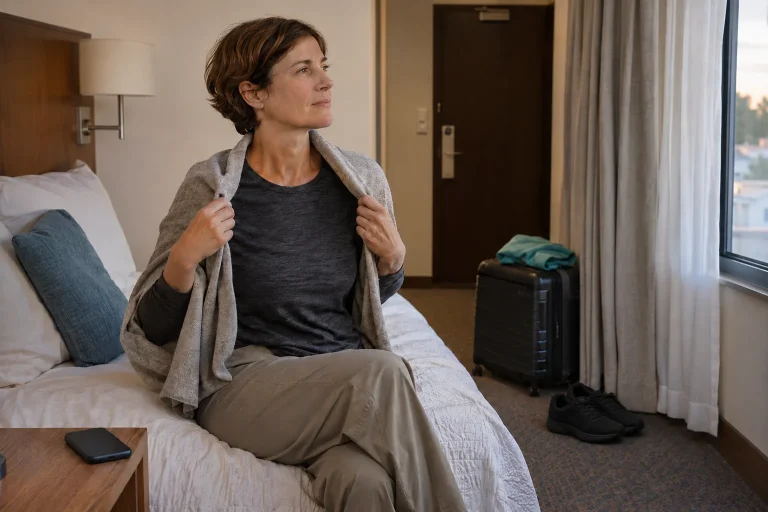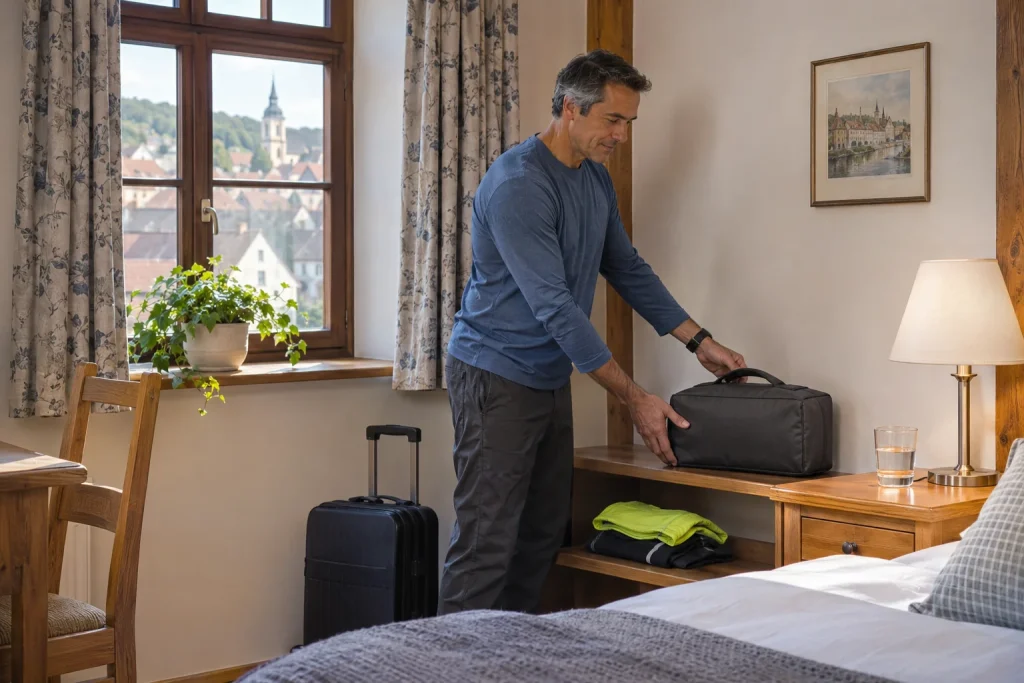
When choosing race-weekend accommodation, proximity to the start, parking and early breakfast can dominate. If you use prescribed CPAP, continuing your usual sleep treatment in an unfamiliar room matters just as much. A bedside socket, appropriate device location and every necessary accessory may not be apparent in attractive accommodation photographs.
The aim is not buying a new travel device or altering settings. Organise continuity of your own treatment around the real journey. These questions chiefly concern advance discussions with accommodation, equipment providers and your care team. They do not override the device manual or medically approve racing when sleep-deprived or unusually sleepy.
Treatment is not confined to your home bedroom
According to the NHS information on sleep apnoea, CPAP supplies airflow through a mask during sleep to help keep airways open. Regular nightly use matters, and uncomfortable or difficult treatment should be discussed with a doctor. The machine is not merely a sleep-comfort accessory. Running or a successful workout does not replace prescribed treatment.
The University Hospitals of North Midlands CPAP patient information also addresses travel, emphasising taking the device and continuing treatment away from home. Individually configured therapy and its guidance remain the starting point. If difficulties are foreseeable, do not decide alone to skip treatment on departure evening. Ask your clinician or equipment provider about your situation.
For race planning, clarify sleep conditions as early as entry and transport. You do not need to send a detailed history to the guesthouse. A simple question may suffice: I use a medical device while sleeping and need a suitable accessible electrical socket and stable space beside the bed. Accommodation can answer practical questions, not decide treatment.
What should you ask before booking?
Ask more than whether the room has electricity. Clarify distance from the bed, accessibility and whether the socket works when the room card is removed from the central switch. This may matter when clarifying device power or charging needs. Do not assume every hotel socket works identically. Keep the specific answer with the booking.
Ask precisely about placement: is there a stable suitable surface without overcrowding, allowing use according to the manual? A decorative table in a picture may not be the furniture in your assigned room. Request a brief description or image of the actual arrangement. You are not asking accommodation to certify medical-device compliance, only circumstances they can describe.
If an extension lead is considered, match the electrical solution to your device and accommodation rules. UHNM notes that a socket is not always beside the bed. This does not generally approve arbitrary power strips, adapters or improvised wiring. A cable across a walkway or a socket needed elsewhere creates further problems. Seek an agreed solution rather than improvising on arrival.
| What you ask | A more precise version | Who can answer? |
|---|---|---|
| Is there electricity? | Where is a genuinely usable socket near the bed? | Accommodation provider. |
| Is there space? | Is there a suitable stable surface, and what surrounds the bed? | Accommodation and your device instructions. |
| Which power supply? | What suits my exact device and destination? | Manufacturer instructions and equipment provider. |
| How should I clean it? | Can I follow my accessories’ required routine while travelling? | Device instructions, care team or equipment provider. |
| What if something fails? | Which contact details and individual actions have I been given? | Your care team and equipment provider. |
 Enlarge image
Think through the complete setup, not just the machine
Pack from the actual system you use at home: device, correct power supply, cable, mask, tube and further accessories your setup requires. A general online product list should not be the reference. The point is not taking every accessory available, but leaving none essential to your treatment behind. A small missing part can be difficult to identify and replace in another city.
Keep clean accessories separate from used running clothes and shoes. Pack and transport the device according to its manufacturer’s requirements. If using a humidifier, check the specific guidance for transport and permitted water. Models and accessories differ. Someone else’s travel trick may not suit your system even if the bags look similar.
The official ResMed travel information, for example, separately addresses mains power, correct adapters, humidifier transport and provider contacts. These are manufacturer references for its products, not technical claims about every CPAP system. Naming the brand is not a purchase recommendation. Consult your device’s documentation or ask the provider where to find it.
If leaving early, do not invent a packing list at dawn on race day. Keep your own actual accessory list for the return too, including bedside drawers and bathroom shelves. This is not medical self-testing, but responsible care of items needed for treatment. Give it separate attention alongside keys, race number and shoes.
Destination, power and travel rules depend on the exact model
On foreign trips, plug shape and electrical requirements are separate issues. Check your power supply and device specifications rather than assuming a plug adapter solves every difference. For battery or vehicle use, ask about a specific approved solution. This article does not choose universal adapters or batteries or recommend unknown replacement cables.
For flying, carrying a device differs from using it onboard. UHNM mentions prior airline discussion and treatment documentation where needed. Check current rules with your actual carrier, including accessories and any battery. Another airline’s earlier approval or a general foreign health-page statement does not replace an answer for your journey.
Domestic race trips can also involve uncertain power, for example at campsites or temporary accommodation. An appealing running location does not settle it. If your treatment system’s requirements cannot be met, discuss alternatives with the provider beforehand. Rearranging travel can be a practical decision. Skipping or independently changing treatment is not the inevitable consequence of unsuitable accommodation.
Allow time for your routine on arrival
Do not leave finding the socket and device space until the final minutes before sleep. Check the agreed conditions against your instructions. If the room differs from expectations, reception may still help. A sports bag surrounding the device, chargers tangled with cables and a crowded surface are easier to rearrange calmly.
Tell a roommate only what shared use needs: I use a medical device for sleep, please leave this surface and socket clear and avoid accidentally moving the bag. A medical lecture is unnecessary, and device use need not become a joke or photograph. Whether other teammates know is your private choice. A shared room requires respect, not public explanation.
If the usual mask or another accessory becomes uncomfortable, clarify using your instructions and provider contact. Do not rebuild the system with whatever is available at the accommodation. UHNM treats CPAP as individually configured treatment. Independently changing therapeutic pressure in hope of better pre-race sleep is not appropriate. Bring persistent difficulty back to care.
Daytime sleepiness is a separate sign, not a training score
The NHS information on excessive daytime sleepiness distinguishes repeatedly falling asleep during the day from general tiredness. Frequent daytime sleep or sleepiness disrupting life warrants medical assessment. Several causes are possible. Existing CPAP treatment does not require attributing every new episode to one poor hotel night.
Do not judge the drive home or sporting plan solely by a watch sleep score. If sleepy, dozing or unable to attend safely, do not drive; arrange other transport and speak to your care provider. A good race result does not retrospectively establish driving fitness. Helpful support includes another travel option in advance, rather than trying to keep you awake during a long drive.
Describe when sleepiness occurs, when you fall asleep and whether treatment usability changed. Share device reports with a professional through your usual method if available. Favourable app data and your symptom need consideration together rather than cancelling one another out. You do not need a homemade diagnostic threshold or further nights of deliberately altered treatment.
 Enlarge image
Keep more than reception’s number for problems
Retain equipment-provider and care-team contacts and information identifying your device. ResMed’s travel material also emphasises provider contact and accessible treatment details. Accommodation handles room or electrical-access issues; device failure and therapy problems need other contacts. Do not give unnecessary treatment details to someone whose task is only arranging a room change.
Ask before leaving what to do if the device fails, a part is missing or treatment is impossible at the accommodation. Keep understandable individual guidance. General internet statements should not decide how many missed nights are acceptable. Specific health, treatment and daytime symptoms require individual judgement.
On return, organise the kit and prescribed cleaning routine too. Note new difficulties for follow-up. A good travel plan does not mean everything matches home, but knowing the right person for differences. An enjoyable race and consistent treatment organisation can coexist. Necessary health conditions need not be squeezed into the sporting weekend’s leftover time.
Sources
- NHS: sleep apnoea and CPAP
- NHS: excessive daytime sleepiness
- University Hospitals of North Midlands: CPAP patient information and travel
- ResMed: travelling with your CPAP device
How Futószív articles are prepared: our editorial guidelines.