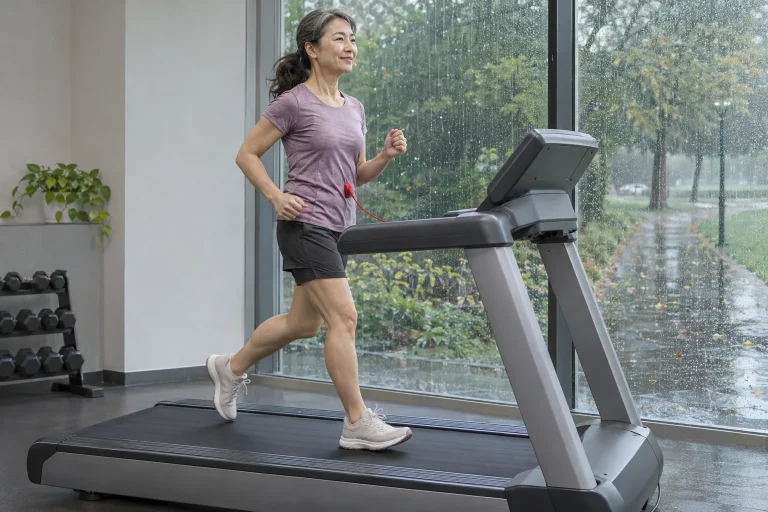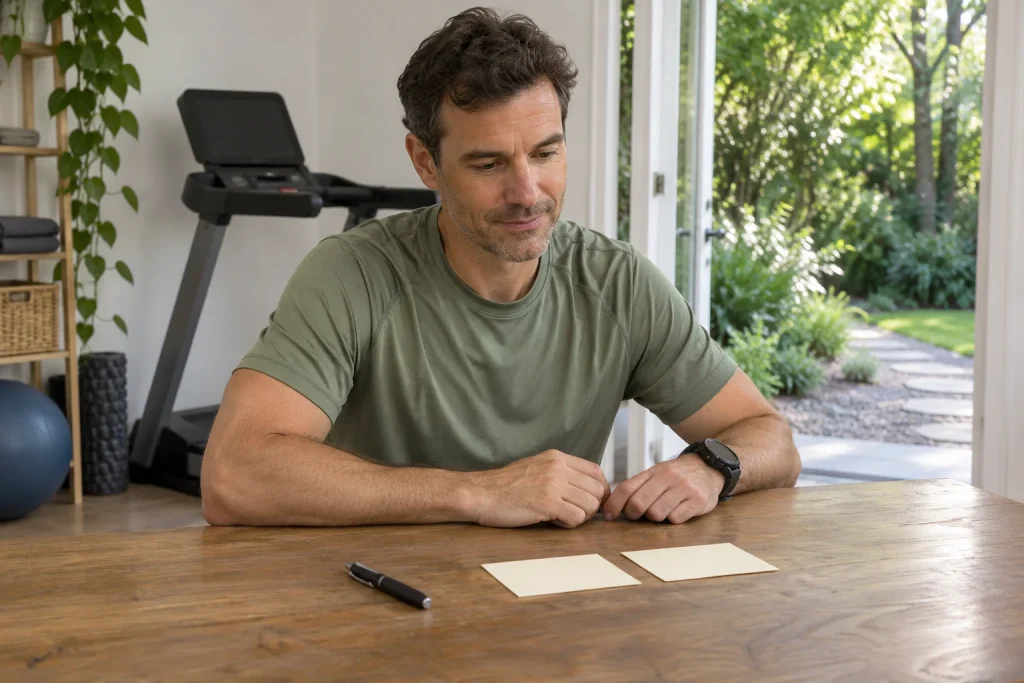
Time passes easily on a treadmill, but outdoors you feel freer. Or the opposite: you enjoy changing park scenery while indoors you watch the clock throughout. If you want to understand the difference, brief personal observations may help more than ranking the two forms of movement generally. You do not need to become a researcher, buy special instruments or force two sessions to be identical.
The log’s task is simple: bring you closer to what was manageable and pleasant in that session. It does not prove the environment caused every change or replace exercise testing or medical assessment. It can help by preserving specific details while leaving choices open. These questions provide a framework for that low-stakes record.
First name what you want to understand
‘Which is better?’ combines too much. Easier starts, time perception and social closeness call for different answers. An indoor session may be easier to organise, while outdoors you have more desire to describe the route afterwards. Squeezing both onto one good–bad scale can hide the difference that actually matters to your choice.
Choose a simple personal question: which situation makes starting easier on a busy day, or where does paying less attention to workout data feel good? It need not be fully scientific, but should be clear. Notes then relate to your life rather than collecting data simply because a watch can show many values.
You can change the question later. Organising the journey may turn out to matter more than passing time. That is not a failed experiment, because you are not conducting a preregistered study. Personal observation allows you to discover what you want to notice along the way. Keep later conclusions equally modest.
A short research example: experience and performance can differ
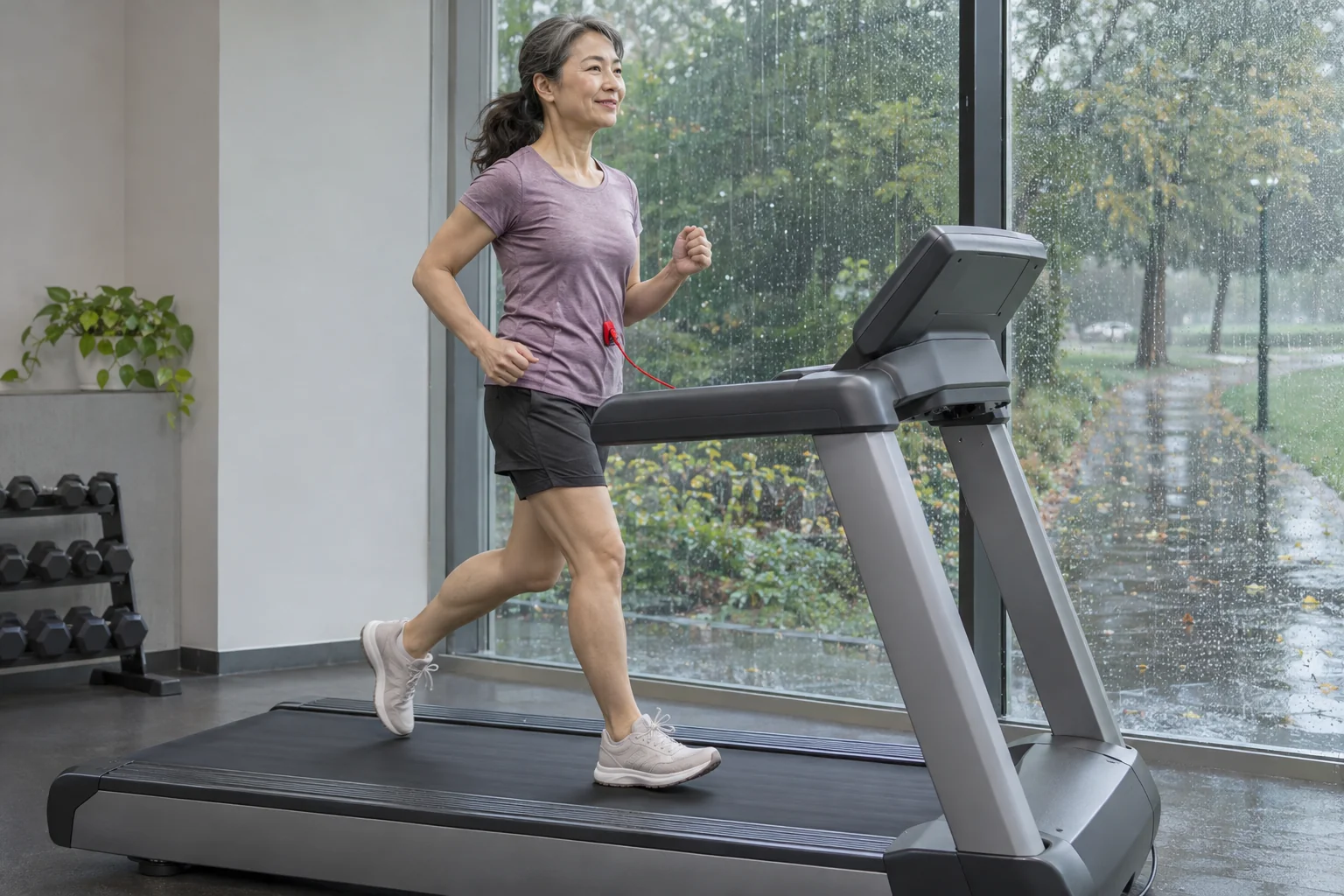
In Yeh and colleagues’ study, thirty participants completed three twenty-minute self-paced treadmill sessions with a still nature image, moving nature imagery or entertainment of their choice. Entertainment produced greater distance and higher heart rate, while natural-image conditions produced more favourable changes in happiness. One favourable outcome did not automatically make the same condition the winner in every respect.
Your log can therefore separate what you did from how you experienced it. A faster session may be more pleasant or harder; a shorter one can offer valuable relaxation. Inferring experience from performance numbers can silence what you actually felt. Personal observation makes room for what total kilometres cannot explain.
The study was not a direct ranking of outdoor and indoor running, but a comparison of indoor visual environments. You need not reproduce it at home or extract more performance alongside a favourite video. The useful idea is separate questioning: what happened in movement, and what was the experience? They do not require the same adjective.
 Enlarge image
A few words about the session’s context
At the start of an entry, briefly describe the setting: a home machine, nearby park or city loop; alone or with others; comfortable time or a hurried departure. These are not compulsory fields, but background that may make the experience meaningful later. Similar-looking runs on two days can happen in very different contexts.
Name important earlier events if relevant to your question. Were you tired, had work been difficult or were you looking forward to the group? You do not need to check and quantify every circumstance perfectly. ‘I had almost no free time today’ often helps later reading more than another hard-to-interpret graph.
Recording circumstances does not establish an explanation. A less pleasant treadmill run after a tiring day cannot reveal whether fatigue, the machine, the task or something else caused it. Brief context keeps possible differences from being forgotten. Uncertainty is useful information here, not an error to erase.
What can you write about the experience?
Your own words are appropriate. Call the session calm, boring, varied or distracted if that fits. You can say the overall impression is not immediately clear. You do not need a psychological scale or a diagnosis calculated from a borrowed questionnaire. Notes help when you can later understand what an adjective meant.
A specific scene may help: perhaps the park section towards the river felt good, or a calm treadmill stretch when you stopped watching the time. Another entry may identify an environmental irritation, such as a crowded pavement or overly loud room. Detail avoids condemning the whole movement type for one troublesome component.
Keep pleasant experience separate from a medical assessment of wellbeing. Saying movement felt good does not establish why a symptom occurred or prove it resolved. For health questions, notes can at most support a specific account given to a professional. They do not become independent treatment or fitness tools.
Describing exertion should not become a new challenge
Noting that a session felt easy, moderate or harder than planned may help. Do not force outdoor and indoor days to have identical pace or heart rate. Surfaces, temperature, machine operation and routes may differ; matching numbers does not automatically make tasks identical. Do not increase load for observation’s sake.
Distinguish the chosen task from the movement completed. If an outing was intended to be easy but felt too hard, simply say so. Do not retrospectively rename it as though a hard workout had been intended. Honest reporting leaves room for experience differing from the plan.
Another experiment comparing mountain and indoor walking illustrated that differences remain despite careful matching: the outdoor descent could not be reproduced on the treadmill used. Even a research setting cannot easily make every component identical. Do not demand laboratory control of a personal log.
The story before leaving may differ from the one afterwards
A location may carry expectations. You might hope the park will help you switch off or imagine indoors as more convenient. If you later see only an overall rating, that expectation may be missing. One short pre-start sentence can preserve it without requiring a questionnaire before every workout.
Afterwards, describe what happened relative to expectations. Pleasant surprise and disappointment can both be useful details. Do not assume expectations caused every feeling. The log cannot reliably separate causes; it makes accompanying thoughts and circumstances more visible.
If writing makes evaluation occupy your mind instead of running, simplify or stop. Observation need not be present every moment. A short impression written later may answer what interests you. Your experience is no less credible without perfectly timed data collection.
 Enlarge image
A few sessions suggest a pattern, not a universal law
When rereading, look for recurring details. A short journey may repeatedly make starting easier, or chosen entertainment may absorb substantial attention. These can be useful personal observations. Repetition in your notes does not prove the same happens for every runner or that one selected factor caused it.
Keep exceptions too. If you usually prefer the park but particularly enjoyed one indoor session, that is interesting rather than spoiled data. It may show conditions under which indoors works for you. The log is not a legal brief defending an earlier position; retain more than entries supporting your favourite.
For a personal decision, enjoying movement more in one situation may be enough. You do not need to manufacture statistical certainty. A preference can be valid while its causes remain unseparated. That is more realistic than declaring a treadmill or outdoors superior in every psychological and performance question after a few sessions.
A short example you can adapt freely
An entry could read: ‘Nearby park, alone, after work; little time. Planned easy movement. Starting was quick, the crowded beginning bothered me, and I felt good in the quieter section.’ Another day may foreground other details. This is not a form to complete; it shows how a few words preserve the distinction between situation and experience.
If keeping numbers, choose only data relevant to your question and understandable to you. More fields do not automatically improve observation. Convenience also depends on where and how you write: paper, a private digital note or an existing platform. Personal mental-health and medical details need not go into public workout sharing.
Finally, one winner need not emerge. Outdoor and indoor running can be manageable and pleasant in different circumstances. The log succeeds by helping you understand choices more precisely, not removing every uncertainty. It can remain brief, irregular and personal; the aim is a more liveable movement setting, not another compulsory performance task.
Sources and the log’s role
Yeh and colleagues: Physical and Emotional Benefits of Different Exercise Environments Designed for Treadmill Running, 2017. A thirty-person indoor experiment with separate physical and emotional outcomes.
Niedermeier and colleagues: Affective responses in mountain hiking, 2017. A crossover study also describing limits to matching conditions. This article’s log questions are original editorial suggestions, not a validated instrument, diagnostic procedure or protocol with documented medical review.
How Futószív articles are prepared: our editorial guidelines.