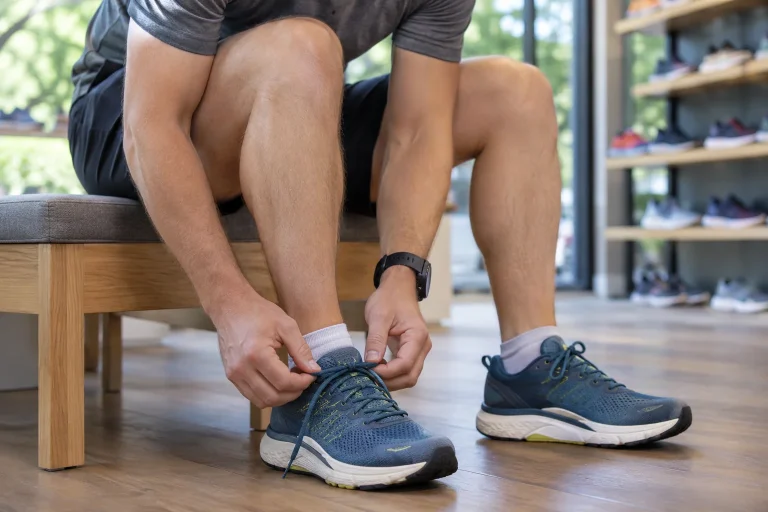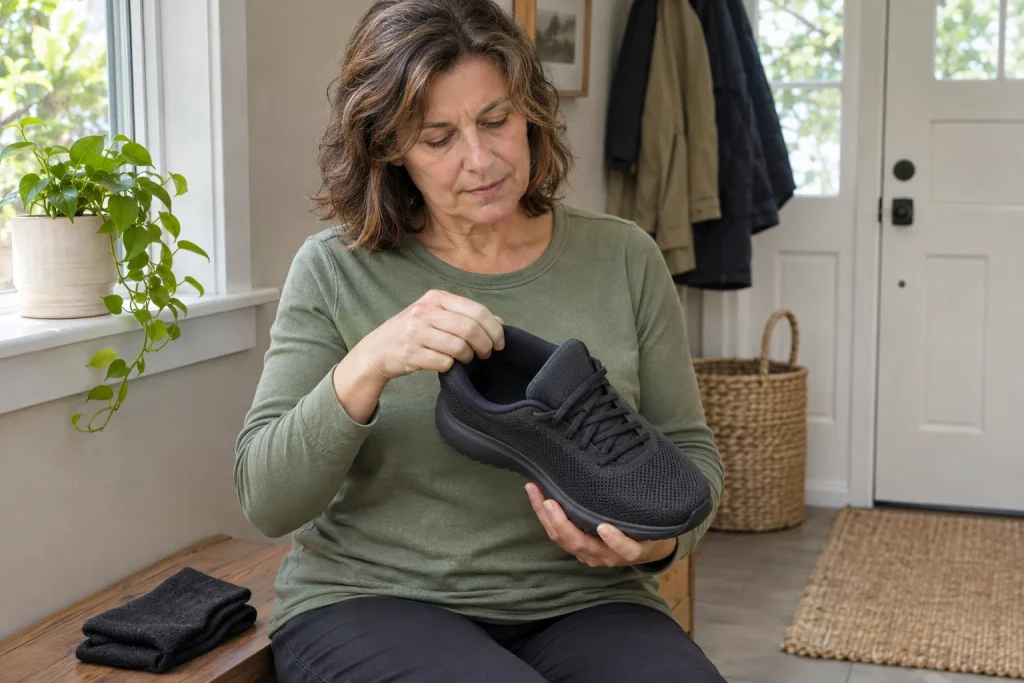
“It doesn’t hurt, it’s just numb” can sound reassuring to a runner. Pain, however, is not the only important signal about a foot’s condition. When sensation changes, uncomfortable pressure or a skin injury may not feel as it did before. New or persistent numbness is therefore a healthcare question of its own, rather than automatic permission to continue usual running.
Sudden one-sided numbness, new weakness, facial changes or speech changes require immediate emergency help; do not drive yourself to care. The NICE NG127 guideline relates sudden one-sided sensory disturbance to stroke assessment too. According to the NHS, symptoms stopping does not remove the need for immediate help. Do not wait for another running test or further signs.
Pain and sensation are different measures
The NHS describes sensory and motor functions of peripheral nerves separately. Sensory nerves carry information about touch, temperature and pain. Their involvement can produce tingling, burning, reduced sensation or numbness. Experiences differ, and every symptom need not occur together.
Pain intensity alone therefore cannot describe the reliability of sensation. Feeling something less is not necessarily the same as a completely symptom-free, healthy area. You need not make your own nerve diagnosis from this information. The important point is to report altered sensation separately from pain.
Your own words are enough: feeling as if through a thick sock, tingling, an unfamiliar sensation or an area being less sensitive. Say if describing it is difficult. You do not need a needle, hot object or strong pressure to prove the difference. Home sensation tests cannot replace professional examination and may create another problem.
Motor function and balance matter separately too
Alongside sensory change, describe any difference in movement. Is lifting the front of the foot harder, your step less steady or the shoe toe catching more often? Do not dismiss these because pain is mild. Movement and sensation provide separate information even when changing together.
According to the NHS, motor symptoms of peripheral nerve involvement can include weakness and difficulty lifting the foot. Sensory changes can also affect balance. This is not a final conclusion for every numb foot. It explains why one pain score cannot determine the activity question.
You do not need running drills to test whether you remain skilful despite the unusual sensation. High knees, single-leg hopping or a barefoot loop are not clinical exclusion methods. Report changes already noticed in everyday function. Sudden or rapidly worsening symptoms require appropriate urgent assessment before independent balance or technique work.
With diabetes, skin protection has particular importance
The NIDDK information on diabetes and foot care explains that reduced nerve sensation can mean a pebble or blister causes no noticeable pain. Pressure or injury that would normally trigger discomfort may then continue. This matters in that particular health context, rather than explaining every numbness identically.
The American Diabetes Association’s 2026 professional recommendations consider loss of protective sensation important in assessing foot-injury risk. Professional examination considers skin, sensation, shape and circulation together. A normal-looking exterior or absence of pain cannot replace this assessment.
If you have diabetes, connect foot-care and activity plans with your own care. Different diagnoses and risk states do not require identical actions. A general running article cannot give individual clearance or prohibition. New sensory changes do belong in care, however, even if no similar symptom was present at the last review.
 Enlarge image
Looking at the foot differs from seeking pain
For diabetes, the 2026 ADA recommendations include individually taught self-checking as part of prevention. Looking at your foot differs from testing sensation with a sharp object or heat. The aim is to observe skin and existing changes rather than force a diagnostic answer from the foot.
Observation incorporated into a daily routine helps when it is achievable. If you cannot see the sole clearly, do not balance awkwardly to reach it. The NIDDK mentions a mirror or another person’s assistance. Your own care can clarify support suited to vision, movement and circumstances.
Do not hide a new wound, blister, colour change, warmth or swelling behind “it doesn’t hurt”. Especially with reduced sensation and diabetes, seek professional advice promptly about a new foot change. Do not wait for pain severity to validate its importance. Observation supplies no home treatment protocol, but can help report an important change in time.
| Observation | Why mention it separately? | What does it not establish? |
|---|---|---|
| It hardly hurts. | Pain and sensation are separate questions. | It does not guarantee an uninjured foot. |
| Altered sensation | Location and onset support assessment. | It does not identify one definite nerve diagnosis. |
| Visible skin change | This matters even with reduced sensation. | Severe pain need not precede action. |
| Movement change | Weakness or less steady walking should be reported too. | It is not simply concentration or technique. |
Checking inside a shoe is not a complete fitness assessment
The NIDDK includes inspecting shoe interiors in its diabetes-related foot-protection advice. Finding a bunched-up part or an object can help practically, especially with reduced sensation. This serves a different purpose from determining why the foot is numb and which sporting load is appropriate.
If you find an object causing trouble, remove it, but do not automatically consider new or persistent symptoms resolved. Describe what was there and what you experienced before or afterwards. A further long run is unnecessary to prove it was the sole cause. Removing an external circumstance is not always equivalent to resolving the whole healthcare question.
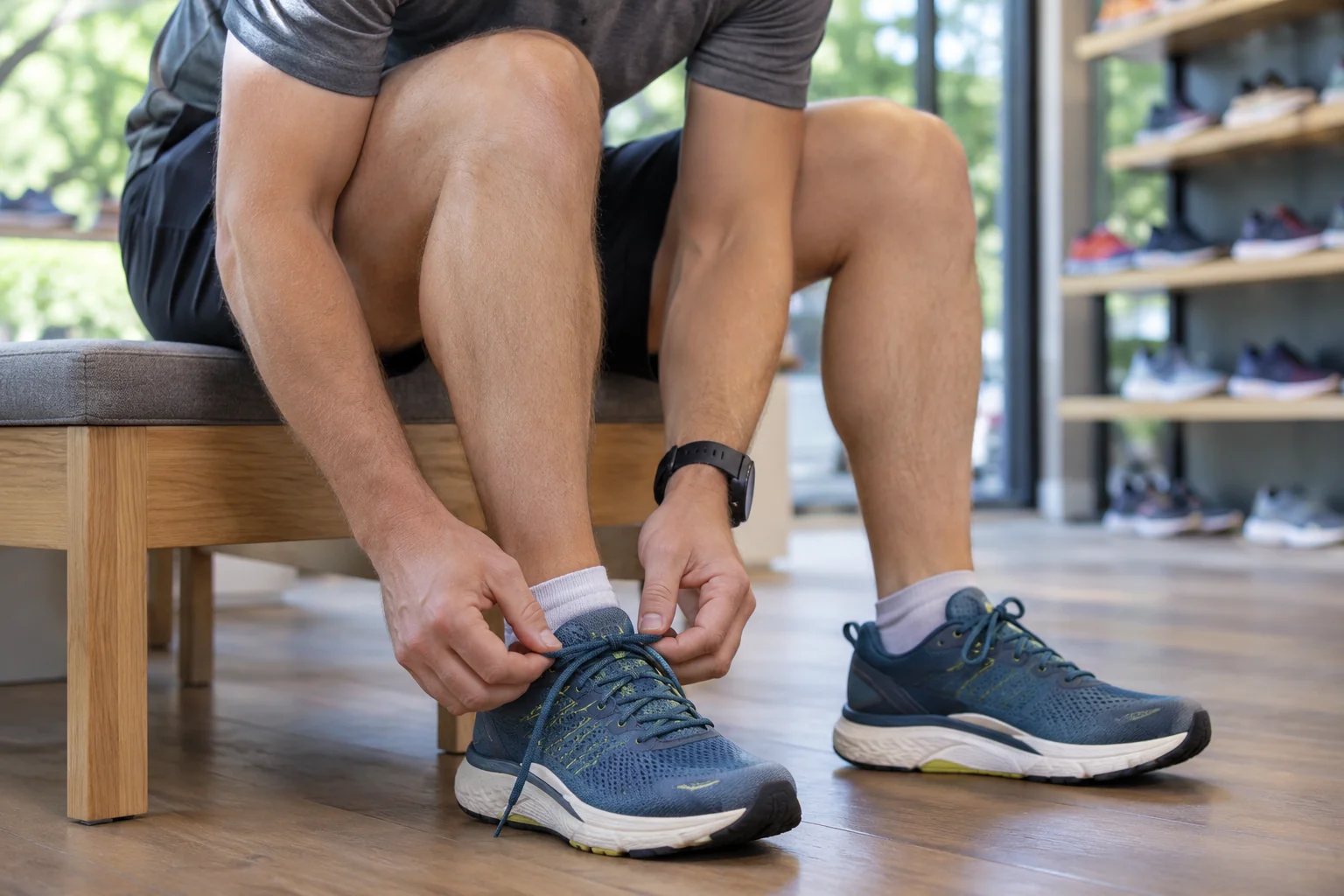
Reduced sensation can make judging shoe and sock fit harder: something failing to cause pain is not necessarily suitable. Individual footwear discussions and skin inspection may therefore matter within your care plan. Do not deliberately tighten laces or load the foot barefoot to “feel” its position better.
Heat and pressure should not become home sensation tests
Do not check sensory changes using objects that would normally be uncomfortable or dangerous. Hot water, heating pads, strong pressure or sharp surfaces cannot establish safe running. With reduced sensation, the feedback such tests depend on may itself be less reliable. You do not need another stimulus to prove a symptom.
The NIDDK specifically warns about directly heating feet with diabetes-related sensory loss. Keep this tied to the particular risk context. The article prescribes no water temperature or treatment; it explains why “if it doesn’t hurt enough, use more” is not a sound principle.
Online advice based on pain cannot be transferred unchanged to every situation either. If a method says to stop only when uncomfortable, sensory change is an important limitation. Discuss your own plan alongside health background. A general pain-tolerance rule cannot become clearance to run with new numbness.
Timing and which side is affected matter in describing numbness
Say whether one or both feet are involved, where the sensation starts and how it changed. Do you notice it only in particular familiar situations or independently of them? You need not hold a position for a long time to provoke symptoms. Observation means communicating what already happened rather than producing increasingly detailed symptoms at home.
According to the NHS, nerve symptoms can develop quickly or more slowly and affect different functions. Add whatever genuine timing information you know to “it’s felt odd for a while”. Do not invent an exact date. Real uncertainty can belong in the history without making a new change insignificant.
Mention a previous similar episode or diagnosis, but keep current differences distinct. An old explanation does not mean every new sensation shares its cause. Even with diabetes, not every nerve symptom should automatically be attributed to it: the 2026 ADA recommendations also call for considering other causes.
 Enlarge image
An individual foot examination assesses more than pain
Professional assessment may include history, sensory and motor function, circulation where needed and skin condition. You do not need examination instruments at home. An improvised touch or pressure test is not equivalent to a properly performed and interpreted clinical examination. Preparing a diagnosis with personal test results is not the patient’s task.
If several professionals are involved, explain their findings and the tasks assigned. New or persistent numbness may require clarification of earlier activity advice too. You need not assemble your own combination of conflicting online programmes. The next step should relate to current condition and real circumstances.
Ask about running concretely, without needing to prove a yes answer beforehand. The goal is an appropriately assessed activity plan. Everyday mobility or care of a skin change may need priority. General movement advice alone does not establish suitability for someone with a new sensory disturbance or changed foot condition.
Let absence of pain be information, rather than final clearance
If a task remains easy despite altered sensation, report that as well as difficulties. Do not hide good experiences. Simply avoid drawing the whole conclusion from one signal. Absence of pain, skin condition, movement and sensation need interpreting together. Personal observation contributes information rather than replacing individual judgement.
Follow-up should clarify changes requiring earlier contact and how to seek help for new skin changes, weakness or unusual symptoms. Do not adapt health reporting to a training plan. If a planned run becomes uncertain, social or organisational matters can be resolved separately. An already booked start or companions’ pace should not assess the foot.
Numbness is therefore not a less important version of pain. It provides information worth including even without severe discomfort. Assessment of new or persistent sensory disturbance, appropriate foot protection and an individual plan can provide useful direction together. Link the running question to this rather than treating absent pain alone as proof of no injury or general permission for loading.
Sources
- NHS: sensory and motor symptoms of peripheral nerves
- NIDDK: diabetes-related foot protection and reduced sensation
- American Diabetes Association: neuropathy and foot care, Standards of Care 2026
- NICE NG127: assessing new sensory disturbance and limb weakness
- NHS: sudden stroke symptoms and immediate help
How Futószív articles are prepared: our editorial guidelines.