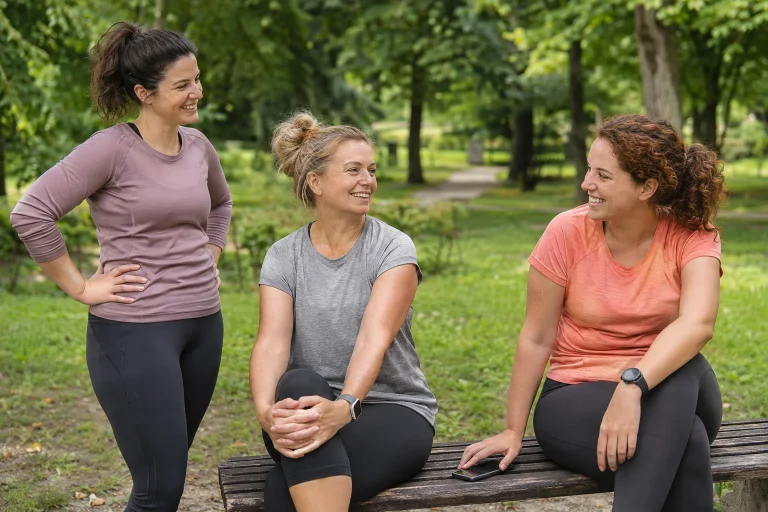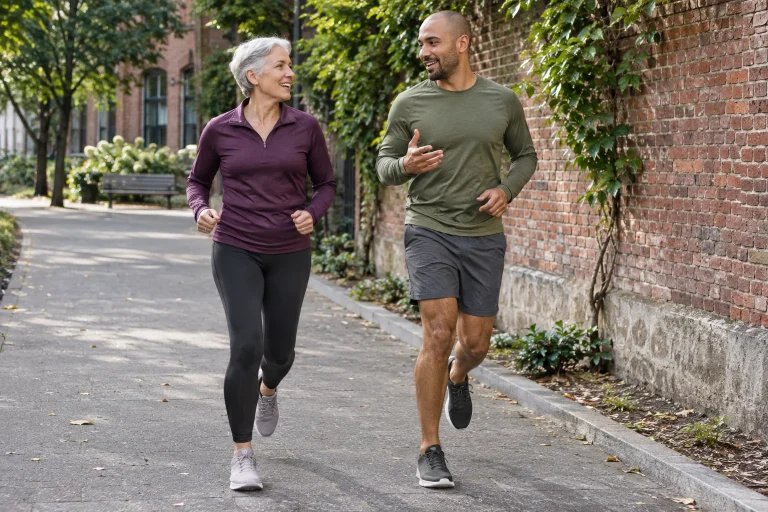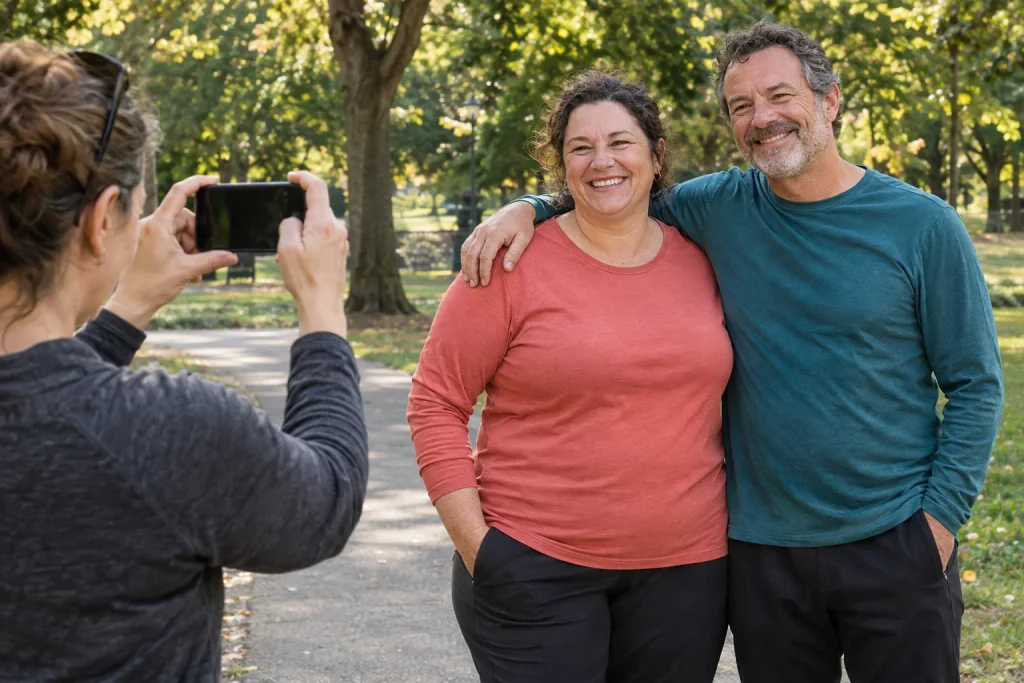
A running group asks for a photograph of you for its closing report, preferably paired with an older one. You would rather talk about the company, something you learned or a good morning than compare your body. That does not make your story less valuable. A pair of transformation pictures does not authenticate your participation in recreational running, and you do not have to describe every sporting experience as a weight-loss result.
Photography can bring joy, preserve a memory or offer creative self-expression. It can also be something you would rather skip. Separate the questions of whether you want a photograph, who you would show it to and what story should accompany it. The following points concern personal and group discussions; they are not advice on Hungarian image rights or data protection law. Nor do we assess health changes from photographs or ask for new photographic proof of your sport.
Two pictures answer a different question from sporting experience
A pair of pictures can show two selected moments, but not every session in between, the circumstances or the participant’s health. Clothing, posture, camera position and lighting also affect appearance. Even an honestly produced comparison cannot explain by itself what happened in the body or why. Your experience of sport may include details that never appear in a still image.
The NIDDK information on choosing weight-management programmes lists before-and-after pictures that look too good to be true among advertising warning signs. This does not mean that every personal photograph is false or worthless. It shows that a striking presentation cannot replace understanding how a programme works and what its outcome data show. Your own keepsake need not become clinical or marketing evidence either.
If finding a community mattered in your sport, the story of a good meeting can express that. If you learned to understand an activity better, you can describe your experience of it. You do not need to display a slimmer body or a changed clothing size. A story’s value does not depend on whether it fits advertising’s familiar before-and-after format.
Do not let a caption replace your own goal
You may have been finding a place for movement in your days, while the finished post would portray your participation as if you had started solely to lose weight. Clarify the text planned for the picture too. What do you actually want to say, and what do you not? A claim attached to a photograph can go beyond what the picture itself shows. Understanding your story matters more than filling in the organiser’s easiest template.
The NICE principles of care emphasise considering the whole person, their experience and their needs. This is healthcare guidance, not a policy for group photographs. A practical interpretation for telling your sporting story is that a person is more than a body size or measurement. The details that matter to you can have a place in your account.
You might say: “I want to talk about how I found people to exercise with; I do not want text about a body transformation.” Or: “I enjoyed this session, but I do not want it presented as a general health outcome.” These are not compulsory formulas. They help the picture and accompanying story reflect what you actually wish to share.
 Enlarge image
A memorable photograph need not compare bodies
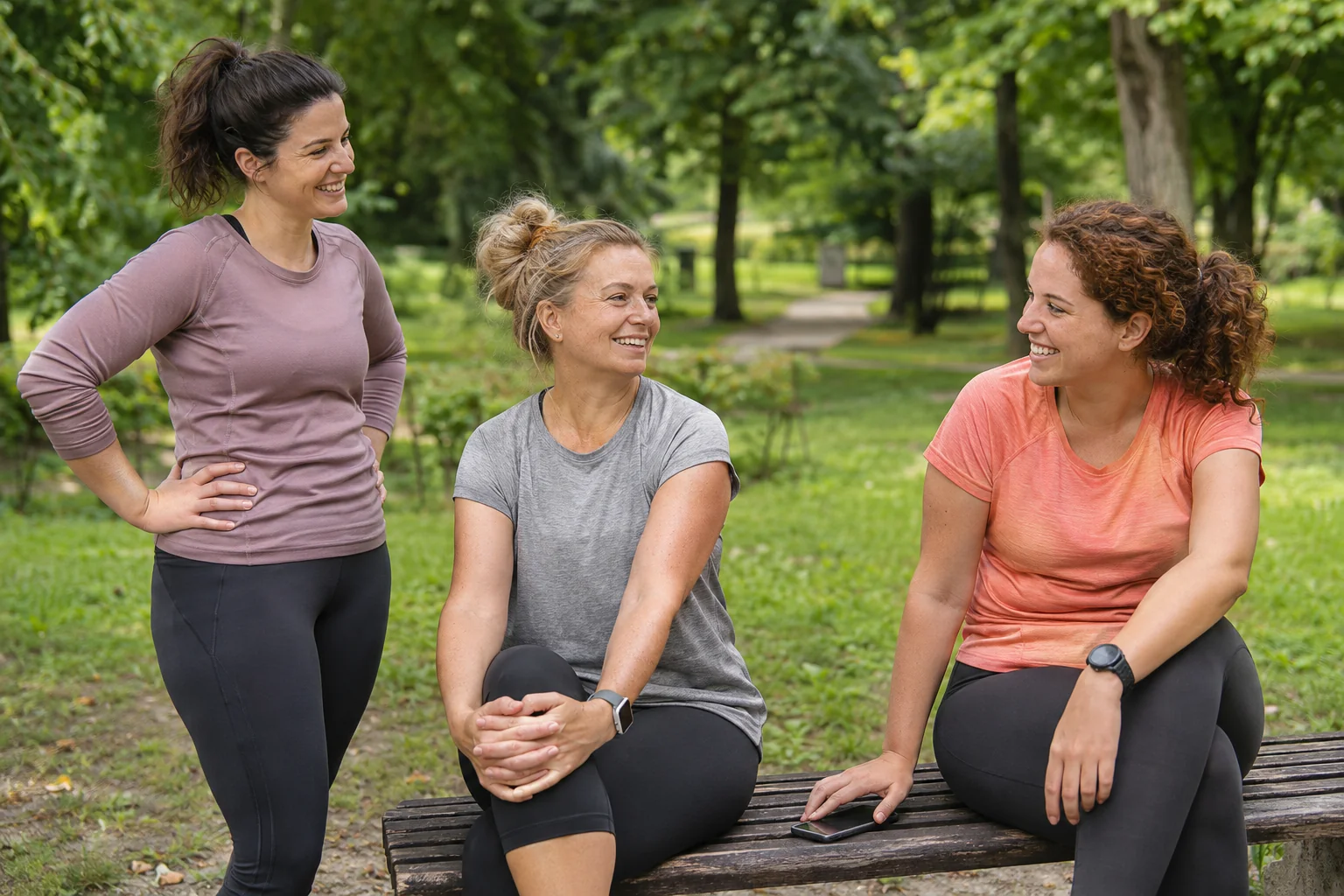
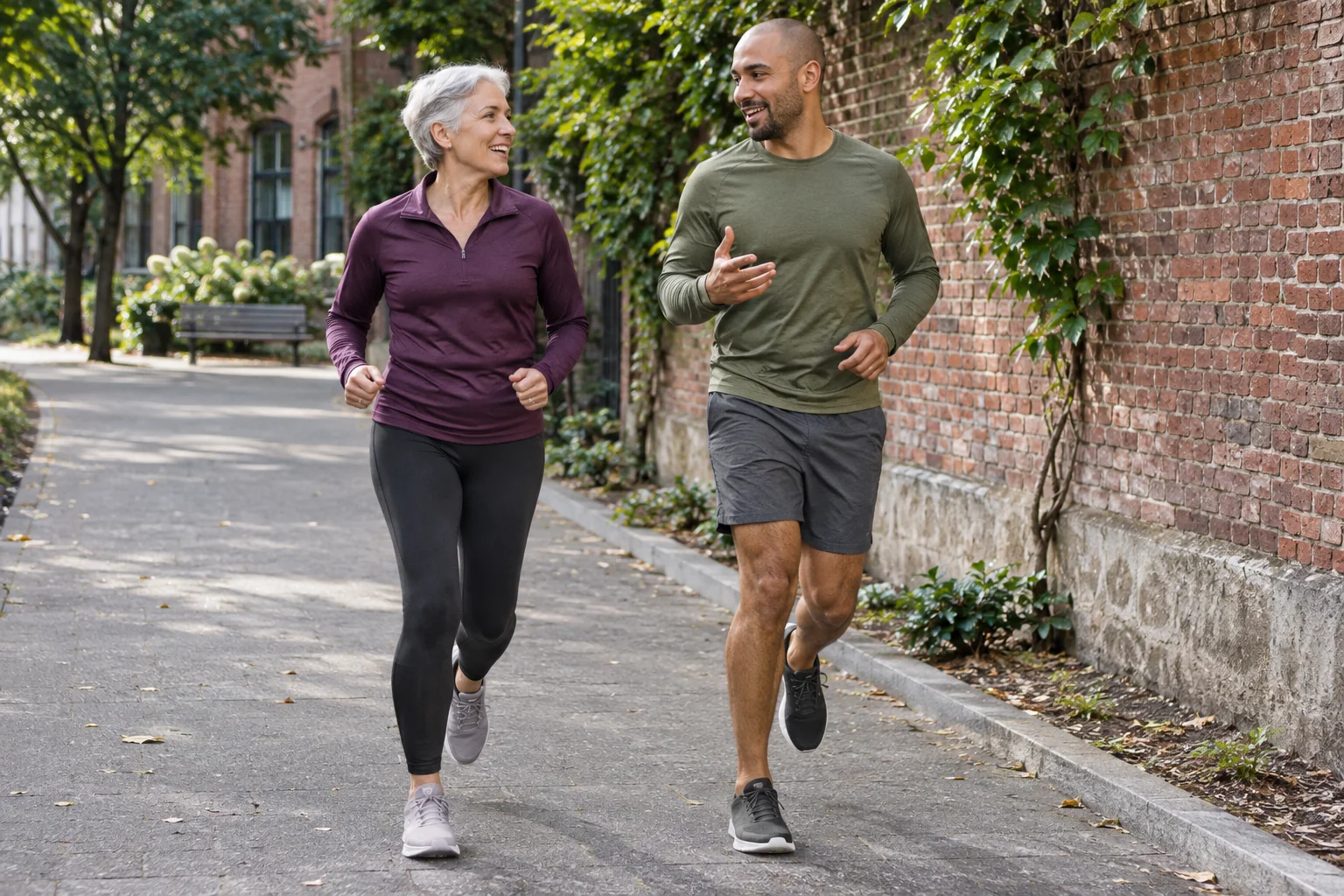
A photograph can show a meeting, a favourite point on the route or the conversation after an activity. You do not need to arrange your body in a rigid pose or recreate an old picture’s angle and clothing. Where you were and what happened can provide the shared memory. If others appear in the picture, discuss taking it and the planned sharing first; your own enjoyment cannot decide their wishes for them.
A detail photograph can be personal too, but should not become a new compulsory trick for hiding the body. You can choose a landscape or a distinctive location, and you can choose a picture in which you appear completely naturally. The point is not for everyone to follow the same “body-neutral” visual language. What matters is having a choice, without making your presence in a picture depend on some future change.
Do not create an unnecessarily difficult or dangerous sporting situation for a photograph. You need not repeat a section if it is unsuitable or step onto a busy road for a better background. A calm moment suited to your circumstances can also say that you were there. A memory does not become authentic because you undertake another feat to capture it.
Taking, limited sharing and advertising are different situations
A friend taking a picture on their own phone, group members receiving it in an album and an organiser using it in a public advertisement can be different situations. You should not have to work out the difference afterwards. Ask in advance about intended use, names or tags appearing, and whom to contact with questions. This is practical clarification, not a legal assessment of that use.
Someone should not infer what accompanying text you would accept from your agreement to a photograph. A friendly keepsake and a post advertising a programme’s results tell different stories. Say if you want one but not the other. If a contract or separate declaration is involved, read the actual terms and request appropriate information about anything unclear. This article does not determine the Hungarian legal consequences of a particular situation.
Check the background too: another participant, a named document or a screen could enter the picture without your intending to show them. Not every friendly moment needs a formal checking process, but a calm review before posting can prevent misunderstandings. If what the picture shows or whom it is intended for is unclear, clarify that first rather than trying to infer it later from reactions to the post.
You can tell a specific sporting story without pictures
A short account can describe what happened: how you arranged to meet, what you learned about an activity or why you enjoyed the company. The more specific the experience, the less it needs a general transformation slogan. “Getting started feels easier now because I know where I am going” describes a personal experience. It is not the same claim as saying that a programme changes everyone’s health.
Try three straightforward sentences: what you were looking for, what happened and what you want to clarify or continue next. You need not write a finished success story while your participation is still developing. Uncertain or mixed experiences are worth describing too: you enjoyed meeting people but are looking for another time or activity. That makes the account more accurate to your situation, rather than less real.
A public story is not a compulsory part of every sporting experience. You may want to keep it only for yourself or a friend. You do not need a post to prove you started, nor must you make personal information available for a service’s marketing for movement to have meaning. Of course, learn a particular programme’s contractual terms beforehand, rather than assuming precisely what freedom or obligations apply.
What can you say if asked for a pair of pictures?
Your answer can be brief: “I would be happy to take a shared keepsake picture, but I do not want a before-and-after comparison.” Or: “I do not want a photograph now; I would rather write a few sentences about my experience of movement.” You do not need to recount your whole body-image history. If a request feels uncomfortable, naming a boundary around the specific use is usually clearer than trying to explain every possible reason at once.
The NICE shared decision-making guideline emphasises expressing what matters to the person and having an understandable decision-making conversation in healthcare. It is not a guide to granting photography permission. As a practical application, however, a useful question is: do we mean the same thing by what I am agreeing to now? With a photograph too, understand separately its creation, the text and its intended use.
If the request continues with “you would motivate others”, you can acknowledge that intention without changing your answer. An inspiring story need not be built on comparing your body. If you would like to help, you can offer another format, but even that is not a required trade-off. The conversation is not about finding a persuasive reason to arrive at the same pair of pictures after all, but about having your choice understood.
 Enlarge image
If a post is already published, identify the specific difference
Text or a picture arrangement may appear differently from what you expected. Describe exactly what differs: the pairing of pictures, the claim, the name, the tag or the place of use. Saying “this makes me uncomfortable” matters, but identifying the specific part helps the other person understand what you want clarified. You do not need to share more personal information in public comments to address the situation.
Find the appropriate contact: the organiser, the platform’s manager or the service provider’s stated contact details. Which changes, removal or other procedures are available or can be requested must be assessed against the actual terms and legal setting. A dispute may require appropriate professional or official information. A clinical communication guideline does not automatically resolve a Hungarian image-rights case.
The emotional burden can matter too. If comparisons around pictures persistently interfere with sport, eating or everyday participation, seek support from an appropriate professional. This does not mean that an unpleasant photographic experience implies a diagnosis. It means your distress deserves attention, and you do not have to resolve it alone with another, “better” body picture.
Choose a memory that preserves your story
In a fictional example, after a runner’s first group session, the organiser requests an old photograph to accompany the new one. The participant prefers a park picture with a friend and a short account: they liked learning the route in advance and finding it easy to ask questions. This is not a body-transformation outcome, but it is a specific story of participation. The example illustrates another way of telling the story, rather than a real service’s rules or a legal solution.
Someone else may enjoy making a pair of pictures for themselves. It can have personal value if they choose the format and understand the use. This article does not dictate which photographs you should like or set a new standard for the right body image. Your choice is your own when you do not have to use it to prove your worth to a sporting community. Your relationship with pictures may also change as your goals and life circumstances develop.
Your sporting story can include encounters, things learned, new places and everyday barriers overcome. These do not have to be forced into a before-and-after body story. If a picture is taken, it can reflect what matters to you. If none is taken, the experience and participation still happened. Two body pictures placed side by side do not make your running life real.
Sources and limits of the practical suggestions
NICE NG246: Principles of care; NICE NG197: Shared decision making; NIDDK: choosing programmes and advertising promises. Clinical guidelines are not photography laws. The picture and wording ideas are original editorial suggestions, not individual legal or mental-health advice.
How Futószív articles are prepared: our editorial guidelines.