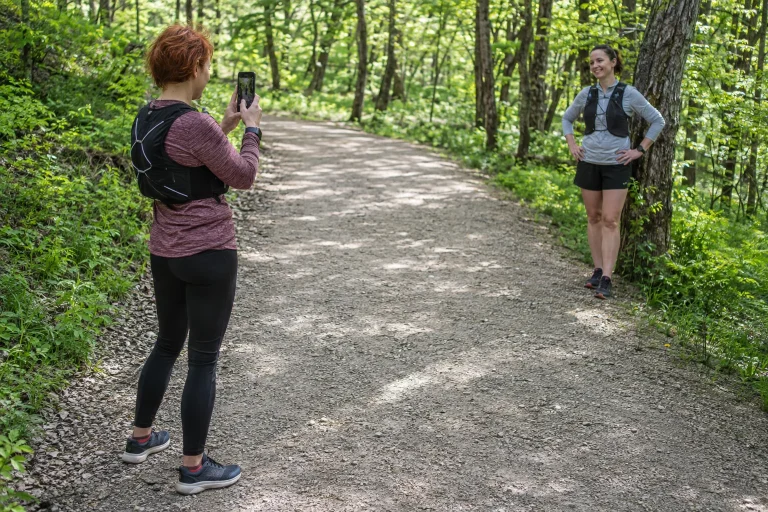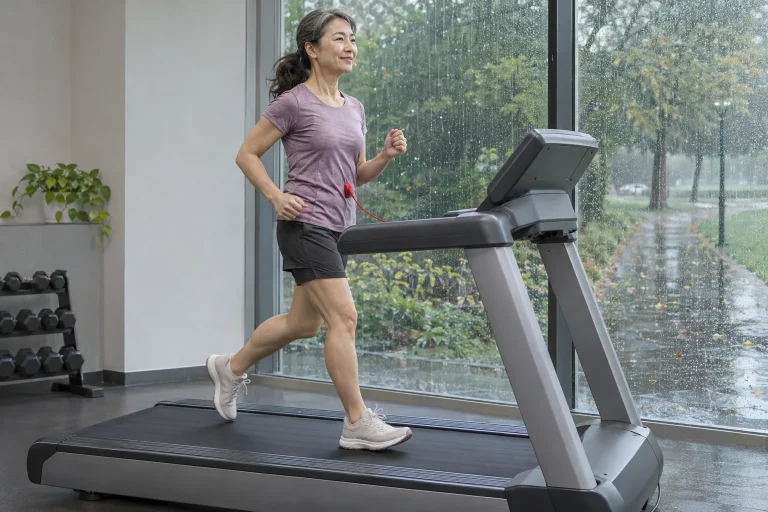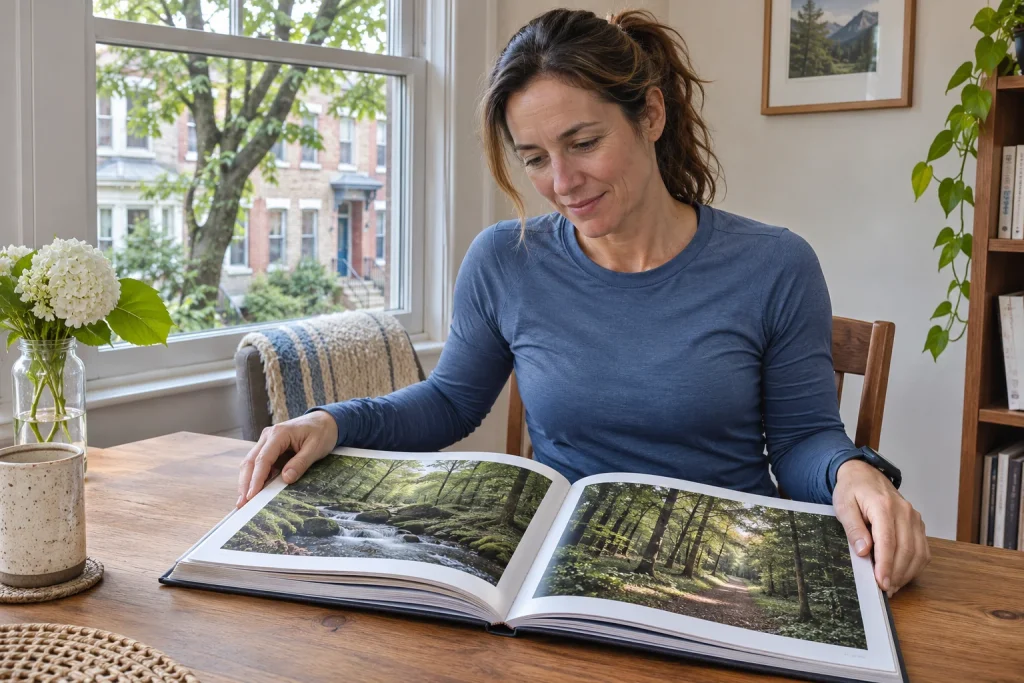
Viewing a forest photograph, walking a forest route and running among trees are different situations. Scenery may be shared, but bodily movement, sounds, weather and presence are not. When reading that nature’s image or proximity may accompany a favourable experience, pause at that distinction. Showing a picture, building a virtual environment and actually sending participants for a walk are different methods.
Runners have varied indoor and outdoor options. A landscape photograph at home, a park video and real outdoor activity can each be pleasant. None needs to be called false or inadequate. Ask instead which components are present and what you expect: a brief attentional break, a more pleasant workout or something else.
What appears in the picture, and what happens to the body?
A photograph fixes a selected viewpoint. You need not adjust steps to uneven ground, sense wind direction or yield to someone approaching. These omissions are not all disadvantages: viewing a steep hillside safely from a room may be pleasant when you would not want to climb it. But the image remains different from the complex situation it depicts.
During running, perception continually connects with movement. A landscape opens after a bend, and different details appear when slowing or stopping. A prerecorded screen viewpoint need not follow these changes. That remains true even with beautiful, high-resolution footage. Richness of experience should not be equated simply with screen size or realism.
An indoor option can still have value. Time, access or weather may make home movement fit life better. A nature image need not promise to replace a whole forest experience. It can simply be a preferred visual setting where you enjoy being. Personal liking is an acceptable reason without a measurable health claim.
Two attention experiments in different settings
Berman, Jonides and Kaplan’s 2008 paper examined attention performance related to natural and urban environments in two experiments. Specific attention tasks were assessed after a nature walk or viewing nature images. Reported tasks included backward digit span and an attention network test. Findings concerned certain measures of directed attention, not every nature picture improving everyone’s whole thinking capacity.
The separate walking and picture experiments matter. Both involving nature does not merge them into one everyday recipe. Walking included movement and an actual route; viewing pictures involved different participation. The paper cannot establish that home landscape viewing produces the same as outdoor running or replaces it in every respect.
Keep the measured outcome in view. Recalling digits, performance on an attention task and enjoying a forest video are different outcomes. They may relate but cannot be exchanged without explanation. Promising lasting work capacity, better race results or treatment of mental illness from a brief experiment would be a major leap.
 Enlarge image
Nature is more than visual stimulation
In 2019, Hedblom and colleagues examined physical responses after stress in virtual urban, park and forest settings. The experiment combined 360-degree images with matching sounds and smells and measured skin conductance. Green environments were associated with more favourable recovery patterns; smells also played a significant role in analyses of stimulus pleasantness. This was neither running research nor an essential-oil treatment trial.
The design shows how different stimulus materials may hide behind the research word ‘nature’. A photograph, a virtual space with recorded sound and an actual place offer different things. A report saying only participants experienced a forest can lose this important detail. Brief methods often help more than a dramatic claim about nature’s power.
Runners need not therefore assemble smells, noises and screens at home. Research stimuli belonged to a controlled design. Strong scents or continuous sound at home may be unpleasant, and no experience must be intensified. Multisensory presence is a description, not a shopping list or a universally effective environmental recipe.
Attending to images differs from following a workout
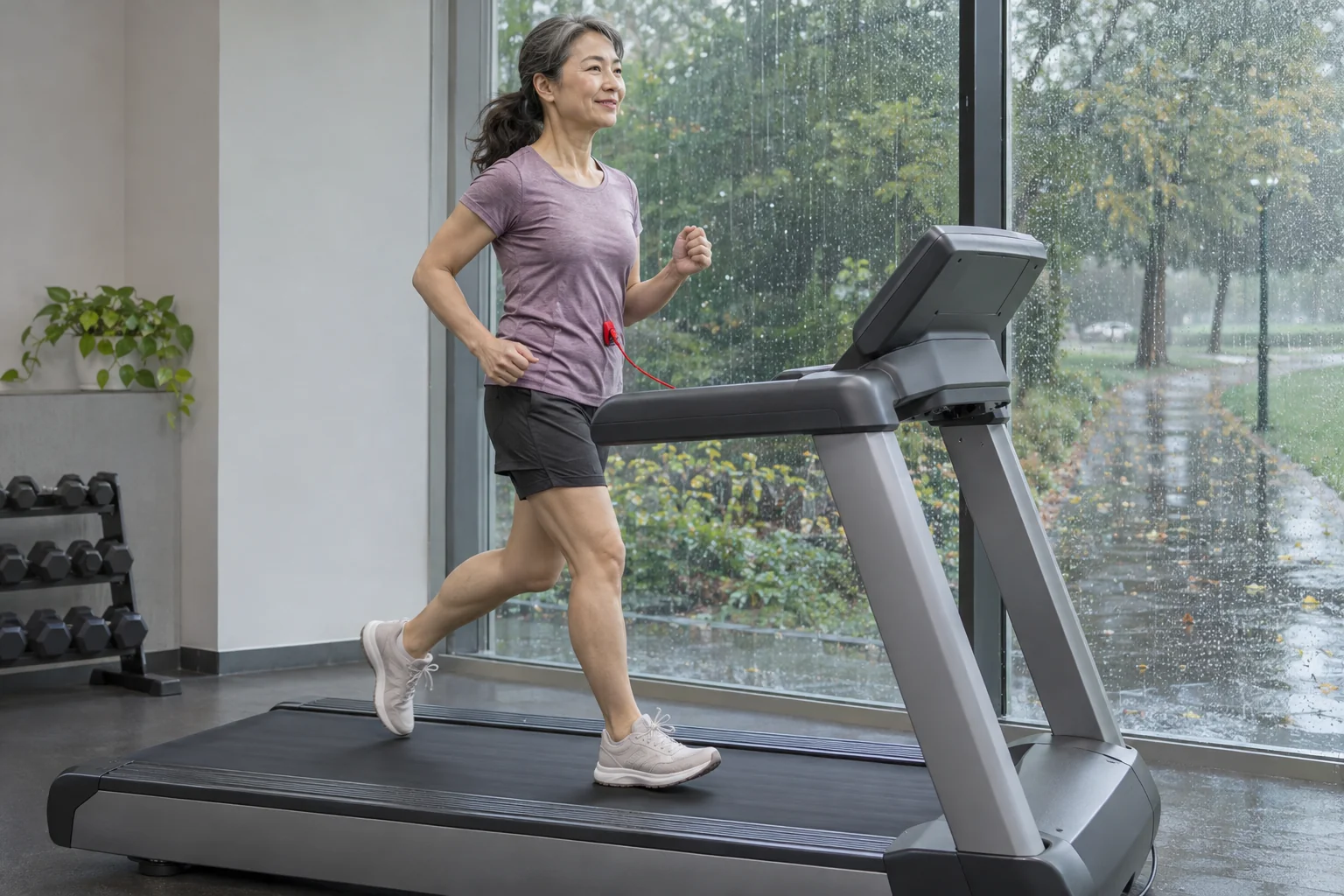
With an album at home, you can pause, turn back or look elsewhere. On a moving treadmill, attention must include safe machine use. Quiet image-viewing findings cannot simply transfer to following changing video, messages and workout data at once. Content and usage situation matter together.
Not every workout needs a screen because impressive nature videos exist. Moving images may bother you, or a simple quiet room may feel better. Another day a calm landscape may make time feel more pleasant. Ask simply whether you enjoyed the setting; you need not prove a laboratory attention effect.
Where movement requires divided attention, safe equipment operation takes priority. Read, turn pages or adjust a phone in a stable position after stopping. Liking nature images does not justify ignoring machine or space-related risks. This article gives no new treadmill procedure; your machine’s instructions govern use.
What is missing from a beautiful landscape photograph?
A photograph often selects a favourable moment. It may omit a long journey to the trail or rain afterwards. A frame can hide construction, background noise or crowds in a nearby park too. This is natural to photography, but matters when comparing ordinary routes with carefully selected images.
An image may also omit usability for you. An apparently quiet beautiful route may be hard to reach while a less dramatic park is familiar, accessible and easy to use. Visual appeal and practical suitability are different. Confusing them may lead you to seek rest somewhere whose use ultimately creates too much burden.
A picture can evoke a trip, shared run or favourite season too. That may have personal meaning while the same image feels neutral to someone else. More than visible landscape properties are involved; your history contributes. It need not be sold as a general nature effect to be real and valuable.
Equivalence may be the wrong question
Does an indoor nature video ‘count as much’ as outdoor movement? First define the value being measured. Completing movement, discovering a new place and a quiet attentional break have different priorities. One total score can obscure that the situations answer different needs.
Choose indoors for security and fit with your day, or outdoors for changing scenery. These are not scientific arguments against each other. Research may separate components but does not award moral rankings to activities. Knowing your circumstances is part of deciding, not an inconvenient exception.
Replacement can also be partial. A nature picture may offer pleasant scenery without meeting a wish to see people; a shared park walk may provide company without satisfying a need for quiet. Clarifying these avoids disappointment. One tool or location need not supply every desired experience.
 Enlarge image
A personal trial without exaggerated conclusions
If curious about nature images in your activity, first notice liking and comfort. Did a still landscape make indoor time pleasant or feel unnecessary? Was moving footage enjoyable or demanding? No exhaustive workout, performance comparison or new equipment is required. It can remain a low-stakes experience.
Relate the result to the occasion. ‘It was pleasant today’ is more precise than ‘I proved this improves my brain function’. Sleep, routine, expectations and many factors differ between days. Experience remains credible without providing causal certainty. Everyday choice often needs no larger claim.
If indoor images do not offer what you love outdoors, do not force it. Name what was missing: changing air, seeing your own movement or neighbourhood life. If indoors was pleasant, do not diminish it either. Recognising differences supports realistic expectations rather than rejecting an enjoyed option.
What should we retain from the idea of nature images?
Scenery can be an important part of environmental experience without being the whole environment. Movement, sensory inputs and personal meaning deserve separate attention. Keeping that in mind makes promises of a screen as an entire forest experience or brief viewing as a solution to every problem less tempting. Restrained claims often better match what research actually examined.
You do not have to turn running surroundings into an experiment. A favourite photograph, indoor workout and outdoor route can each have a different role. What matters is a usable, manageable choice without attributing nonexistent certainty to it. A nature picture can remain a picture, a walk a walk, with separate value in each.
Sources
Berman, Jonides and Kaplan: The cognitive benefits of interacting with nature, 2008. Two experiments using different methods to study nature-related attention performance; not running training or a treatment protocol.
Hedblom and colleagues: Reduction of physiological stress by urban green space in a multisensory virtual experiment, 2019. A multisensory stress experiment in virtual environments. Practical situations are editorial examples, not research participants’ stories. This article makes no claim of documented medical review.
How Futószív articles are prepared: our editorial guidelines.