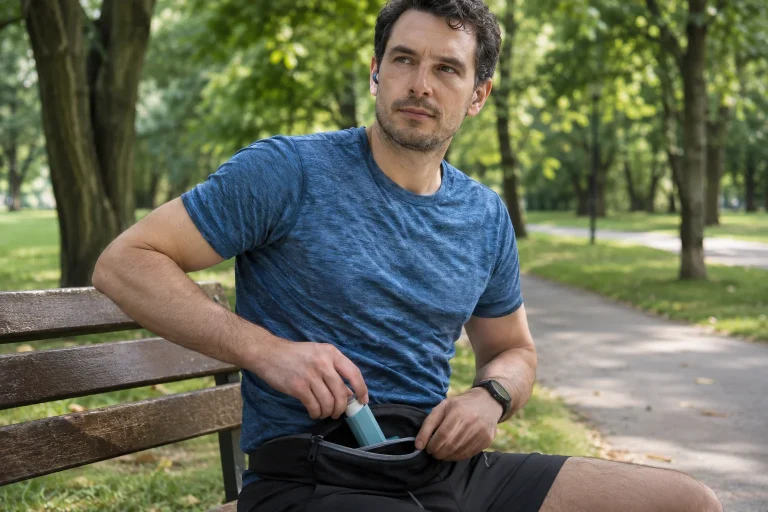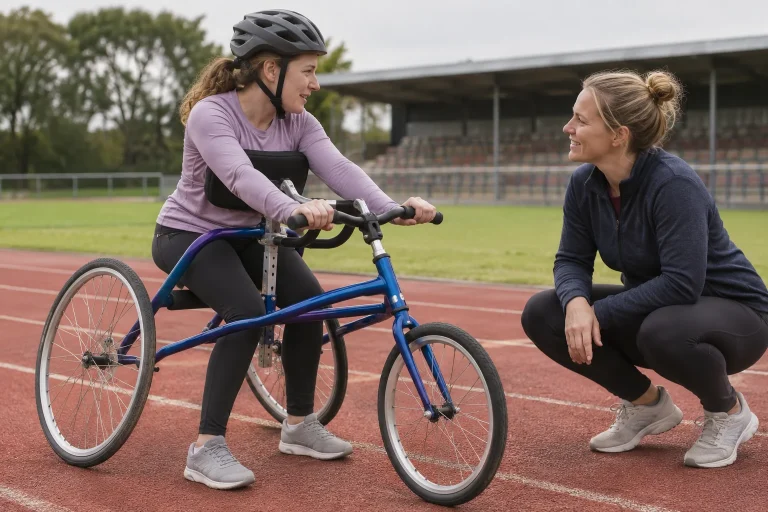
With multiple sclerosis, or MS, planning movement can involve more than distance and intensity. Heat can worsen familiar symptoms for some people, making a usual outing feel different. This does not automatically mean avoiding all sport. An individual plan should consider temperature, the day’s condition and opportunities to change together.
This article offers questions for organising movement discussed with neurological care providers. It does not determine a relapse, give running doses for everyone or override the treating team’s guidance. New or unusual symptoms must not automatically be attributed to heat sensitivity.
Heat sensitivity has an individual pattern
The MS Society says temperature changes can temporarily worsen symptoms for some people with MS. Experiences differ, and summer heatwaves are not the only relevant circumstances. Warm indoor spaces, hot baths and other conditions may also belong to your own pattern.
Note which situation changes which familiar symptom: fatigue, visual difficulties, unsteady movement or another sensation. This is not a self-diagnostic list. A precise account of experience can help discussion with your clinician.
Do not adopt another person’s temperature limit. A cooler time suits some; others benefit from indoor surroundings or more breaks. One thermometer reading cannot describe every personal circumstance.
Movement can be valuable, while running remains an individual question
The NICE MS guideline recommends supporting exercise and names heat among factors influencing fatigue. This does not imply the same running programme for everyone. The chosen movement should suit current function, goals and necessary professional guidance.
At consultation, explain what you want: a short easy run, another endurance activity or shared movement. Distance, terrain, equipment and assistance needs matter too. An appropriate alternative is not failure when more manageable in the situation.
Seek individual advice before starting a new activity or substantially changing demands if your condition is uncertain. A companion’s good intentions do not replace assessment. The aim is preserving opportunities for movement while making clear what needs attention.
Temporary symptom worsening is not automatically a relapse
The 2025 Australian–New Zealand consensus discusses raised body temperature, infection and other external factors among situations that can worsen earlier symptoms and mimic relapse. This distinction matters, but does not enable confident differentiation at home. Assessing a new concern is a clinical task.
If familiar symptoms change in heat, stopping under individual guidance and reaching appropriate cooler surroundings may help. Contact the treating team for new, unusual, severe or unresolved symptoms. Do not use another run to test whether the same thing happens.
Duration used in a clinical relapse definition must not become a compulsory waiting time. You need not watch a concerning new neurological symptom for a whole day before seeking help. Severe or sudden change may signal another urgent condition too.
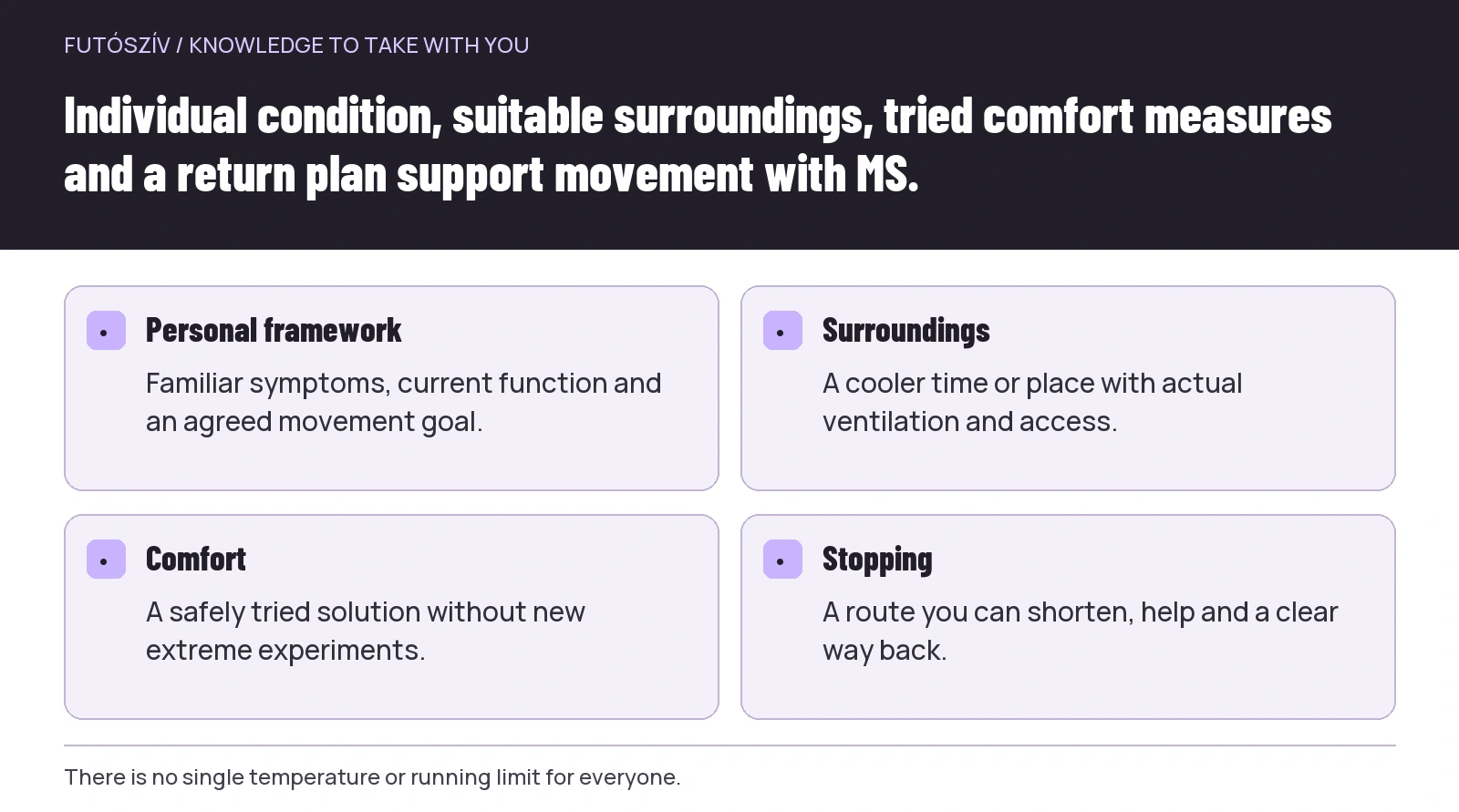 Enlarge diagram
Text version of the illustration
- Personal framework
- Familiar symptoms, current function and an agreed movement goal.
- Surroundings
- A cooler time or place with actual ventilation and access.
- Comfort
- A safely tried solution without new extreme experiments.
- Stopping
- A route you can shorten, help and a clear way back.
Give the route a turnaround plan
Choose somewhere movement is easily shortened and cooler rest space or help can be reached if necessary. A distant loop difficult to leave may pose different risks from a nearby route with several exits. Base the choice on your function and personal plan.
Agree with a running companion beforehand what happens if symptoms change. Who helps you return, where will you meet and which contact is available? Their task is supporting slowing or finishing, not persuading you to complete the distance.
Count the rest of the day too. Long hot travel or crowded event waiting may add to the activity. Training surroundings alone do not describe the full heat-exposure situation.
A cooler time is only one option
The University Hospitals Dorset information lists a cooler environment or time of day among practical possibilities. This does not mean the same time for everyone. Work, transport, lighting and available help belong to the choice too.
If moving early or in the evening, still check route usability then. A cooler time should not create organisational difficulties hard to manage in your condition. For indoor options, actual ventilation and temperature matter more than simply having a roof.
In winter, overly warm clothing and heated spaces may matter too. The aim is suitable conditions for you, not the coldest place possible. If cold also triggers uncomfortable symptoms, explain this separately to the professional.
Cooling ideas should be safe and already tried
The Dorset NHS guide mentions several cooling possibilities, including appropriate clothing and environmental arrangements. Which work for you is individual. Expensive cooling equipment is not necessary for every outing.
First try a cooling method in calm circumstances under your own guidance. Do not experiment during sport with intense cold, direct ice or sudden extremes. Appropriate advice is particularly important with altered sensation or another health circumstance.
Keep drinks accessible without treating fluid intake as a universal symptom treatment. Follow any medical fluid rule or other individual requirement. Cooling and drinking do not remove the need to assess a new concern.
Adjust outing length and breaks separately
Breaking movement into shorter sections or adding rest may belong to an individual plan. Less time need not be compensated by greater intensity. Interpret the purpose and adjustment of activity demands alongside your own condition.
Choose an easier version beforehand for days with different circumstances. It might mean another time, location or activity where appropriate within your framework. Do not leave that decision until far from the starting point.
Do not derive the next increase from one successful outing alone. Consider evening and next-day function too, discussing changes with the clinician or appropriate movement professional. A clear plan provides more information than a sudden large jump.
Fatigue can have several contributing causes
The NICE guidance emphasises individual fatigue assessment and reviewing contributing factors. Do not assume every difficult day proves lack of fitness or heat alone. Sleep, infection, other symptoms, treatment and the whole day’s demands may matter in discussion.
A diary should include more than running. Note unusual surroundings, the preceding day and when wellbeing changed. The aim is not continual numerical scoring of every symptom, but showing a few useful connections.
Do not independently alter medication or treatment for sport. Discuss suspected side effects or difficult timing with your clinician. The running plan should fit necessary care, not the other way round.
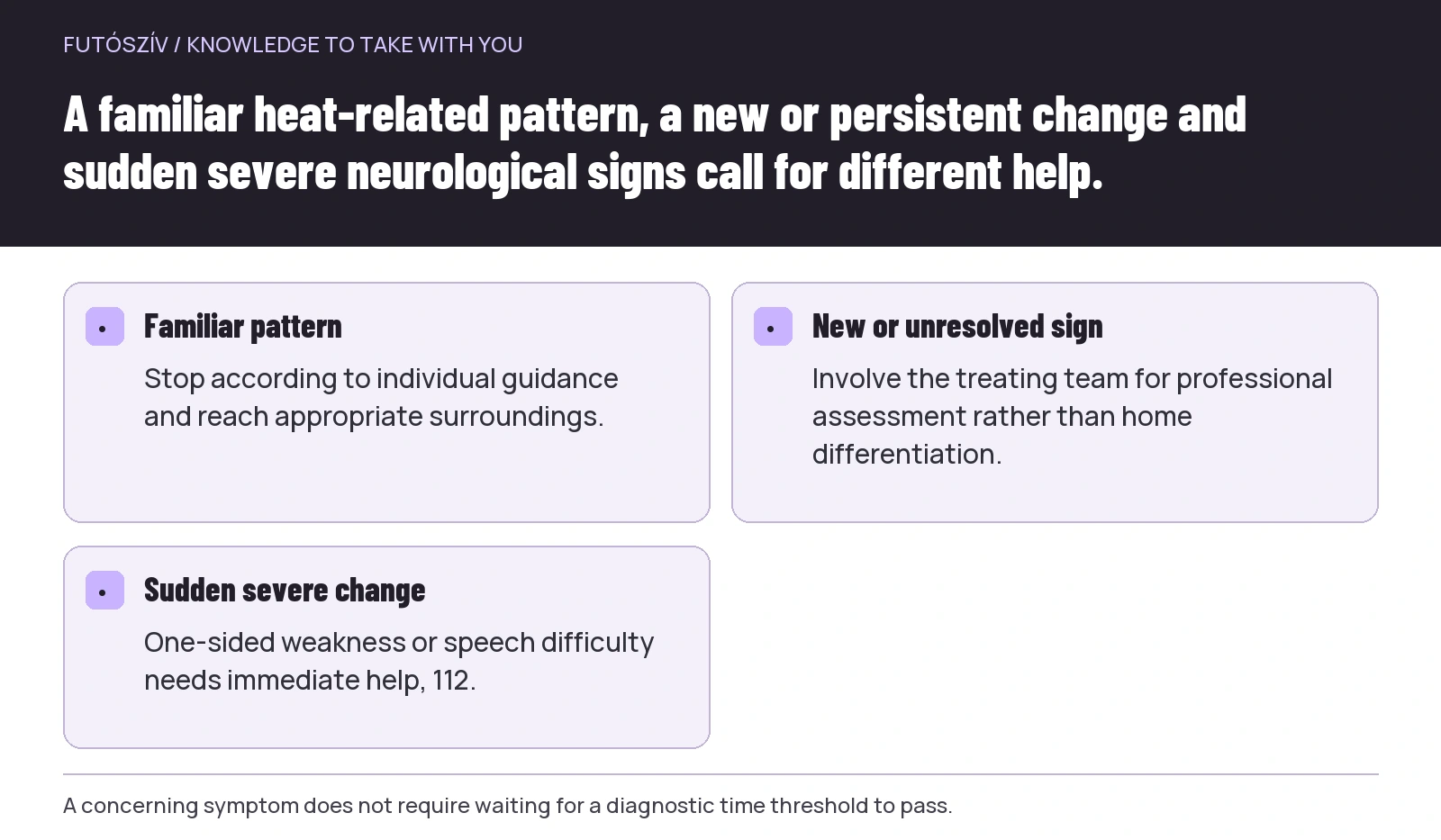 Enlarge diagram
Text version of the illustration
- Familiar pattern
- Stop according to individual guidance and reach appropriate surroundings.
- New or unresolved sign
- Involve the treating team for professional assessment rather than home differentiation.
- Sudden severe change
- One-sided weakness or speech difficulty needs immediate help, 112.
With infection or fever, adjust more than training
The NICE guideline also requires considering infection when assessing suspected relapse. If fever, urinary or respiratory symptoms accompany neurological change, tell your clinician. Independently switching to a cooler running time is insufficient.
Until the condition is clarified, seek appropriate activity guidance. Temporary improvement alone does not establish one cause. Do not independently restart leftover treatment or use training intensity to decide whether medical help is needed.
A community supports well when flexible about cancellations and changes. A runner should not have to prove in detail every time why participation is inappropriate that day. Necessary health information belongs with the appropriate professional contact.
Sudden neurological signs may be urgent
The NHS stroke information treats sudden changes in face, arm or speech as urgent warning signs. Sudden one-sided weakness, speech difficulty or another serious new neurological symptom requires immediate help; in Hungary, call 112. Known MS does not rule out another urgent condition.
Do not wait to see whether it resolves in cooler surroundings or set off running home or driving alone. A companion should help arrange care and give the exact location. Symptom onset time may be important information.
For a new or persistent change that is less sudden, contact the treating team under personal guidance too. This article gives no home method to distinguish relapse, heat effects and other conditions reliably. Uncertainty itself can justify professional discussion.
The running community needs a flexible plan too
An organiser should communicate precise timing, route and exit options. Report substantial temperature or location changes beforehand. Participants should decide for themselves what is manageable within their individual framework.
Someone should not need to fight for special treatment to obtain a shorter loop or cooler meeting point. Specific adaptations are often simpler than they first seem. A group should not expect identical pace or symptom responses from everyone.
Support does not mean MS becomes a runner’s only community role. Their own goals, humour, relationships and sporting experience belong to participation too. Share health information only to the necessary extent and with their agreement.
Questions for a personal hot-weather plan
- Which familiar symptoms change with heat, and what is unusual for me?
- Which movement, setting and amount suit my current condition?
- Which cooling or comfort measures can I use safely?
- How can I interrupt the outing and get back?
- Which symptoms mean contacting whom, and how quickly?
- How will we monitor evening, next-day and longer-term responses?
With MS and heat sensitivity, movement planning can build on individual discussion and flexible surroundings. You need not tolerate every symptom or give up every sport. Accurate communication, appropriate assessment of new concerns and manageable conditions can together open more opportunities for movement.
Sources
- NICE NG220: Multiple sclerosis in adults – management
- University Hospitals Dorset: Living well with MS
- MS Society: The effects of temperature on MS
- Consensus recommendations on multiple sclerosis management in Australia and New Zealand, part 2, 2025
- NHS: Symptoms of a stroke
How Futószív articles are prepared: our editorial guidelines.